REVIEW · MUMBAI
Mumbai Morning Market Tour of Flowers, Fish, and More
Book on GetYourGuide →Operated by Cityscape Mumbai Tours · Bookable on GetYourGuide
Smells, trains, and real Mumbai start before sunrise. This short tour is built around Sassoon Dock fish auctions and the sensory chaos of Dadar’s flower and vegetable markets, so you see daily life while most of the city is still waking up.
I also love the human stop at Dhobi Ghat, where your guide explains how Mumbai’s laundry runs at full speed—then you get a quick, practical look at the rail system along the way. One thing to plan for: the fish market area can get smelly and a bit wet, so shoes and clothing matter.
In This Review
- Key Things I’d Highlight Before You Go
- Why This Mumbai Morning Market Tour Starts So Early
- Sassoon Dock Fish Market: Auctions, Prawns, and the Sensory Kick
- Dhobi Ghat Laundry Stop: Seeing Work at City Scale
- Churchgate Station and CSMT: Getting Your Bearings the Mumbai Way
- Dadar Fruit and Vegetable Market: Coriander, Chili, and Everyday Pricing
- Flower Market Dadar: Fragrance Meets Daily Demand
- Transport and Guide: English Support Plus Calm Handling
- Price and Value: Why $19 Works for Three Hours
- What to Wear, Bring, and Do at Each Stop
- Who This Tour Is Best For (and Who Should Skip It)
- Should You Book This Morning Markets Tour?
- FAQ
- How long is the Mumbai Morning Market Tour?
- What’s included in the $19 price?
- Are food and drinks included?
- Where do I meet the guide if I’m not using hotel pickup?
- Is the tour guide available in English?
- Is free cancellation available, and can I pay later?
Key Things I’d Highlight Before You Go
- Fish market first thing: see how the day’s catch moves before it all gets picked over
- Dhobi Ghat laundry photo stop: learn what it takes to wash thousands of clothes daily
- Local train time: get confident using the trains with an English-speaking guide
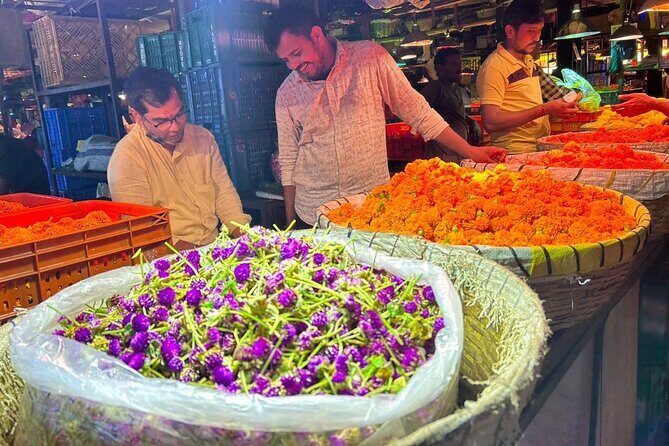
- Dadar flower and vegetable markets: colors and aromas right up close, not from far away
- CSMT photo/visit moment: a classic landmark break that fits the morning pace
Why This Mumbai Morning Market Tour Starts So Early

This is the kind of experience that works because you’re out early. Markets don’t wait for your hotel wake-up call, and many close or thin out as the day goes on—so starting at dawn means you catch the real rhythm, not the leftovers.
I like that the schedule also helps with jet lag and traffic. You’re moving while roads are calmer and before the city gets harder to navigate on foot and by train. You get more “how Mumbai works” in fewer hours, which is exactly what you want when time is tight.
The tour runs about 3 to 3.5 hours, which is just long enough to hit multiple stops without turning it into a full-day slog. And because it includes hotel pickup and drop-off (optional), the logistics are simpler than trying to DIY your own route at 6 a.m.
You can also read our reviews of more shopping tours in Mumbai

Sassoon Dock Fish Market: Auctions, Prawns, and the Sensory Kick
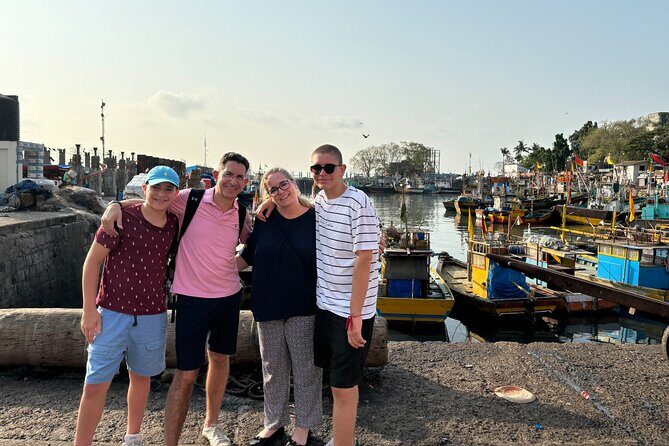
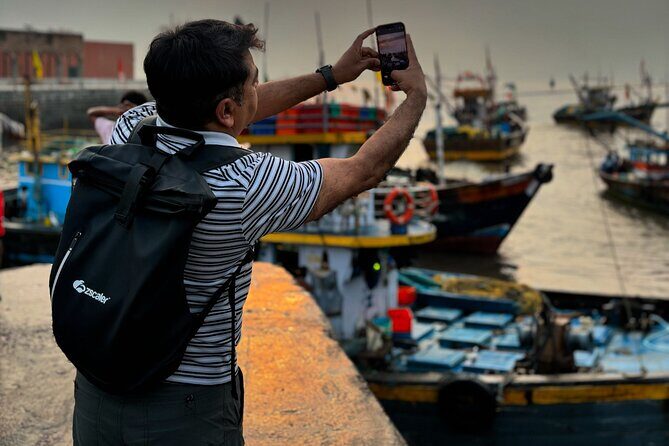
The morning starts at Sassoon Dock, and the focus is straightforward: fish, people, and a working marketplace. You’ll walk through stalls where women sell fresh fish and men display the daily catch, then watch the flow as vendors bargain and handle the day’s product.
What makes this stop worthwhile is that you’re not just looking—you’re observing processes. Your guide points out how auctions work, and you can see seafood being cleaned and prepared. One moment you’ll notice quickly: prawns and shrimp preparation is handled with speed, experience, and a system that runs on routine.
Yes, it’s intense. The payoff is that you understand the scale of what keeps the city fed. If you’re the type who likes seeing how jobs actually run, this is the best way to get that view in a short time.
Practical tip: wear robust shoes. A lot of morning-market discomfort isn’t about heat—it’s about fishy air, wet floors, and close quarters. I’d rather you plan for that than try to power through in delicate footwear.
Dhobi Ghat Laundry Stop: Seeing Work at City Scale

From the fish docks, you move toward Dhobi Ghat, and this is where the tour turns from smell-and-motion into something more human and eye-opening.
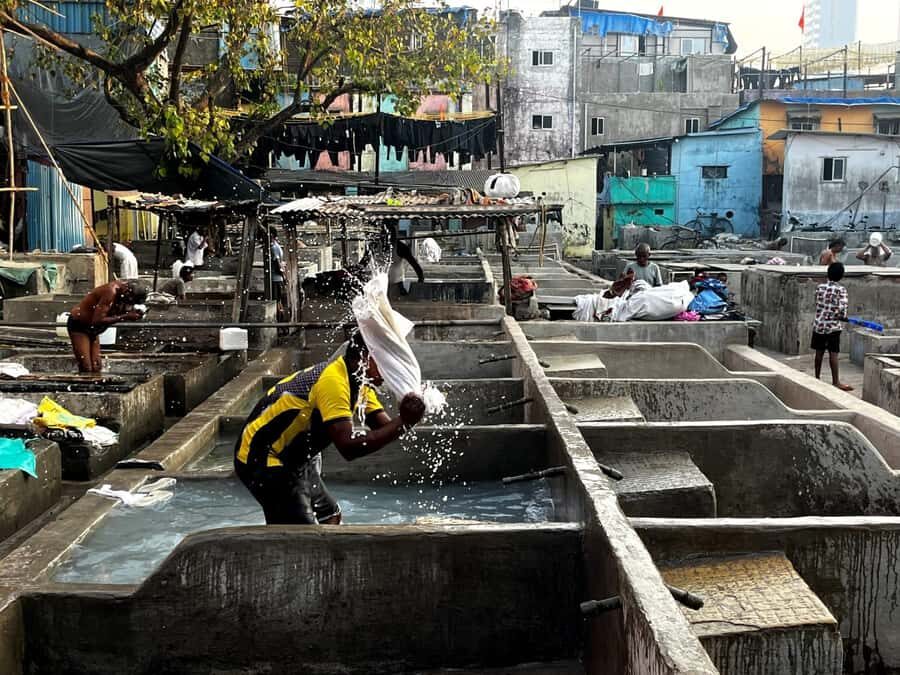
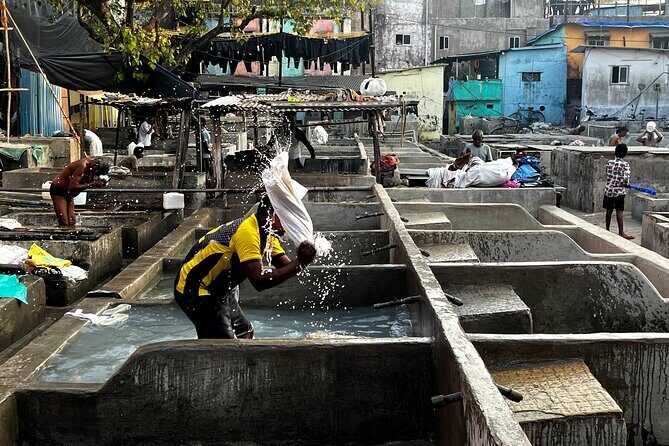
Dhobi Ghat is famous for a reason: it’s a large-scale laundry operation where washers clean over 2,000 clothes daily. The guide explains what’s happening and what that workload means for the people who run it. There’s also a photo stop built into the visit, so you can capture the scenes without feeling like you’re sneaking around.
Even if you don’t love photos, the value here is understanding the daily supply chain of a city. Hotels, hospitals, and homes all rely on laundry being done reliably—this is one of those systems that tourists usually miss completely.
A note on how to act: keep your pace respectful. This is work, not a staged attraction. If you want to ask questions, do it calmly through your guide and let the workers keep doing their thing.
Churchgate Station and CSMT: Getting Your Bearings the Mumbai Way
This tour doesn’t just show markets. It also uses the train system as part of the lesson.
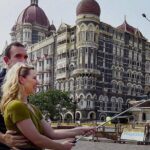
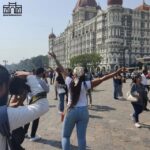
You’ll have a stop at Churchgate Railway Station, and you’ll also get a chance to see Chhatrapati Shivaji Maharaj Terminus (CSMT) as part of the tour. These are not random extras. They help you understand how Mumbai moves—especially how quickly you can get from one neighborhood world to another.
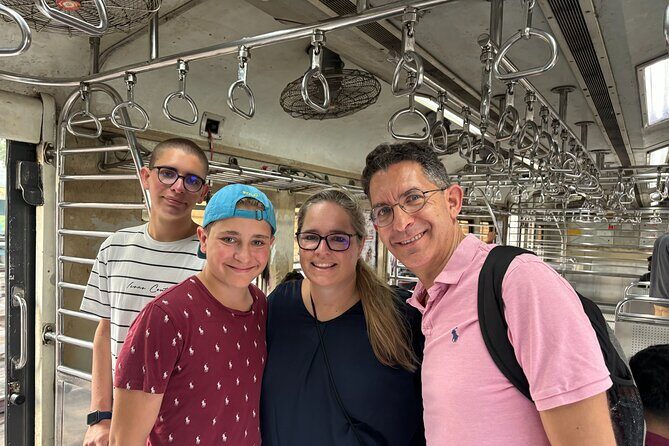
The tour includes a local train ride experience, so you’re not only watching from a window. Your guide helps you time things and navigate streets and station areas more confidently, especially because you’re moving during the morning when it can be crowded but still manageable.
If you want one practical takeaway for your trip, it’s this: Mumbai trains aren’t mystical. With the right timing and a guide who knows where people flow, you can get a lot more comfortable about using the system on your own afterward.
Also, since the tour says skip the ticket line, it removes one friction point that can otherwise eat into a short morning.
Dadar Fruit and Vegetable Market: Coriander, Chili, and Everyday Pricing
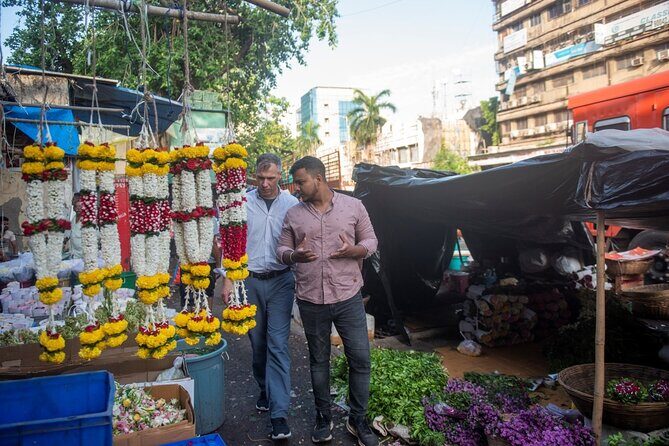
Next up are the produce markets around Dadar, with a stop at the fruit and vegetable market. This part is where the senses shift again. Instead of fish, you’re hit with the smell of fresh vegetables and the bright presence of herbs like coriander, plus chili and other staples.
What I like here is the clarity of what you’re seeing. Produce markets are easier to interpret than fish auctions because you can instantly connect products to everyday cooking. Your guide also points out how vendors work and how market activity flows during the morning window.
And this is one of the best parts for first-time visitors because you get context you can carry into later meals. When you know how ingredients move, you shop and eat differently afterward—less guessing, more understanding.
Also keep in mind: the tour doesn’t include foods and drinks as part of the base price. But it does include time for short stops, including chai breaks along the route. If you want to snack, plan to pay for what you choose.
You can also read our reviews of more tours and experiences in Mumbai





Flower Market Dadar: Fragrance Meets Daily Demand
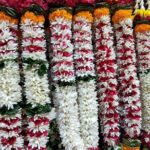
The final market stop is the flower market in Dadar, with time for both a photo stop and a guided visit. Flowers here aren’t just for decoration. They connect directly to daily rituals, events, and the steady demand that keeps the market alive every morning.
What you experience at the flower market is the opposite of the fish docks. The vibe becomes slower and more colorful, even though the pace is still quick. You’ll see how flowers are displayed, how vendors talk to customers, and how people buy in a practical, everyday way.
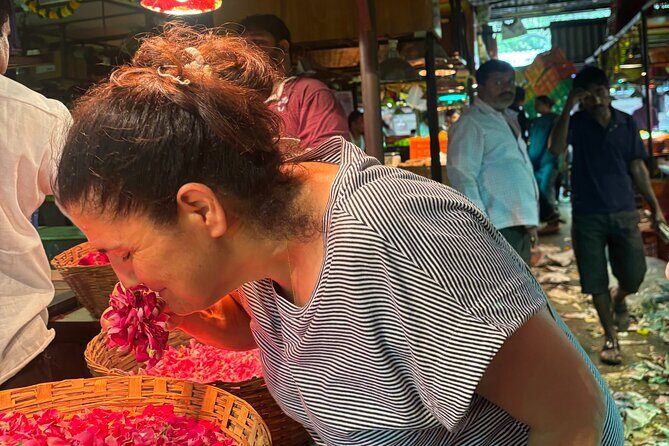
I find flower markets especially rewarding on a guided tour because your guide helps you understand what you’re looking at—types of flowers, how sellers present them, and why the morning timing matters.
If you want souvenirs, this is the place to ask questions. You’ll be surrounded by choices, and your guide can help you communicate clearly.
Transport and Guide: English Support Plus Calm Handling
This tour is built around the idea that you shouldn’t struggle with Mumbai logistics before you even get to the fun part.
You get hotel pickup and drop-off (optional), and the tour is designed to move you between stops without long, confusing gaps. Once you arrive at the station areas and market lanes, your English-speaking guide takes over: explaining what’s happening, answering questions, and helping you get where you need to be safely.
The reviews you’ll see for this tour repeatedly mention guides like Subhan, Jawwad (Jay), Chirag, and Sharon, along with drivers such as Saddam, Deepak, and Pranav. You might not get the exact same pairing, but the pattern is consistent: people value guides who keep things organized and don’t rush you through the most interesting parts.
One small but real comfort: several people note that guides help with station timing and street navigation, especially in those early hours when the crowd behavior can surprise you. That’s the difference between seeing markets and actually understanding them.
Price and Value: Why $19 Works for Three Hours
At $19 per person for roughly 3 to 3.5 hours, this tour is good value if you compare it to what you’d pay for just a guide plus transport in Mumbai.
Here’s what’s included that protects your time and money:
- Hotel pickup and drop-off
- Guided time through the Dadar flower and vegetable markets
- Exploration of Sassoon Dock fish market and Dhobi Ghat
- A CSMT visit moment
- A local train ride experience
- Skip the ticket line
- English live tour guide
The big thing is that the cost covers both the people and the movement. Markets like these are hard to thread together on your own at dawn, especially if you want to understand what you’re seeing.
What you should budget separately: food and drinks. The tour highlights a chai stop along the way, and some people mention breakfast snacks like samosa and chai, but the base listing doesn’t include foods and drinks. Treat it like a “snack if you want” morning, not an all-inclusive breakfast.
What to Wear, Bring, and Do at Each Stop
This morning tour is sensory. So pack for reality, not for comfort fantasies.
Wear: sturdy shoes with grip. Fish market areas can feel wet, and you’ll be standing and walking in close quarters.
Bring: a light layer. Early mornings can feel cooler than you expect, especially near water and stations.
Bring cash: not required for the tour itself, but useful if you want to buy flowers or small snacks at the market.
At fish docks, keep your camera ready but don’t block workers. At Dhobi Ghat, be respectful with photos. In the flower and produce markets, ask your guide questions—you’ll get much more out of the colors and smells when someone explains what you’re seeing.
Who This Tour Is Best For (and Who Should Skip It)
This tour is a strong fit if you want:
- A morning plan that’s short but packed with real city life
- A first taste of Mumbai’s market culture in a way that’s easy to follow
- The train ride as a practical skill-building piece
- Cultural context from an English guide
It may be less ideal if:
- You can’t handle strong odors (fish market air is not subtle)
- You hate very early wake-ups
- You’re expecting a relaxed stroll with minimal crowds
If you’re traveling with limited time but want more than the usual sightseeing checklist, this hits a sweet spot.
Should You Book This Morning Markets Tour?
If you want an efficient, sensory, and genuinely Mumbai-feeling morning, I’d book it. The biggest strengths are the combination of fish + laundry + flower/veg markets plus the included local train ride, all guided in English with hotel pickup to keep things simple.
My recommendation is especially strong if you’re in town for the first time or only have a couple of mornings to spend. This tour gives you a different Mumbai angle—one built on work, trade, and daily rhythm.
If you’re on the fence, make the decision based on two things:
- Are you okay with a very early start and the fish-market smell/wet conditions?
- Do you want the guidance that helps you navigate trains and market lanes without stress?
Say yes if that sounds like your kind of day.
FAQ
How long is the Mumbai Morning Market Tour?
The tour lasts about 3 to 3.5 hours.
What’s included in the $19 price?
The package includes hotel pickup and drop-off, an English live guided tour, visits to Sassoon Dock fish market, Dhobi Ghat, and Dadar flower and vegetable markets, plus an iconic CSMT visit and a local train ride experience.
Are food and drinks included?
No. Foods and drinks are not included in the tour price.
Where do I meet the guide if I’m not using hotel pickup?
You meet your guide at the Pizza Express Colaba meeting point near the Gateway of India.
Is the tour guide available in English?
Yes. The live tour guide is available in English.
Is free cancellation available, and can I pay later?
Free cancellation is available up to 24 hours in advance for a full refund. You can also reserve now and pay later to keep your plans flexible.