REVIEW · MUMBAI
Mumbai: Dhobi Ghat & Dharavi Slum tour
Book on GetYourGuide →Operated by Mumbai with Locals · Bookable on GetYourGuide
Dharavi will change how you see Mumbai. This tour pairs Dharavi with Dhobi Ghat, showing real routines, real trades, and the city’s everyday muscle.
I especially like the way the visit is led by guides from Dharavi itself, including noted guides like Sajid and Jay in recent experiences, so the explanations feel personal instead of scripted. You also get to watch how the community works across both industrial workshops and residential streets, then shift gears with a local train ride.
Two things I really loved: first, the focus on community life and craftsmanship, not just a quick look and a photo. Second, Dhobi Ghat is genuinely special—rows of hand-washed clothes in an active, open-air setting, with a final view from the Dhobi Ghat viewing deck. A possible drawback is that the total experience can vary; one guide-led day ran shorter than expected when access to the potters area wasn’t possible.
In This Review
- Key Takeaways Before You Go
- Dharavi: Seeing a Working City, Not a Sideshow
- Kumbharwada Potter’s Community: Craft, Then Reality Checks
- Riding the Local Train to Mahalaxmi: The City in Motion
- Dhobi Ghat: The Open-Air Laundry That Runs Like Clockwork
- Timing and the 3-Hour Reality Check
- Meeting Point: Find It Fast and Start Calm
- Price and What $13 Actually Buys You
- Who Should Book This Dharavi and Dhobi Ghat Tour
- How to Make the Most of Dhobi Ghat and Dharavi Without Being That Person
- Should You Book This Mumbai Tour?
- FAQ
- How long is the Mumbai Dhobi Ghat & Dharavi Slum tour?
- What is included in the price?
- Where does the tour meet?
- Does the tour include a train ride?
- What sites are covered during the tour?
- What languages are the live guides?
- Is hotel pickup included?
- Is free cancellation available?
- Can I reserve and pay later?
Key Takeaways Before You Go
- Local guides from Dharavi: better context, better English, and a more respectful pace.
- Two distinct worlds in one walk: industrial workshops, then residential life, both discussed on the same route.
- A train ride that feels like the city: a simple 30-minute local connection to Mahalaxmi station.
- Dhobi Ghat as a working laundry: not staged, and the visuals hit fast.
- Kumbharwada may be affected: if routes change, the potters community stop might not happen as planned.
Dharavi: Seeing a Working City, Not a Sideshow
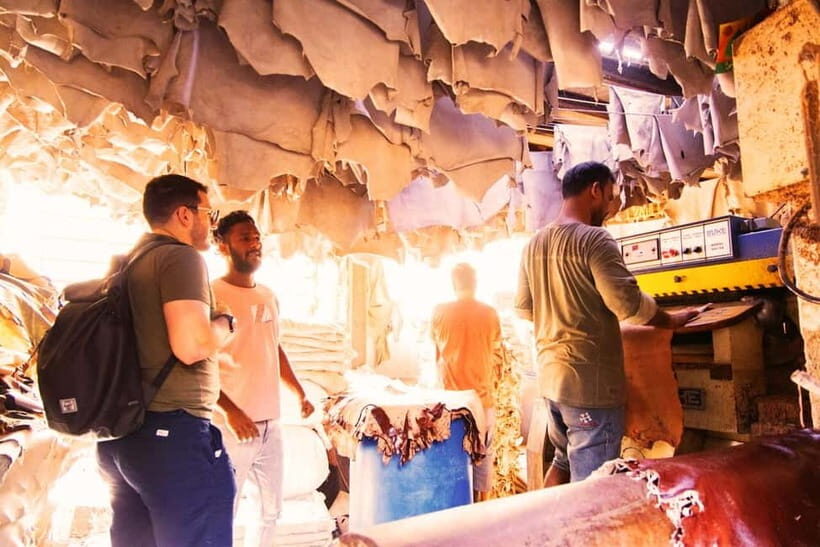
Dharavi is often reduced to a single word in travel talk. On this tour, it’s treated like what it is: a neighborhood full of livelihoods, trades, family routines, and problem-solving. The tone is respectful from the start, and the guides are from the area, which makes a huge difference.
You’ll start in Dharavi’s industrial side, where small workshops and factories show up right in the street-level view. Instead of abstract talk, you get concrete examples of how people make, repair, recycle, and produce. That’s one of the strongest parts of the experience, because you can practically see the economics at work.
Then the tour moves toward the residential side for a more personal conversation. This is where you hear about day-to-day life, family traditions, and the kinds of challenges people deal with. It helps you understand that Dharavi isn’t only “poverty”—it’s also agency, skills, and community bonds that keep daily life running.
One more thing: because privacy is part of the approach, the visit doesn’t feel like a free-for-all. You’re guided through the area with an emphasis on respect, not rubbernecking. That makes the walk easier to handle emotionally.
You can also read our reviews of more tours and experiences in Mumbai.



Kumbharwada Potter’s Community: Craft, Then Reality Checks
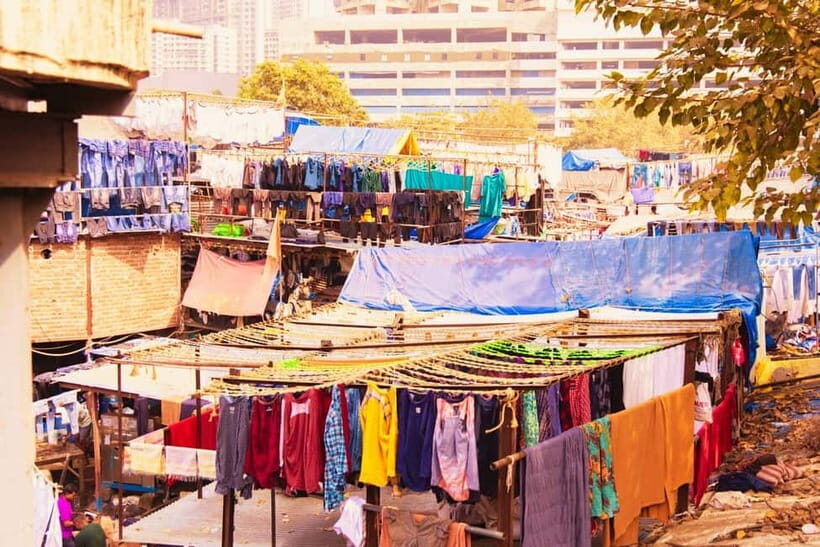
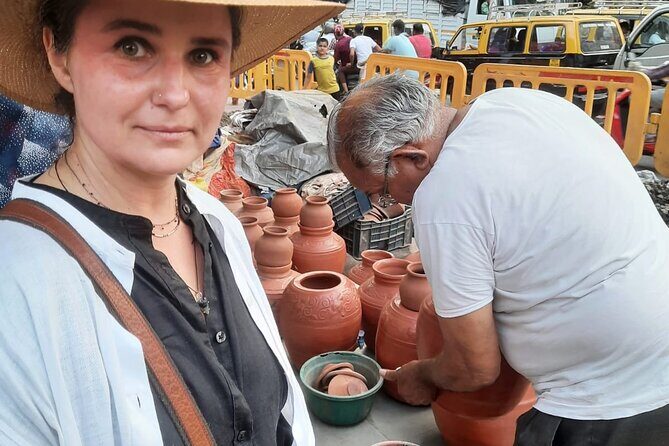
Kumbharwada is listed as a potter’s community stop, and that’s exactly the kind of detail that can turn a generic slum tour into something memorable. Pottery communities add a different layer to Dharavi: not only industrial work, but traditional craft and skill passed through generations.
That said, you should know that access can be impacted. In one recent experience, the stop didn’t fully happen because a bridge route was unavailable after a collapse. It’s a good reminder that this is a living place with real infrastructure issues—sometimes the itinerary has to bend for safety.
If pottery is a top reason you booked this tour, I’d treat Kumbharwada as a priority to ask about when you confirm. If it’s not possible on the day, the best approach is to roll with the local guide’s recommendation rather than force an outcome.
The takeaway for you: the tour isn’t only about checking boxes. It’s about seeing how people live and work, and sometimes the route reflects what’s safe and reachable.
Riding the Local Train to Mahalaxmi: The City in Motion

After the Dharavi portion, you hop onto a local train. The ride is short—about 30 minutes—but it changes the tone fast. You’re no longer walking through one tightly defined micro-world; you’re watching Mumbai connect neighborhoods in real time.
This train segment is also a reminder that Mumbai is a city built on movement. People commute, errands happen across districts, and everyday life doesn’t pause because you’re on a tour. Even if you’ve visited other Indian cities, that train feeling tends to stick with you.
You’ll get off at Mahalaxmi station. That’s where the tour begins the transition to Dhobi Ghat, giving you a mental handoff from “workshops and lanes” to a large-scale, open-air operation.
If you’re sensitive about crowding, this is the moment to stay calm and let the guide set the pace. The value here isn’t comfort—it’s authenticity.
Dhobi Ghat: The Open-Air Laundry That Runs Like Clockwork
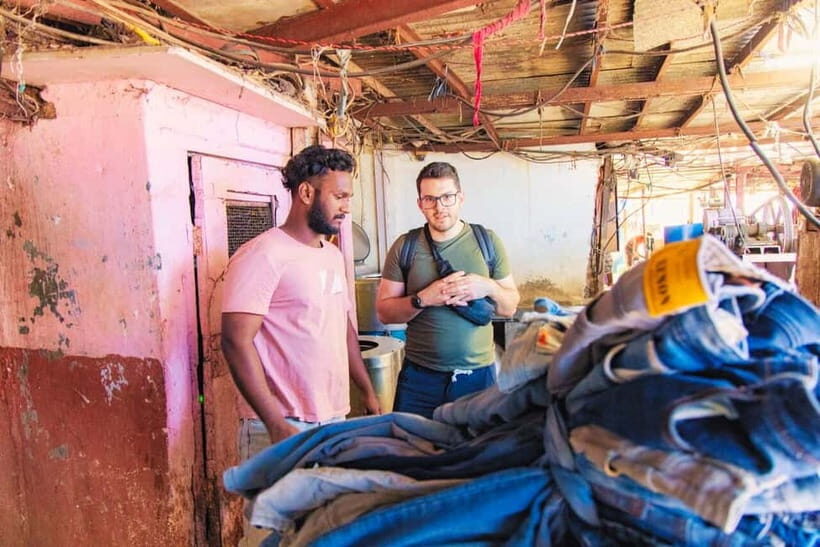
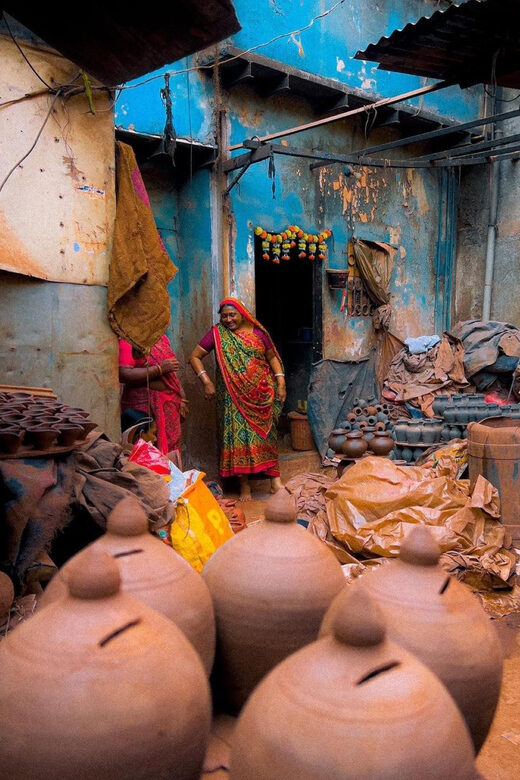
Dhobi Ghat is the headline because it’s one of Mumbai’s best-known working scenes: the world’s largest open-air laundry. And yes, it’s exactly that—rows and rows of colorful clothing, handled by people washing and managing laundry with practiced precision.
This part of the tour includes a photo stop of about 15 minutes, plus a finish at the Dhobi Ghat viewing deck. That viewing deck is important because it lets you see the bigger pattern of the operation. From ground level, it can feel like chaos. From a slightly higher vantage, you start to notice how the whole system is organized.
A key way to get more out of Dhobi Ghat is to watch the workflow, not just the spectacle. The clothes aren’t randomly scattered. You’ll notice that the work is structured—sorting, washing, and moving items through stages. It’s labor-heavy, but efficient in a practical way.
Also, remember this is a working place, not a theme park. I found that the best “photo moment” is usually the brief second when you can capture the scene without turning the experience into a distraction.
If you’re going with a camera, bring a plan: shoot the viewing deck first, then do quick frames during the photo stop. That way you don’t feel rushed, and you don’t waste time wandering while the tour moves.
Timing and the 3-Hour Reality Check
On paper, the tour runs about 3 hours. In practice, it has a very clear shape: around 2 hours in Dharavi, roughly 30 minutes on the local train, and then a short Dhobi Ghat photo stop before finishing at the viewing deck.
Two things matter for your planning. First, you’re walking in Dharavi’s lanes for a long stretch, so you’ll want energy for that. Second, the day can shift if access conditions change—especially around route-dependent areas like Kumbharwada.
One recent review noted the overall tour time became about 90 minutes on that day. The reason wasn’t the guide being rushed; it was that a bridge route was out. That’s a practical heads-up: the “3 hours” duration is a target, but Mumbai’s neighborhoods can influence what’s reachable.
So if you have tight plans after this tour, I’d give yourself some buffer time. This is the kind of experience where you’ll want to sit with what you saw for a minute, not sprint to the next appointment.



Meeting Point: Find It Fast and Start Calm
You’ll meet at Third-wave Coffee Shop in the Ram Mahal building, opposite Mahim railway station on the west side. The tour operator also lists Courage Comm Solutions Pvt. Ltd. as the starting location, so I’d treat the coffee shop as your practical meetup anchor and assume the team will connect from there.
Arriving a little early is a smart move. Not because you’ll be waiting long, but because a new neighborhood meeting point can be confusing if you’re navigating street-level details.
Once you’re with the guide, the pace makes more sense. Dharavi works best when you follow local guidance and don’t try to freestyle. The guide’s familiarity is the point.
Price and What $13 Actually Buys You
$13 per person sounds low, and that’s exactly why it’s worth understanding what’s included. Your money covers packaged bottled water, train tickets, and entry fees for Dhobi Ghat. You’re also getting a live guide in English and Hindi, and the structure of the tour moves you between Dharavi and Dhobi Ghat.
That makes the pricing feel more “local day plan” than “checklist attraction.” Many tours at higher prices still don’t include the transit piece or the site entry. Here, the transit and Dhobi Ghat access are part of what you pay for, which boosts the value.
The best part is that you’re not only seeing places—you’re hearing how people explain their own lives. Recent experiences credited guides like Sajid for professional, detailed explanations and for ensuring you see each part of the area on the day. Another guide praised in recent feedback, Jay, was described as informative and heartwarming, which matches what the tour promises: storytelling grounded in real neighborhood knowledge.
So, for value-focused travelers, the price is a win. For comfort-focused travelers, just remember this isn’t designed to be a smooth, sanitized ride. It’s designed to be real.
Who Should Book This Dharavi and Dhobi Ghat Tour
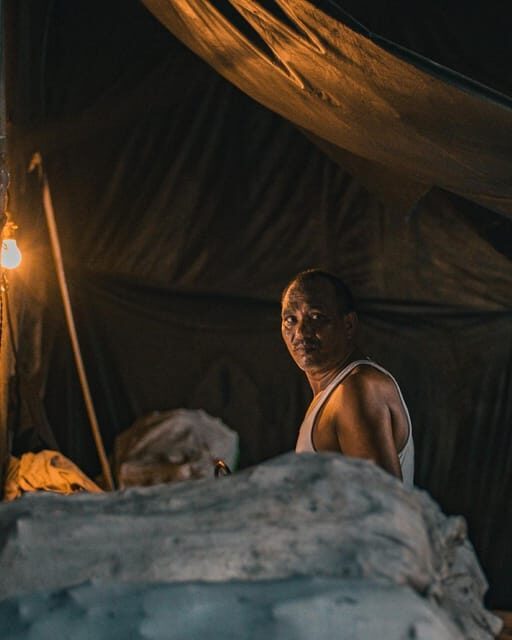
This tour is a strong fit if you:
- Want context over quick photos, and you like learning from people who live the story
- Are curious about Mumbai’s working life, from small industrial spaces to a large open-air laundry
- Like structured pacing but can handle walking and being in a real neighborhood
You might want to think twice if you prefer light, purely scenic sightseeing. Dharavi involves poverty in the background, but the guide-led approach keeps the focus on people, work, and community reality rather than shock value. Still, it’s not the same emotional vibe as visiting a palace or beach.
If you’re the type of traveler who enjoys respectful, small-group access and clear guidance, this tour hits the sweet spot.
How to Make the Most of Dhobi Ghat and Dharavi Without Being That Person
This experience works best when you treat it like a workplace and a home neighborhood. Privacy and respect are built into the tour style, and that’s exactly how you should show up.
I recommend you:
- Ask questions instead of pushing for photos. If photography is part of your plan, keep it quick and follow your guide’s lead.
- Pay attention to the workflow. Dhobi Ghat becomes more than a photo when you understand the process.
- Keep an open mind about Kumbharwada. If access changes, follow the guide’s route and focus on what’s still possible that day.
Good tours aren’t just seen. They’re practiced, moment by moment.
Should You Book This Mumbai Tour?
Yes, if you want a guided, reality-based look at Mumbai that includes both Dharavi’s everyday work and the iconic open-air laundry at Dhobi Ghat. The value is strong for the price, especially because train tickets and Dhobi Ghat entry are included.
Book it if you like small-group experiences with local, English-speaking guides. Guides like Sajid and Jay have been praised for professionalism, thorough explanations, and a heart-to-heart tone.
Just book with eyes open. Expect walking, expect a living neighborhood, and accept that route-dependent stops like Kumbharwada may not always work on the day due to practical access issues.
FAQ
How long is the Mumbai Dhobi Ghat & Dharavi Slum tour?
The tour duration is about 3 hours.
What is included in the price?
It includes a packaged water bottle, train tickets, and entry fees at Dhobi Ghat.
Where does the tour meet?
You meet at Third-wave Coffee Shop in the Ram Mahal building, opposite Mahim railway station on the west side.
Does the tour include a train ride?
Yes. There’s a local train segment of about 30 minutes to Mahalaxmi station.
What sites are covered during the tour?
You visit Dharavi, Dhobi Ghat, and Kumbharwada (Potter’s Community).
What languages are the live guides?
Guides speak English and Hindi.
Is hotel pickup included?
No, pick up and drop at hotels are not included.
Is free cancellation available?
Yes, you can cancel up to 24 hours in advance for a full refund.
Can I reserve and pay later?
Yes. You can reserve now and pay later.