REVIEW · MUMBAI
Best South Mumbai Heritage Walk
Book on Viator →Operated by Mumbai Dream Tours · Bookable on Viator
Some cities make you rush. This one makes you look.
The Best South Mumbai Heritage Walk is a 3-hour, on-foot route through landmark colonial and post-colonial sites—Gateway of India, grand civic buildings, and the famous train-station face of Mumbai—at a pace that lets you actually notice details. I like that the tour runs in both morning and afternoon options, so you can match it to your day. I also like the mobile ticket format and the small-group feel (up to 15 people).
What I love most is the way the stops stay connected: you move from monumental waterfront views to arts and civic architecture, including Victorian Gothic Revival-style elements, without feeling like you’re bouncing around. You’ll get great close-up photo moments walking the streets, plus strong guide storytelling—people mention guides such as Aakash, Gautam, Sandesh, and Sanika for making the history feel clear and conversation-friendly. One thing to consider: on rare occasions, plans can change last-minute, so I’d keep a little flexibility in your schedule.
In This Review
- Key things that make this South Mumbai walk worth your time
- Walking South Mumbai’s big icons without the rush
- Meeting at CST area: easy start, smart direction
- Gateway of India: monument scale you feel in person
- Kala Ghoda: street life plus arts-season context
- Town Hall (Asiatic Society Library) and the look of power
- Flora Fountain and Horniman Circle: public spaces with design
- Bombay High Court and the Taj Mahal Palace: civic gravity meets luxury
- Chhatrapati Shivaji Terminus: the stop that rewards paying attention
- What this tour is like on the ground (and how to prep)
- Guides matter: why the stories stick
- Price and value: what $17.89 buys you
- Who should book the Best South Mumbai Heritage Walk
- Should you book it?
- FAQ
- How long is the South Mumbai Heritage Walk?
- How much does it cost?
- Is there a morning and afternoon option?
- Are tickets mobile?
- What major stops are included?
- Is admission required for the stops?
- Where do I meet and end the tour?
- What’s the cancellation window?
Key things that make this South Mumbai walk worth your time
- A tight 3-hour route that strings major landmarks together in a way that’s easy to follow on foot
- Architecture spotting, including Victorian Gothic Revival influences you can’t really appreciate at car speed
- Great photo access, with multiple stops designed for close viewing of facades and public spaces
- Small group size (up to 15), which helps the guide keep the pace comfortable
- Free admission at the listed stops, so your $17.89 mainly buys the walking route and guidance
- Two daily time slots (morning and afternoon) to fit how you want to move through Mumbai
Walking South Mumbai’s big icons without the rush
South Mumbai has a way of pulling you in fast—traffic, crowds, honking, everything moving at once. This walk is the antidote. You trade speed for sightlines. And in places like the waterfront and Fort district, slower is better, because the buildings reward your attention.
This is a heritage walk with a practical goal: show you how colonialism and later British-era planning shaped the city’s street look, civic design, and monument scale. You also get a strong “walk-and-look” rhythm—each stop is close enough to keep momentum, but spread out enough that the area makes sense as you go.
You’re exploring with Mumbai Dream Tours, and the pace is meant to be doable for most people. The tour’s built for photos and up-close viewing, not for sprinting between landmarks.
You can also read our reviews of more walking tours in Mumbai



Meeting at CST area: easy start, smart direction
The walk starts near Azad Maidan and the CST (Chhatrapati Shivaji Terminus) zone, right by a McDonald’s building on Dr Dadabhai Naoroji Road. That’s a handy detail because CST is one of the city’s easiest reference points, and it also means you can plug into public transit without planning a complicated meetup.
From the start, the route is designed to carry you through South Mumbai’s most recognizable “postcard” corners, then finish in the Colaba area near Regal Cinema on Apollo Bandar—close to the broader Gateway of India neighborhood.
One nice reality check: because you’re walking, you’re seeing what buses and cars hide—street textures, building transitions, and the way neighborhoods tighten and loosen as you move.
Gateway of India: monument scale you feel in person
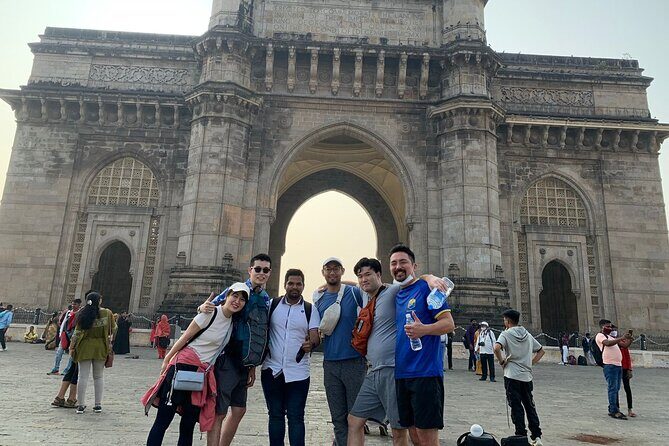
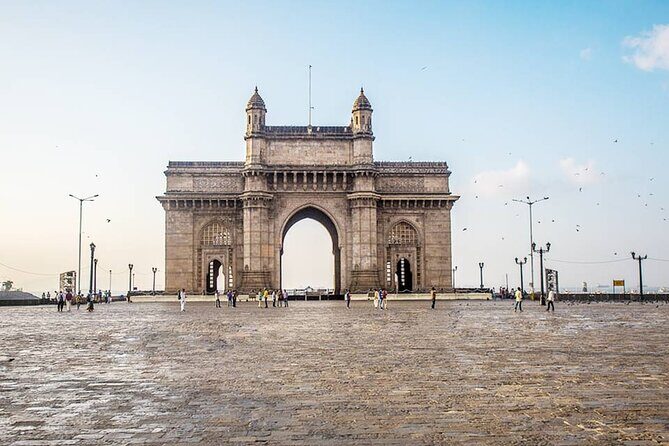
Your first stop is the Gateway of India, the early 20th-century arch-monument that frames the waterfront area like a formal entrance. From up close, you can really see how the structure dominates the public space around it. Photos here are easy, but what makes the stop worth your time is the sense of scale—this isn’t a small “look at it and move on” spot.
Even if you’ve seen Gateway of India in pictures a hundred times, it’s one of those places where your brain needs a second to recalibrate. Standing there and looking around helps you connect the monument to the surrounding city energy.
This first stop also sets the theme for the walk: monumental coastal architecture and the city’s colonial-era links.
Kala Ghoda: street life plus arts-season context

Next you’re at Kala Ghoda, a neighborhood that gets especially famous in February due to the Kala Ghoda Arts Festival. This stop works because it’s not only about buildings. It’s about a district identity—how a place can feel both cultural and local at the same time.
You’ll spend about half an hour here, which is enough to notice shopfront rhythm, street layout, and the general “creative district” vibe without turning it into a shopping detour.
If your timing happens to line up with festival energy, you’ll likely feel it in the streets. Even without the festival, the area still signals a shift from pure monument viewing into living neighborhood texture.
Town Hall (Asiatic Society Library) and the look of power
From Kala Ghoda, the walk moves to the Town Hall (Asiatic Society Library) in the Fort locality. This is a Neoclassical building, and the style matters because it tells you what kind of authority the designers wanted to project—order, permanence, and civic legitimacy.
Neoclassical architecture can feel “stately” from far away. Up close, you can pick up the formality in proportions and the building’s intention as a public institution. This stop is about learning to see. The more you notice, the more the architecture stops being background scenery.
It’s also a good mental reset after the more scenic, monumental energy near the waterfront.
You can also read our reviews of more historical tours in Mumbai






Flora Fountain and Horniman Circle: public spaces with design
Then you head to Flora Fountain at Hutatma Chowk, described as an ornamentally sculpted architectural heritage monument on Dadabhai Naoroji Road. This is one of those stops where the city’s sense of commemoration shows up visually in everyday crossings.
You get enough time to look carefully instead of just snapping a photo from across the street. That’s a big deal in Mumbai, where the best angles often require a bit of patience.
After that, the walk brings you to Horniman Circle Garden, a large park area in the Fort district. It’s about 2½ acres, and it sits within a ring of office complexes—so you get a rare pocket of greenery in an area that otherwise feels built for workday movement.
The value here is simple: you’re seeing how South Mumbai balances civic greenery with dense development. And if you like photography, parks give you softer light and better compositional variety.
Bombay High Court and the Taj Mahal Palace: civic gravity meets luxury
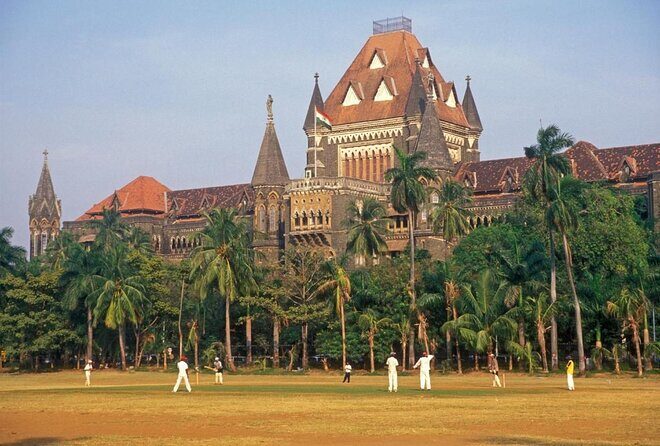
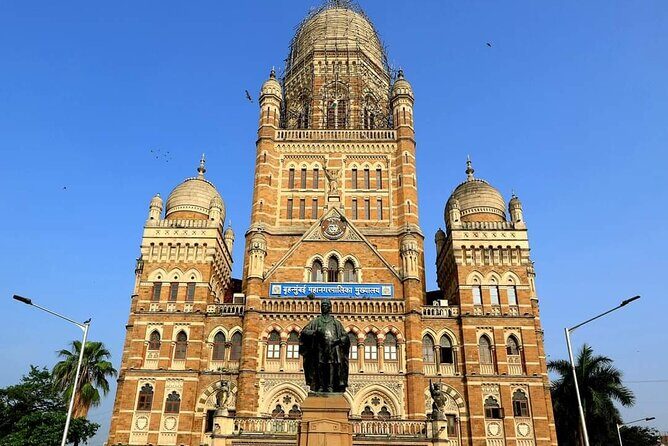
You’ll then pause at the High Court Principal Bench Bombay, part of the High Court of Maharashtra and Goa. Courthouse architecture isn’t just “old building.” It’s a message: power, procedure, and institutional seriousness. Even if you don’t know the legal history, you can read the design intent.
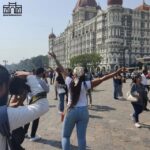
From there, the route continues toward The Taj Mahal Palace, Mumbai, a heritage five-star hotel in the Colaba area. This stop adds contrast. You go from civic gravity to high-end luxury on a heritage frame.
Even if you’re not a hotel guest, it’s worth seeing how the Taj presents itself architecturally, especially in the context of the walk’s larger theme: how different kinds of influence show up in built form.
Chhatrapati Shivaji Terminus: the stop that rewards paying attention
The big finish is Chhatrapati Shivaji Terminus (CST), a historic railway station and UNESCO World Heritage Site. This is one of Mumbai’s most photographed structures, but it’s also one of the easiest places to rush past without really seeing what makes it special.
You’ll have about 30 minutes here, which is enough to get a sense of the station’s grand statement and the fine-grain architectural work that makes it feel like more than a transit hub.
For me, the real benefit of seeing CST on foot as part of a heritage route is that the station stops feeling like a standalone icon. It becomes part of a larger South Mumbai story—how the city’s major institutions and their designs cluster in Fort and adjacent areas.
If you care about architecture, you’ll likely leave feeling like you learned how to “read” these places instead of just collecting landmark names.
What this tour is like on the ground (and how to prep)
This walk is built for comfort at street level. It’s a 3-hour outing, designed for a small group of up to 15 people. That matters because it changes your experience: you’re less likely to get left behind at each stop, and you can actually hear your guide’s explanations.
You’ll also move at a slower pace than you would in a car. That’s not only eco-friendly in spirit; it also means you can turn your head, stop for photos, and notice building transitions along the way.
A practical prep list, based on how walking tours usually feel in South Mumbai:
- Wear shoes you trust for pavement and frequent turns.
- Bring water, because you’ll spend the whole time outside.
- Have your camera ready before you reach the stops; crowds move fast around waterfront and major landmarks.
If you’re aiming for the best photos, arrive with a simple plan: one wide shot (to capture monument scale) and one detail shot (architecture textures). On this route, you’ll have multiple chances for both.
Guides matter: why the stories stick
A theme in the guide feedback you’ll see for this walk is that people remember the how of the storytelling, not just the facts. Guides such as Aakash and Gautam get praised for extensive historical knowledge and the ability to make it feel interesting rather than like a lecture.
Other guides named in feedback include Sandesh and Sanika, noted for being friendly, personable, and open to broader conversation. That’s a real advantage on a heritage walk, because Mumbai isn’t only history—it’s living culture right now.
If you’re the type who likes to ask questions, small-group format helps. You’re not just standing at a curb waiting for the next instruction.
Price and value: what $17.89 buys you
At $17.89 per person, this is a low-cost way to cover a cluster of major South Mumbai landmarks in one coherent route. You’re not just paying for “someone to walk with you.” Your money goes toward:
- A guided 3-hour structure that links stops into a story
- A route designed for close viewing and photography
- Small-group handling (max 15)
- A mobile ticket format
- Listed stops with free admission tickets as part of the experience design
In other words: you’re paying less for entry fees (since the stops are listed as free) and more for the interpretation and pacing. For many people, that’s exactly the right value model.
One caution: if you’re hoping for a fully ticketed museum day, this isn’t that kind of tour. It’s street-level heritage and architecture viewing—strong for people who like walking and looking.
Who should book the Best South Mumbai Heritage Walk
This walk fits best if you want:
- A heritage route focused on landmarks you can see clearly from street level
- Architecture appreciation, including Victorian Gothic Revival-style elements
- Photo stops that don’t require you to sprint between locations
- A small-group experience with guide interaction
It’s also a good pick if you’re in Mumbai for the first time and want a “big picture” day that still stays practical. The route is concentrated enough to feel productive, but paced enough that it doesn’t feel exhausting.
If you’re traveling with limited time, the 3-hour length is a sweet spot. If you love deep museums only, you might pair this with a separate indoor stop later. But if you like the city itself, this is a great foundation.
Should you book it?
I think you should book the Best South Mumbai Heritage Walk if you want a guided way to see South Mumbai’s top architecture and monuments without chaos. The route is tight, the guide style tends to score well for friendliness and storytelling, and the free-admission stops keep the cost focused on the walk and guidance.
Skip it—or at least keep a backup plan—if you absolutely can’t handle last-minute schedule issues. Also, if you hate walking for extended stretches, this might feel like too much. But if you can handle a solid few hours on your feet, this is one of the most cost-effective ways to make Mumbai’s built heritage click.
FAQ
How long is the South Mumbai Heritage Walk?
The tour is about 3 hours.
How much does it cost?
The price is $17.89 per person.
Is there a morning and afternoon option?
Yes. The tour is offered in morning and afternoon options to fit your schedule.
Are tickets mobile?
Yes, you’ll receive a mobile ticket.
What major stops are included?
The walk includes Gateway of India, Kala Ghoda, Town Hall (Asiatic Society Library), Flora Fountain, Horniman Circle Garden, the High Court Principal Bench Bombay, The Taj Mahal Palace, and Chhatrapati Shivaji Terminus.
Is admission required for the stops?
Admission tickets for the listed stops are shown as free.
Where do I meet and end the tour?
You start near the McDonald’s building on Dr Dadabhai Naoroji Road next to CST Station, and the tour ends at Regal Cinema on Apollo Bandar in Colaba.
What’s the cancellation window?
You can cancel up to 24 hours in advance for a full refund. If you cancel less than 24 hours before the start time, the amount paid isn’t refunded.