REVIEW · MUMBAI
Mumbai: Dharavi Slum Walking Tour by First Female Tour Guide
Book on GetYourGuide →Operated by Mumbai Excursions · Bookable on GetYourGuide
Dharavi isn’t what you expect. This walking tour focuses on real Dharavi life, not sightseeing box-checking, and it packs in working places like recycling and manufacturing areas alongside schools, colleges, markets, and residential streets. I like that it is led by a first female guide, which changes the tone from outsider-to-spectator to local-to-local explanation. The one drawback to factor in is that this is not a comfort-park tour; it’s a walk through a lived, working community, so your mindset matters more than your itinerary.
I also like the simple setup: you meet outside Third Wave Coffee, then you’re taken around for about 2 to 2.5 hours and returned to the same spot. Recent guide-led experiences consistently mention careful pacing, clear English, and guides like Pooja, Varsha, Sneha, Anu, Mahek, and Sarah keeping groups together while answering questions. If you’re short on time, this is a strong first-day option because it gives you a working understanding of how Dharavi functions beyond stereotypes.
In This Review
- Key highlights worth centering
- Why Dharavi Makes the Best First-Day Mumbai Stop
- Starting at Third Wave Coffee: Getting Oriented Fast
- Plastic, Paper, and Aluminium Recycling: The Work Behind the Waste
- Soap Factories, Cloth Manufacturing, Leather Industries, and Pottery
- Schools, Colleges, Markets, and Residential Areas
- Ethical and Impactful, but Keep Your Expectations Grounded
- The First-Female Guide Element: Why the Tone Feels Different
- Duration, Walking Pace, and What to Plan For
- Price and Value: $5 for a Local-Only Perspective
- Photography, Questions, and Staying Respectful in Real Neighborhoods
- Who Should Book This Tour (and Who Might Want Another Option)
- FAQ
- How long is the Dharavi Slum Walking Tour?
- Where do we meet for the tour?
- What does the tour cost?
- What language is the tour guide?
- Is bottled water included?
- What is included in the experience?
- Is free cancellation available?
- Is there a reserve now and pay later option?
- Should You Book This Tour or Skip It?
Key highlights worth centering
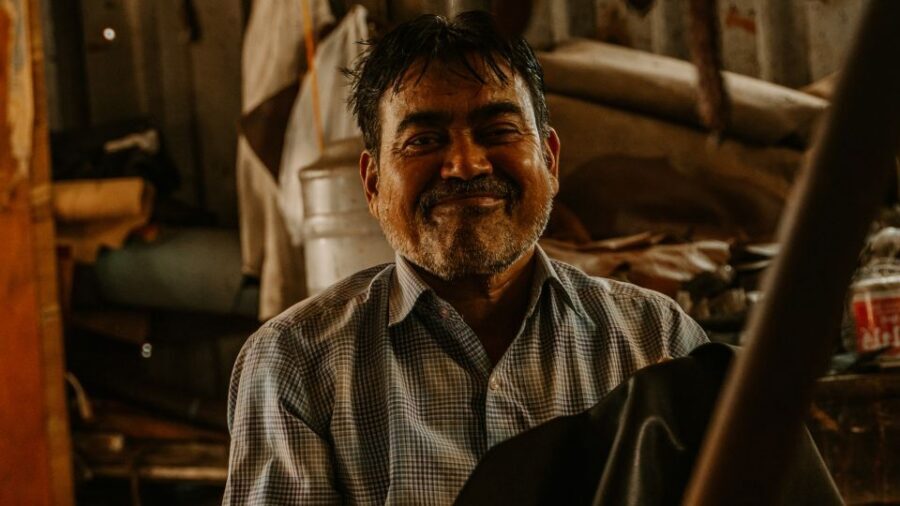
- Local walk, local explanations: You’re shown places you wouldn’t find just wandering on your own.
- Recycling turned into industry: You pass through plastic, paper, and aluminium recycling areas and see how material flows.
- Hands-on work sectors: Soap factories, cloth manufacturing, leather industries, and pottery appear on the route.
- Education and community spaces: Schools and colleges are part of the experience, not an afterthought.
- Human resilience and transformation stories: The tour focuses on people and roles inside the community.
Why Dharavi Makes the Best First-Day Mumbai Stop
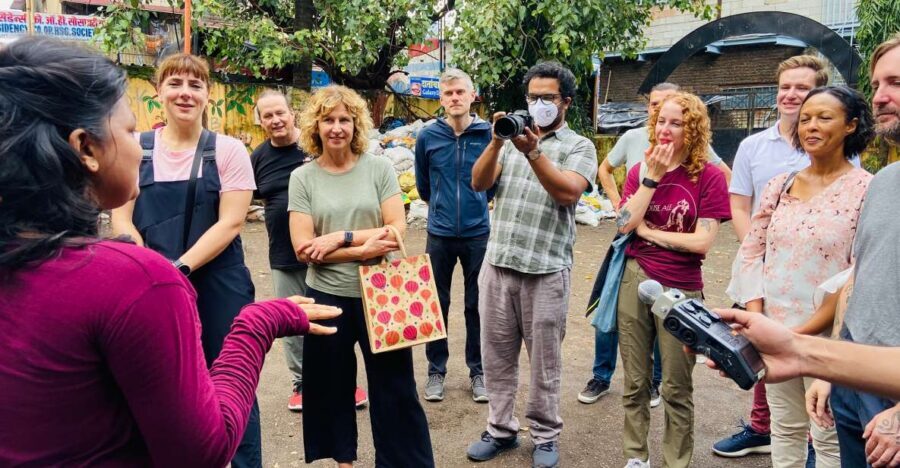
Most Mumbai sightseeing lists start with monuments and big views. This experience flips the script. Dharavi is often described as Asia’s largest slum, and the tour is built around one big idea: the community isn’t only about hardship, it’s also about systems, jobs, learning, and entrepreneurship.
The value for you is speed plus depth. In about 2 to 2.5 hours, you get an overview of how different parts connect. You’ll walk past sectors involved in turning waste into usable materials, and you’ll also see how daily life continues through schools, colleges, markets, and residential areas. That mix is what makes the tour more than a single-topic visit.
It’s also why it tops many people’s short list of Mumbai experiences. You get a practical framework for understanding Dharavi as a living economy, not a distant headline.
You can also read our reviews of more walking tours in Mumbai


Starting at Third Wave Coffee: Getting Oriented Fast
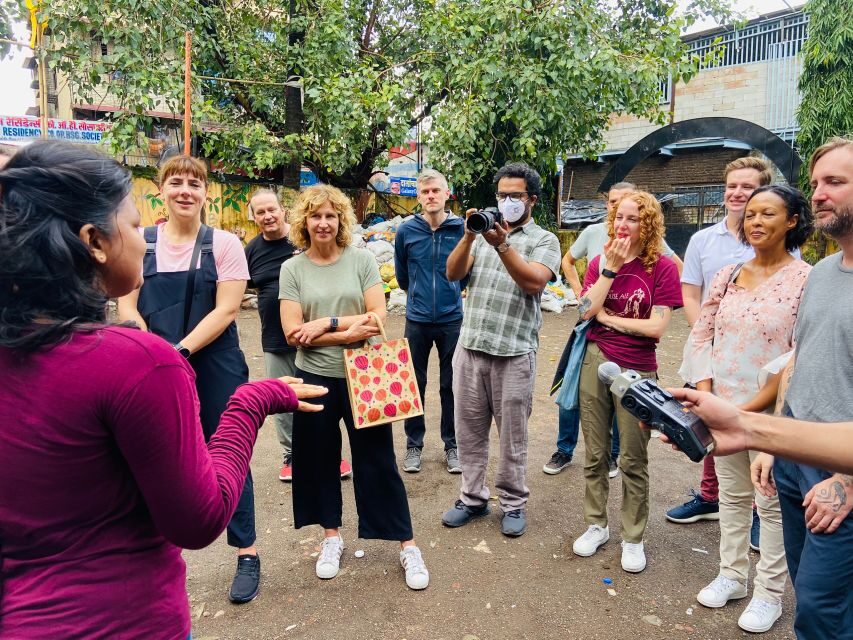
Your meet point is outside Third Wave Coffee. If you drive, plan for Mumbai traffic, because it can be rough. One practical tip from recent experiences: the meeting point is right by the station, and taking the train can save you real time and stress. Third Wave Coffee also shows up in feedback for two down-to-earth reasons: good coffee and air conditioning, which is useful before you head out on a walk.
This matters because it sets your mental gear. Instead of stumbling into Dharavi with no context, you start with the guide. You can also expect bottled mineral water to be included, so you’re not scrambling mid-walk.
And if you can’t find your guide outside the shop, the operator’s instruction is straightforward: contact them so you can link up.
Plastic, Paper, and Aluminium Recycling: The Work Behind the Waste
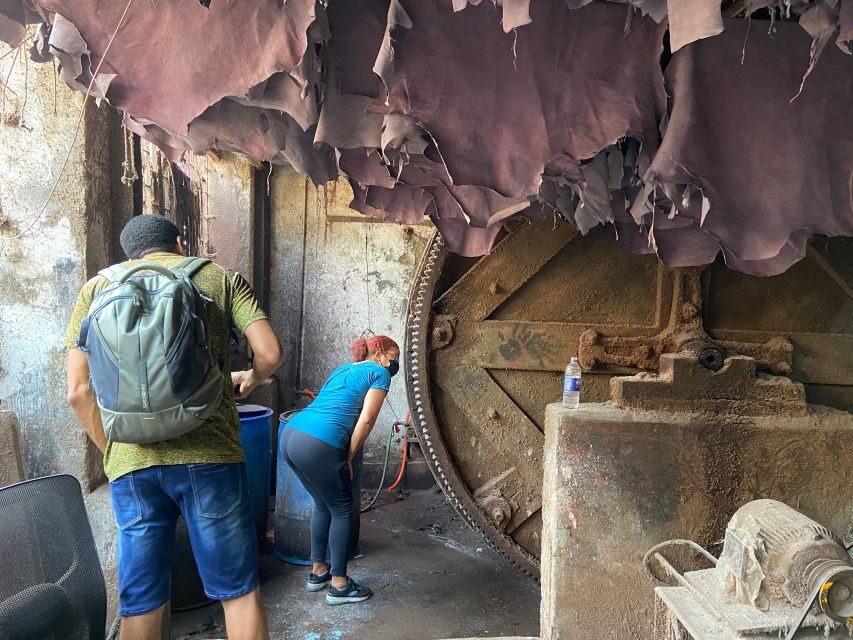
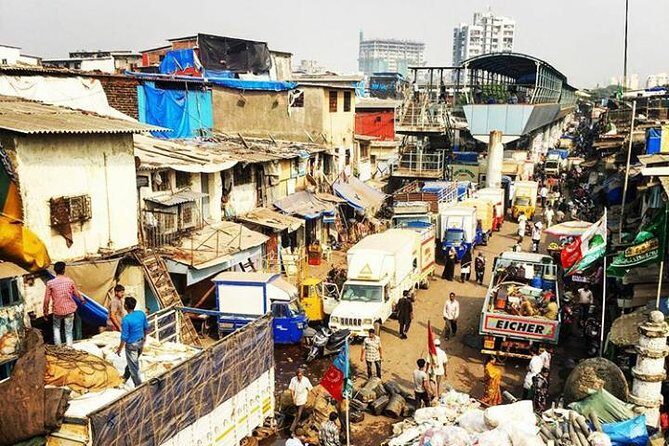
The route is built around what Dharavi does day to day. One of the most eye-opening parts is the recycling storyline. You’ll see plastic recycling, paper recycling, and aluminium recycling areas as part of a single walking thread. The point isn’t just to look at materials; it’s to understand how the community processes waste into value.
For you, that turns a common assumption upside down. Instead of thinking of “slum” as one thing, you start seeing “industry” as the organizing principle. Recycling isn’t treated like a side activity. It’s treated as part of a larger workflow that supports jobs and local businesses.
This is also where the guide’s role really matters. Guides mentioned in recent experiences, including Pooja, Varsha, Sneha, Anu, and Mahek, are repeatedly praised for clear explanations and for patience with questions. If you want to ask how one step connects to another, this is where your questions will land.
Soap Factories, Cloth Manufacturing, Leather Industries, and Pottery
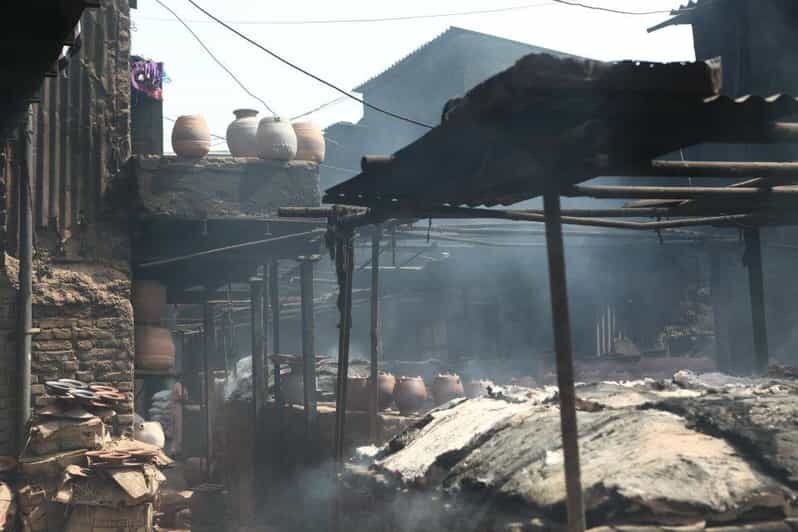
The tour then moves from recycling into other manufacturing and craft sectors. You’ll pass by places such as soap factories, cloth manufacturing, leather industries, and pottery. That set of stops matters because it shows Dharavi isn’t only recycling bins and back alleys. It’s also product work.
Here’s what I like about this structure: it gives you multiple lenses in one short time. You can compare processes. You can notice how raw inputs and finished outputs differ across sectors. And you can see the variety of skills that exist within the community.
Another detail that shows up in recent feedback is that guides often keep the walk coherent even when people get distracted by taking photos or stopping to ask questions. That keeps you from feeling like you’re wandering and losing the plot.
If your travel style is “tell me how things work,” this section is where the tour earns its ticket price.
Schools, Colleges, Markets, and Residential Areas
Not all “slum tours” focus on daily life. This one includes it. Along the walk you’ll see schools and colleges, plus markets and commercial areas, and you’ll also visit residential parts.
This is important because education and commerce reveal continuity. Work is one part of the story, but the tour also highlights how learning fits into everyday life and how local markets function as community infrastructure. By the time you reach the residential areas, you’re not just looking at labor scenes. You’re connecting labor to home life.
Recent guide-led experiences also highlight that the tone is often both human and practical. People mention guides asking the group along, making sure everyone is comfortable, and explaining clearly from firsthand familiarity. When the guide is from Dharavi, you tend to get less performance and more plain explanation of how roles work in the community.
You can also read our reviews of more guided tours in Mumbai






Ethical and Impactful, but Keep Your Expectations Grounded
The experience is described as ethical and impact-oriented. I think that’s less about slogans and more about behavior. You get value when you treat the tour as a conversation, not a wildlife exhibit.
So go in expecting real people and real work. You’re not going to get a polished “heritage walk.” You’re going to get transformation stories and human resilience, but also the facts of how a working community operates.
A balanced way to approach it: expect a mix of hope and weight. If you’re the type who wants everything to feel cheerful, you might struggle. If you’re open-minded and you’re okay with challenging your assumptions, this is the kind of tour that leaves a stronger mental imprint.
The First-Female Guide Element: Why the Tone Feels Different
This tour is led by a first female guide of Dharavi, and the guide element comes through strongly in feedback. Names that appear repeatedly in recent experiences include Pooja, Varsha, Sneha, Anu, Sarah, Mahek, and Anushka.
What gets praised most is not just English clarity (multiple guides are described as speaking excellent English), but how the guide handles people. The pattern is consistent: guides are patient, keep the group together, and answer questions directly and clearly. Some mentions also include humor, which helps when you’re walking through a subject that can feel heavy.
For you, that matters because the best tours don’t just give facts. They manage your pace, your attention, and your comfort. A resident guide also tends to frame what you’re seeing with context you can’t grab from search results.
Duration, Walking Pace, and What to Plan For
The tour runs around 2 to 2.5 hours. That timing is ideal for first-day logistics. You can fit it before or after other Mumbai plans without needing an all-day commitment.
Since it’s a walking tour inside Dharavi, plan for the basics: comfortable shoes and a water-friendly mindset, since bottled mineral water is included. Also, try to show up a few minutes early at Third Wave Coffee so you’re not rushed.
If you’re traveling with family or teenagers, feedback suggests the tour can work well for groups who can handle questions and discussion. The key is attitude: curiosity beats judgment.
Price and Value: $5 for a Local-Only Perspective
At $5 per person, this is one of the most affordable “deep understanding” activities in Mumbai. The obvious question is: how can such a low price include a guide, a walk, and bottled water?
Here’s the value logic you should use: you’re not paying for museum tickets or transport into a controlled site. You’re paying for access to a route and explanations that you couldn’t realistically piece together on your own. You’re also paying for someone to translate complex, everyday work into a story you can follow in a short walk.
When you compare that to typical guided tours in big cities, it’s the guide’s role that’s doing most of the heavy lifting. Recent feedback repeatedly highlights guides who are professional, attentive, and good with questions. For $5, getting a guide with that level of clarity is strong value.
One more practical note: because the price is low, the experience can feel like a “must-do” without breaking your budget. If you’re trying to experience authentic Mumbai without spending a fortune, this is a clean fit.
Photography, Questions, and Staying Respectful in Real Neighborhoods
The tour is built around real places and real activity. That means your behavior matters more than your camera.
Use your guide as the filter for what to ask and what to photograph. Several guides are praised for keeping groups together and helping people stay comfortable, so it’s okay to be a slower walker while you ask questions. If you’re the type who takes lots of photos, it helps to stay close so the guide can keep the flow.
Also, keep the tone respectful. The tour’s focus on resilience and transformation stories means your questions should aim to understand systems and experiences, not to reduce people to stereotypes.
If you go in with that kind of curiosity, you’ll get more from every stop.
Who Should Book This Tour (and Who Might Want Another Option)
This tour is a great match if you want:
- A first-day introduction to Mumbai that goes beyond postcards
- Clear explanations of how Dharavi functions as an economy
- A route that includes recycling, manufacturing work, education, markets, and residential life
- A guided experience led by a female resident, with English support and patient handling
It might not be ideal if:
- You only want scenic or classic landmark sightseeing
- You feel uncomfortable with heavy real-world topics and want everything light
- You dislike walking and short neighborhood routes
If you’re open-minded and you like learning by seeing work and asking questions, this is one of the most rewarding ways to spend a short window in Mumbai.
FAQ
How long is the Dharavi Slum Walking Tour?
The tour lasts about 2 to 2.5 hours, and the listed duration is 2.5 hours.
Where do we meet for the tour?
Your guide meets you outside Third Wave Coffee. If you cannot find the guide, you should contact the operator.
What does the tour cost?
The price is listed as $5 per person.
What language is the tour guide?
The live tour guide speaks English.
Is bottled water included?
Yes. Bottled mineral water is included.
What is included in the experience?
You get a walking tour with a guide, plus bottled mineral water.
Is free cancellation available?
Yes. You can cancel up to 24 hours in advance for a full refund.
Is there a reserve now and pay later option?
Yes. The experience offers reserve now & pay later, so you can book your spot and pay nothing today.
Should You Book This Tour or Skip It?
Book it if you want an honest, guided look at how Dharavi works day to day, with stops that connect recycling and manufacturing to education, markets, and residential life. The guide-centered approach is where the tour shines, and recent experiences repeatedly praise patient explanations, clear English, and thoughtful pacing from guides such as Pooja, Varsha, Sneha, Anu, and others.
Skip it if you’re looking for classic Mumbai monuments or if you know neighborhood reality tours will feel too intense for your travel mood. But if you’re the curious type who wants a real understanding of the city, this is a smart use of a first day in Mumbai.