REVIEW · MUMBAI
South Mumbai: Cultural Heritage Walking Tour
Book on GetYourGuide →Operated by Amaze Tours · Bookable on GetYourGuide
Mumbai’s buildings explain themselves. This guided South Mumbai heritage walking tour strings together the Gateway of India, the Taj Mahal Palace area, and the UNESCO-listed Chhatrapati Shivaji Maharaj Terminus so you get the big-picture story behind what you’re seeing. I especially love the way the guide ties architecture to everyday history, and I like the simple mid-walk chai stop that makes the whole thing feel local instead of museum-still. One thing to watch: there’s no hotel pickup, so you’ll need to get yourself to the meeting point at Pizza Express by the Gateway of India.
The small-group size (limited to 6) keeps the pace friendly and questions actually get answered. The tour runs in English with a live guide, and you’ll do mostly on-foot sightseeing with a short bus hop near the end to reach CSMT. Guides have included people like Loki, Maze, Dawood, Ganesh, and Dinesh, and the common thread is clear, story-driven explanations that turn landmark photos into something you understand.
In This Review
- Key highlights you’ll feel fast
- From Pizza Express to the Gateway of India: where the story starts
- Victorian power and everyday grandeur: Yacht Club, Police HQ, and college facades
- Kala Ghoda and Oval Maidan: the kind of guided walking that changes how you look
- Around Horniman Circle and the Asiatic Society: learning as architecture
- The CSMT finale: UNESCO design you can feel on the ground
- Price and value: why $16 makes sense for what you see
- Pace, footwear, and what to bring (and skip)
- About the guides: what you can hope for from Loki, Maze, Dawood, and more
- Should you book this South Mumbai heritage walk?
- FAQ
- Where is the meeting point for the tour?
- How long is the South Mumbai heritage walking tour?
- Is the tour in English?
- What is included in the ticket price?
- Is there any transportation during the tour?
- Do I need to bring an ID?
- Is it wheelchair accessible?
Key highlights you’ll feel fast
- Chai on the walk: you’re not just looking at history, you’re tasting the rhythm of Mumbai.
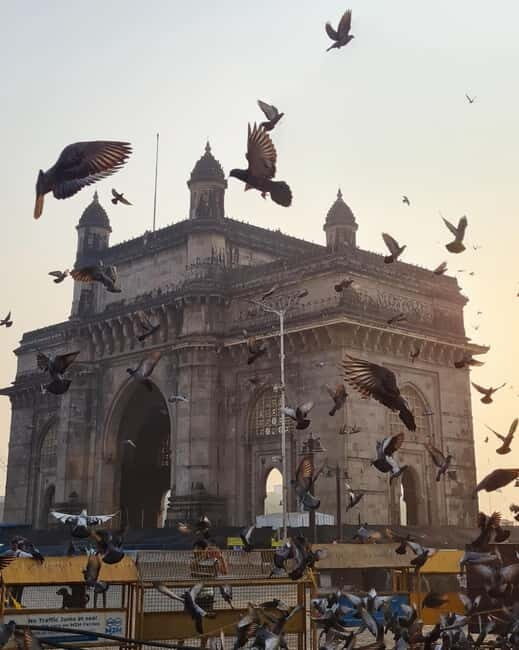
- Gateway of India + Taj Mahal Palace area: iconic sights, handled with practical context in a short time.
- Kala Ghoda and Oval Maidan: guided stops that help you read what’s around you beyond the facades.
- Asiatic Society of Mumbai: a library-focused visit that connects “learning” to the city’s architecture.
- UNESCO CSMT by guided visit: a short bus ride, then a proper look at one of India’s great stations.
- Small group (max 6): less crowding, more back-and-forth.
From Pizza Express to the Gateway of India: where the story starts
You meet at the entrance of Pizza Express next to the Gateway of India. It’s an easy anchor point, and once you’re there, the tour does what good walking tours should: it gets you moving quickly so South Mumbai doesn’t feel like one long wait.
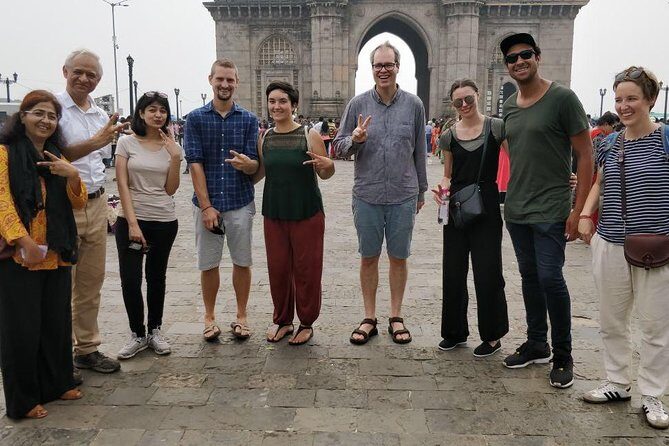
The first big stop is the Gateway of India with a guided look for about 20 minutes. This is the kind of place where you can take pictures all day, but what makes the visit worthwhile is how the guide frames what the monument is for and how it fits into Mumbai’s older layers. You’ll also get your bearings right away, since the rest of the walk flows from here.
From there, you pass by the Taj Mahal Palace, Mumbai for about 5 minutes. You’re not standing around in a photo queue; you’re catching sight lines and moving onward. That passing time matters because it keeps you from spending your whole morning staring at one corner while the tour’s real strength is the route you follow.
You can also read our reviews of more walking tours in Mumbai



Victorian power and everyday grandeur: Yacht Club, Police HQ, and college facades
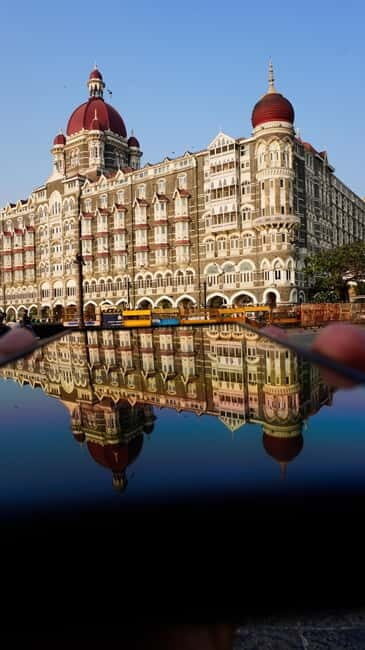
After the Gateway, the walking portion continues past some striking institutional buildings. Think: government, education, and old Mumbai elegance, all close enough to compare style changes while you’re still on your feet.
You’ll pass the Royal Bombay Yacht Club and the Maharashtra Police Headquarters. These are quick stops, but they’re useful because the guide’s explanations help you spot patterns in the city’s colonial-era design language and understand why these places were built where they were. Even if you only catch the highlights from the street, you’ll start noticing how entrances, boundaries, and architectural cues communicate status.
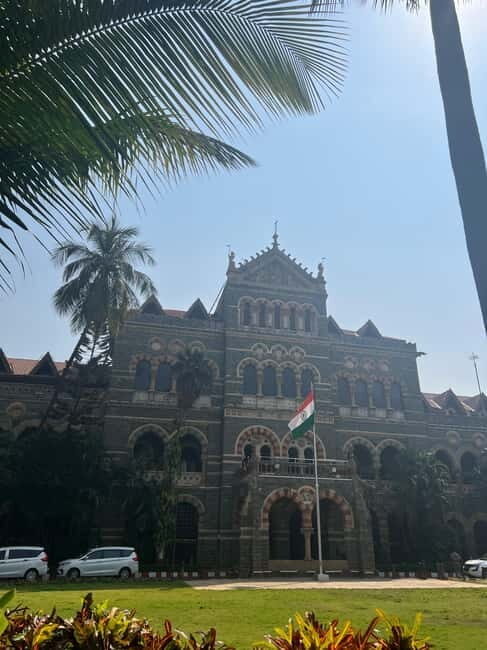
Next you’ll move by Elphinstone College. Colleges in old cities can be more than schools; they’re social hubs that signal what a city valued. A short walk-by can still be meaningful here because the guide connects the building to the broader South Mumbai story, so it doesn’t feel random.
Then there’s the David Sassoon Library. A library stop can either become a quick “yep, it exists” photo moment or a real insight into how education shaped public life. Here, you’re set up for the second option, especially because the day later returns to the theme of reading at the Asiatic Society of Mumbai.
Kala Ghoda and Oval Maidan: the kind of guided walking that changes how you look
The tour includes guided time in Kala Ghoda (about 15 minutes). This area is a sweet spot for understanding South Mumbai because you get a cluster of cultural and architectural elements in a walkable footprint. The guide’s job here is to help you see the ensemble as more than a set of buildings. You’ll likely come away with a better sense of how public spaces and institutions shaped each other over time.
After Kala Ghoda you’ll spend about 10 minutes at Oval Maidan with a guide. This is where I find walking tours pay off, because a large open space forces you to think. You start noticing how the buildings around the square form a visual frame and how the layout influences movement. It’s also a good mental reset: you’ve been scanning facades; now you’re reading the city’s “stage.”
From a practical standpoint, these two guided segments are what make the tour feel like more than a checklist. If you want a route that teaches you how to watch, this is where you’ll feel it most.
Around Horniman Circle and the Asiatic Society: learning as architecture
You’ll walk around Horniman Circle and then spend about 10 minutes at the Asiatic Society of Mumbai (with walking time included in that stretch). Horniman Circle is the kind of location where the street geometry and building rhythm make more sense once someone points out what to look for.
The Asiatic Society of Mumbai stop adds a strong “why this matters” layer. You’re not just collecting landmarks; you’re getting a sense of how institutions of knowledge took physical form in this part of town. Even if you’ve seen grand buildings elsewhere in India, this one helps you understand a specific Mumbai angle: education and civic life built into the skyline.
One thing I like about this portion is that it keeps your attention from drifting. Ten minutes is long enough to absorb a theme, but short enough that you still feel like you’re moving toward the next highlight rather than waiting for the tour to move on.
The CSMT finale: UNESCO design you can feel on the ground
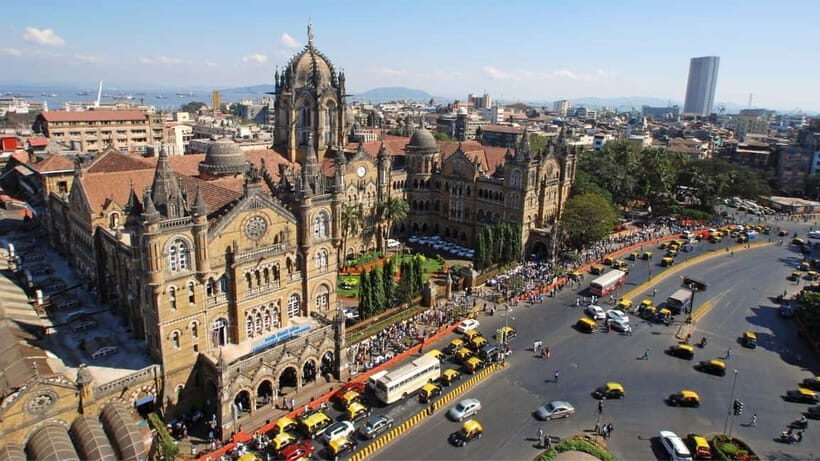
Near the midpoint, you’ll take a short bus ride to Chhatrapati Shivaji Maharaj Terminus (CSMT). The reason that bus hop is smart is simple: it saves time without stealing the experience. You arrive at CSMT ready to focus, not tired from a long slog.
At CSMT you’ll get a guided visit for about 10 minutes. This is your UNESCO payoff moment, and it works because the guide frames CSMT as both architecture and function. Stations like this aren’t just transportation; they’re city statements. When the guide connects design choices to the role the building played, CSMT stops being a stop on your itinerary and starts being an icon you understand.
At the end, the tour finishes with drop-offs at three spots: Mumbai Cruise Pirs, CSMT Viewing Stage, and Mumbai port. That’s helpful because you can walk off with a plan instead of getting dumped on a random corner.
You can also read our reviews of more historical tours in Mumbai





Price and value: why $16 makes sense for what you see
The price is listed at $16 per person for about 2.5 hours, and that’s a strong value if your goal is orientation plus storytelling. You’re paying for more than “standing near buildings.” You’re getting a live English guide, a cup of chai, and a tight route through multiple major South Mumbai landmarks.
Where the value really lands is the balance. The tour isn’t trying to cram in everything in one day, and it doesn’t feel like a slow, meandering stroll either. You get multiple guided moments (Gateway of India, Kala Ghoda, Oval Maidan, Asiatic Society, CSMT) plus pass-by architecture stretches where the guide helps you make sense of what you’re seeing.
Also, the small group limit of 6 matters for value. In smaller groups, you’re more likely to hear answers to questions and not just listen to a scripted script. When guides like Loki, Maze, Dawood, Ganesh, and Dinesh lead these tours, the vibe tends to be friendly and interactive, which is exactly what you want when you’re walking.
Pace, footwear, and what to bring (and skip)
This is a walking tour, about 2.5 hours total. Comfortable footwear is strongly recommended, because you’re doing several short walks between stops plus time spent on foot around circles and open spaces. If your shoes are too rigid or too thin, you’ll feel it before the CSMT segment.
A couple of practical notes:
- You’ll want an ID card; a copy is accepted.
- Baby strollers are not allowed.
- The tour is not suitable for wheelchair users.
None of this is a deal-breaker, but it’s important. You’ll be moving at a normal walking pace, and the route includes a bus ride only at the CSMT transition—not as a backup for mobility issues.
About the guides: what you can hope for from Loki, Maze, Dawood, and more
The tour’s English-speaking guides have names that come up often: Loki, Lokesh, Maze, Dawood, Ganesh, and Dinesh. The common thread I’d expect you to care about is how they handle the “small details” that turn a place into a story: why buildings face the way they do, how institutions developed, and what a monument meant beyond its postcard look.
If you’re the kind of person who likes asking questions mid-walk, this tour fits well. With only up to six people, you’ll likely get time to clarify what you’re looking at instead of being rushed through.
Should you book this South Mumbai heritage walk?
Book it if you want a time-efficient way to understand South Mumbai. It’s ideal for first-timers who feel lost when a city’s landmarks are just names on a map. The route is designed to give you a sequence: Gateway to Taj area, then cultural-institution neighborhoods, then the big UNESCO finish at CSMT.
Skip it (or choose a different style) if you need hotel pickup, if walking for 2.5 hours is hard for you, or if you rely on stroller use or wheelchair access. Also, if you want a deep, sit-down museum experience, this format is more about streets, architecture, and guided context than long indoor time.
If you’re in town for a short stay, this is a good use of one morning or afternoon. You’ll leave with a clearer sense of how Mumbai’s past shaped the city you’re standing in right now, plus you’ll get a real little break with chai that feels like part of the day, not an extra.
FAQ
Where is the meeting point for the tour?
You meet at the entrance of Pizza Express next to the Gateway of India.
How long is the South Mumbai heritage walking tour?
The tour lasts about 2.5 hours.
Is the tour in English?
Yes, the live tour guide speaks English.
What is included in the ticket price?
Your ticket includes a tour guide, a cup of chai, and the walking tour.
Is there any transportation during the tour?
Yes. After the walk segments, you take a short bus ride to visit Chhatrapati Shivaji Maharaj Terminus (CSMT).
Do I need to bring an ID?
Yes. You should bring an ID card; a copy is accepted.
Is it wheelchair accessible?
No, the tour is not suitable for wheelchair users.