REVIEW · MUMBAI
Private 8 Hours Mumbai City Sightseeing and Dharavi Slum Tour
Book on Viator →Operated by Mumbai Dream Tours · Bookable on Viator
Mumbai keeps two stories side by side. This private 7–8 hour ride strings together British-era landmarks and a Dharavi area walk with a guide who lives there, with pickup in an air-conditioned vehicle.
I like the way the day gives quick context through major sights, including UNESCO Victoria Terminus (CST), plus the everyday intensity of Dhobi Ghat. I also love that the human element is real, and the reviews specifically highlight Rakesh for tailoring the pace and even keeping kids engaged.
One thing to plan for: parts of the visit involve walking and time outdoors, so heat and stamina can be a factor—especially during the slum sections.
In This Review
- Key things I’d plan around
- British-era Mumbai to Dhobi Ghat to Dharavi, in one long day
- Price and logistics: what you’re really paying for
- How the day starts: pickup, air-conditioning, and where you get your bearings
- Gateway of India to Victorian landmarks: fast context without feeling rushed
- Watson’s Hotel Ruins, Azad Maidan, and the city’s public rhythm
- UNESCO CST and the sea-view drive: the iconic plus the ordinary
- Mani Bhavan Gandhi Museum: one hour that changes the tone
- Hanging Gardens and Dhobi Ghat: Mumbai’s practical beauty
- The slum walking block: stories from someone who lives there
- Dharavi (2 hours): what the tour emphasizes, and why it matters
- Driving past extra landmarks: the quick hits that add up
- Comfort and ethics: how to make this kind of day go smoothly
- Guide quality: why the reviews keep pointing to Rakesh
- Should you book this Mumbai + Dharavi private tour?
- FAQ
- How long is the Private 8 Hours Mumbai City Sightseeing and Dharavi Slum Tour?
- Is hotel pickup and drop-off included?
- Is the tour private?
- Are any entrance tickets required?
- Is food included in the tour price?
- Can I cancel for a full refund?
Key things I’d plan around
- Private, up-to-2 group size keeps it flexible when your timing is tight
- Hotel pickup/drop-off from South Mumbai saves time and hassle in traffic
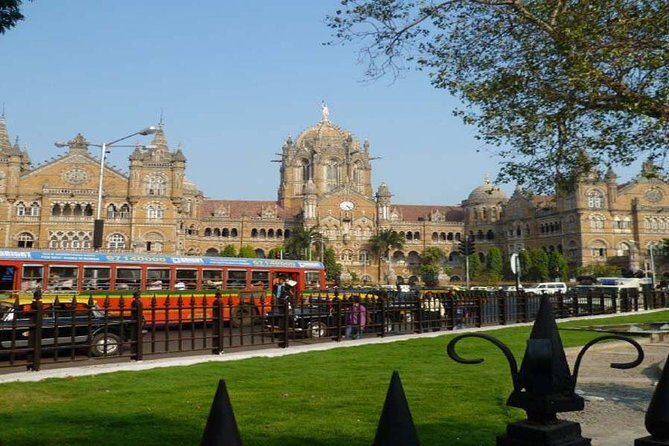
- UNESCO Chhatrapati Shivaji Maharaj Terminus (CST) anchors the British-era stretch
- Dhobi Ghat gives you a look at public laundry life up close
- Slum visit with a guide who lives there makes the stories feel grounded, not scripted
- Two big on-foot blocks (slum walking and Dharavi) mean you should wear good shoes
British-era Mumbai to Dhobi Ghat to Dharavi, in one long day
Mumbai is a city of contrasts you can feel in your feet. In a single day, you move from grand colonial buildings and famous rail architecture to working city life you can watch with your own eyes—then finish with a guided look at Dharavi, one of Asia’s best-known informal communities.
What makes this tour work is the pacing: you get classic “postcard” Mumbai along the way, but you also get moments that feel more like real life than sightseeing. That balance is why I think this fits people who want both the architecture and the human stories, without spending your whole trip only staring at monuments.
You can also read our reviews of more city tours in Mumbai


Price and logistics: what you’re really paying for

This tour costs $153.08 per group (up to 2) for a 7 to 8 hour experience. That pricing is worth thinking about because it’s private—so you’re paying for a guide plus round-trip hotel transfers, not a seat on a big bus.
Also, the tour description lists admission ticket free for the stops it names. So if you’re watching costs, you’re mostly paying for transport and the guided segments rather than entrance fees. The one thing not included is food and drink, so plan to budget or pack accordingly.
There’s also a practical bonus: you get a mobile ticket and hotel pickup and drop-off from South Mumbai. If you’re basing yourself in that part of the city (most first-timers do), it reduces stress on a day when you’re moving around a lot.
One more logistics note: the tour is private, so it’s only your group. That matters on a day with both driving and walking—your guide can slow down or adjust the route when needed.
How the day starts: pickup, air-conditioning, and where you get your bearings
The morning setup is designed for comfort. You’ll be collected from your South Mumbai hotel, then you travel in an air-conditioned vehicle between the major sights. That cooling break matters in Mumbai, where the weather can feel like it’s trying to win an argument.
From there, the route is a classic “orientation loop.” You start at the Gateway of India, then work your way through recognizable British-era landmarks, major civic buildings, and sea-facing streets. The pattern is useful because it helps you understand where things sit relative to each other—what’s along the water, what’s inland, and where the railway architecture fits into the city’s layout.
Gateway of India to Victorian landmarks: fast context without feeling rushed

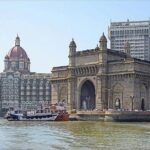
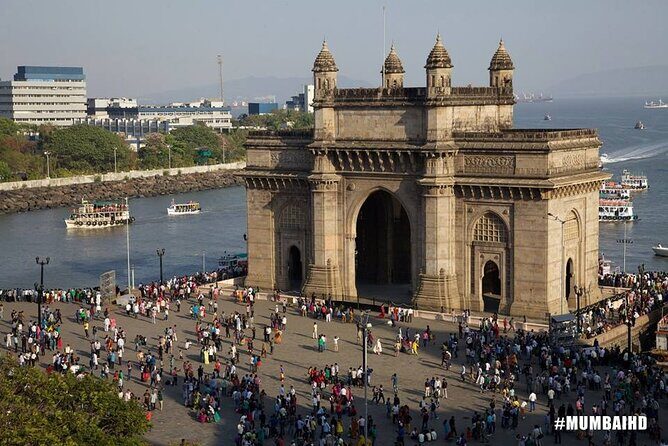
Stop 1: Gateway of India (15 minutes)
This is the big welcome arch on the waterfront, built to commemorate the visit of King George V and Queen Mary. Even if you’ve seen it in photos, it’s the kind of place where the scale hits you in person. It’s also a good starting point because it gives you a sense of Mumbai’s colonial-era connection to the sea.
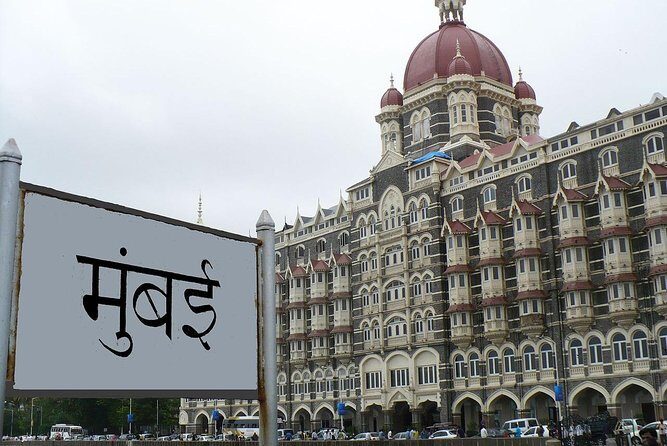
Stop 2: Taj Mahal Palace Hotel (10 minutes)
Right after, you’ll pass the iconic Taj Mahal Palace Hotel area. You won’t spend a long time here, but it works as a quick landmark moment—part of building your mental map of where Mumbai’s “old power center” sits.
Stop 3: University of Mumbai Library (5 minutes)
This is a smaller stop, but it’s the kind that helps you notice style. The library building dates to 1857 and reflects the British-era civic “institution” look: formal, symmetrical, and meant to last.
Stop 4: Rajabai Clock Tower (5 minutes)
Often called the Big Ben of India, the Rajabai Clock Tower is one of those sights that makes you look up without trying. It’s not just a pretty clock face—it’s also a reminder that the rail and education infrastructure of the British period shaped how the city developed.
Watson’s Hotel Ruins, Azad Maidan, and the city’s public rhythm
Stop 5: Watson’s Hotel Ruins (5 minutes)
Watson’s Hotel is described as ruins, and the story goes that Tata was refused entry, leading to the creation of the Taj Mahal Hotel. I like stops like this because they explain the “how” behind the skyline—you learn why certain buildings exist, not just what they look like.
Stop 6: Azad Maidan (Oval Cricket Ground area, 5 minutes)
This open space is tied to cricket culture, described as the place where people play the beloved sport in India. Even in a short stop, it adds an important Mumbai ingredient: not everything here is about colonial stone. It’s also about everyday public life and how sports occupy big open grounds.
Stop 7: Bombay High Court Principal Bench (5 minutes)
The Bombay High Court building is highlighted as a British heritage structure. In practice, this stop helps you see how government buildings were designed to project order and authority.
You can also read our reviews of more private tours in Mumbai




UNESCO CST and the sea-view drive: the iconic plus the ordinary
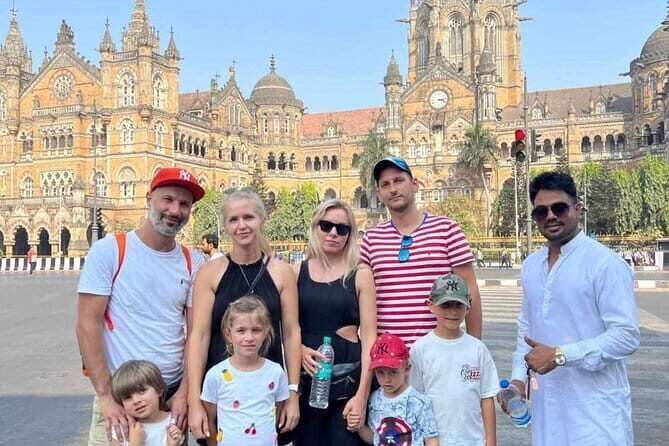
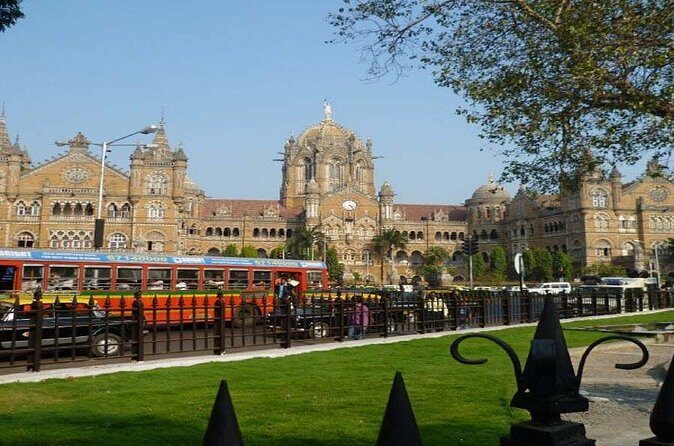
Stop 8: Victoria Terminus (Chhatrapati Shivaji Maharaj Terminus), 15 minutes
This is the UNESCO anchor of the tour. The Victoria Terminus train station (CST) is one of Mumbai’s most famous rail architecture scenes, and the time here is long enough to actually register details: the grandeur, the stonework, and the sense that the station is a city landmark, not just transportation.
Stop 9: Marine Drive and Chowpatty beach (drive past, 15 minutes)
Then you get the sea air vibe through the car. Marine Drive is a landmark street; Chowpatty beach is nearby. Even though it’s a drive-past moment, it’s useful for connecting Mumbai’s architecture to its coastal identity.
At this stage, you’ve covered big visuals. That matters because it makes the later neighborhoods feel more meaningful, not random. You’re moving from “official Mumbai” to the city’s everyday systems.
Mani Bhavan Gandhi Museum: one hour that changes the tone
Stop 10: Mani Bhavan Gandhi Museum (1 hour)
This is your time-buffer and your tone-shifter. Instead of only architecture and street scenes, the day slows down with a museum visit. The key point here is pacing: after the quick landmark stops and driving, you get a full hour where you can focus and learn without sprinting.
For me, a museum hour is often the difference between a tour that feels like a checklist and one that feels like you understand why people remember certain places. Even if your interests are mostly in buildings, it gives context for the social story of the city.
Hanging Gardens and Dhobi Ghat: Mumbai’s practical beauty
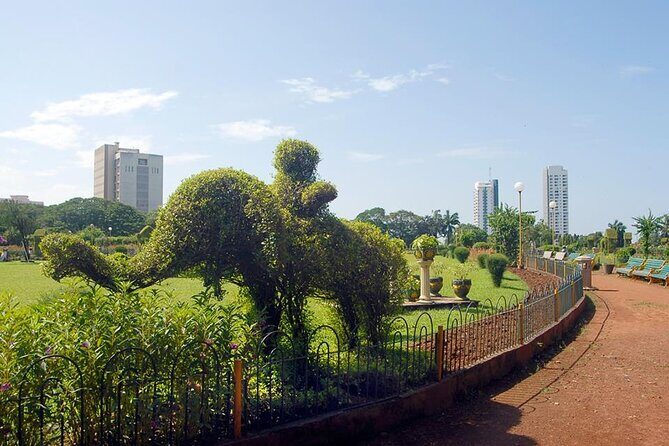
Stop 11: Hanging Gardens (30 minutes)
You’ll visit Hanging Gardens, described as gardens built on top of water tanks near the Tower of Silence, linked to Parsi burial traditions. The idea that water management and garden spaces are connected is one of those Mumbai details that makes the city feel engineered, not just picturesque.
Stop 12: Dhobi Ghat (15 minutes)
This is one of the most memorable parts of the day because it’s working life in public. Dhobi Ghat is an open-air laundry where clothes are washed in full view of the street.
A practical note: Dhobi Ghat can be busy and visually intense. The quick stop is a plus, not a downside—it lets you see the scale without exhausting yourself before the longer walking blocks later.
The slum walking block: stories from someone who lives there
Stop 13: Slum walking (2 hours, admission ticket free)
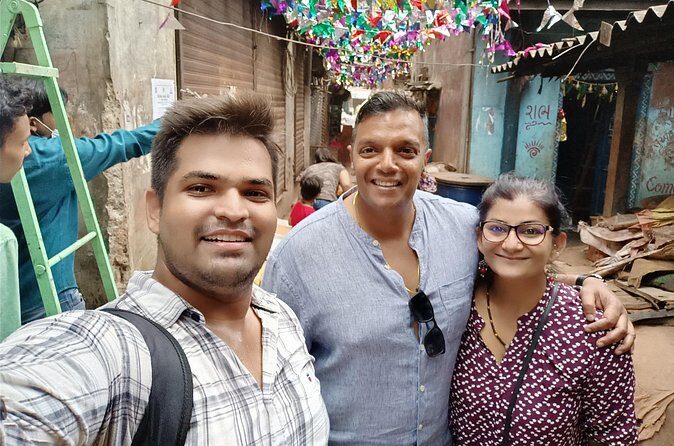
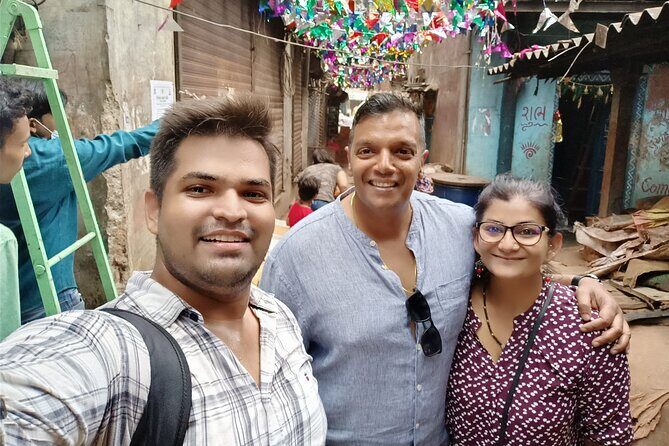
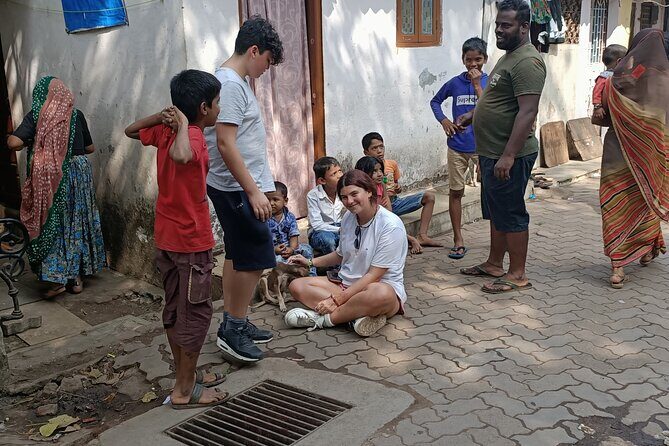
This portion is described as slum walking with visits linked to the slum where scenes from Slumdog Millionaire were shot, guided by someone connected to the community. The emphasis here isn’t on spectacle. It’s on interpretation—helping you understand how people live, work, and organize daily life in dense spaces.
What I value most in this kind of segment is that it’s guided by a person who knows the neighborhood from the inside. When the guide lives there, you usually get details that don’t fit into a signboard explanation.
A consideration: this is also where sensitivity matters. If you’re thinking about photos, keep your expectations realistic and follow your guide’s cues. The goal is respect, not a social-media snapshot.
Also, it’s a long block—two hours on foot means you should treat shoes like part of your sightseeing budget. If you have mobility limits, mention it early so the guide can help you plan the pace.
Dharavi (2 hours): what the tour emphasizes, and why it matters
Stop 14: Dharavi (2 hours, admission ticket free)
The tour frames Dharavi as one of Asia’s largest slums, with a major note on economic output—stated as approximately $1 billion annually. It also references how revenue comes from informal recycling industry and related work.
Even if you’ve read about Dharavi before, what you’re likely to get on the ground is a view of how an economy can form inside tight spaces. You’re not just seeing poverty; you’re seeing systems—work patterns, trade, and community infrastructure shaped by necessity.
Why that matters for you: many visitors leave with a one-note story about slums. This tour’s structure pushes you toward a more accurate takeaway: complexity. Dharavi is working life, not just hardship.
Driving past extra landmarks: the quick hits that add up
Between the big stops, the tour also includes driving past several British heritage landmarks, including areas like Flora Fountain and Hutatma Chowk, the Telegraph Office, the India Post Office Building, and Kala Ghoda.
These are quick-pass moments, but they help you connect the dots. If you like architecture, you’ll enjoy spotting details even from the car—then later you’ll recognize styles you saw earlier.
Comfort and ethics: how to make this kind of day go smoothly
This tour mixes air-conditioned transport with longer walking segments. That means it’s not just about what you see—it’s about how you manage your body through the day.
Here are the practical points I’d plan around:
- Wear comfortable shoes since the walking time includes both the slum section and Dharavi
- Use sunscreen and consider a light layer, since you can’t control the weather but you can control your comfort
- If you have mobility concerns, you should communicate early; the tour’s own reviews highlight that the guide adjusted support for an elderly traveler who couldn’t walk far in the heat
- For photography, follow your guide’s lead and keep interactions respectful
This is also where the guide’s presence matters most. The experience is set up for a guided visit, not an unguided wander, which helps keep the visit thoughtful.
Guide quality: why the reviews keep pointing to Rakesh
The strongest praise in the feedback centers on the guide experience, and one name shows up clearly: Rakesh. In one review, Rakesh tailored the tour because a family was between flights that day. In another, the guide adjusted support for an elderly traveler who couldn’t walk long distances in hot conditions.
That kind of responsiveness is exactly what you want on a day that includes both driving and walking in busy areas. It’s also what makes a private tour feel like it fits you, not the other way around.
Should you book this Mumbai + Dharavi private tour?
I’d book it if:
- you want a one-day introduction to both colonial landmarks and working neighborhood life
- you like UNESCO-level architecture but also want reality on the ground
- you appreciate a local guide connection for the slum and Dharavi sections
- you’re staying in South Mumbai and want hotel pickup and drop-off
I might think twice if:
- you’re looking for a purely relaxed sightseeing day with minimal walking
- your schedule can’t handle a 7–8 hour block with two longer on-foot segments
- you want food included (it’s not)
FAQ
How long is the Private 8 Hours Mumbai City Sightseeing and Dharavi Slum Tour?
It runs about 7 to 8 hours.
Is hotel pickup and drop-off included?
Yes. Round-trip transfers from South Mumbai hotels are included.
Is the tour private?
Yes. It’s a private tour, and only your group participates.
Are any entrance tickets required?
The tour details list admission ticket free for the named stops.
Is food included in the tour price?
No. Food and drink are not included.
Can I cancel for a full refund?
Yes, free cancellation is available up to 24 hours in advance for a full refund.