REVIEW · MUMBAI
Mumbai: Guided City Sightseeing Tour
Book on GetYourGuide →Operated by Amaze Tours · Bookable on GetYourGuide
Mumbai is loud; this tour helps you focus. I like that you can customize your day around what you actually want to see, not a fixed script. I also like the air-conditioned car that makes the city’s heat and traffic feel manageable. The one drawback: several big-name stops are photo-and-walk style, so if you crave long museum time at every location, you’ll want to add a focused day elsewhere.
For first-time Mumbai visits, this kind of route is ideal. You’ll hit the iconic coastline views, heritage architecture, and everyday neighborhoods without feeling trapped on your own. And the guide quality matters here—names like Dawood, Ganesh, Dinesh, and Maze come up again and again for clear English, quick explanations, and a friendly way of handling questions.
One more consideration: Mumbai traffic can be chaotic, so you’ll need a bit of flexibility with timing and walking comfort. This tour handles it well with a driver who gets you from stop to stop, but your day still moves at street speed.
In This Review
- Key points before you go
- How the custom route keeps Mumbai from feeling like a checklist
- The 6-hour core loop vs the 8-hour Mumbai day
- The tighter 6-hour version
- The longer 8-hour version
- Gateway of India and Colaba: start with the harbor mood
- Quick tip
- CSMT and the heritage corridor: architecture you can actually read
- The best way to experience it
- Crawford Market and Marine Drive: where the city smells like Mumbai
- Practical advice
- Mani Bhavan and Banganga Tank: two stops that add context fast
- Why I like this combination
- Hanging Gardens and Dhobi Ghat: Mumbai’s scenic breaks and real work
- What makes the Dhobi Ghat visit worth it
- Adding Dharavi (and Dadar Flower Market) for a more complete Mumbai
- How to approach it
- Transport, timing, and what to pack for heat and chaos
- What to bring
- Price and logistics: why $10 can feel like a fair deal
- The value test
- Who this Mumbai tour suits best
- Should you book this Mumbai guided city sightseeing tour?
- FAQ
- How long is the Mumbai city sightseeing tour?
- What are the main attractions included?
- Can I customize what we see?
- Is there an option that includes Dharavi?
- Where do I meet the guide?
- Is hotel pickup available?
- What language is the tour guide?
- Is food included?
- Are entrance fees included?
- Can I bring alcohol in the vehicle?
- Is there free cancellation?
Key points before you go
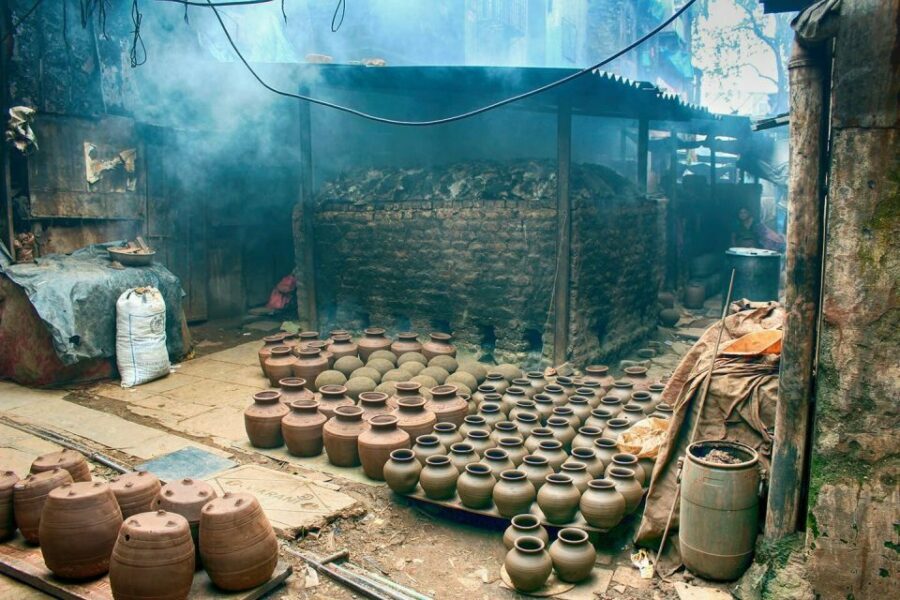
- Choose-your-stops flexibility: Tell your guide what you want most, and the route adjusts.
- Comfort beats endurance: You’re in an air-conditioned vehicle between short walks.
- Iconic + real Mumbai: Gateway of India, CSMT, markets, temples, and Dhobi Ghat.
- Optional neighborhood add-on: The longer day can include Dadar Flower Market and Dharavi.
- No commissioned shopping pressure: The tour is built for seeing, not hard selling.
How the custom route keeps Mumbai from feeling like a checklist

This is the kind of tour that works because it respects reality. Mumbai isn’t laid out like a neat museum campus. It’s layered, crowded, and fast-changing. So instead of you forcing the city to fit your schedule, the guide can shape the day around your interests—architecture, street life, culture, photography, or even a specific storyline you want to understand.
You’ll also get the comfort side built in. Pickup and drop-off mean you don’t burn energy figuring out local transport for each leg. The vehicle is air-conditioned, which matters a lot when your sightseeing includes walking by the harbor, heritage stations, and open-air places.
And yes, there’s value for the money. At around $10 per person, what you’re buying is not just a list of places—it’s a guided interpretation of how those places connect, plus transport and entrance fees that are included. The result is a “see more, stress less” day.
A small planning note: the tour isn’t a slow wander. Some sites are short—think pass-by or photo stop—so the best approach is to prioritize your top 2 or 3 must-sees before you start.
You can also read our reviews of more guided tours in Mumbai

The 6-hour core loop vs the 8-hour Mumbai day
You can shape this tour into either a shorter or longer outing.
The tighter 6-hour version
Plan on the classic south Mumbai overview: Gateway of India and Colaba area, a pass near the Taj Mahal Palace, CSMT (Chhatrapati Shivaji Maharaj Terminus) and other nearby heritage viewpoints, plus stops like Banganga Tank, Mani Bhavan, and Dhobi Ghat. You’ll also get time around lively spots such as Crawford Market and Marine Drive.
This is a great pick if:
- you’re on a port day or time crunch,
- you want the main sights without a marathon,
- you’d rather save extra time for a separate neighborhood later (or a beach day).
The longer 8-hour version
The longer schedule adds Dadar Flower Market and Dharavi. That gives your day a stronger “two Mumbais” contrast: polished heritage and busy civic spaces, alongside neighborhoods where daily life and local enterprise dominate the scene.
Choose the 8-hour day if:
- you’re curious about how Mumbai works beyond postcard spots,
- you want a more human, community-focused perspective,
- you’re comfortable with open-air walking and learning on the go.
Either way, you’ll end back at your drop-off location (often your hotel zone), with the guide helping keep the pacing realistic.
Gateway of India and Colaba: start with the harbor mood
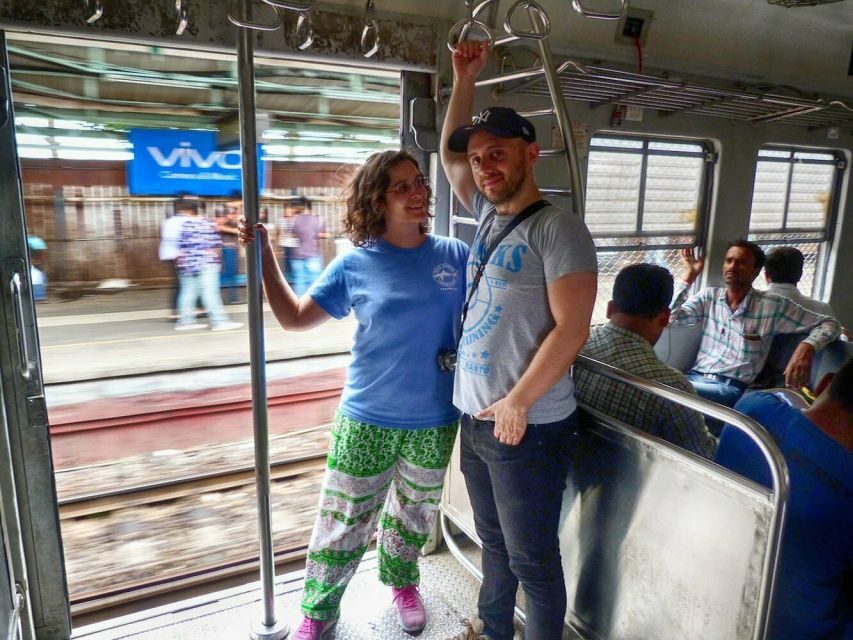
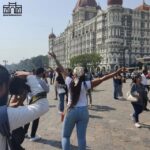
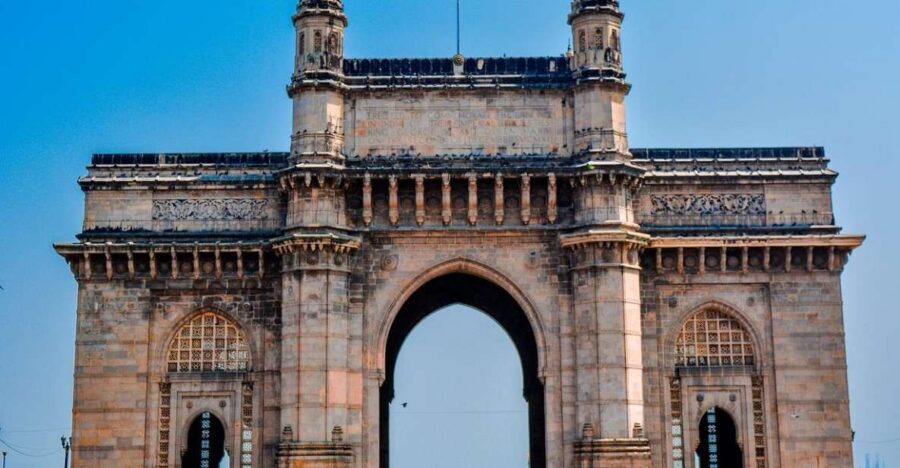
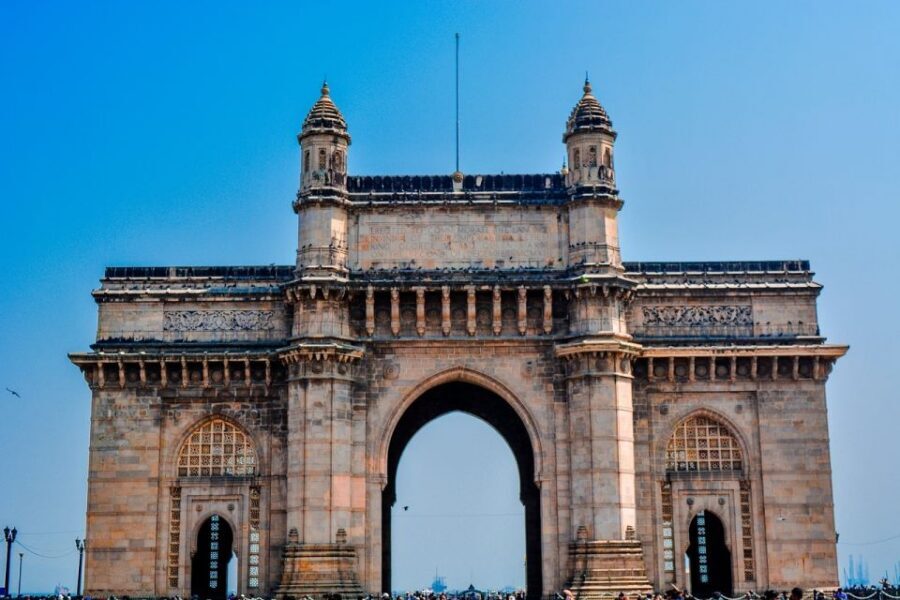
Your day often begins near the cruise-terminal area and quickly lands you at Gateway of India, a harbor-facing landmark that anchors south Mumbai’s image. Even if you’ve seen it in photos, it hits differently in person—planes of sea air, busy foot traffic, and that classic monument framing.
From there, you’ll move through the Colaba area for photos and walks. This is where you get to notice how Mumbai feels at street level: shopfronts, crowds, and the constant motion that guides the rest of your day.
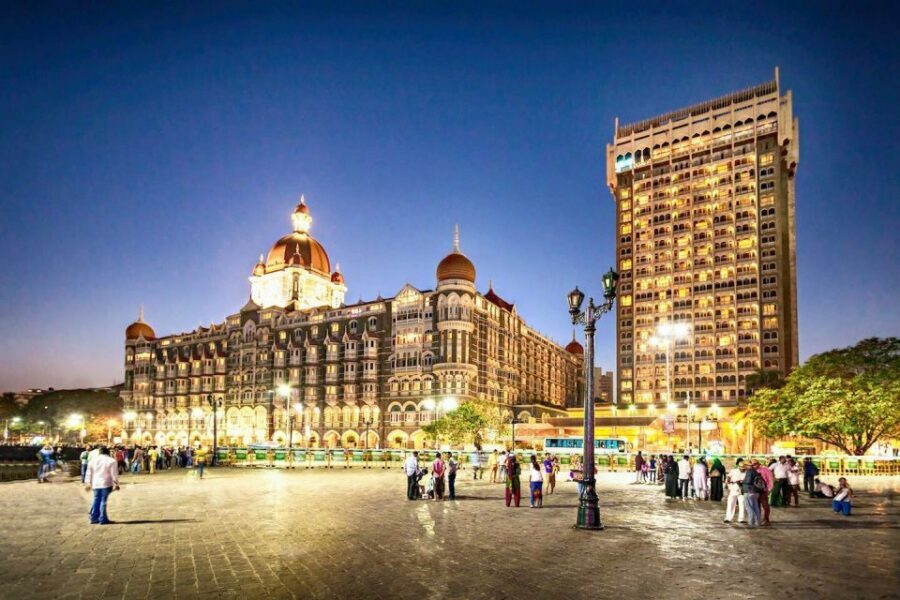
You’ll also pass by the Taj Mahal Palace, usually a quick look rather than a sit-down stop. Use this moment to enjoy the architecture from the outside—then let your guide steer you toward other spots where you can actually spend time.
You can also read our reviews of more city tours in Mumbai


Quick tip
If you care about photos, ask your guide where the best angles are before you start walking. It saves time and stops you from wandering in circles with a camera in the heat.
CSMT and the heritage corridor: architecture you can actually read
One of the biggest draws here is Chhatrapati Shivaji Maharaj Terminus (CSMT). You’ll get both a photo stop and time to visit. It’s one of Mumbai’s signature heritage buildings, and having a guide makes it easier to understand what you’re seeing—because the station isn’t just a train hub. It’s an entire architectural statement.
Around this region you may also stop near places like Kala Ghoda and the Asiatic Society of Mumbai. Even when some stops are short, they work as stepping stones: you start to see how the city’s colonial-era layers and local identity sit side by side.
CSMT area also pairs well with the way Mumbai traffic works. By placing the heritage section earlier in your day (when possible), you reduce the chance of feeling rushed through the most detailed parts.
The best way to experience it
Go with a camera mindset, but also a “slow gaze” mindset. Look at the building lines, the sculptural details, and the ways people move through the station area. Your guide’s explanations help you notice patterns you’d otherwise miss.
Crawford Market and Marine Drive: where the city smells like Mumbai
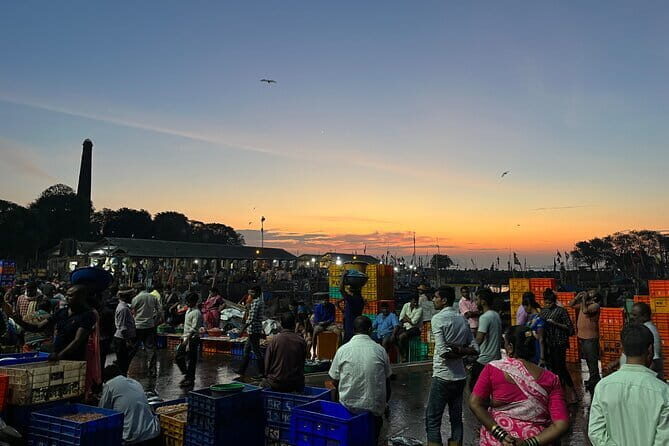
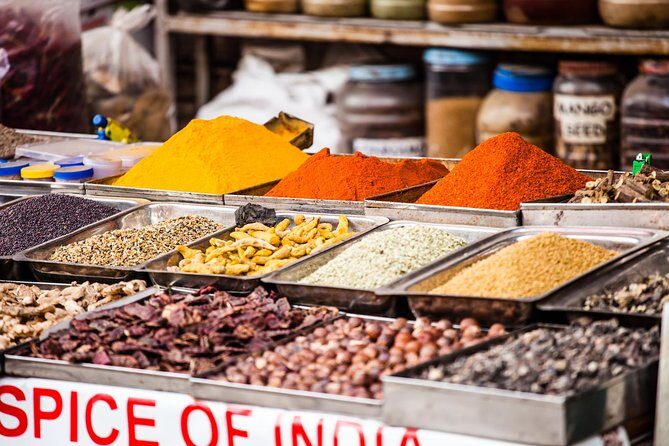
Crawford Market is one of those stops that gives you an instant sensory hit. You’ll likely do a photo stop and walk through, with time for sightseeing and shopping if you want it. It’s known for market energy and the presence of spices and local goods, and it’s a good place to see daily commerce up close.
A balanced note: this is not the kind of tour that pushes hard selling. The experience is designed to avoid commissioned shopping traps. If you want to browse, you can. If you want to keep your hands in your pockets and just observe, your guide should support that too.
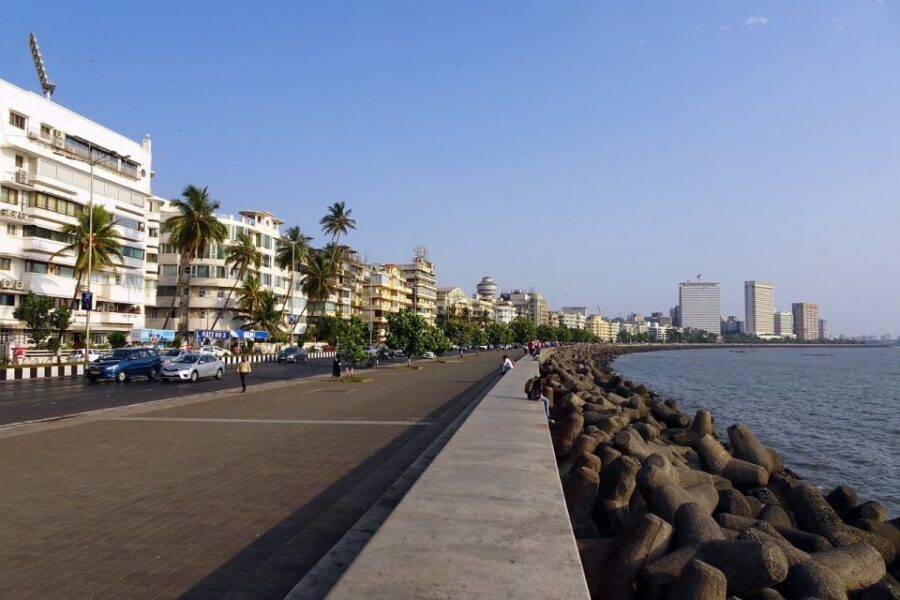
Then you’ll transition toward Marine Drive, a famous seafront strip where the city’s skyline and road life blend together. Expect a photo stop plus a walk. It’s ideal for a slower breath between busier stops.
Practical advice
Wear shoes you can walk in for at least 30–45 minutes total across the day. Market cobbles and uneven sidewalks aren’t dangerous, but they’re not forgiving if you show up in fragile footwear.
Mani Bhavan and Banganga Tank: two stops that add context fast
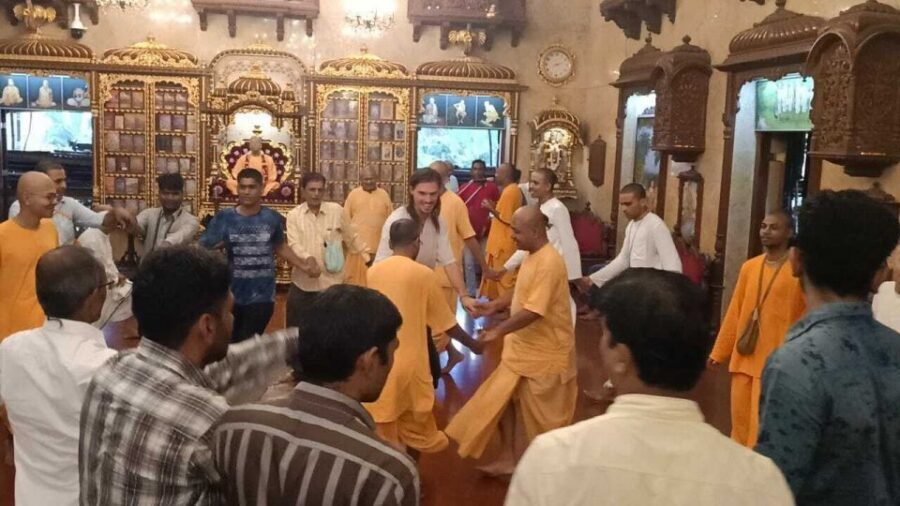
Mani Bhavan is often the kind of stop that changes your tone for the rest of the day. You’ll get time for a visit and walk-through. It’s strongly linked to Mahatma Gandhi’s time in Mumbai, and it can feel more grounded than pure sightseeing. Even in a short visit window, it helps you connect Mumbai’s landmarks to real people and choices.
After that, you may head to Banganga Tank. This is another quick walk-and-sightseeing type stop, where you get a sense of religious and neighborhood life around a historic water tank. The value here is that it shifts you away from just “big sights” into places where locals experience the city day to day.
If your schedule includes Jain Temple (often a pass-by), your guide can help interpret what you’re seeing in context—especially if you’re used to temples being presented without the street-level setting around them.
Why I like this combination
Mani Bhavan gives a story. Banganga Tank gives a setting. Together they make Mumbai feel less like a collection of stops and more like a working city.
Hanging Gardens and Dhobi Ghat: Mumbai’s scenic breaks and real work
Hanging Gardens is usually a photo stop with time to visit and walk. If the light and weather cooperate, this is a pleasant pause—an elevated break from street-level crowds. It’s also a good spot to rehydrate mentally before you head to more active, open-air areas.
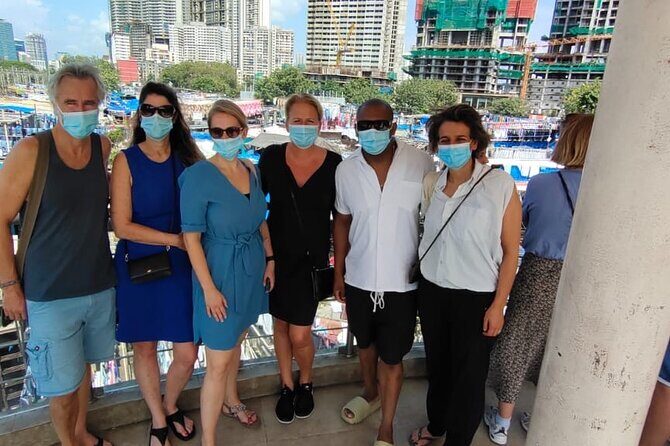
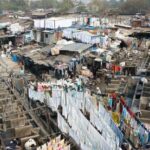
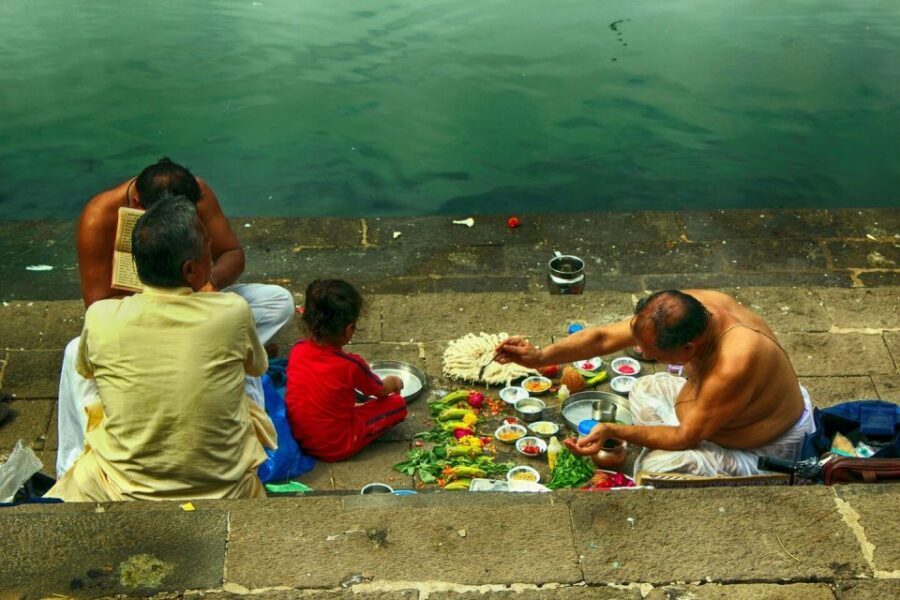
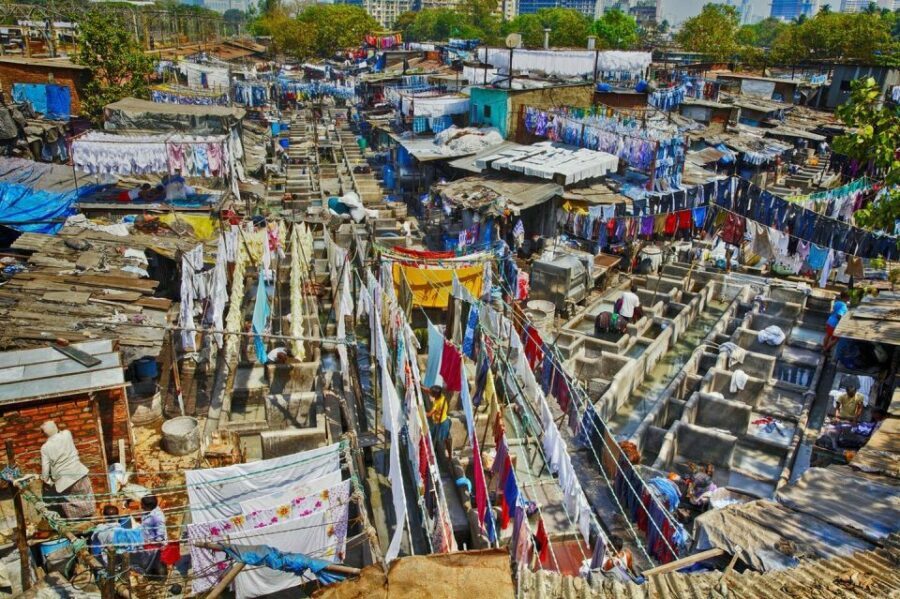
Then comes Dhobi Ghat, the open-air laundry. This is one of the most striking parts of the day because it’s not staged. You’re watching daily work—water, rhythm, and labor—happen in public view.
Expect a photo stop plus time to see the laundry bay. It’s worth keeping your camera use respectful. Move slowly, ask if there’s a good spot for photos, and remember that this is a place people rely on for work.
What makes the Dhobi Ghat visit worth it
It’s one of those moments where Mumbai’s “behind-the-scenes city life” becomes visible. A good guide helps you see it beyond the spectacle—so you understand the practical reality of why it’s there and how it functions.
Adding Dharavi (and Dadar Flower Market) for a more complete Mumbai
If you choose the longer day, you’ll often add Dadar Flower Market and Dharavi.
Dadar Flower Market adds color and movement in a different way than Crawford. Expect market energy plus a chance to see how goods flow through the city—especially the pace of life around a flower hub.
Then Dharavi becomes the emotional center of the itinerary for many people. With the right guide, it’s not just a “slum tour.” It becomes a lesson in how complex communities can be—how people create work, build community networks, and maintain industry in limited space.
The reviews I see repeatedly mention Dharavi as an eye-opener, with guides like Alam, Ganesh, and Maze described as strong at explaining the complexity of daily life. Some solo travelers also mention feeling safe with experienced local guidance. That doesn’t mean it’s a casual walk—this is still an active neighborhood with real people and real spaces—but it does mean the experience is handled with care when you have a guide.
How to approach it
Be calm. Keep your interactions respectful. Ask your guide what’s appropriate and follow their lead. This is a place for learning, not filming for shock value.
Transport, timing, and what to pack for heat and chaos
The tour’s transport plan is a big part of why it works. You’re in a private or small-group setup with a driver, and pickup/drop-off reduces your stress. The car being air-conditioned is the obvious win, but what matters is how it supports timing: you can pack in multiple areas without burning energy in traffic.
Guides you might be assigned—people like Dawood, Ganesh, Dinesh, Alam, and Maze—are often praised for pacing the day and keeping things smooth. Drivers named in reviews include Loki, Azeb, Mukhtar, and Prabkar, with repeated mentions of safe, prompt driving in chaotic roads. Some guides also show helpful extras when conditions shift, like carrying an umbrella in rainy weather or bringing along small comforts like water.
What to bring
Use the tour’s suggested checklist seriously:
- comfortable shoes
- sunglasses and a sun hat
- camera (or phone with enough storage)
- hand sanitizer or tissues
- a face mask or protective covering
Mumbai can swing between harsh sun and sudden rain, and open-air stops mean you’ll feel it.
Also: alcohol isn’t allowed in the vehicle. Plan around that and keep water within reach.
Price and logistics: why $10 can feel like a fair deal
At about $10 per person, this tour is unusually priced for what’s included. You get:
- pickup and drop-off
- air-conditioned car with driver
- English-speaking tour guide
- entrance fees
- all taxes and parking fees
What you don’t get:
- food
- Prince of Wales Museum
That split is important. If you want included meals, you’ll need to budget for food separately. But if you’re the type who prefers a quick snack whenever the day allows, not a forced lunch, this setup can actually be better.
Also, entrance fees are included, which prevents one of the most common problems on cheap city tours: the “surprise costs” game. Here, the structure is meant to keep you moving and seeing.
The value test
If you’re a first-time visitor who wants a guided, high-coverage day with major stops plus local context, this is good value. If you already know Mumbai well and just want to hop between a few points on your own, the guide may feel less necessary.
Who this Mumbai tour suits best
I’d recommend it if you:
- want a first-time overview without learning Mumbai transport on the fly
- enjoy seeing architecture and learning stories behind it
- want open-air experiences like Dhobi Ghat, not just indoor landmarks
- like to control your day (your guide can adjust to your priorities)
It also makes sense for solo travelers who want a safe, organized route. In the longer version, it can be a strong way to experience Dharavi thoughtfully with a guide who handles the neighborhood respectfully.
If you dislike walking, pick the shorter option and tell your guide you want fewer stops and more time at the ones you care about most.
Should you book this Mumbai guided city sightseeing tour?
Book it if you want a guided Mumbai day that mixes iconic sights with everyday places, while keeping the heat and traffic from taking over your schedule. The inclusion of air-conditioned transport, guide time, entrance fees, and the no-commission-shopping approach makes it feel genuinely built for visitors who want value.
Skip it (or pair it with other plans) if you’re seeking long, slow museum time at every stop, or you want a food-centered tour—because food isn’t included and some stops are short by design. If you do book, set your priorities early: tell your guide what you want most, and you’ll get a smarter version of the same day.
FAQ
How long is the Mumbai city sightseeing tour?
It runs from 3 to 8 hours, depending on the option you choose.
What are the main attractions included?
You may visit or stop for photos at places like the Gateway of India, Dhobi Ghat, Chhatrapati Shivaji Maharaj Terminus (CSMT), Mani Bhavan, Crawford Market, Marine Drive, and others based on the chosen route.
Can I customize what we see?
Yes. The tour is designed so you can experience Mumbai according to your own interests.
Is there an option that includes Dharavi?
Yes. The longer 8-hour option adds Dharavi along with additional stops like Dadar Flower Market.
Where do I meet the guide?
Meet your guide at the cruise terminal.
Is hotel pickup available?
Pickup is optional. If you select hotel pickup, you should be in your lobby at least 10 minutes before the pickup time.
What language is the tour guide?
The live tour guide speaks English.
Is food included?
No, food is not included.
Are entrance fees included?
Yes. Entrance fees are included, along with taxes and parking fees.
Can I bring alcohol in the vehicle?
No. Alcoholic drinks are not allowed in the vehicle.
Is there free cancellation?
Yes. You can cancel up to 24 hours in advance for a full refund.