REVIEW · MUMBAI
Mumbai City of Dreams Tour in Private Vehicle
Book on Viator →Operated by Shreeji Tours n Travels · Bookable on Viator
Mumbai hits fast. This tour keeps you moving. You get round-trip hotel transfers and a guided route through South Mumbai’s biggest landmarks, from the Gateway of India to working laundries at Dhobi Ghat, without spending the day wrestling with directions.
I also like the human side: a local English-speaking guide who can explain what you’re seeing in plain terms, with real personality. In past groups, guides such as Ankita Shah, Vikrant, and Sameer have been singled out for making the history feel usable and not like a textbook.
One thing to consider is the pace. Even though it is a full day, several stops are short, so short stop times mean you’ll need to choose where you want to linger and where you’ll keep it to photos and a quick look.
In This Review
- Key points that make this tour worth your time
- Private vehicle, pickup included: the day’s comfort system
- Gateway of India to Colaba Causeway: where the day starts to feel cinematic
- Rajabai Clock Tower, Mumbai University, and the High Court: colonial-era form with modern purpose
- Chhatrapati Shivaji Terminus and Crawford Market: rail heritage meets everyday life
- Marine Drive and Girgaum Chowpatty: the seaside mood shift
- Temples in a single route: ISKCON Chowpatty to Babulnath
- Antilia and Hanging Gardens: contrasts you can spot in one hour
- Jain temple, Mani Bhavan Gandhi Museum, and Dhobi Ghat: the close that sticks
- Price and value for a two-person private group
- What to do with the short stops: smart ways to enjoy the pace
- Should you book the Mumbai City of Dreams private vehicle tour?
Key points that make this tour worth your time

- Private, air-conditioned car with bottled water: comfortable even when traffic drags.
- You get a real guide, not just a driver: explanations at temples, colonial buildings, and markets.
- A tightly packed South Mumbai route that covers landmarks most first-timers list.
- Gandhi Museum is built in: Mani Bhavan admission is included in the plan.
- Dhobi Ghat is a standout for atmosphere: an outdoor look at the city’s laundry work.
Private vehicle, pickup included: the day’s comfort system
Mumbai can be chaotic in a good way, but it can also be exhausting. What I like here is the “take the thinking out of it” approach. You start at 9:00am with pickup and you’re back with drop-off, riding in a private, air-conditioned vehicle for the whole route. Bottled water is included, which matters in South Mumbai when you’re walking on sidewalks that can feel crowded even when it’s cool.
This is also priced as a private tour for up to 2 people per group, so you’re not sharing your schedule with strangers. That matters when you want to ask questions, change the order, or spend extra minutes at one stop. In the feedback, a common theme is flexibility: guides adjust when you care more about one temple, one building detail, or one neighborhood street.
The trade-off is that you still have an 8-hour route. If you want long museum time and slow wandering at every stop, you may feel a little rushed. Still, as a first-day orientation, it’s a strong setup because the driving and guidance do the heavy lifting.
You can also read our reviews of more city tours in Mumbai



Gateway of India to Colaba Causeway: where the day starts to feel cinematic
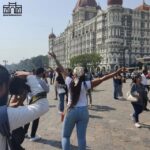
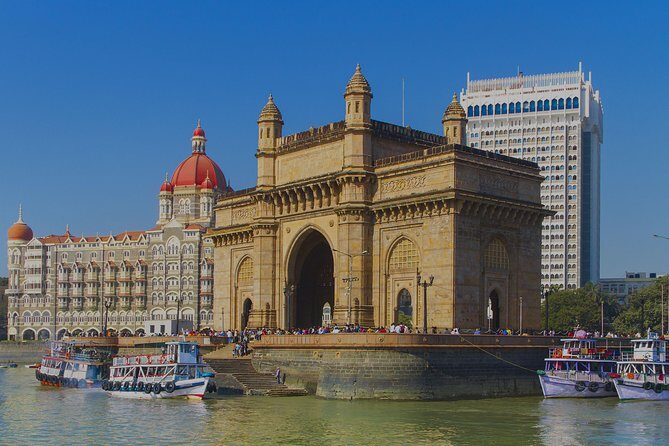
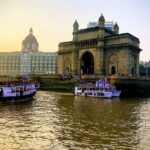
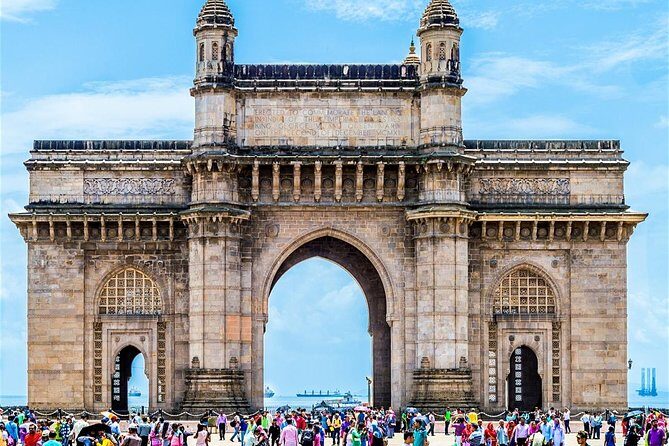
The first big hit is the Gateway of India. It’s a 20th-century arch monument tied to the landing of King George V and Queen Mary. Even if you don’t know the date details, you’ll get why it’s iconic: it’s wide, photogenic, and it sits at the edge of the harbor like a front door to the city.
Right after, the route slips into Colaba Causeway, a lane famous for shopping and food. This is where your tour becomes practical. You get a quick feel for how people move, where stalls cluster, and what kind of goods are common in South Mumbai’s street life. It’s also a handy place to spot what you might want to revisit later on your own.
Because this is a highlights plan, the time here is brief. You can browse, but you can’t shop like you’re on a separate half-day errand run. If you’re serious about shopping, you’ll probably want to park your picks and save deeper browsing for later.
Rajabai Clock Tower, Mumbai University, and the High Court: colonial-era form with modern purpose
Next comes architecture that looks like it belongs in a history book, but it’s still part of an operating city. You’ll stop at the Rajabai Clock Tower on the University of Mumbai campus. The tower is about 85 meters tall and part of the Victorian and Art Deco ensemble that gives this area its famous skyline.
You’ll also pass by the University of Mumbai Library and a stop at the High Court of Bombay. In many big cities, law buildings and schools can feel dead from the sidewalk. Here, the character is in the details: stonework, scale, and the way the buildings sit within a working academic and legal zone. The best use of these short stops is to pay attention to proportions. These are the kinds of places where a guide can point out elements you’d otherwise miss.
One consideration: these stops are quick and mostly exterior-focused. If you’re the type who loves stepping inside major institutional buildings, keep your expectations realistic. This route is built for seeing a lot of major landmarks, not for deep access to every site.
Chhatrapati Shivaji Terminus and Crawford Market: rail heritage meets everyday life
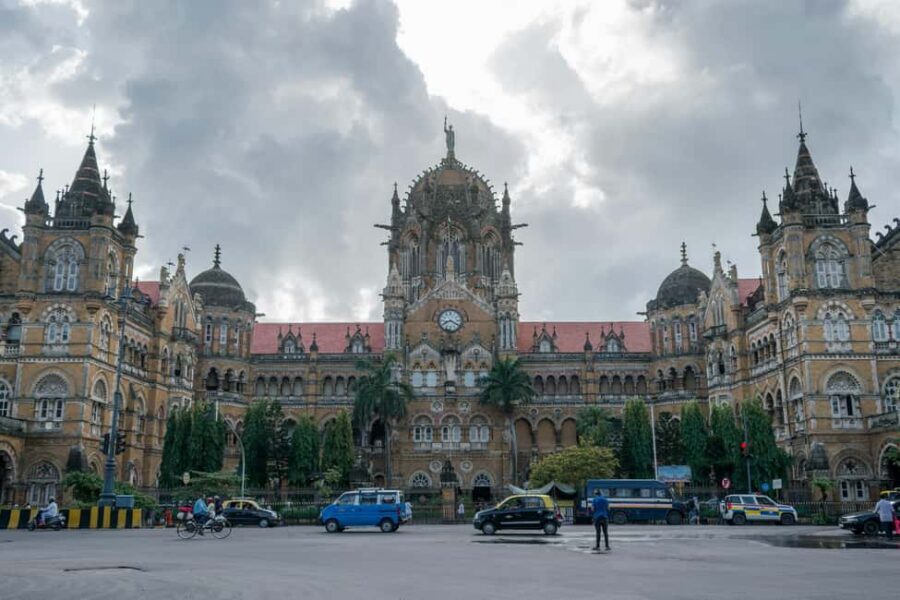
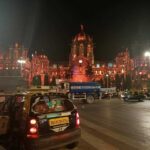
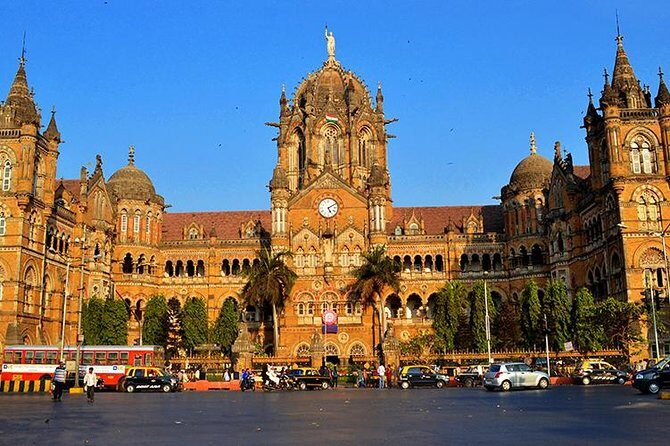
The tour’s history-and-motion centerpiece is Chhatrapati Shivaji Maharaj Terminus (formerly Victoria Terminus). It’s a UNESCO World Heritage Site and a historic railway station. Even in a short visit, it hits because it’s not just a building; it’s a living transit hub. You’ll notice how the architecture frames movement—people streaming in, signage, bustle, and that sense that the city runs on its rail lines.
After that, you’ll get a very Mumbai stop at Crawford Market. The building dates to 1869 and the market is donated to the city by Cowasji Jehangir. This is the kind of place where history and daily shopping sit side by side. If you enjoy watching how locals shop, how sellers display goods, and how markets work as social spaces, this brief stop is a great hit.
Again, the time is short. But if you time your photos right—doors, arches, ceiling lines, the street rhythm—you can come away with images that feel like Mumbai, not generic landmarks.
Marine Drive and Girgaum Chowpatty: the seaside mood shift
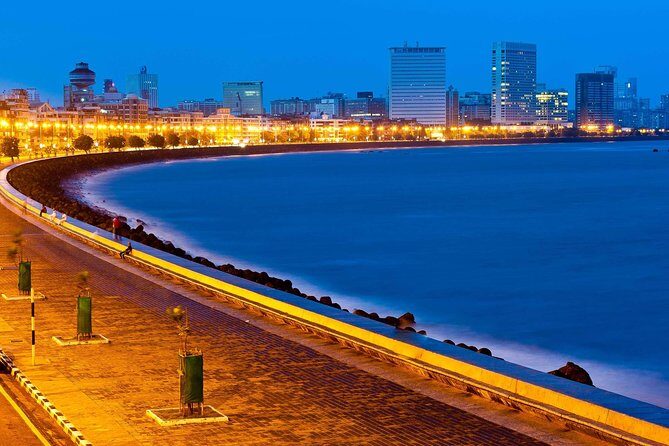
Then you get a change of pace: the coast. Marine Drive, also called Queen’s Necklace, is known for its smooth, C-shaped boulevard feel. Even if you’re not a sunset person, the view gives you breathing room from dense streets and dense buildings.
A quick stop at Girgaum Chowpatty follows. It’s a public beach along the same necklace area, and it helps you understand why South Mumbai’s identity is so tied to the water. You’ll see the public beach vibe: people walking, taking photos, and just using the space as a daytime outlet.
This part can feel crowded depending on timing and local events, but that’s also part of the point. Mumbai isn’t “quiet sightseeing.” It’s life happening in between monuments.
You can also read our reviews of more private tours in Mumbai




Temples in a single route: ISKCON Chowpatty to Babulnath
One of the smartest choices in this tour is how it groups religious sites. You go from the sea and city streets into temple spaces without changing your whole day.
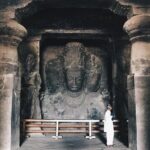
First is Sri Sri Radha Gopinath Temple, listed as ISKCON Chowpatty. This is tied to the Hare Krishna community, temple, and ashram. You’re not only seeing architecture—you’re seeing how devotion plays out in a public setting. Plan for a quiet, respectful walk-in and a bit of time to absorb the atmosphere, especially if there’s any ongoing ceremony.
Then you visit Babulnath Temple, an ancient Shiva temple near Girgaum Chowpatty. It’s described as one of the oldest temples in the city, with Shiva in the form of the Lord of the Babul tree. This is the kind of stop where the guide’s explanations make a difference because the meaning behind the site helps you look past the obvious visuals.
The main practical note: temple areas often have rules around footwear and dress, and sometimes crowd control. The upside is that these stops are typically free, and they give you a more personal connection to the city than purely architectural sightseeing.
Antilia and Hanging Gardens: contrasts you can spot in one hour
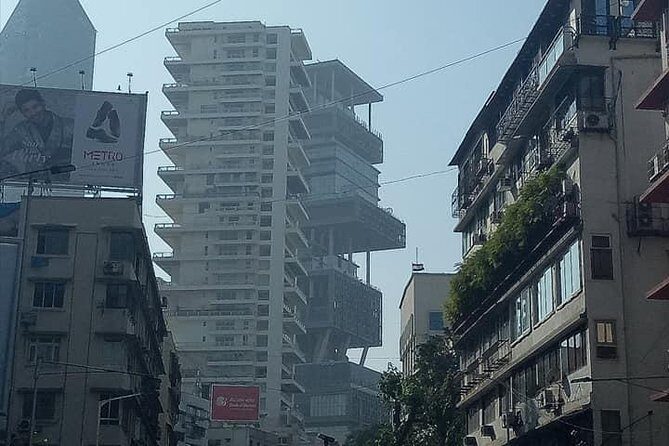
South Mumbai has extreme contrasts in a way that’s hard to recreate elsewhere. This route leans into that by including a stop at Antilia, described as a private home valued at around $2 billion, often cited as the world’s second most valuable residential property after British crown property Buckingham Palace.
Seeing Antilia doesn’t mean you’ll tour a home. Think of it as a context stop: the skyline, wealth, and modern Mumbai’s scale, placed next to temples, markets, and public beaches. For many first-timers, it’s an eye-opener.
Then you shift into greenery at the Hanging Gardens. The plan describes it as green space and trees among the density of South Mumbai, with hedges shaped into animal forms. This is a good emotional break. Even a short visit can help reset your legs and your eyes before the final cultural blocks of the day.
Jain temple, Mani Bhavan Gandhi Museum, and Dhobi Ghat: the close that sticks
The final stretch is where the tour turns from “big sights” into “big meaning.”
You’ll visit a Jain Temple in Mumbai: the Babu Amichand Panalal Adishwarji Jain Temple, located around Malabar Hills (Walkeshwar Road). Jain worship spaces are typically quiet and structured, and the short stop is enough to notice the calm and the symbolism. With a guide, you’re more likely to catch what matters there rather than just taking a quick exterior photo.
After that comes Mani Bhavan Gandhi Museum, and this is an important difference from the other stops: admission is included. Mani Bhavan is a museum and historical building dedicated to Gandhi, featuring his room, a library, photos, films, and displays. If you’ve only encountered Gandhi through school summaries, this is one of those stops that can make the person feel real and specific to Mumbai’s story.
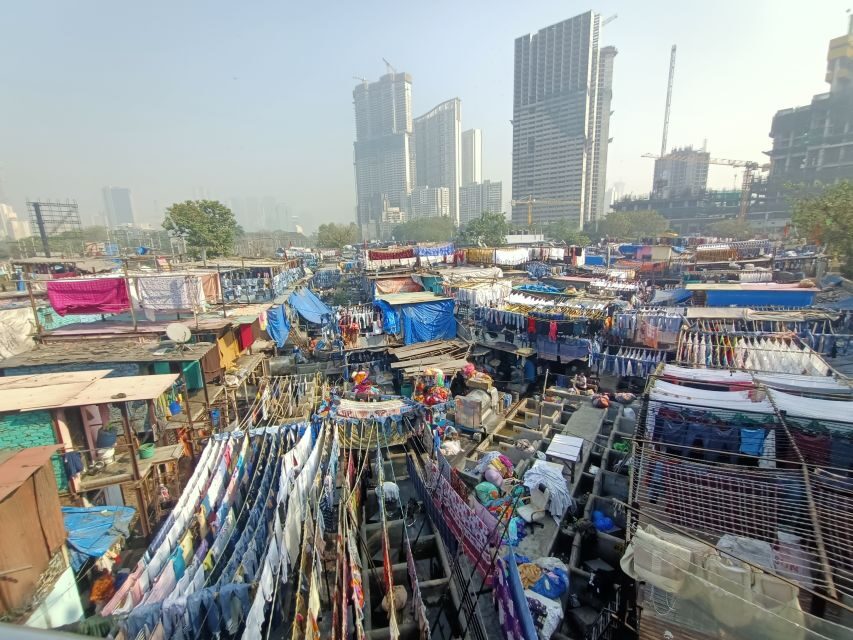
Then you end with Dhobi Ghat, the open-air laundromat. It’s not a museum set. The plan describes washers, called dhobis, working in the open to clean clothes and linens for Mumbai’s hotels and hospitals. This is one of the most memorable parts because it’s working life, not staged viewing. You’ll understand how the city’s infrastructure supports everyday comfort for thousands of people—while also doing that work in a public, visible way.
One practical note: Dhobi Ghat and Hanging Gardens are outdoor-heavy. The experience depends on good weather, so plan for the day to run best when skies cooperate.
Price and value for a two-person private group
At $126 per group (up to 2) for an ~8-hour private tour with round-trip transfers, a local English-speaking guide, bottled water, and toll/parking fees, the value is strong if you compare it to paying separately for a guide plus a car for a full day.
This isn’t a bargain for one person traveling alone unless you’re flexible about splitting costs. But if you’re two people, it’s the kind of pricing that makes a private day feel realistic.
You’re paying for three things:
- Time savings: the route handles navigation, traffic planning, and stop-to-stop coordination.
- Interpretation: the guide helps you understand what you’re looking at, especially for architecture and religious sites.
- Comfort: air-conditioned transport and water remove the usual drain of a long day.
If your goal is to “see the highlights” and also leave with a clearer sense of how Mumbai fits together, this is a good match.
What to do with the short stops: smart ways to enjoy the pace
This route is built as a highlights sprint. That doesn’t mean it has to feel frantic, but you should work with the structure.
My advice:
- Pick one or two stops you want to treat as your “slow moments” and ask the guide for slightly more time there.
- Use the short stops for photo planning: get the main angle, then let your guide point out one detail you might otherwise miss.
- If you care about temples, go in with respect and take cues on how people behave there. Your experience will feel better and smoother.
Based on guide style mentioned in feedback, the team often adjusts on the fly. Guides like Ankita Shah, Vikrant, Siddhi, and Sameer are described as professional and flexible, and that’s exactly what you want when the city is doing its thing around you.
Also, if you’re using a pickup meeting point and the area feels busy, give yourself a buffer. One note in past feedback described the Green Gate meeting area as chaotic, so showing up early helps you avoid the “where are you” stress.
Should you book the Mumbai City of Dreams private vehicle tour?
Book it if you want a first-time-friendly South Mumbai highlights loop that covers big landmarks, temples of different traditions, a major Gandhi site, and Dhobi Ghat in one organized day. The private AC car and hotel transfers alone make a long day much easier, and the guide adds meaning that you won’t get from just reading plaques.
Skip it or adjust your expectations if you’re looking for long museum time, slow wandering, or deep access inside every institution. This is a “see a lot, understand a lot” tour, not an all-day sit-down at one place.
If your group is two people, and you want to keep the logistics off your plate while still getting authentic glimpses of how Mumbai functions, this is a solid pick.