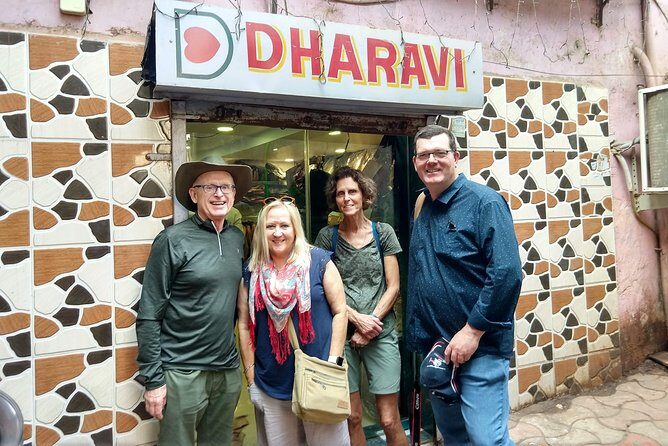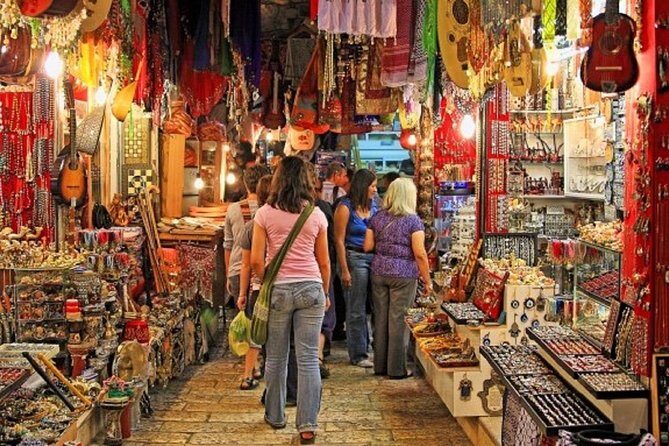
REVIEW · MUMBAI
2-Hour Guided Tour of Dharavi
Book on Viator →Operated by Be The Local Tours and Travel · Bookable on Viator
Two hours can change how you see a neighborhood. This Dharavi guided tour is built to show real routines—where people work, live, learn, and unwind—without leaning on the darkest movie clichés. The result feels practical, grounded, and surprisingly hopeful for a place so often misunderstood.
I like how the tour uses a professional guide who can explain local industry in plain language. I also like the small-group feel, which makes it easier to ask questions instead of watching from a distance.
One consideration: it’s a walking experience in a dense area, and it runs only in good weather. If you’re not comfortable with walking through narrow lanes, plan for a slower pace and bring water.
In This Review
- Key things you’ll notice on this Dharavi tour
- Why this Dharavi walk feels different from the movies
- Meeting point at Third Wave Coffee: how to start without stress
- The 2-hour route: what happens once you reach Dharavi
- What you might find challenging
- Local guides make the difference: Razak, Faisan, Touseef, Adil, Avil, Abir
- What you’ll see in Dharavi: bakeries, pottery, schools, and real neighborhood mix
- Interacting with residents: how to do it respectfully
- Safety and comfort: plan for a dense walking route
- Price and value: is $22.32 actually a good deal?
- When the timing is right: opening hours and weather
- Who should book this Dharavi tour (and who might skip it)
- Should you book this Dharavi tour?
- FAQ
- How long is the Dharavi guided tour?
- How much does the tour cost?
- Does the tour include hotel transfers?
- Is there a mobile ticket?
- Where do I meet the guide and where does the tour end?
- Are there small groups or is it private?
- What are the operating hours?
- Does weather affect the tour?
- Will I get to interact with residents?
Key things you’ll notice on this Dharavi tour
- Local guiding that explains daily work—not just sightseeing
- Small-group pacing so you can ask real questions
- You see the full loop: homes, schools, workplaces, and places to relax
- Industry highlights you can name like bakeries and pottery areas
- A movie-famous neighborhood reframed away from extreme-need stereotypes
Why this Dharavi walk feels different from the movies
Dharavi is the kind of place people think they already know. If you’ve watched Slumdog Millionaire, you may expect desperation. This tour deliberately nudges you away from that script.
Instead of leading with shock value, the walk is organized around function. You’ll pass through areas where people do skilled jobs close to where they live, and where local schools sit inside the same patchwork of daily life. The tone stays matter-of-fact: who does what, how work gets made, why these lanes exist, and how communities hold together.
That framing matters, because it changes how you look. I’ve found that when a guide points to actual businesses—bakeries, pottery work, and other small industries—it’s easier to understand Dharavi as an engine of livelihoods, not just a “set.”
You can also read our reviews of more guided tours in Mumbai

Meeting point at Third Wave Coffee: how to start without stress

The tour starts at Third Wave Coffee (Tip Road, Unit no. 58, Ground, Ram Mahal, Senapati Bapat Marg, Marinagar Colony, Station, Mahim, Mumbai). The finish is at Kumbhar Wada near Sion Hospital in Dharavi (you can use the Kumbharwada near Sion Hospital pin).
This matters because Mumbai can feel like a web of short hops. A clear start location helps you avoid that panicked last-minute search. Also, the tour says it’s near public transportation, which is useful if you’re not using the transfer option.
You don’t need to obsess over timing down to the minute, but you do want to arrive ready. The tour is about two hours, and it’s structured as a guided walk with stops. If you’re late, you usually lose the flow—and on a route like this, flow is half the point.
The 2-hour route: what happens once you reach Dharavi
The itinerary is simple: one main stop in Dharavi, guided throughout. In practice, that means the experience is less about moving long distances and more about understanding how this neighborhood is organized.
You’ll travel through areas where residents work and where they live side by side. The walk is designed to show the mixed-use reality: not just housing, but workshops, family spaces, and community spots.
Here’s what that typically feels like during the walk:
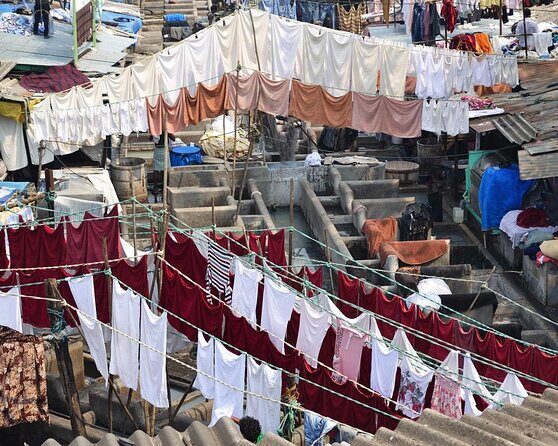
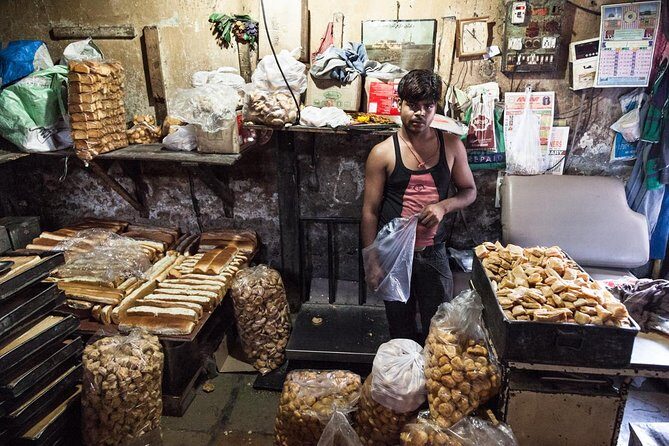
- Where people work: You’ll see broad industrial zones and more specialized craft areas. The tour specifically points out important industries, including bakeries that supply beyond Dharavi.
- Where people live: You’ll get a look at residential areas where whole families may share compact living space. The guide’s explanations help make sense of how “small rooms” can still function as full family homes.
- Where people learn: Local schools are part of the route, reinforcing the idea that education isn’t something “over there”—it’s within the neighborhood.
- Where people relax: You’ll also pass areas that show everyday downtime, not just labor. That balance is a big part of why this tour works.
The biggest value of the 2 hours is attention. A guided walk like this forces you to slow down just enough to notice the details you’d skip on your own.
What you might find challenging
Dense neighborhoods can be emotionally intense, even when the tone is respectful. Also, this is not a “sit and view” tour. You should expect walking through narrow lanes with your guide managing the route.
Local guides make the difference: Razak, Faisan, Touseef, Adil, Avil, Abir
Guides are the engine of this tour. The tour’s whole philosophy depends on someone who can explain daily life from the inside—language, context, and the ability to answer the questions visitors actually ask.
In the information you’ll see associated with this experience, multiple local guides are named:
- Razak (a guide who has grown up in Dharavi and still lives there)
- Faisan, noted for answering lots of questions with generosity
- Touseef, described as hospitable and very familiar with the alleys
- Adil, praised for helpful, courteous, kind guidance and smooth safety management
- Avil, recommended for showing an interesting face of the area
- Abir, highlighted for storytelling and knowing the neighborhood well
Even if your guide isn’t one of these names, the pattern matters: you’re not just getting directions. You’re getting explanations from people who understand how things work here and how visitors can view it fairly.
One of the best parts is that the guide can translate stereotypes into specifics. Instead of “slum = hopeless,” you start hearing how industry and community routines operate under real constraints. That shift is what makes the walk feel meaningful rather than just different.
You can also read our reviews of more tours and experiences in Mumbai




What you’ll see in Dharavi: bakeries, pottery, schools, and real neighborhood mix
This tour doesn’t try to cover everything about Dharavi. It picks key themes and shows them in motion—work followed by living spaces, schools followed by craft or production areas.
A few highlights you should look forward to:
- Industrial areas with multiple trades: The walk includes vast industrial zones and the idea that important work happens very close to home.
- Bakeries serving Mumbai: You’ll be shown areas tied to baking and food production, including how some outputs reach far beyond the neighborhood.
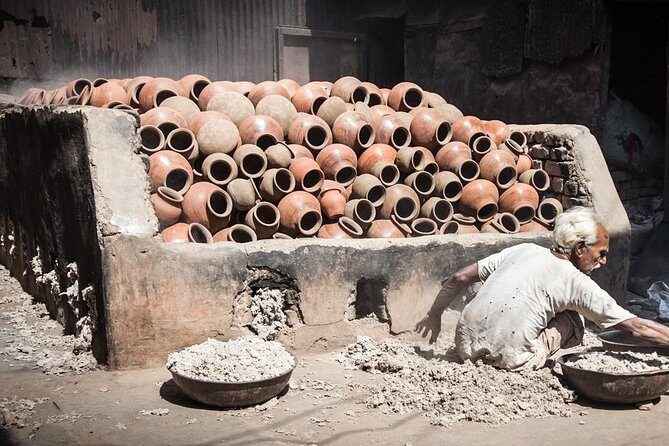
- Pottery industries: Craftwork is part of the route, and the guide’s explanation helps you see it as skilled production rather than “handicraft only.”
- Residential pockets for full families: You’ll see where families live, and the guide helps connect what you see with how daily life functions in tight space.
- Local schools: Education shows up as a visible part of the route, not an abstract concept.
And then there’s the softer part: the places where people spend downtime. A neighborhood can’t survive on work alone, and Dharavi is shown as a place where social life and rest are part of the same geography.
Interacting with residents: how to do it respectfully
The tour says you’ll get a chance to interact with residents, guided by your professional leader. That’s important. It’s not random wandering and it’s not staring.
For you, the best mindset is:
- Ask questions that focus on everyday life (how something is made, how work fits into routines, what learning looks like nearby).
- Keep your tone normal. You don’t need pity; you need curiosity.
- Follow your guide’s cues. In a busy working area, timing and etiquette are part of respect.
Also, being open-minded helps. One of the strongest bits of advice tied to this experience is simple: bring water and keep an open mind. That pair sounds basic, but it’s exactly what you need when you’re walking through a place that doesn’t match the movie version.
Safety and comfort: plan for a dense walking route
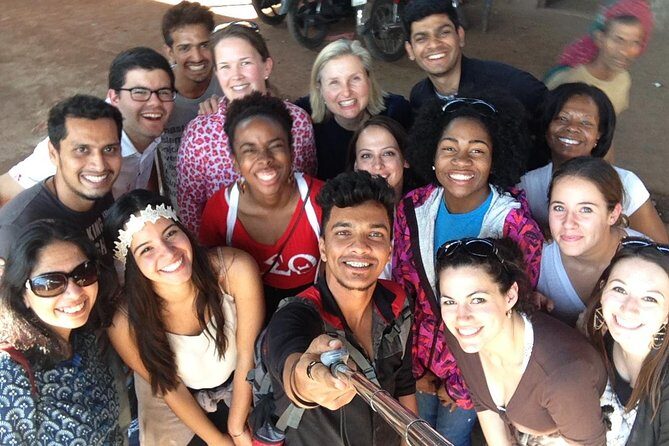
You’ll likely feel the density quickly. This isn’t wide, scenic walking. It’s a neighborhood with active lanes and constant movement.
The good news is that safety is addressed by the guide. One guide is specifically praised for ensuring safety was never an issue as they looked after needs. Still, I’d use that as reassurance—not an excuse to stop paying attention. Treat the walk like a local guided errand: stay with the group, keep your phone secure, and don’t drift off for photos.
Comfort tips that fit what the tour data supports:
- Bring water
- Wear comfortable walking shoes
- Dress for warm conditions and crowds (you’ll be moving constantly)
- If you’re sensitive to emotional moments, remind yourself this tour is structured to break stereotypes, not trap you in them
Price and value: is $22.32 actually a good deal?
At $22.32 per person for roughly two hours, this tour is priced in a way that feels accessible compared to many guided experiences in Mumbai. But the real value isn’t only the hourly rate.
Look at what’s bundled:
- A professional guide
- Small group sizes for personal attention
- Round-trip transfers from your hotel (hassle-free)
- Admission ticket free for the experience
If you’re staying in Mumbai and you’re comparing against the cost of getting to and from Dharavi independently plus paying for a guide, this becomes easier to justify. The transfer is especially helpful because Dharavi is not the kind of place you want to “figure out” first by yourself.
Also, the tour is offered as a private tour/activity for your group, meaning you’re not sharing the experience with strangers beyond your party. That typically improves the quality of the Q&A and the pace of the walk.
When the timing is right: opening hours and weather
The tour runs Monday through Sunday from 10:00 AM to 4:00 PM. That’s a wide window, but you still need to match your plan to the day’s weather.
The experience explicitly requires good weather. If it’s canceled due to poor weather, you should expect to be offered a different date or a full refund. For you, that means: don’t book this as your “last possible activity” on a monsoon-prone day. Choose a day when the forecast looks reasonable and give yourself buffer time.
Who should book this Dharavi tour (and who might skip it)
This tour is a strong fit if you want:
- A guided walking format with time for questions
- A more balanced view of Dharavi, focused on work and community life
- A practical experience with a local leader who can explain industries and daily routines
- A tour that doesn’t treat Dharavi as a one-note tragedy
It might not be ideal if:
- You need a fully air-conditioned, low-walking experience
- Crowded, lane-based walking makes you uncomfortable
- You’re expecting a “sit-down presentation.” This is active and on-the-ground
If you’re the type of traveler who likes to understand how places function—economy, learning, family routines—this is right up your alley.
Should you book this Dharavi tour?
Yes, if you want a local-guided Dharavi experience that pushes past movie stereotypes and gives you clear examples of work, education, and everyday life. The combination of a professional guide, small-group attention, and hotel transfers makes it a smart use of time.
But book it with the right expectations: this is a working neighborhood walk, not a theme park. Go with comfortable shoes, an open mind, and a willingness to treat what you see as real life, not a performance.
If that matches your travel style, you’ll likely come away with a sharper, more humane picture of Mumbai—one that’s harder to reduce to a single screen scene.
FAQ
How long is the Dharavi guided tour?
The tour lasts about 2 hours.
How much does the tour cost?
The price is $22.32 per person.
Does the tour include hotel transfers?
Yes. The experience includes hassle-free round-trip transfers from your hotel.
Is there a mobile ticket?
Yes. The tour uses a mobile ticket.
Where do I meet the guide and where does the tour end?
You start at Third Wave Coffee on Tip Road in Mahim. The tour ends in Dharavi at Kumbhar Wada near Sion Hospital.
Are there small groups or is it private?
It’s described as a private tour/activity, with only your group participating. Small group sizes are part of the experience.
What are the operating hours?
The tour runs Monday through Sunday from 10:00 AM to 4:00 PM.
Does weather affect the tour?
Yes. The experience requires good weather. If it’s canceled due to poor weather, you’ll be offered another date or a full refund.
Will I get to interact with residents?
You’ll have a chance to interact with residents, with your professional guide leading the way.