REVIEW · MUMBAI
Private Tour in Mumbai Slum with Sightseeing
Book on Viator →Operated by Colors Experiences · Bookable on Viator
Dharavi teaches Mumbai in one day. This private tour strings together the city’s most human-scale neighborhood life with famous sights, starting in Dharavi and moving on to Dhobi Ghat laundry scenes and then big-city landmark stops. You’ll do it in an air-conditioned vehicle with pickup, so the long transit bits stay bearable.
I like how the Dharavi portion is structured as an educational walk through different neighborhoods and local daily life, with admission included and real conversation as the focus. I also like that a large share of tour profits is reinvested into Dharavi Travel, which gives this day a purpose beyond sightseeing.
One possible drawback: the day is packed. Expect some driving plus multiple short stops, and if you’re sensitive to the realities of poverty, plan for an emotionally heavy first half.
In This Review
- Key things to know before you go
- A private day across Mumbai’s biggest contrasts
- Why Dharavi is worth the time (and how the tour frames it)
- Dhobi Ghat: the open-air laundromat that runs like a system
- Antilia, Banganga, and the quick stops that add texture
- Antilia (short look, big contrast)
- Banganga (legend with a physical place)
- Jain Temple – Mumbai (short time, strong philosophy focus)
- Mani Bhavan Gandhi Museum: the independence story told in one place
- Markets and stations: Crawford Market and Chhatrapati Shivaji Terminus
- Crawford Market
- Chhatrapati Shivaji Terminus (CST)
- Gateway of India and Kamala Nehru Park: classic photo spots, used well
- Gateway of India
- Kamala Nehru Park (the shoe-shaped view)
- Pickup, air-conditioning, and the reality of an 8-hour schedule
- Guides can turn stops into stories (and several do)
- Price and value: what you’re really paying for
- Who should book this, and who should think twice
- Should you book this Mumbai private tour?
- FAQ
- How long is the private Mumbai Slum with Sightseeing tour?
- What is the price per person?
- Does the tour include pickup and an air-conditioned vehicle?
- Are tickets included for all stops?
- Is this a private tour?
- What should my physical comfort level be?
- What’s the weather requirement?
- Can I cancel for free?
Key things to know before you go
- Dharavi is the centerpiece (about 3 hours), with guided neighborhoods and discussion of everyday life and social issues.
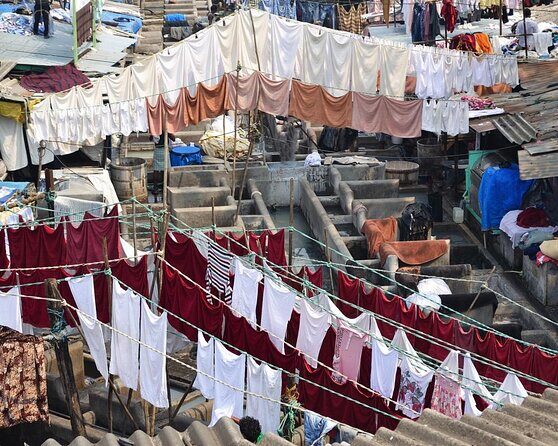
- Dhobi Ghat is an active open-air laundry (about 1 hour), with color-coded wash pens that highlight how the work is organized.
- You get top Mumbai sights in short, efficient blocks like Gateway of India, Chhatrapati Shivaji Terminus, and Mani Bhavan Gandhi Museum.
- Not all major stops are admission-included, so your time inside may vary depending on what you choose to do at each place.
- The guide style matters a lot, and the strongest guides in the local group are praised for clear English and respectful pacing.
A private day across Mumbai’s biggest contrasts
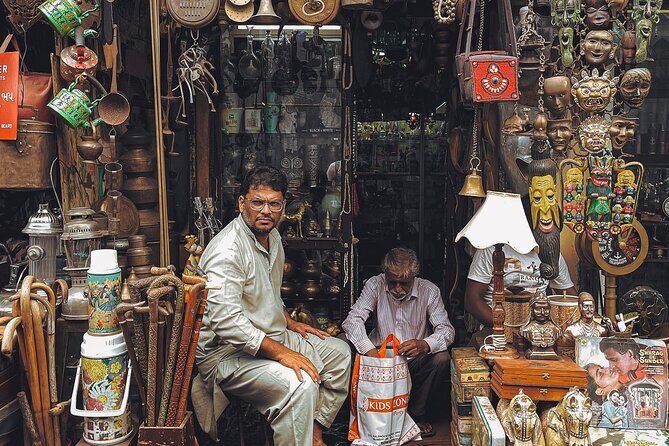
This is built for people who want more than a bus full of photo stops. You’ll move between worlds in one day: Dharavi’s street life and small industries, the open-air wash operation at Dhobi Ghat, and then major landmarks tied to Mumbai’s colonial and modern identity.
Because it’s private, your guide can adjust the emphasis a bit—some guides are especially good at explaining what you’re seeing in plain language. In the reviews I saw names like Abhi, Sajid, Bala, and Suraj show up often, and common praise is that their English is strong and their stories stay grounded rather than scripted.
Duration is listed at about 8 hours, and the itinerary is a mix of longer blocks (Dharavi) and quick stops (many places are around 30 minutes). That structure is useful: you get variety without spending the whole day in traffic.
You can also read our reviews of more private tours in Mumbai



Why Dharavi is worth the time (and how the tour frames it)
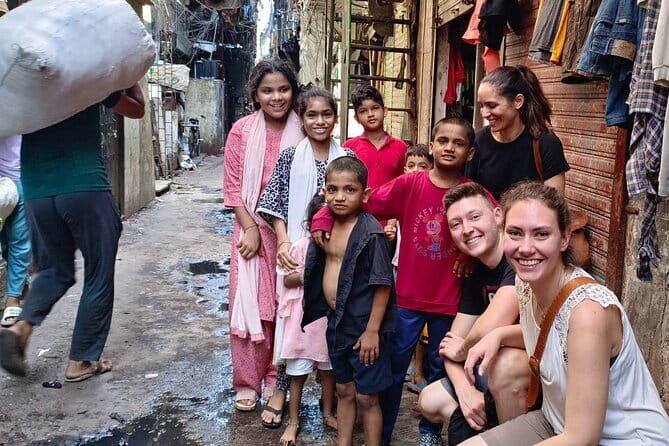
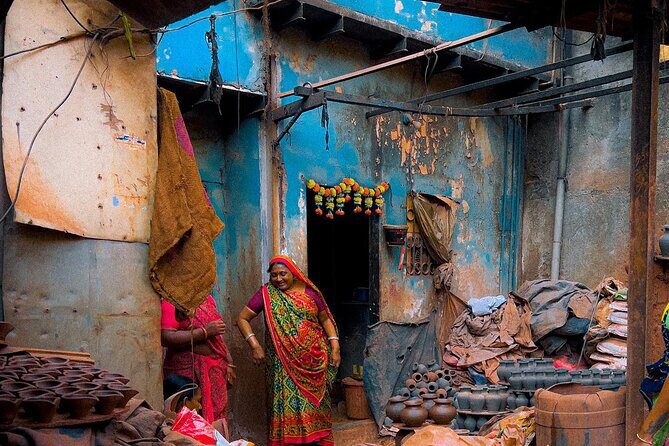
Your day starts at Dharavi, and it’s not treated like a shock-value photo opportunity. The focus is on an educational look at the area through different neighborhoods, plus discussion of daily life and social issues locals face. The time here is about 3 hours, and admission is included.
What makes this stop feel more meaningful is the intent behind the tour. A large portion of the profits is reinvested in Dharavi Travel, so your visit isn’t just taking—it’s also supporting a local effort. That matters, because Mumbai has plenty of ways to see neighborhoods from a distance. This is about walking with context.
You should also set your expectations. This is a working community, not a museum. You may see the kinds of small-scale industries that keep households running. You’ll also hear about the strain and the choices people have to make. One review note that stuck with me: the area feels like its own world, and even many people outside Dharavi don’t go there. A good guide helps you understand what you’re seeing without turning people into a spectacle.
Dhobi Ghat: the open-air laundromat that runs like a system
After Dharavi, you’ll head to Dhobi Ghat, one of the world’s largest open-air laundry facilities. The scheduled time is about 1 hour, and admission is included.
This stop works because it’s not just a view—it’s something in motion. Wash pens are color-coded, and the operation reflects how skills and routines get passed down through families over generations. It’s a vivid example of industry that you can’t really replicate with a single museum exhibit. You see labor, technique, and organization happening right in front of you.
Practical tip: bring a mindset for close-up observing. You may smell soap and steam in the air (that’s part of the point), and the layout is active. If you’re sensitive to busy environments or strong odors, plan for it mentally before you arrive. Still, it’s one of the rare places in Mumbai where you can watch a real service happening at street level.
Antilia, Banganga, and the quick stops that add texture
Once you leave the “life on the ground” feel of Dharavi and Dhobi Ghat, the tour shifts gears to famous locations—some iconic, some more quietly meaningful.
Antilia (short look, big contrast)
You’ll spend about 30 minutes at Antilia, described as a modern architectural marvel and among the most expensive private residences in the world. Admission is not included, so think of this as a viewing stop. The real value is the contrast: one part of the tour shows tight community economics; another shows extreme wealth in the same city.



Banganga (legend with a physical place)
Next is Banganga, with legend tied to Lord Rama and the story of an arrow creating the tank. The stop is about 30 minutes, and admission is free.
This is the kind of place where a guide’s explanation makes it click. Without context, it can feel like “just another spot.” With context, it becomes a map of story and belief layered onto geography.
Jain Temple – Mumbai (short time, strong philosophy focus)
You’ll have about 30 minutes at a Jain Temple. Admission is free, and the guiding emphasis is on Jainism’s influence—non-violence and spiritual enlightenment as a path out of the cycle of life and liberation.
Again, this one is likely more about understanding what you’re seeing than a long visit. If you’re the type who enjoys learning a religion’s ideas through the objects and spaces built for it, this stop can punch above its time.
Mani Bhavan Gandhi Museum: the independence story told in one place
You’ll then go to Mani Bhavan Gandhi Museum for about 30 minutes, with admission free.
This stop is a strong pivot point after the spiritual and neighborhood stops. The museum is framed as a living testament to Mahatma Gandhi’s legacy and his work for independence through non-violence and civil disobedience. With a guide, you’ll likely get a simpler “what to look for” approach to keep this from turning into a quick shuffle through rooms.
If you enjoy history but don’t want your day to become only museum time, this is a useful balance. It offers a clear theme—non-violence and strategy—without demanding hours.
Markets and stations: Crawford Market and Chhatrapati Shivaji Terminus
Two stops that often matter more to first-timers than they expect are Crawford Market and Chhatrapati Shivaji Terminus (CST).
Crawford Market
You’ll get about 30 minutes at Crawford Market, listed as an important historical landmark that reflects Mumbai’s commercial and cultural diversity. Admission is free.
If you love looking at daily life—baskets, stalls, signage, and bargaining energy—this can be one of the most fun short stops. It’s not only shopping; it’s a snapshot of how people live and buy.
Chhatrapati Shivaji Terminus (CST)
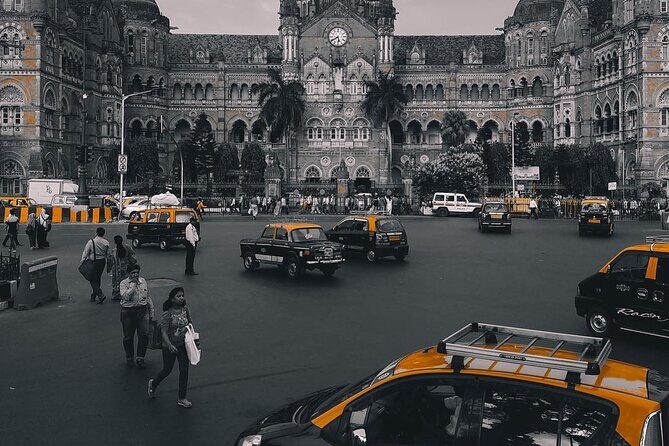
Then it’s about 30 minutes at Chhatrapati Shivaji Terminus, again admission free. The description here is practical: it’s both an architectural gem and a working transportation hub, reflecting colonial legacy in Mumbai’s city form.
This is one of those places where you can spend 30 minutes and still feel like you “got it,” especially if your guide points out the features you’d otherwise miss.
Gateway of India and Kamala Nehru Park: classic photo spots, used well
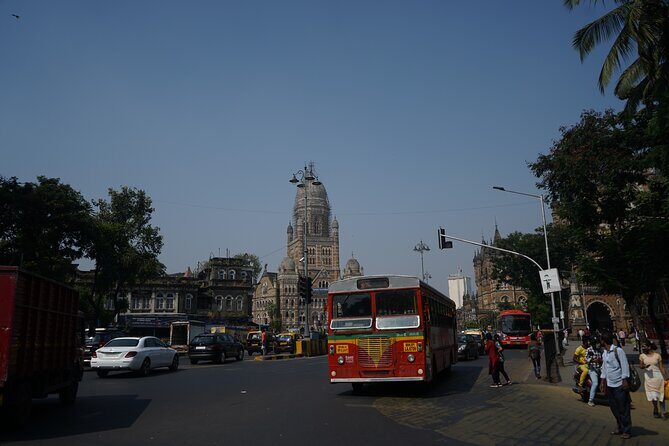
The tour ends with a cluster of very recognizable Mumbai views.
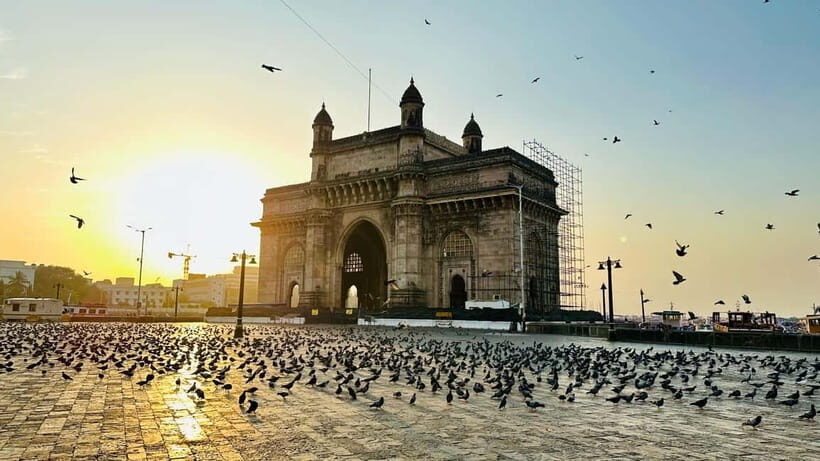
Gateway of India
Gateway of India is a 30-minute, free admission stop. Expect a symbolic stop tied to Mumbai’s history and independence. This is one of the most famous waterfront markers in the city, so even if you’ve seen photos before, it helps to see the scale in person.
Kamala Nehru Park (the shoe-shaped view)
Then you’ll visit Kamala Nehru Park for about 30 minutes. Admission is not included. The highlight is the park’s layout that resembles a giant shoe—named for the idea of Mother Earth—and the view from the top, including the Marine Drive area.
This is a smart way to close the day. You end with a “read the city” moment: the kind of viewpoint that makes the earlier stops feel connected instead of random.
Pickup, air-conditioning, and the reality of an 8-hour schedule
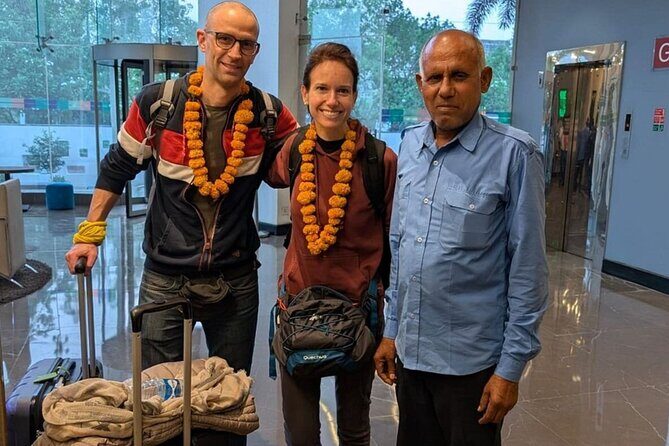
This tour includes water bottle and travel in an air-conditioned vehicle, plus pickup is offered. For an 8-hour day in Mumbai traffic, that’s not a small detail—it’s the difference between a tour you enjoy and a tour that drains you.
The itinerary is heavy on short segments. That means you’ll want a few things from yourself:
- Comfortable shoes for walking and entering spaces
- A bit of patience when you’re switching from one setting to another
- A willingness to focus—Dharavi and Dhobi Ghat take attention, and the landmarks need a calm pace to get meaning
The tour notes moderate physical fitness is recommended. You don’t need athletic gear, but you should be prepared for walking portions and crowds.
Also note: mobile ticket is used, and there’s near public transportation, which can matter if you need an easier backup plan for timing.
Guides can turn stops into stories (and several do)
The best part of this tour in practice is the human layer: a guide who can explain what you’re seeing without turning it into a lecture or a sales pitch.
From the guide names that show up again and again—Abhi, Sajid, Bala, Suraj, Jwetu, Sufiyan, Jeeta—the praise pattern is consistent:
- clear explanations and strong English
- a respectful, local perspective on Dharavi life
- helpful pacing so you don’t just “move through” places
One review mentioned a guide adjusting the route if you share your interests in advance, which is exactly how a private tour should work. If you care more about history than shopping time, you should say so early.
There’s also one caution worth noting from a review: some people prefer fewer shop stops. The suggestion was to let the guide know your preference in advance, and to ask for a more relaxed rhythm. That’s a reasonable request for you too.
Price and value: what you’re really paying for
The price is listed at $61.37 per person for about 8 hours, private, with pickup and air-conditioned transport. For a day that includes entry tickets at Dharavi and Dhobi Ghat (both listed as admission included), plus free admission at many landmark stops, the value comes from the “packed but guided” format.
You’re not paying only for transport. You’re paying for:
- guided access and interpretation at Dharavi and Dhobi Ghat
- a structured route that hits multiple landmark clusters in one day
- air-conditioned comfort with a plan that reduces wasted time
What’s not included: tips. Plan to tip your guide/driver if you feel the day went well, especially because the guide’s communication is a big driver of your experience.
Who should book this, and who should think twice
I’d point this tour toward people who want:
- a deeper look at Mumbai beyond the postcard version
- a guided day that combines everyday life with major landmarks
- a private format where your interests can influence how the guide times stops
It’s also a strong match if you like seeing the city’s layers in a single route: working neighborhoods, spiritual spaces, museums, markets, major rail architecture, and waterfront views.
Think twice if:
- you’re very uncomfortable with poverty-related realities (the Dharavi portion can be emotionally intense)
- you strongly dislike crowded, active environments (Dhobi Ghat is working, not staged)
- you want long, slow museum time (many stops are around 30 minutes)
Should you book this Mumbai private tour?
If you want an efficient, human-scale introduction to Mumbai—and you’re open to learning through a guide who treats Dharavi and Dhobi Ghat with respect—this is an easy yes. The private vehicle with pickup plus the mix of Dharavi + Dhobi Ghat + landmark highlights is a good use of one day.
My main “book with intention” advice: tell your guide what you want to prioritize. If you prefer history and streets over shop stops, say it upfront. If you’re emotionally sensitive, give yourself a mental heads-up for Dharavi so you can stay present instead of surprised.
If you do that, you’ll likely leave with a Mumbai that feels more real—and more connected—than the one you get from only famous viewpoints.
FAQ
How long is the private Mumbai Slum with Sightseeing tour?
It runs about 8 hours (approx.).
What is the price per person?
The price is listed as $61.37 per person.
Does the tour include pickup and an air-conditioned vehicle?
Yes. Pickup is offered, and you travel in an air-conditioned vehicle.
Are tickets included for all stops?
Tickets are listed as included for Dharavi and Dhobi Ghat. Several other stops are free, and some have admission not included, like Antilia and Kamala Nehru Park.
Is this a private tour?
Yes. It’s a private tour/activity, and only your group participates.
What should my physical comfort level be?
The tour calls for a moderate physical fitness level.
What’s the weather requirement?
The experience requires good weather. If it’s canceled due to poor weather, you’ll be offered a different date or a full refund.
Can I cancel for free?
Yes. You can cancel up to 24 hours in advance for a full refund.