REVIEW · MUMBAI
Private Mumbai Sightseeing Tour with Pickup, Car & Guide
Book on Viator →Operated by MUMBAI EXPERIENCES · Bookable on Viator
Mumbai hits fast, and this tour adds context. I like that you ride in a private AC car with pickup and drop-off, which keeps the day from turning into a traffic-adventure. I also like the guided Dharavi walk, paired with Mumbai’s big-name sights, so you get both the famous views and the working reality of the city in one stretch.
The main thing to consider is pacing. With many stops and short time windows at several of the landmarks, this is more about getting your bearings and learning the story than doing slow, lingering sightseeing.
In This Review
- Key highlights I’d plan around
- What kind of day this is (and why it works)
- Private AC car and pickup: the practical win
- Dharavi first: what you’re actually going for
- Dhobi Ghat: the laundry at street level
- Chhatrapati Shivaji Maharaj Terminus and South Mumbai’s rail-era soul
- Crawford Market and the human side of shopping streets
- Gateway of India plus the big-clock and courthouse zone
- Marine Drive to Hanging Gardens: sea views and a breather
- Banganga Tank and a Jain Temple pause
- Mani Bhavan Gandhi Museum: ending with meaning
- Price and what you truly get for $32.92
- Timing, walking, and how to prep without overthinking
- Guide quality: why the names Sid, Siddesh, Siddhu, Shivam keep popping up
- Who should book this (and who might want a simpler plan)
- Should you book this private Mumbai tour?
- FAQ
- Is this tour private, and will only my group participate?
- How long is the tour, and can I choose half-day or full-day?
- What’s included in the price?
- Are admission tickets included?
- Is food included during the tour?
- What if I need to cancel?
Key highlights I’d plan around
- A guide-led Dharavi visit that focuses on daily work and community life, not a quick drive-by
- Dhobi Ghat at work: rows of washermen and women using washing stones, giving you the rhythm of the city
- UNESCO-level architecture in motion at Chhatrapati Shivaji Maharaj Terminus (Victoria Terminus)
- South Mumbai landmarks grouped logically so you see Gothic buildings, markets, and sea views without backtracking
- Guides named Sid, Siddesh, Siddhu, and Shivam come through in the feedback, with one trip also mentioning Jeezal as the understudy
What kind of day this is (and why it works)
This is a private, guide-led Mumbai “greatest-hits plus real life” day. You choose a half-day or full-day version, and your plan can be tailored to your interests. The big idea is simple: you’ll move through iconic places in South Mumbai, then shift gears for a deeper look at how people live and work in Dharavi.
For first-timers, that mix is a smart way to avoid the common mistake of seeing only postcards. South Mumbai’s monuments are stunning, but Mumbai is also built on labor, small industries, recycling, and neighborhood routines. This route gives you both sides so your mental picture of the city actually connects.
You can also read our reviews of more guided tours in Mumbai


Private AC car and pickup: the practical win
One of the biggest value points here is the private AC car with pickup and drop-off. Mumbai traffic can drain a day fast, and going from site to site without having to coordinate transit makes the whole experience smoother.
You also get your guide in the car, which matters more than it sounds. You’re not just following a checklist. You’re hearing explanations as you go, so the landmarks start making sense in context—why they are where they are, what they symbolize, and how they relate to Mumbai’s growth.
If you like to keep control of your time—stopping for photos when it’s convenient, or adjusting what matters most—this setup supports that.
Dharavi first: what you’re actually going for
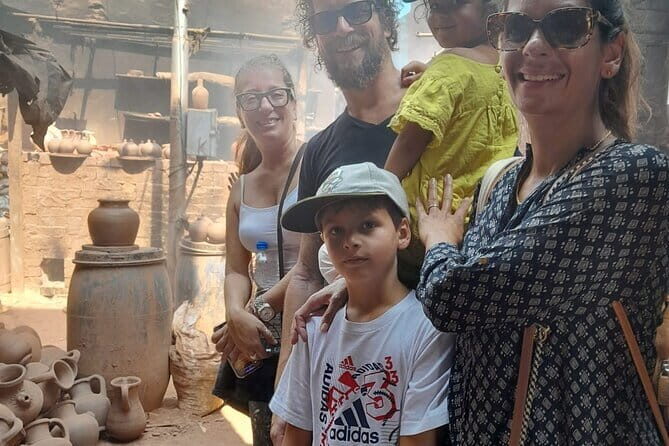
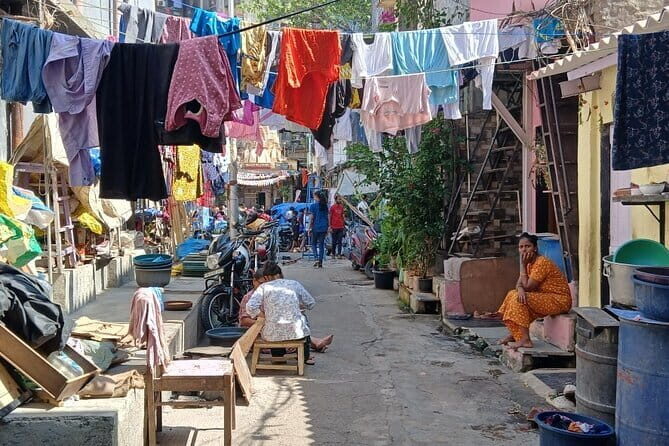
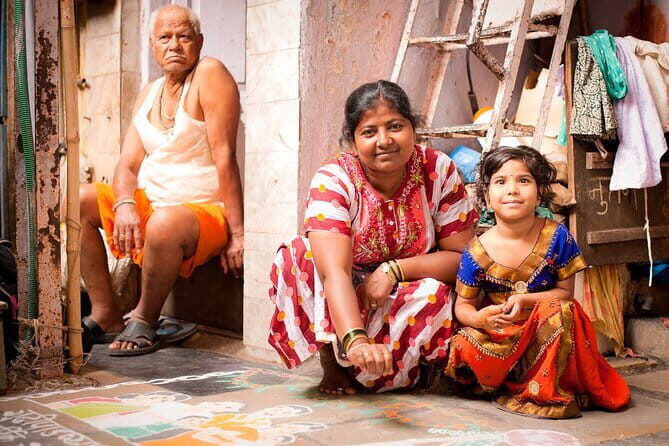
Dharavi is the tour’s emotional and educational anchor. The visit is framed as an insight into both working and residential areas, with time spent seeing small-scale industries and day-to-day activity.
In the format described, you’re looking at how people earn a living through things like recycling workshops and pottery areas, plus the residential lanes that sit alongside production work. That’s not a museum-style experience. It’s closer to a guided walk where the “exhibit” is real life.
How it feels depends on your mindset before you arrive. Some people find it eye-opening in a heavy-but-motivating way. The feedback I see emphasizes learning a lot about culture and resilience, and it also mentions that the tour can feel sad and informative at the same time. If you’re the kind of person who can handle complex realities with respect, you’ll likely find this stop the most meaningful part of the day.
Tip for comfort: wear shoes that handle uneven ground and go in ready to walk. The itinerary includes a longer block at Dharavi (about 2 hours), while many other sites are quicker, so you’ll want your legs to feel good for the main segment.
Dhobi Ghat: the laundry at street level
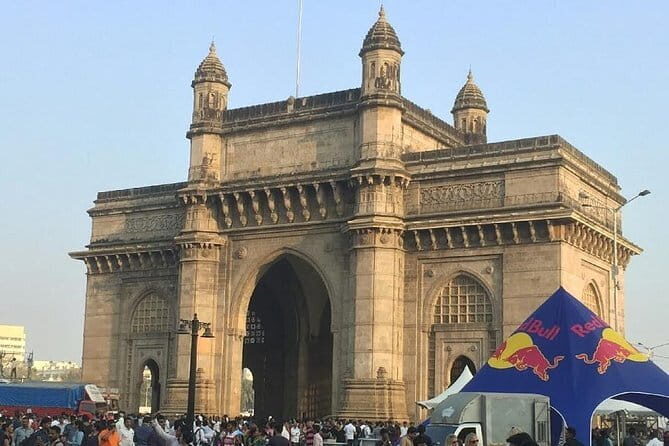
After Dharavi, you’ll head to Dhobi Ghat, described as the world’s largest open-air laundry. The experience is built around watching hundreds of washermen and women working in rows across washing stones.
What I like about this stop is that it’s not a formal show. It’s daily work you can observe up close, and that’s exactly why it fits well after Dharavi. You start to see patterns: industry isn’t some distant concept in Mumbai. It’s right there on the street level.
The time block here is short (about 10 minutes), so you’ll want to treat it like a quick visual and learning moment rather than a long hangout. If you’re the type who loves photography, keep your expectations aligned: you’ll get a look, then move on.
Chhatrapati Shivaji Maharaj Terminus and South Mumbai’s rail-era soul

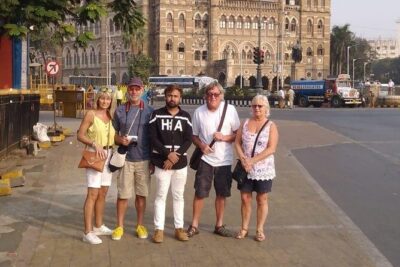
Next up is Chhatrapati Shivaji Maharaj Terminus (Victoria Terminus). This is a UNESCO site, famous for its blend of Victorian Gothic and Indian architecture. The station setting also gives it energy—because it’s still a functioning hub.
Even in a short visit (about 15 minutes), you’ll understand why the building matters. It’s not just pretty stonework. It’s a landmark tied to how Mumbai connected to broader trade and travel networks, and it sits in the middle of the city’s working rhythm.
Right near this zone, you’ll also pass by other institutional architecture, like the Brihanmumbai Municipal Corporation building (BMC). It’s described as Gothic-style and built in 1893, located opposite CST. Places like this help you read the city: you can see where power was formalized, how design signaled importance, and how colonial-era architecture still shapes street corners today.
You can also read our reviews of more private tours in Mumbai





Crawford Market and the human side of shopping streets
Crawford Market is on the list for a reason: it’s a working marketplace where you’ll find stalls selling fresh produce, spices, and other goods. The stop is about 15 minutes, so you’re not doing a full market day with shopping carts.
Instead, you’ll likely use this segment to notice how commerce flows and how people move through stalls and aisles. It’s one of those places where you don’t need to buy anything to learn something. Watch how vendors set up, how customers browse, and how daily needs become a map of the neighborhood’s culture.
If you’re coming with dietary interests, this is also a good visual stop before the sea and hill viewpoints—especially if you like to connect what you see with what you might eat later.
Gateway of India plus the big-clock and courthouse zone
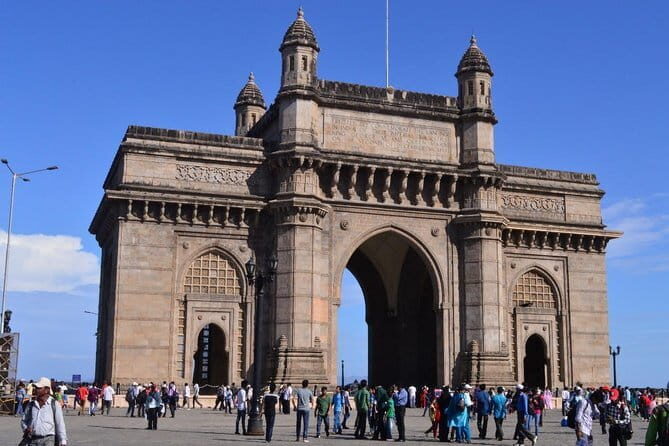
The Gateway of India stop is about heritage and scale. You’ll see the iconic arch overlooking the Arabian Sea, built in 1924, with Indo-Saracenic design and colonial history behind it. With about 15 minutes, it’s timed for a classic photo moment and a quick orientation to the waterfront history.
From there, the itinerary continues with a cluster of South Mumbai landmarks that walk you right through the “old meets new” architectural vibe:
- Rajabai Clock Tower (inside Mumbai University): a 19th-century Gothic landmark inspired by London’s Big Ben, standing about 85 meters tall and known for its chime.
- Bombay High Court: built in 1878 in the Gothic Revival style, with grand towers and detailed architecture near Oval Maidan.
- Oval Maidan: a wide open green ground surrounded by colonial-era buildings, known for local cricket and football matches, and also a scenic anchor for what’s around it.
Even when the visit times are short, bundling these sites together helps you notice the pattern. The architecture isn’t random. It’s a linked theme: governance, education, law, and public space—placed within the city’s street grid so you feel their presence as you walk.
Marine Drive to Hanging Gardens: sea views and a breather

Then comes a shift in atmosphere. You’ll stroll along Marine Drive, a 3.6 km promenade by the Arabian Sea, known as the Queen’s Necklace. The route notes sweeping views, art deco buildings, and famous sunset vibes, which makes it a great pairing with all the earlier institutional architecture.
After that, you’ll head toward Hanging Gardens on Malabar Hill. This is described as a lush green oasis with city views, flowerbeds, and a tranquil setup—more pause than power-point. The stop is about 15 minutes, which is just enough time to reset and take in the sea-and-city angles without turning this into a long detour.
I like this portion of the day because it gives your brain a break. After Dharavi and Dhobi Ghat, your nervous system might be carrying emotion and new impressions. These viewpoints help you process it by giving you space, air, and a different kind of “Mumbai” to notice.
Banganga Tank and a Jain Temple pause
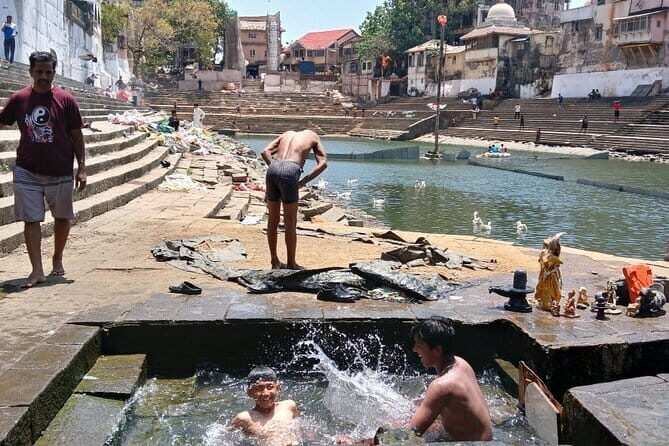
Banganga Tank is a sacred water reservoir in the Walkeshwar area, surrounded by ancient temples and busy lanes. It’s short (about 15 minutes), but it adds spiritual texture that balances the more public, architectural stops.
Then you’ll visit the Jain Temple in Mumbai, highlighted for intricate marble carvings and a serene ambiance. The idea here is simple: after all the city motion, you get a quieter moment of stillness where craft and devotion are the focus.
The temple stop is listed at about 10 minutes, so plan on observing rather than planning a full religious experience. Still, it’s a meaningful contrast point in an itinerary that otherwise moves quickly between work sites, rail icons, markets, and sea promenades.
Mani Bhavan Gandhi Museum: ending with meaning
To close, you’ll visit Mani Bhavan Gandhi Museum, described as Gandhi’s former home in Mumbai. This museum covers his life, works, and teachings with photos, artifacts, and a library dedicated to his legacy. The museum fee is included.
If your day started with Dharavi’s present-day work and Dhobi Ghat’s street-level industry, this ending can feel like a different kind of learning: a look at how one person’s ideas shaped how people think about justice and social life.
A museum stop of about 15 minutes is not enough to read every label slowly, but with a guide, it usually works well as a closing narrative: you leave with themes rather than only images.
Price and what you truly get for $32.92
At about $32.92 per person, the value comes from bundling several things that are usually separate costs:
- Private AC car plus pickup and drop-off
- A guide
- Bottled water
- Museum fee included (at least for Mani Bhavan Gandhi Museum)
- Mobile ticket
- Flexibility between half-day and full-day formats
A day like this can be expensive if you try to assemble it yourself: taxi time plus a guide plus admission fees add up quickly, especially when you’re covering multiple districts.
One detail that can affect your budget: food and drinks are not included, and tips for the guide and driver are also not included. So if you’re doing a full-day version, you’ll want a plan for lunch or snacks, or you might find yourself hungry right at the wrong moment.
Also, most listed admissions are marked as free, which helps keep the day predictable. Your main built-in paid stop is the museum segment.
Timing, walking, and how to prep without overthinking
This tour is designed as a day built on quick but meaningful stops. Dharavi is about 2 hours. Dhobi Ghat is about 10 minutes. Many other points are 10 to 15 minutes.
That matters because you should expect to move often. If you like museums where you can sit and read slowly, you may feel a little rushed here. If you like a guided route that gives context fast, this format fits well.
Prep checklist that actually helps:
- Wear comfortable shoes for a longer walk segment at Dharavi.
- Carry something light to drink if you get thirsty between stops (bottled water is included, but you’ll still want to feel comfortable).
- Think ahead about lunch if you choose a full-day option.
- Bring a respectful attitude for places where people work and live.
Guide quality: why the names Sid, Siddesh, Siddhu, Shivam keep popping up
The best part of this experience is the human layer. The feedback repeatedly highlights guides who explain clearly and handle the emotional weight with patience.
Several names stand out: Sid, Siddesh, Siddhu, and Shivam, with one trip mentioning an understudy named Jeezal who helped keep the narration moving smoothly. When a guide does that well, you don’t just see Dharavi or Dhobi Ghat—you understand what you’re seeing.
If you care about that, it’s worth asking when you book whether you can request one of those guides, since the feedback mentions them by name. Either way, the tour’s structure gives your guide the right role: they connect the dots between architecture, street work, and daily routines.
Who should book this (and who might want a simpler plan)
This fits best if you:
- Want first-time Mumbai context in one day
- Like guided explanations more than self-guided wandering
- Are okay with an emotionally complex stop like Dharavi
- Prefer a private setup so your route feels responsive
You might choose a different option if you:
- Want long museum time or slow browsing at each place
- Struggle with packed itineraries and frequent transitions
- Prefer a lighter day focused only on scenery and photos
The itinerary includes areas where people live, work, and worship, so your best match is a respectful, curious traveler who can handle nuance.
Should you book this private Mumbai tour?
Yes, if you want a day that connects the city’s “famous face” with its daily labor. The strongest reason to book is the combination: Dharavi + Dhobi Ghat + South Mumbai landmarks under one guide, with a private AC car doing the heavy lifting between districts.
I’d book it especially if you value explanations and you’re excited to learn from people and places rather than only collecting photos. Just go in prepared for a full day’s worth of movement, and treat Dharavi as the heart of the experience, not a side stop.
FAQ
Is this tour private, and will only my group participate?
Yes. It’s a private tour/activity, so only your group will participate.
How long is the tour, and can I choose half-day or full-day?
The tour runs about 4 to 8 hours. You can choose a Half-Day or Full-Day Tour depending on what you want to fit into your day.
What’s included in the price?
The tour includes a private AC car, pickup and drop-off, a guide, bottled water, and the museum fee for the included museum stop.
Are admission tickets included?
Admission is listed as free for the main landmark stops, and the Mani Bhavan Gandhi Museum fee is included.
Is food included during the tour?
No. Food and drinks are not included, so plan on your own meals or snacks.
What if I need to cancel?
You can cancel for a full refund up to 24 hours in advance. If you cancel less than 24 hours before the start time, the amount paid will not be refunded.