REVIEW · MUMBAI
Mumbai By Night: Lights & Luminance
Book on Viator →Operated by Linda Tours Mumbai · Bookable on Viator
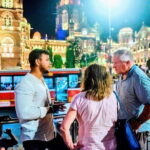
Mumbai looks different after dark, and this tour leans into that. You get an air-conditioned roundtrip vehicle plus English guidance, so you’re not sweating through South Mumbai while trying to find the next big sight.
I especially like the mix of iconic monuments and street-level scenes, from the Gateway area to Dhobi Ghat. The one drawback to keep in mind: some buildings may not have the dramatic, special lighting you’re expecting, and a stop like the Gateway can occasionally be limited by events.
In This Review
- Key Highlights You’ll Actually Feel During the Ride
- Mumbai Lights, Minus the Day Heat
- Is $37.50 Worth It for a 3–4 Hour Night Loop?
- The Night Itself: What the “Lights & Luminance” Theme Really Means
- Stop-by-Stop: Your Route Through South Mumbai’s Night Personality
- Gateway of India: The Classic Photo Anchor
- Flora Fountain at Hutatma Chowk: A Sharp Downtown Contrast
- Chhatrapati Shivaji Maharaj Terminus (CSTM): Architecture You Notice More at Night
- Rajabai Clock Tower: Quick Glance, Strong Silhouette
- Marine Drive and Girgaum Chowpatty: The Shoreline Glow
- The Asiatic Society: A Nighttime Stroll for the Mind
- Dhobi Ghat: Where Local Life Takes Over
- Hanging Gardens (Pherozeshah Mehta Gardens): A Cooler View Over the City
- Antilia: Billionaire-Scale Shock Value
- Pramod Navalkar Viewing Gallery: Panoramic Payoff
- St. Thomas Cathedral: A Quiet Ending With Historic Weight
- Photography Tips That Match This Route’s Pacing
- The Guide and Driver Make or Break the Evening
- What’s Included (and What You’ll Need to Plan Yourself)
- Who Should Book This Mumbai Night Tour?
- Should You Book Mumbai By Night: Lights & Luminance?
- FAQ
- How long is the Mumbai By Night: Lights & Luminance tour?
- Is pickup offered?
- Is the tour private?
- What’s included in the price besides the guide?
- Are admissions required at the stops?
- What locations are included on the route?
- Does the tour include dinner?
- When does the tour end?
Key Highlights You’ll Actually Feel During the Ride
- Air-conditioned transport: a real comfort upgrade when the city’s heat and humidity are still hanging around.
- A guided night perspective: landmarks make more sense when someone explains what you’re seeing, not just where it is.
- Photo-friendly pacing: short, targeted stops that help you grab views without turning the evening into a walking marathon.
- Icon + local life mix: you’re not only doing grand monuments; you also get street-scene energy like Dhobi Ghat.
- Clear value at $37.50: a 3 to 4 hour loop with many major sights included, plus bottled water and onboard WiFi.
Mumbai Lights, Minus the Day Heat
Mumbai after sunset has a different tempo. Streets feel fuller, façades look more dimensional, and it’s easier to notice details you’d miss in the middle of the day.
This tour is built for that shift. The idea isn’t just to “see Mumbai at night,” it’s to ride between key areas comfortably while your guide gives you context—so the lights feel meaningful instead of random.
If your trip is short, this format is a smart way to get your bearings fast. You cover more ground than you would on foot, and you avoid the day-time grind of crowds plus heat.
You can also read our reviews of more evening experiences in Mumbai
Is $37.50 Worth It for a 3–4 Hour Night Loop?
At $37.50 per person, this sits in the “high value” zone for Mumbai sightseeing. You’re paying for (1) guided storytelling, (2) an air-conditioned ride, and (3) multiple major stops in a compact time window.
A big value clue: the tour highlights are listed with free admission for the sights in the route. That doesn’t mean every moment is cost-free in practice—your time is still the currency—but it helps keep the evening from turning into surprise ticket math.
Also, it’s not framed as a dinner cruise. No dinner is included, so you’re free to choose your own meal afterward—or just keep it light with snacks near wherever you end up.
The Night Itself: What the “Lights & Luminance” Theme Really Means
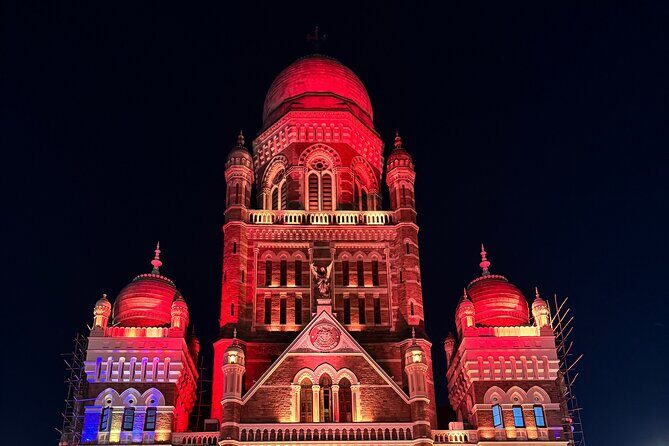
Here’s the honest expectation-setting: Mumbai’s night look is often about normal lights plus architectural shape, not constant choreographed light shows everywhere. Some sites look spectacular because the building and materials catch street lighting in interesting ways.
That’s also why this tour works. Your guide doesn’t just point at lit landmarks; they help you notice why they look that way—historic layout, the city’s shoreline mood, the way crowds behave after dark, and what the areas were built for.
If you’re chasing a stage-show level of lighting effects on every stop, you might be slightly disappointed. But if you want a “night reading” of South Mumbai—how the city presents itself when it cools down—this delivers.
Stop-by-Stop: Your Route Through South Mumbai’s Night Personality
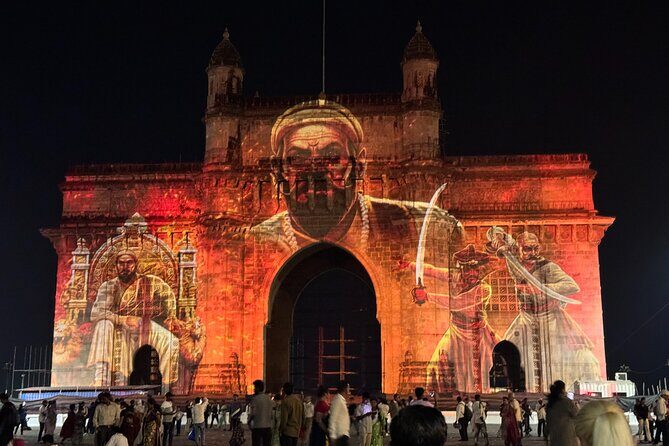
Gateway of India: The Classic Photo Anchor
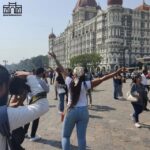
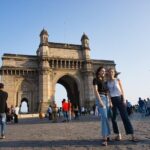
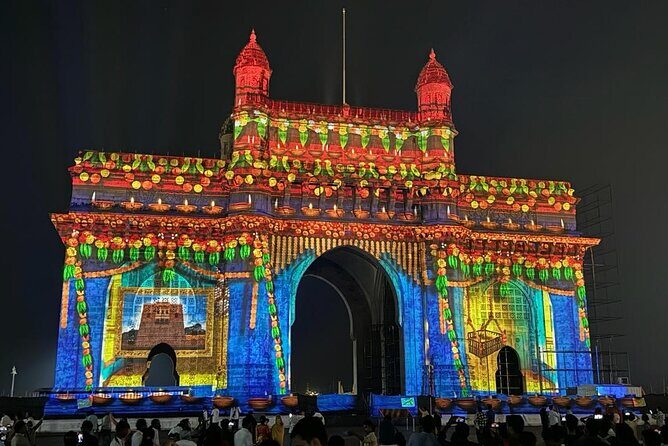
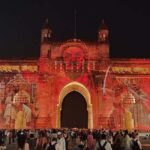
You start near the Gateway of India area, with time to take photos and orient yourself. The Gateway is one of those places where the night atmosphere does half the work: the shoreline light, the open space around it, and the general sense of history all combine into a strong first impression.
One practical caution: the Gateway can be affected by private events. If you’re booking specifically for a perfect photo set, it’s worth knowing this stop may not always be fully accessible at the level you’d hope.


Flora Fountain at Hutatma Chowk: A Sharp Downtown Contrast
Next up is Flora Fountain at Hutatma Chowk (Martyr’s Square). This is a great “in-between” stop—grand enough to matter, but close to the city’s rhythm.
It’s the kind of place where night photography tends to work because you can frame it against surrounding street lighting and the flow of nearby traffic.
Chhatrapati Shivaji Maharaj Terminus (CSTM): Architecture You Notice More at Night
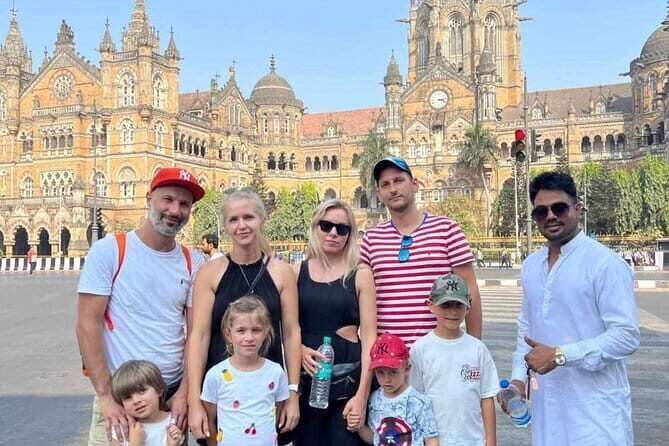
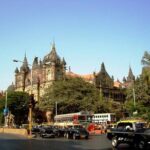
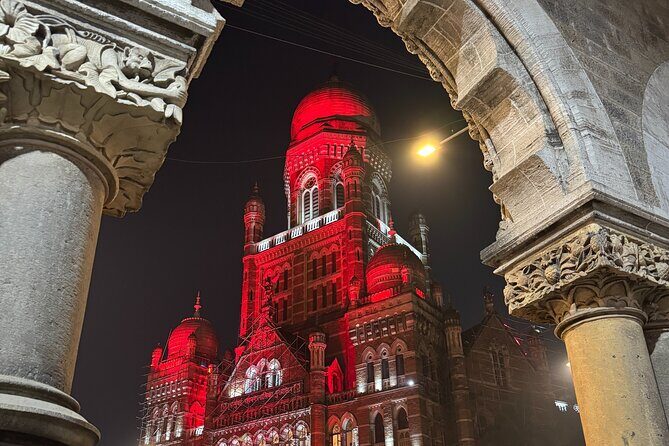
You spend a short chunk of time at CSTM (also known as the historic Victoria Terminus). Night doesn’t make the station feel smaller—it makes the details stand out against the darker background.
Even if you only get a brief viewing window, it’s a strong cultural anchor for your evening because it ties Mumbai’s colonial-era ambitions to the city’s rail-powered energy.
Rajabai Clock Tower: Quick Glance, Strong Silhouette
The Rajabai Clock Tower stop is brief, but it’s designed for impact. At night, clock towers read like landmarks in the literal sense: a vertical reference point you can use to map the area in your head.
You’re also in the Fort campus zone, so it feels slightly more formal than the street scenes farther south.
Marine Drive and Girgaum Chowpatty: The Shoreline Glow
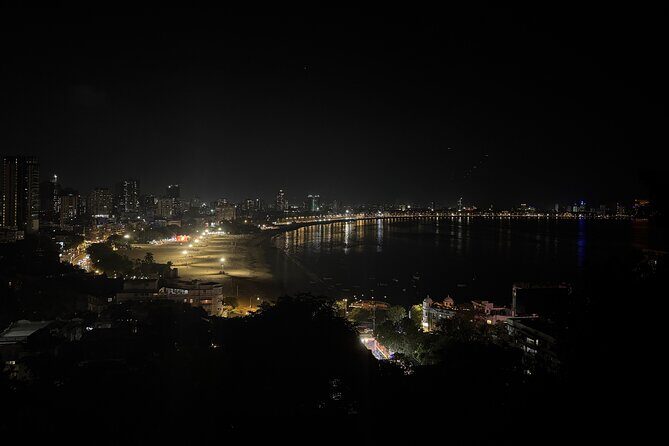
Marine Drive is a long, iconic boulevard, and at night it becomes a moving horizon. You’ll get a short look that works well for photos and a quick “walk-a-long-without-walking” feeling.
The route also includes Girgaum Chowpatty nearby, so you can sense the seaside mood—people strolling, the promenade feeling active, and that coastal lighting effect along the roadway.
If it’s a clear night, this section often becomes your “wow” moment.
The Asiatic Society: A Nighttime Stroll for the Mind
The stop at the Asiatic Society building (Town Hall) is short, but it’s memorable because it shifts the evening from pure sightseeing to cultural history in one jump.
This is a good place to slow down mentally. Night makes it easier to read the building’s presence without the rush of daytime city life competing with your attention.
Dhobi Ghat: Where Local Life Takes Over
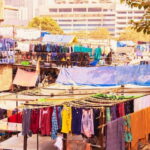
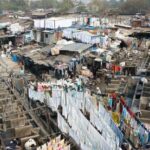
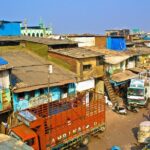
Dhobi Ghat is the most street-level stop on the route. You’ll see the open-air wash pens and learn what makes this working laundry area so famous.
Night here can be fascinating for one simple reason: you’re not just looking at a monument. You’re watching a living, functional part of the city—so it feels real, not staged.
A quick note for expectations: this stop is about observation and understanding the place, not about comfort amenities. Plan your time accordingly and keep it short if you’re sensitive to heavy foot traffic or weather.
Hanging Gardens (Pherozeshah Mehta Gardens): A Cooler View Over the City
The Hanging Gardens sit up on Malabar Hill, and the night vantage helps. You’ll get time to appreciate the terraced setting and take in views from above rather than from street level.
It’s also a nice contrast after Dhobi Ghat. One moment you’re at ground level with city activity, and the next you’re looking down at the urban grid and how lights cluster.
Antilia: Billionaire-Scale Shock Value
Antilia is quick—about a few minutes viewing time—but it has that “wait, what am I looking at?” effect. It’s the residence of Mukesh Ambani’s family and is known for its extreme scale and cost.
Even if you don’t care about celebrity or wealth comparisons, it’s a stark visual marker of how different economic stories can coexist within the same city.
Pramod Navalkar Viewing Gallery: Panoramic Payoff
You’ll reach a viewing gallery at Malabar Hill for broader city views. This is where the tour’s structure makes sense: you spend the early part of the evening seeing major points, then you come back at elevation to understand how they relate across the city.
If you’re someone who likes skyline photos, this is a key stop to prioritize.
St. Thomas Cathedral: A Quiet Ending With Historic Weight
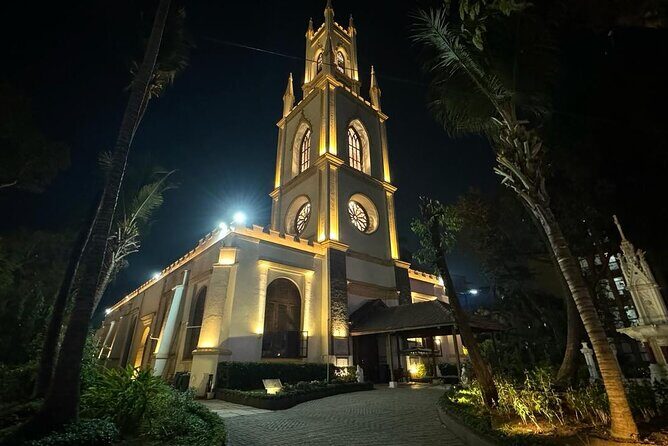
The tour finishes at St. Thomas Cathedral, near Horniman Circle. At night, churches often feel calmer than the surrounding streets, and this stop works as a closing note to the evening’s visual rhythm.
It’s the oldest church in Mumbai, and even with a brief look, the atmosphere can feel different from the high-energy stops earlier in the route.
Photography Tips That Match This Route’s Pacing
This tour is ideal if you travel with a phone camera—or any camera you actually bother to use at night. Short stops mean you need to be ready when the vehicle pulls up.
Here’s what I’d do to get the best results:
- Use clean, stable frames for the monuments. Don’t zoom too aggressively; night shots suffer fast.
- If it’s overcast or rainy, expect less crisp detail. Night still looks good, but it’s more about glow than sharp lines.
- Arrive mentally prepared for quick repositioning. This route doesn’t linger for long at every site.
- Tell your guide you want photo spots. Many guides in this tour style will suggest angles and offer help with timing.
If you’re the type who likes to plan shot lists, this route gives you plenty of anchors: Gateway, Marine Drive, and the Malabar Hill viewpoints.
The Guide and Driver Make or Break the Evening
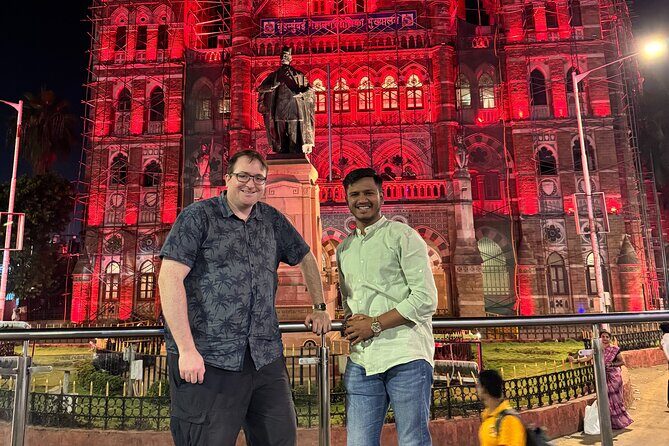
One of the biggest strengths here is the human team. You’ll have an English-speaking guide and a driver, and the consistent theme is smooth timing plus helpful explanations.
You’ll also benefit from local traffic know-how. In Mumbai, time can vanish fast if you’re stuck in the wrong streets—so the ability to move you efficiently is part of the value you’re paying for.
In past departures, guides such as Shruti, Abhi, Husain, Yash, Mayur, Mohammed, and Yash have been praised for making stories clear and answering questions. Drivers like Arjun and Neeraj show up in reviews as the people who help keep things safe and on schedule.
Even if you don’t recognize the names, you can use the same logic: the best night tours aren’t just route maps. They’re people who know how to handle timing, crowds, and when to move.
What’s Included (and What You’ll Need to Plan Yourself)
Included:
- Bottled water
- Air-conditioned vehicle
- Private transportation
- WiFi onboard
- English language guides
Not included:
- Dinner
That’s pretty straightforward. Bring a light layer if you get chilly at the waterfront, and consider snack plans since dinner isn’t part of the deal. If you’re doing this night tour as a “first taste” of Mumbai, pair it with a separate daytime block later so you can compare how each neighborhood looks in daylight.
Who Should Book This Mumbai Night Tour?
This is a great fit if:
- You have limited time and want a fast, guided overview.
- You care about history and context, not just photos.
- You want to move between South Mumbai highlights without dealing with navigation.
- You’re traveling solo or in a small group and want a safer, more structured feel.
It might feel less perfect if:
- You’re expecting dramatic light-signal effects at every stop.
- You’re only interested in one landmark and want a long, uninterrupted time there.
- Your priorities are purely beach time or purely museum time; this is a mix.
Should You Book Mumbai By Night: Lights & Luminance?
Yes, if you want a guided evening that balances iconic sights with real city texture. For the price, the combination of air-conditioned comfort, multiple South Mumbai highlights, and English guidance makes it easy to justify—especially when you’re trying to see the city’s main cards without burning your day.
I’d book it if you’re planning a short stay and you want a night “orientation” that helps your next day sightseeing click. If you’re the type who needs a guarantee that the Gateway photo is perfect, keep in mind that at least one key landmark can be affected by events.
If you want the city’s night vibe with clear explanations and smooth logistics, this tour is a strong choice.
FAQ
How long is the Mumbai By Night: Lights & Luminance tour?
It runs about 3 to 4 hours.
Is pickup offered?
Yes, pickup is offered, and it’s described as meeting at a Starbucks location near Apollo Bunder in Fort.
Is the tour private?
Yes. It’s a private tour/activity, meaning only your group participates.
What’s included in the price besides the guide?
The tour includes a private air-conditioned vehicle, bottled water, WiFi on board, and an English-language guide.
Are admissions required at the stops?
The stops listed are shown with free admission.
What locations are included on the route?
The route includes Gateway of India, Flora Fountain (Hutatma Chowk), Chhatrapati Shivaji Maharaj Terminus, Rajabai Clock Tower, Marine Drive/Girgaum Chowpatty, The Asiatic Society, Dhobi Ghat, Hanging Gardens, Antilia, Pramod Navalkar Viewing Gallery, and St. Thomas Cathedral.
Does the tour include dinner?
No, dinner isn’t included.
When does the tour end?
It ends back at the meeting point.