REVIEW · MUMBAI
Mumbai City + Dabbawala aka Lunchbox + Train Ride Tour – The Unfeigned Mumbai.
Book on Viator →Operated by Young Tours And Travel · Bookable on Viator
Mumbai makes sense fast on this ride. This private tour stitches together a local train ride with real daily Mumbai work, including the dabbawalas’ lunchboxes, not just postcard stops. I like that it feels practical and grounded: you get history at places like Mani Bhavan and then you’re back out in the city where the systems run.
One thing to plan around: no lunch is included, and a couple of stops involve waiting or walking in busy public areas. If you’re sensitive to heat or crowds, wear breathable clothes and have water ready, even though bottled water and hot drinks are provided.
In This Review
- Key highlights you’ll feel right away
- A five-hour plan that actually fits Mumbai
- Churchgate Railway Station and the dabbawalas lunch workflow
- Dhobi Ghat: outdoor laundry that keeps hotels and hospitals going
- Mani Bhavan Gandhi Museum: the personal base behind the public figure
- Hanging Gardens, Kamala Nehru Park, and Marine Drive
- Gateway of India, Rajabai Clock Tower, and the courthouse-era details
- Chhatrapati Shivaji Maharaj Terminus (CSMT): the railway centerpiece you won’t forget
- Price and what you’re getting for $69.99
- Is this tour worth it for you?
- Who runs the show and how the tour supports a mission
- Should you book the Unfeigned Mumbai City + Dabbawala Tour?
- FAQ
- Is this tour private or shared?
- What’s included in the price?
- Is lunch included?
- How long is the tour?
- Are hotel pickups included?
- What’s the cancellation policy?
Key highlights you’ll feel right away
- A guided ride on a Mumbai local train so you spend less time figuring things out and more time watching how the city moves
- Churchgate + the dabbawala system where lunch delivery and pickup begin and return
- Dhobi Ghat’s open-air laundry work in a place that looks like an everyday factory, not a museum
- Mani Bhavan Gandhi Museum (1917–1934 headquarters) with focused time and an easy story to follow
- Quick-hit landmarks like Marine Drive, Gateway of India, Rajabai Clock Tower, and CSMT without wasting your day
A five-hour plan that actually fits Mumbai
This tour is built for people who want more than photos. You’re not stuck only in museums or only in viewpoints. Instead, you get a mix that explains how Mumbai functions: the daily logistics of food delivery, the outdoor work behind hotel laundry, and the political and architectural landmarks that shaped modern India.
The timing also matters. At about 5 hours, the stops are short on purpose—most are around 10–15 minutes—so you can see a lot without spending the day in transit. It’s the kind of route that helps you get your bearings fast, especially if it’s your first time in the city.
If you’re booking at $69.99 per person, the value is in how much gets bundled in: pickup from select hotels, air-conditioned vehicle time, bottled water plus coffee/tea, and guided entry where entry is included. You still need to handle your own lunch, but the rest is meant to be one smoother package.
You can also read our reviews of more city tours in Mumbai


Churchgate Railway Station and the dabbawalas lunch workflow
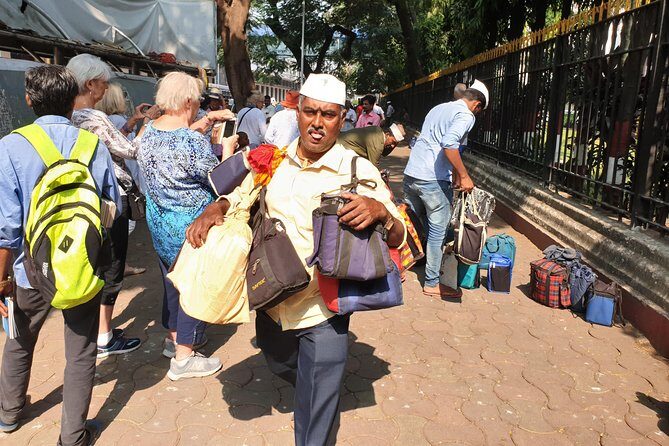
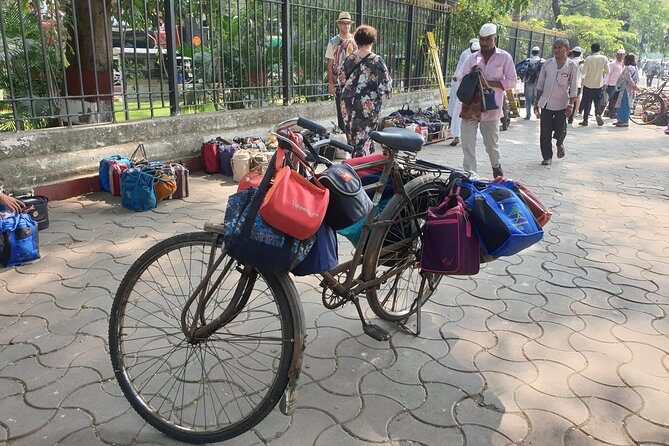
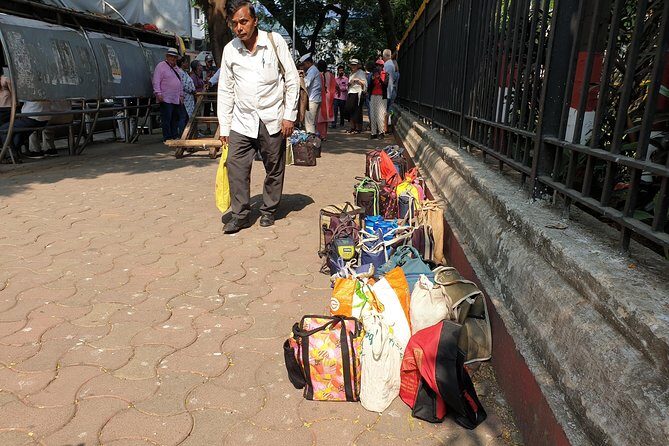
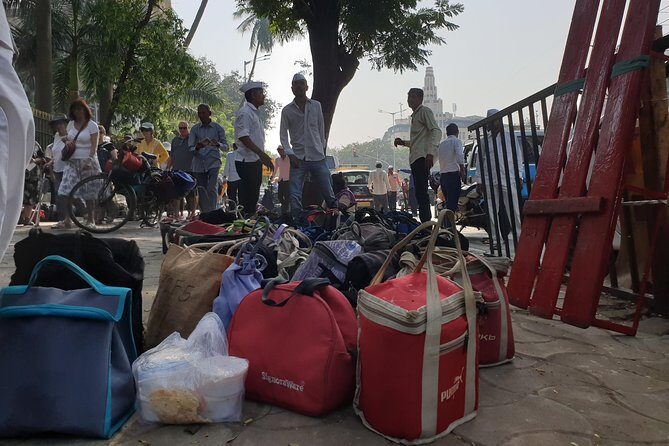
Your first real “this is Mumbai” moment is at Churchgate Railway Station. The point isn’t just to stand near trains. It’s to understand that dabbawalas run a lunchbox delivery and return system that moves hot meals every day for thousands of people.
Why this works as a start: Churchgate is a natural place to see how routine becomes structure. You can look at the flow of movement and connect it to what you’re learning about—food leaving homes and restaurants, moving through the rail network, and returning. Even if you don’t know the system details yet, the station setting makes it click quickly.
Tip for you: if you’re comfortable in public spaces, this is where your observational mode pays off. Watch how people move, listen for your guide’s cues, and don’t rush the learning moment trying to take every photo. The real value is seeing the work as a system, not as a single display.
Dhobi Ghat: outdoor laundry that keeps hotels and hospitals going
Next up is Dhobi Ghat (Mahalaxmi Dhobi Ghat), an open-air laundromat where dhobis wash clothes outdoors. The key detail is what your visit is tied to: hotel and hospital linens.
This stop is free for admission, which helps keep the tour affordable overall. But don’t treat it as a “quick photo stop.” The atmosphere is part of the lesson. You see the scale and routine of work that many visitors never think about because it’s happening in plain sight.
Practical consideration: Dhobi Ghat is outdoors, so plan for sun and dust depending on the day. Wear something light, bring sunglasses, and keep your camera strap tight—this is working space, not a staged attraction.
Mani Bhavan Gandhi Museum: the personal base behind the public figure
Then you shift from everyday labor to political history at Mani Bhavan Gandhi Museum. This is where Gandhi’s Mumbai headquarters were based for about 17 years, from 1917 to 1934.
I like this stop because it turns a big-name biography into a grounded setting. Instead of treating Gandhi as only a figure in textbooks, you’re walking through the kind of space where decisions, discussions, and planning could happen. The tour timing also feels right: about 30 minutes gives you enough time to follow the story without feeling trapped inside for hours.
What to look for: the mansion connection matters. Mani Bhavan belonged to Revashankar Jagjeevan Jhaveri, Gandhi’s friend and host during that period. That helps you understand the social web behind historical change—people making room for ideas and work.
If you usually skip museums because you don’t want to “sit and read,” this one is still worth it. You’re not just collecting dates. You’re collecting context for what Mumbai meant during those years.
Hanging Gardens, Kamala Nehru Park, and Marine Drive
After Mani Bhavan, the tour leans into the city’s open spaces and views. First are the Hanging Gardens, also known as Pherozeshah Mehta Gardens. They were first built in 1881, and the design is said to have been built over one of Bombay’s main water reservoirs to help prevent pollution problems.
That background is the kind of detail that makes a short stop worthwhile. You’re not just seeing greenery and stonework. You’re seeing how engineering and public spaces were tied together.
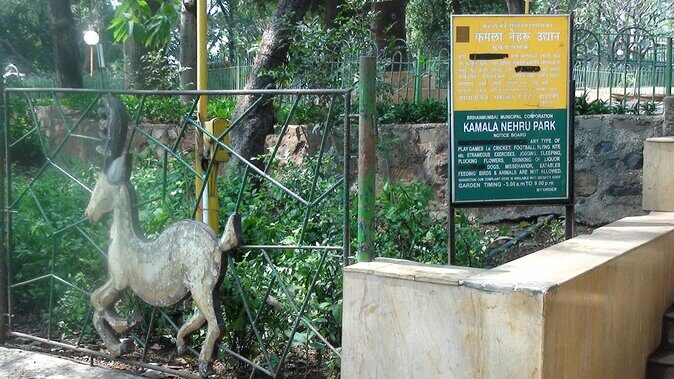
From there, you’ll spend a brief moment at Kamala Nehru Park, named after Kamla Nehru, wife of Jawaharlal Nehru. It’s described as one of the older parks in Mumbai, and the tour route includes a mention of a shoe structure inspired by a nursery rhyme.
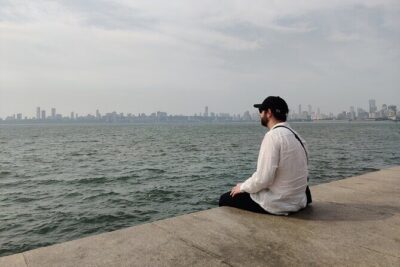
Then comes Marine Drive, where the tour focuses on the classic seaside stretch. The guide area info notes that Marine Drive and Netaji Subhash Chandra Bose Road are often used interchangeably for the 3.6 km promenade. This is the kind of place where you want a clear mind: look at the curve, feel how the road and sea relate, then anchor that with what your guide connects to the city’s layout and character.
This cluster is short, which is good. You get variety—work, history, then views—without turning the day into a long march.




Gateway of India, Rajabai Clock Tower, and the courthouse-era details
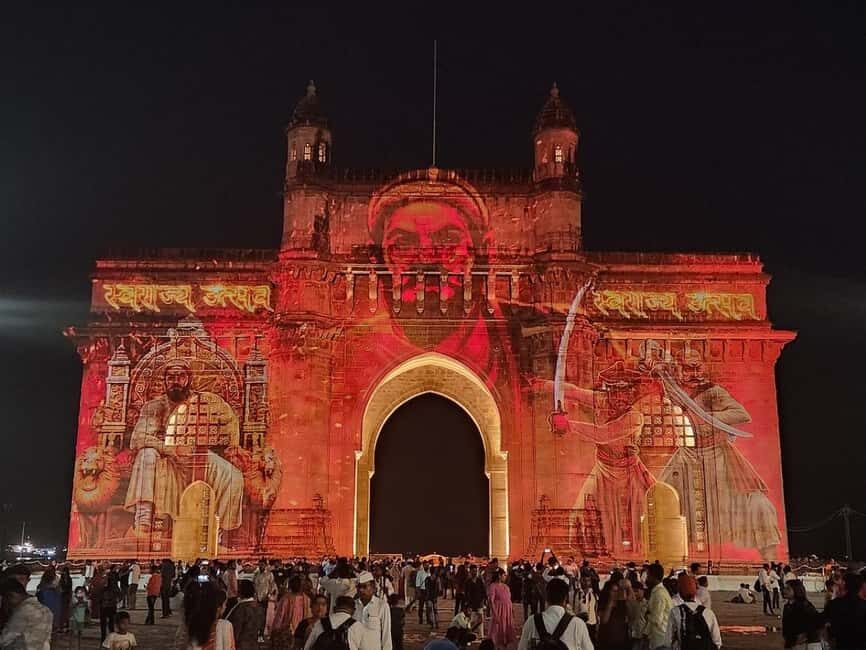
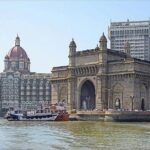
If you’ve never seen the Gateway of India, this is your moment. It was erected to commemorate the landing of King George V and Queen Mary at Apollo Bunder in 1911. It’s built in an Indo-Saracenic style, and the tour frames it through its original purpose.
Here’s how to get more out of the stop: treat Gateway of India as a clue. Ask yourself what kind of city could build something like this and use it as a symbol. You’re not just looking at an object; you’re looking at a story of power, ceremony, and identity.
Next you’ll visit the Rajabai Clock Tower on the University of Mumbai premises. It was designed by architect Sir George Gilbert Scott in 1878. Again, it’s a short stop, but the lesson is bigger than the clock: this is architecture tied to education and institutional life.
The route also includes a stop area tied to the Bombay High Court, founded under the Indian High Courts Act of 1861 and established on August 14, 1862. The functioning started with seven judges. Even with limited time, that’s a useful detail to know because it connects the city’s colonial-era institutions to its later legal and civic identity.
If you like your landmarks with a reason, this is the part of the tour where your “why” questions get answered.
Chhatrapati Shivaji Maharaj Terminus (CSMT): the railway centerpiece you won’t forget
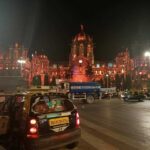
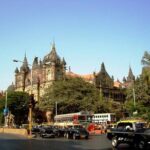
Finally, the tour reaches Chhatrapati Shivaji Maharaj Terminus, often shortened to CSMT or previously coded as CST in some contexts. The description notes the renaming happened in 1996 by the Minister of Railways.
I think CSMT lands differently than other stops because it’s not just one viewpoint. It’s a working transport hub wrapped in major architecture. The tour slot is about 10 minutes, which may sound brief, but you don’t need a long visit to grasp the scale and importance.
Quick advice: if you’re prone to tunnel vision on big stations, step back once and take the whole façade in. Then take your photos. The tour time is limited, so do your “big picture” moment early.
Price and what you’re getting for $69.99
At $69.99 per person for about 5 hours, the cost feels fair when you compare it to what’s included. You’re paying for a private guided plan, hotel pickup from select locations, air-conditioned vehicle transportation, and refreshments (bottled water plus coffee/tea).
Most importantly, you’re also paying for time-saving logistics around the train ride and entry fees where they apply. Admission is included at Churchgate (as noted), Mani Bhavan, and CSMT, while Dhobi Ghat, Hanging Gardens, Kamala Nehru Park, Marine Drive, Gateway of India, and Rajabai Clock Tower are indicated as free stops in the tour details.
Two value notes for you:
- The tour includes guiding and timing, not just access. On a first visit to Mumbai, that can be the difference between understanding and guessing.
- Lunch is not included. That’s the main extra cost you’ll face, so plan to eat before or after depending on your day’s schedule.
Also, confirmation happens at booking time, and the tour uses a mobile ticket. That usually makes entry smoother, especially when you’re juggling a busy transit city.
Is this tour worth it for you?
This is a strong fit if you want a fast, guided orientation to Mumbai that includes real work sites (dabbawalas and dhobis) rather than only sightseeing.
You’ll likely enjoy it most if:
- You’re short on time and need a structured route that covers key neighborhoods and major landmarks.
- You like understanding systems—how food delivery works, how laundry gets done, and how city institutions shaped the built environment.
- You prefer private group attention rather than large-group herding.
This might feel less ideal if:
- You hate outdoor stops or dislike crowds around railway hubs.
- You want long stays in museums or slow wandering with lots of free time.
- You’re expecting the tour to include lunch. It doesn’t, and the schedule can leave you hungry if you don’t plan.
The good news: the tour keeps you moving, but not so fast that you’re constantly sprinting between places. Most stops are built for quick learning moments.
Who runs the show and how the tour supports a mission
The experience is provided by Young Tours And Travel. The operator’s response to at least one review also mentions that a portion of proceeds goes toward running Young Cares Foundation. That’s a meaningful detail for you if you prefer tours that try to tie tourism revenue to local support.
It’s not a reason to book on its own, but it’s a nice extra signal: this isn’t presented only as an extraction of tourist time.
Should you book the Unfeigned Mumbai City + Dabbawala Tour?
I’d book this if you want Mumbai in one day with a real working-city backbone. The local train ride plus the dabbawala lunchbox system gives you a story you can carry around the city afterward. Add Mani Bhavan for context, then finish with major landmarks like Gateway of India and CSMT, and you get a route that helps you understand how Mumbai grew into what it is now.
Skip it or look for an alternative if you’re chasing a relaxing day with long downtime, or if the idea of outdoor work areas near busy transit makes you uncomfortable. And don’t forget lunch—plan your meal so the day doesn’t end on an empty stomach.
If you can handle short stops and a bit of public-space energy, this tour offers solid value for the money and a noticeably more authentic Mumbai than a standard checklist route.
FAQ
Is this tour private or shared?
It’s a private tour/activity, so only your group participates.
What’s included in the price?
The tour includes air-conditioned vehicle transportation, bottled water, coffee and/or tea, and all fees and taxes, plus private transportation.
Is lunch included?
No. Lunch isn’t included.
How long is the tour?
It’s about 5 hours.
Are hotel pickups included?
Pickup is offered from select Mumbai hotels.
What’s the cancellation policy?
You can cancel for free up to 24 hours in advance of the experience start time for a full refund.