Mumbai hits you fast. This tour helps you make sense of it. In about 8 hours, you’ll cover major landmarks that tell the story of modern city life and long-running traditions. I like that it’s a good first-time orientation—you get the big names plus context—and I also like the practical pacing: a full day with a car, stops timed well for photos, and lunch, snacks, and a water bottle included. The main consideration is that Mumbai traffic can squash the schedule, so you may not linger as long as you’d like at each spot.
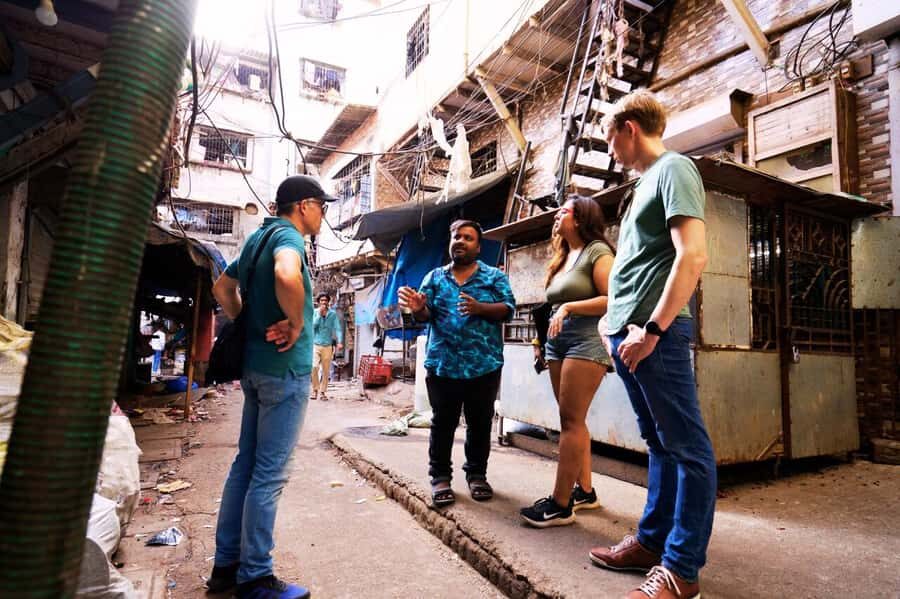
This is also a private tour in your own group, which makes it easier to ask questions and adjust on the fly. The guide is listed as English & Hindi speaking, and in one case the guide Virushali stood out as fun, patient, and good at explaining with a calm, human touch (even a cat-lover detail). Still, there’s one real-world risk with any day tour: if the guide is replaced last minute, the depth and communication can change—one experience ended with a driver stepping in with limited knowledge.
If you want a single day that covers the highlights without you building your own route, this one is built for that. Just go in knowing it’s a “see a lot” day, not a slow wander where you drift from street to street for hours.
In This Review
- Key things to know before you go
- A full-day Mumbai highlights tour: what this 8-hour plan really is
- Gateway of India: the photo stop that sets the mood
- Chhatrapati Shivaji Maharaj Vastu Sangrahalaya and the Jehangir Art Gallery area
- Chhatrapati Shivaji Terminus (Victoria Terminus): rail heritage you can feel
- Dhobi Ghat: the open-air laundromat that changes how you see daily life
- Haji Ali Mosque and the coastal spiritual web of Mumbai
- Hanging Gardens: views, temples, and a look at Mumbai wealth
- Marine Drive: Queens Necklace and the shoreline you’ll remember
- Shri Swaminarayan Mandir and Siddhi Vinayak: a spiritual pause in the middle of the route
- Bandra-Worli Sea Link, Bandra Fort, and the modern-to-historic contrast
- Juhu Beach and ISKCON Juhu: a different kind of Mumbai ending
- Price and what’s included: does it feel worth it?
- Logistics that can make or break the day: traffic, timing, and flexibility
- When this tour is the best match for you
- Should you book this full-day Mumbai sightseeing tour?
- FAQ
- How long is the guided city tour in Mumbai?
- Where does the tour start and end?
- Is pickup offered?
- What are some of the main stops on the tour?
- Are entrance fees included in the price?
- Is lunch and snacks included?
- Is bottled water included?
- Is this tour private?
Key things to know before you go
- A first-time Mumbai route that stitches together colonial-era icons, religious sites, and sea views in one day
- Mostly included entrances at many stops, but not every site is ticketed inside the price
- Car + guided storytelling with an English/Hindi guide, plus lunch and snacks so you don’t scramble for food
- Short, timed visits (some stops are about 30 minutes), so you’ll need to prioritize what you want to photograph
- Traffic is the wild card, especially if you’re aiming for perfect timing at multiple waterfront stops
A full-day Mumbai highlights tour: what this 8-hour plan really is
This tour is for you if you want a structured day in Mumbai. You’re not just dropped at landmarks—you’re taken through them with a guide who’s set up to explain what you’re seeing and why it matters locally. The day includes stops across South Mumbai’s famous shoreline, the city’s heritage rail-and-architecture zone, and the western belt toward the sea link and Juhu Beach.
The big value is that you get a “big picture” order to the day. Gateway of India, a terminus heritage stop, Dhobi Ghat, major temples and mosques, then viewpoints and beaches—this route forces you to see the city’s contrasts in one line. That helps on your first visit, because Mumbai can feel like a series of neighborhoods with different moods, not one continuous story.
Pricing is listed as $131.42 per group (up to 3), and the tour can accommodate up to five people. That means the unit cost can get better if you’re traveling with others. You’re also getting a car for the destinations (so you’re not spending your day coordinating transport), plus lunch, snacks, and a water bottle. Entrance fees are included for most attractions, which can quietly add up in a city where ticket rules can vary by site.
Still, understand the pacing: many stops are around 30 minutes, and several others are about an hour. That’s enough time to get your bearings, hear the explanation, and take photos. It’s not enough time to “deep linger” at every site. If your travel style is slow and obsessive, you might feel rushed. If your style is efficient and curious, you’ll likely feel satisfied.
Finally, Mumbai is a city where the calendar can matter. One reviewer called out monsoon season making things challenging, and traffic is part of the challenge. So if your day includes rain, expect slower movement and plan to stay flexible.
You can also read our reviews of more guided tours in Mumbai


Gateway of India: the photo stop that sets the mood
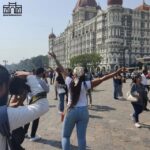
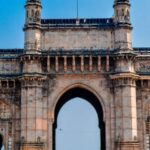
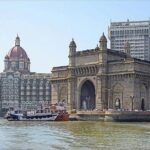
You start at the Gateway of India area, specifically at Apollo Bandar in Colaba. This is a classic starting point for a reason: it’s one of the city’s most recognizable entry symbols. When you’re standing there, you instantly understand why people describe Mumbai as both dramatic and everyday—ships, crowds, the coastline, and the whole sense of arrival.
The tour also includes the Vivekanand & Shivaji Statue area as part of this stop. That matters because it adds a layer beyond the waterfront photo. Even if you only have a short time here (the stop is about 30 minutes), the guide’s explanations can help you read the space: who is celebrated, what the statues signal, and how this part of Mumbai fits into broader identity and public memory.
What to do with your time:
- Give yourself a moment to look beyond the main landmark and notice the wider harbor vibe.
- Use the guide’s context so you’re not just collecting pictures—you’re collecting meaning.
A small caution: because this is one of Mumbai’s most famous spots, it can be crowded. If you care most about clear photos, tell your guide you want a quick reposition to avoid the densest crowd zones.
Chhatrapati Shivaji Maharaj Vastu Sangrahalaya and the Jehangir Art Gallery area
Next comes the heritage-and-culture stretch around Chhatrapati Shivaji Maharaj Vastu Sangrahalaya, plus nearby stops like Regal Cinema, Wellington Fountain, and the Jehangir Art Gallery area. This section is great for you if you like architecture and if you want your city story to include art and civic landmarks, not only religious buildings and beaches.
Here’s the nuance: the itinerary lists this stop as Admission Ticket Not Included. So even though you’ll likely be seeing major museum-related surroundings, you shouldn’t assume you’re paying nothing for this specific ticket. The tour’s highlights say entrance fees are included for most attractions, but this stop is explicitly marked as not included.
How to make this work in real life:
- Ask your guide at the moment what’s ticketed vs. view-only on your exact day.
- If you really care about museum interiors, budget time and money accordingly.
The upside? Even without a ticket, the surrounding civic landmarks can still be worth your attention—especially if your guide explains what each area is known for and how it fits into Mumbai’s social and political development.
Chhatrapati Shivaji Terminus (Victoria Terminus): rail heritage you can feel
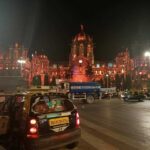
Then you get to Chhatrapati Shivaji Terminus, also known as Victoria Terminus. This is a stop built for people who love big architecture with a sense of purpose. You don’t just see a building—you see a landmark that signals how important Mumbai’s transport and industry were (and still are).
Your time here is about 30 minutes, with an admission ticket included. The heritage aspect makes this a good “anchor stop” in the day: after waterfronts and neighborhoods, you get a solid, grounded structure that helps you picture Mumbai’s role as a hub of movement and trade.
What I like about putting this after the museum area is contrast. Museums can feel like a still-life. A major rail terminus feels like a living machine. In a single day, that contrast helps your brain map the city.
Dhobi Ghat: the open-air laundromat that changes how you see daily life
Dhobi Ghat (Mahalaxmi Dhobi Ghat) is one of those stops that makes Mumbai feel immediate. It’s an open-air laundromat—an everyday industry happening in plain view. You’re not watching a staged performance; you’re seeing a working system, and that’s a big reason this stop lands for many first-time visitors.
Your visit is about 30 minutes, with an admission ticket included. That’s enough time for photos, a quick read of the activity patterns, and to listen while your guide explains how this place fits into the city’s economy and daily routine.
Practical advice:
- Keep your expectations simple. This is a working place, not a museum exhibit.
- Use your guide’s context so you understand what you’re seeing instead of guessing.
The tour’s longer-term value here is that Dhobi Ghat isn’t just a spectacle. It’s a clue: Mumbai’s scale and labor systems are part of what makes the city tick.
You can also read our reviews of more city tours in Mumbai


Haji Ali Mosque and the coastal spiritual web of Mumbai
Then you shift to Haji Ali Mosque, including Haji Ali Dargah and Mahalaxmi Temple, plus other nearby attractions along the way. The stop lasts about an hour, with an admission ticket included.
This is a meaningful change of pace. You’re going from the practical world of Dhobi Ghat to a spiritual world that’s tied to place and water. Even with limited time, it’s the kind of stop where listening matters: your guide can help you understand religious practice as something local, not distant.
One reason I like this stop in the itinerary is balance. You already had a heritage landmark and a working industry site; now you get the religious and coastal layer that Mumbai carries.
What to keep in mind: because this is tied to religious sites, the environment can feel more formal and quieter than commercial streets. If you want photos, ask your guide where timing helps reduce crowds or where viewpoints are best.
Hanging Gardens: views, temples, and a look at Mumbai wealth
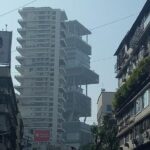
Next is Hanging Gardens, around the Malabar Hill area. The itinerary mentions Antilha (the Ambani House), Hanging Garden, Deoras house, Jain temples, Kamla Nehru Park, Babulnath Temple, and ISKCON Temple.
The stop is about an hour, and an admission ticket is included. This is the spot in the day where Mumbai’s mix of wealth, architecture, and devotion becomes very obvious—sometimes all in the same frame. It’s also a good reminder that the city doesn’t do one mood well. It does many moods, side by side.
A big plus: it’s not only “rich views.” The inclusion of Jain temples, Babulnath Temple, and ISKCON Temple means you’re seeing faith spaces and not just skyline viewpoints. Your guide’s storytelling is what turns a set of landmarks into a coherent neighborhood portrait.
Also, because you’re likely to be photographing, plan for short attention bursts. You’ll want to keep moving with the group so you don’t miss the best explained angles.
Marine Drive: Queens Necklace and the shoreline you’ll remember
Marine Drive is one of those Mumbai places you hear about and then understand when you’re there. You get it for about 30 minutes, with an admission ticket included.
The itinerary specifically calls out Marine Drive and Queens Necklace. That name matters. It’s a visual identity for the curve of the road and the way it lights up (even if you’re here during daylight). When a city gives a place a nickname that poetic, it’s usually because the view is genuinely memorable.
What I think works well here: after Hanging Gardens, Marine Drive brings you back to the sea. The day becomes about reading the coastline, not just listing attractions. You start to connect the city’s geography with its culture and daily behavior.
Shri Swaminarayan Mandir and Siddhi Vinayak: a spiritual pause in the middle of the route
Next is Shri Swaminarayan Mandir, including Siddhi Vinayak Temple. You’ll spend about an hour, with an admission ticket included.
This is a good mid-to-late-day stop when you want a quieter breath. The itinerary’s inclusion of these temples adds another layer of religious variety, and it keeps the day from becoming only monuments and viewpoints.
It’s also a stop where your guide’s conversation style becomes important. When someone can explain what you’re seeing in plain language, you get more out of an hour than you would by just wandering.
If your feet are tired, use the time smartly: listen first, then do your photos once you know what parts you want.
Bandra-Worli Sea Link, Bandra Fort, and the modern-to-historic contrast
After that, you head toward the Bandra-Worli Sea Link. The stop also includes Bandra Fort, Basilica of Our Lady of The Mount, Bandstand, and Linking Road.
This is about an hour, with an admission ticket included. The Sea Link itself is a strong visual marker of modern Mumbai, and the surrounding stops add older texture. That contrast is exactly what helps you understand why Mumbai keeps changing while still holding on to landmarks that people treat as anchors.
Bandra Fort and the nearby church site add civic and religious history alongside the sea-view infrastructure. You’re not just looking at a road or a bridge; you’re watching the city’s layers interact.
One thing to watch: because this part of the city can involve more traffic, time management matters. If your route needs to slide, your guide can decide which parts to prioritize. A well-run guide keeps the story coherent even when the schedule bends.
Juhu Beach and ISKCON Juhu: a different kind of Mumbai ending
Finally, you reach Juhu Beach (including ISKCON Juhu and Juhu Beach Vile Parle). This stop lasts about an hour, with an admission ticket included.
Juhu is a different mood from South Mumbai’s landmark zone. It’s more about public energy and seaside leisure. The tour ending here also feels practical: you finish with open space, sea air, and a place where you can decompress before heading back.
This stop is also where you can get a “real day in the city” feeling. Even with only an hour, you can sense local rhythm—people walking, families around, the general sense that the beach is part of everyday life.
Price and what’s included: does it feel worth it?
At $131.42 per group, this tour can feel like decent value if you’re the kind of traveler who hates planning logistics. You’re paying for:
- A private car for the destinations
- A guide who can talk in English and Hindi
- Lunch and snacks at a local favorite spot
- A water bottle and snacks
- Entrance fees for most attractions
- Mobile ticket access
Now, about tickets: the day includes admission ticket notes per stop. Most stops are marked as admission included, but one key museum stop is marked as not included. So you should treat the price as “most entrances covered,” not “every single ticket is included with no surprises.”
On food: the highlight says lunch, snacks, and bottled water are included, but the tour details also list bottled water as not included while a water bottle is included. In practice, that usually means you’re set for a drink and snacks, but if you strongly prefer a purchased bottled brand, you might want to grab your own extra.
If you’re traveling solo, the per-group price can feel steep. If you can split it among 2–3 people, it tends to look more reasonable, especially because entrance fees and transport reduce your own spending and planning.
Logistics that can make or break the day: traffic, timing, and flexibility
Mumbai traffic can be a storyline. One review mentioned a nice city tour but also pointed out the practical challenge: you may not cover all places in the listed time. That’s not a complaint about the sights—it’s just reality. Roads around busy areas can slow you down, and a guided day with multiple stops has less room to absorb delays.
Here’s how to protect your experience:
- Think of each stop as a chance to see one main thing well, not five things quickly.
- If you want to spend more time somewhere, ask early. With a private group, there’s more opportunity to shift than on a fixed group bus.
- If you’re visiting during monsoon season, assume delays. One reviewer specifically called out monsoon challenges and praised the tour’s flexibility for adjusting around that.
Also, the schedule includes stops that are explicitly timed at 30 minutes and others around an hour. That’s good for keeping you moving, but you’ll still want shoes that handle uneven sidewalks and curbs because you’ll be stepping out and back to the car repeatedly.
When this tour is the best match for you
This tour suits you if:
- You’re seeing Mumbai for the first time and you want a route that makes sense.
- You have limited time and want the key landmarks in one day.
- You like explanations, not just sightseeing.
- You’re happy with a pace that’s active and guided rather than slow and wandering.
- You’re traveling as a small group so the per-group cost makes sense.
It may not be the best fit if you:
- Want to spend long hours inside museums or deep-study one neighborhood.
- Prefer an unstructured day where you can stay put when something catches your eye.
- Get very stressed by traffic delays and short stop times.
And here’s the honest note based on real experience: there can be a problem if a guide is unable to continue and someone else takes over. One experience ended with a guide replaced by a driver with limited communication and knowledge. That’s not something you can predict, but it’s worth knowing because it can affect how much you learn.
Should you book this full-day Mumbai sightseeing tour?
I’d book it if you want a guided highlights day that does the heavy lifting for you. The strongest reason is the mix: you go from iconic Mumbai (Gateway, Terminus) to working-life texture (Dhobi Ghat) to spiritual sites (multiple temples and a mosque) to sea views and beaches (Marine Drive, Sea Link, Juhu). That blend helps you understand Mumbai quickly, without you spending days researching routes.
If you’re the type who wants a slower pace, or you’re focused on one theme like museums only, you might be happier building a half-day plan with fewer stops. But if you’re balancing first impressions with real time constraints, this route is a solid way to get oriented fast.
If you do book, keep a little flexibility in your expectations. Traffic can shift timing, and one museum stop doesn’t list admission as included. That means your best move is to decide in advance which sites you care about most, then let the guide handle the rest.
FAQ
How long is the guided city tour in Mumbai?
It’s listed as 8 hours approximately.
Where does the tour start and end?
It starts at Gateway Of India Mumbai (Apollo Bandar, Colaba) and ends at Marine Lines, Mumbai.
Is pickup offered?
Yes, pickup is offered.
What are some of the main stops on the tour?
The tour includes Gateway of India, Chhatrapati Shivaji Maharaj Vastu Sangrahalaya, Chhatrapati Shivaji Terminus, Dhobi Ghat, Haji Ali Mosque, Hanging Gardens, Marine Drive, Shri Swaminarayan Mandir, Bandra-Worli Sea Link, and Juhu Beach.
Are entrance fees included in the price?
Entrance fees for most attractions are included. However, the Chhatrapati Shivaji Maharaj Vastu Sangrahalaya stop is marked as admission ticket not included.
Is lunch and snacks included?
Yes. Lunch and snacks are included, and a water bottle is also included.
Is bottled water included?
Bottled water is listed as not included, though a water bottle is included with snacks.
Is this tour private?
Yes. It’s a private tour/activity, and only your group participates.