REVIEW · MUMBAI
Essence of Mumbai: Half-Day Private Tour
Book on GetYourGuide →Operated by Taxi Bazaar · Bookable on GetYourGuide
Mumbai moves fast, and so does this tour. It’s a smart way to hit the big icons like Gateway of India and the Taj Mahal Palace Hotel, then mix in real street life at markets and Marine Drive. I especially like the private setup (your route can flex) and the fact that your driver–guide handles the hard parts, like traffic and photo moments; I also love how guides such as Nisar and Salim are patient and adapt to your pace. One consideration: there’s a moderate amount of walking, and Mumbai traffic can make timing feel slightly fluid.
You start around 10:00 AM with pickup from your accommodation inside Mumbai and end around 4:00 PM, with an AC car, bottled water, and a guide in English, Hindi, or Marathi. You’ll see a solid sweep of South Mumbai, from colonial-era landmarks to Gandhi’s history sites, plus chances to sample simple local snacks along the way. If you want a low-effort way to get your bearings fast, this is a good fit.
In This Review
- Key Highlights You’ll Actually Care About
- A Private Half-Day That Lets Mumbai Fit Your Schedule
- Pickup, the AC Car, and What Private Means in Real Life
- Gateway of India and the Taj Mahal Palace Hotel: Start With a Landmark That Clicks
- Victoria Terminus (CST) and Mani Bhavan: Architecture Meets Gandhi-Era Stories
- Wholesale Markets and Crawford Market: The Place Where Mumbai Feels Real
- Marine Drive and Girgaon Chowpatty: Views Worth the Traffic
- Dhobi Ghat and Kala Ghoda Art District: Daily Work, Then Creative Streets
- Flora Fountain, University of Mumbai, and Old Bombay Details
- Malabar Hill and South Mumbai in One Smooth Arc
- Price and Value: Why Around $21 Can Make Sense
- Should You Book This Mumbai Private Tour?
- FAQ
- How long is the Essence of Mumbai half-day private tour?
- What time does the tour start?
- Is pickup available from my hotel in Mumbai?
- Is this a private tour, and what languages are offered?
- What major places will I see?
- What’s included in the price?
- What should I bring?
- Is there walking, and is the tour suitable for mobility impairments?
- Can I cancel, and can I reserve without paying right away?
Key Highlights You’ll Actually Care About

- Private guide + flexible route so you can spend longer where you care most
- Gateway of India + Taj Mahal Palace Hotel to anchor your day with the classic waterfront vibe
- Victoria Terminus (CST) and Mani Bhavan for architecture and Gandhi-era context
- Big wholesale markets and Crawford Market for sensory, everyday Mumbai
- Marine Drive and Girgaon Chowpatty views that look good even from a moving car
- Professional photos with your guide so you don’t have to play photographer all day
A Private Half-Day That Lets Mumbai Fit Your Schedule
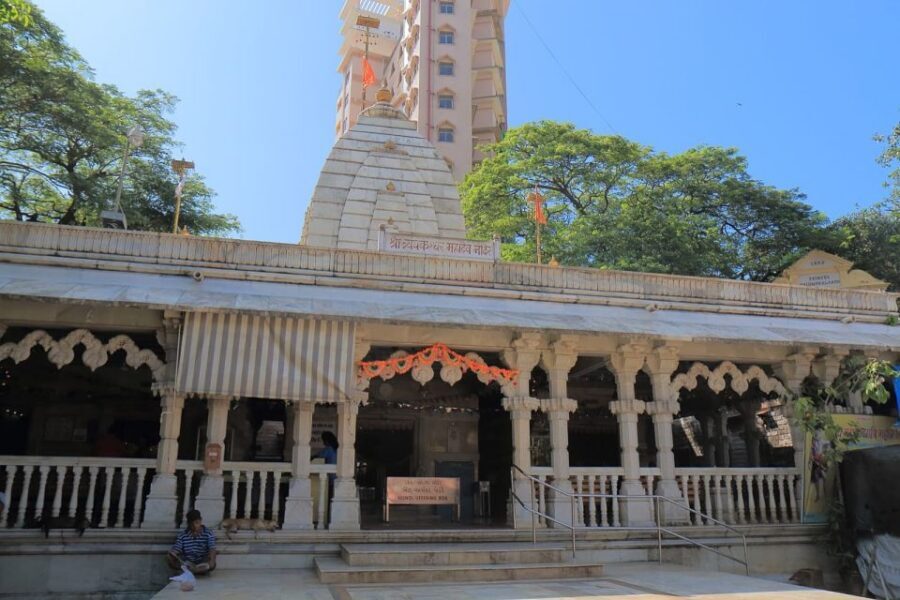
Mumbai is one of those cities where a “quick tour” can easily turn into rushed line-waiting and missed context. This half-day private experience is designed to avoid that trap by keeping the day in one area and letting you choose how intense you want it to feel.
The sweet spot is the length: typically about six hours, which is long enough for a meaningful overview but short enough that you still have energy for dinner after. And since it’s private, your guide can adjust the rhythm when you want more stops, more photos, or more time to just watch people.
The best value here is not just the sights—it’s the human help. Guides in the reviews, including Nisar, Kadir, Arshad, Salim, and others, get high marks for being kind, patient, and responsive to personal wishes. In practical terms, that means less stress for you when streets get crowded or when you suddenly realize you’d rather grab a snack than rush to the next corner.
You can also read our reviews of more private tours in Mumbai



Pickup, the AC Car, and What Private Means in Real Life
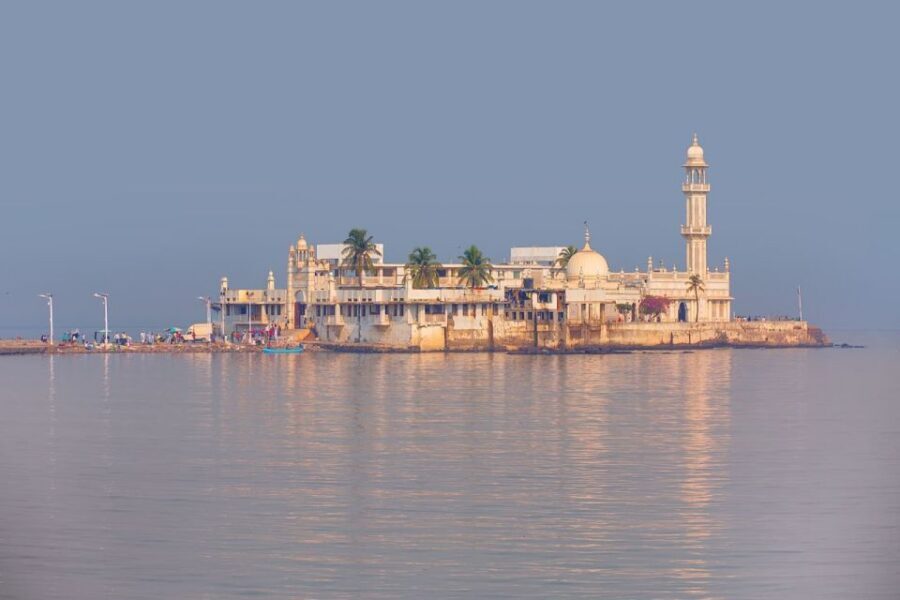
You’ll be met around 10:00 AM at your hotel or accommodation in Mumbai, then transferred in an air-conditioned car. Bottled water is included, which sounds basic, but it matters in a city that can feel hot and chaotic fast.
Because it’s private, your guide is not negotiating with a group schedule. You can request a particular market, a café stop, or more time near a landmark, and the route can adapt. I also like that the pickup is optional and can be arranged within Mumbai, so you’re not forced into a far-away meeting point.
There’s one tradeoff worth knowing: this is a car-focused tour with moderate walking, so wear comfortable shoes. If you’re someone who hates even short walks, plan to take it slowly at each stop.
Gateway of India and the Taj Mahal Palace Hotel: Start With a Landmark That Clicks
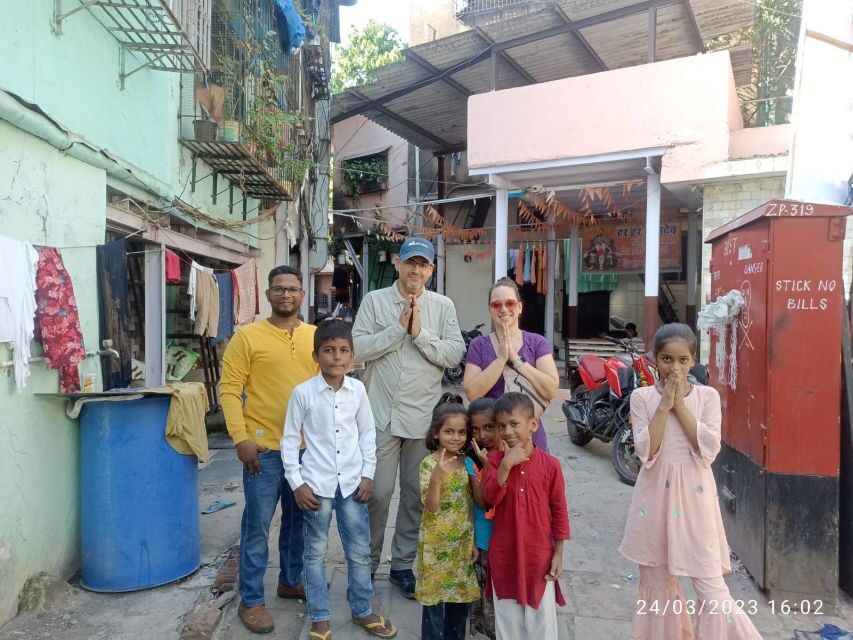
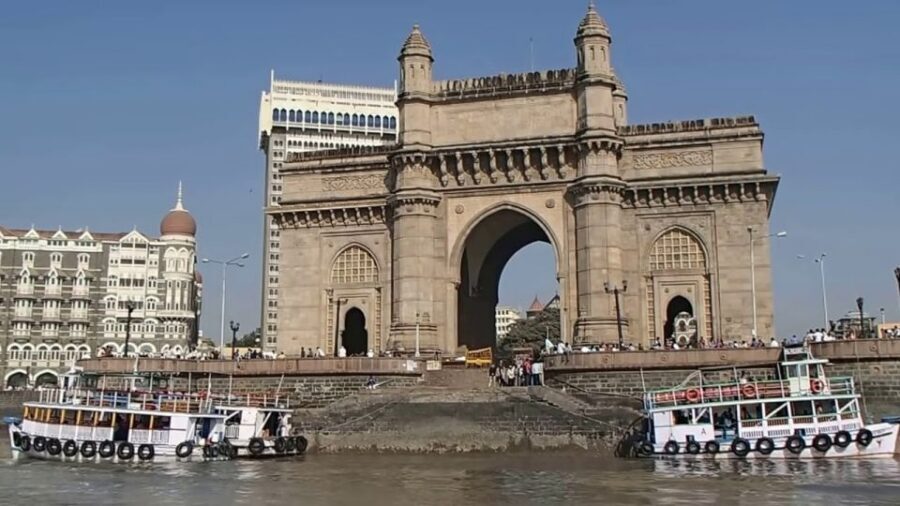
Most Mumbai tours start at the water, and this one does it for a reason. Gateway of India is the postcard monument, but it’s also a practical anchor point for understanding the city’s connection to empire, trade, and later national identity.
Right next door, you’ll see the Taj Mahal Palace Hotel—a building that feels like it belongs in a storybook, even while people stream past it in everyday routines. The combination of the two sites gives you a quick mental map: one side is monumental and ceremonial, the other is glamour tied to history.
What you’ll likely enjoy most is how your guide frames what you’re seeing. In the reviews, guides are praised for explaining significance, not just pointing. So when you stand at the waterline, you’ll understand the why behind the what.
A possible drawback: this area can be busy, and photo time depends on light and crowds. That’s where the private guide helps—people often appreciate that the guide times stops and takes photos so you don’t miss the moment.
Victoria Terminus (CST) and Mani Bhavan: Architecture Meets Gandhi-Era Stories
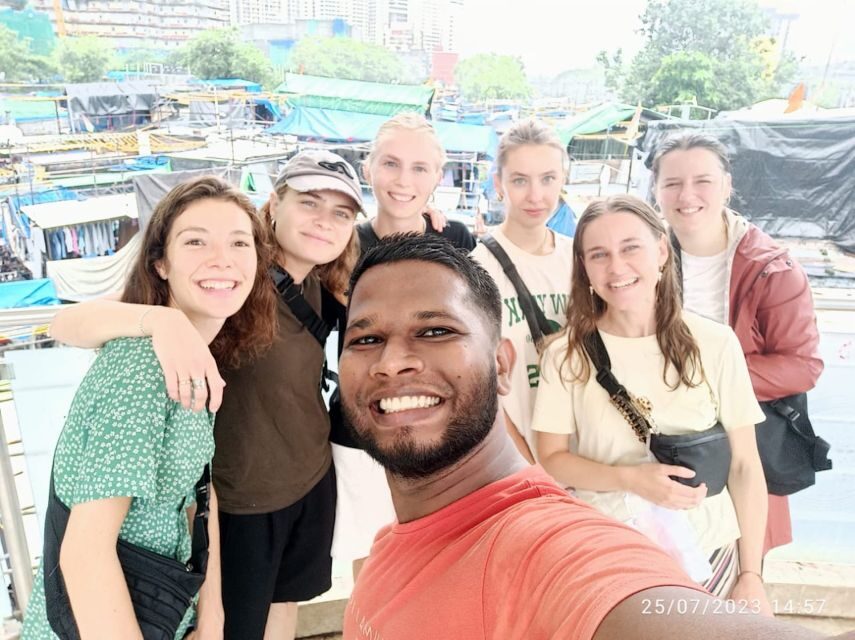
If Gateway of India gives you the big exterior story, Victoria Terminus (CST) gives you the building-and-brain story. The station’s Gothic architecture looks dramatic from multiple angles, and it’s the kind of landmark that rewards a slow look, not a fast glance.
Then there’s Mani Bhavan, closely tied to Mahatma Gandhi’s presence in Mumbai. Seeing it as part of a broader South Mumbai route helps the history feel connected, not isolated. You’ll pass through neighborhoods and landmarks that make it easier to understand how the political ideas spread and took shape.
In the reviews, guides like Kadir and Kamil get credit for clear English and thoughtful pacing—basically, they’ll explain what’s worth noticing and then give you time to look. That’s valuable, because these sites are easy to reduce to a photo. With a guide, you get context you can actually use later.
Wholesale Markets and Crawford Market: The Place Where Mumbai Feels Real
One of the most memorable parts of this tour is the stop (or multiple stops) connected to Mumbai’s wholesale market scene, including Crawford Market. These aren’t just tourist streets; they’re supply lanes where goods move fast and people know exactly what they’re doing.
This is where you get the city’s daily rhythm in your bones. You’ll see how the city feeds itself—literally—plus the mix of shoppers, workers, and shopkeepers that makes markets feel alive.
Your guide’s value here is interpretation. It’s easy to walk through a market with your eyes on the colorful signs and miss how it works. A good guide turns it into a quick lesson: where the action happens, what kinds of stalls matter, and how the market fits into the larger city economy.
The only caution: markets can be crowded, and the day includes moderate walking. If you get overwhelmed in tight spaces, tell your guide early. Private flexibility helps because you can slow down or adjust how long you spend inside.
You can also read our reviews of more tours and experiences in Mumbai



Marine Drive and Girgaon Chowpatty: Views Worth the Traffic
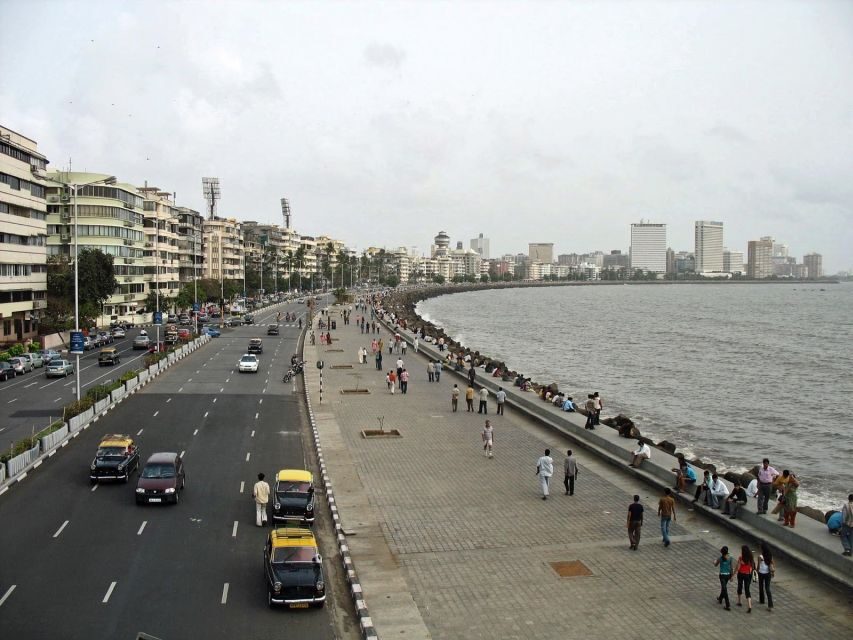
If you want a payoff moment, plan on Marine Drive. The views from here are one of those classic Mumbai looks you can’t fully appreciate from photos alone. From the road and viewpoints, you’ll see the curve of the shoreline and how people use this space for evening relaxation.
You may also stop near Girgaon Chowpatty Beach, where families gather and you can feel how the city unwinds. Even if you don’t linger long, the sightline gives you a “now I get it” feeling about Mumbai’s coastal geography.
Traffic in Mumbai is real, and your guide has to work around it. That’s why so many reviews mention safe driving in difficult conditions. In practical terms, it means you’ll spend less time stressed and more time looking at what you came for.
Dhobi Ghat and Kala Ghoda Art District: Daily Work, Then Creative Streets
Two very different experiences make this tour feel more like a whole day and less like a checklist: Dhobi Ghat and Kala Ghoda Art District.
Dhobi Ghat is the world’s largest open-air laundromat, where you’ll see rows of colorful laundry hanging with constant movement all around. It’s one of those places where you can’t help but notice the scale and the everyday precision. The best part is that you’re seeing work that doesn’t slow down for tourists.
Then Kala Ghoda Art District shifts the mood. You’ll find galleries and street art in a more creative lane of the same city. The contrast between Dhobi Ghat’s functional intensity and Kala Ghoda’s expressive visuals helps you understand Mumbai as more than landmarks. It’s people working, creating, selling, praying, and watching.
If you’re sensitive to crowds or strong visual scenes, Dhobi Ghat may feel intense at first. Give yourself a minute to settle in, then decide how long to stay.
Flora Fountain, University of Mumbai, and Old Bombay Details
South Mumbai is full of small architectural clues, and this tour includes several of them, such as colonial buildings near Flora Fountain and the University of Mumbai. These stops help connect the dots between the grand monuments and the everyday street grid you’re driving through.
Why it matters: it’s easy to treat Mumbai as only two categories—historic icons or street scenes. These in-between areas show the city’s continuity: how the built environment evolved while daily life kept moving.
Your guide’s background shows up here too. In reviews, people appreciated how guides shared stories about significance as they drove past buildings. That turns a “drive-by” into something you’ll remember.
Malabar Hill and South Mumbai in One Smooth Arc

Depending on your route choices, you may get time near Malabar Hill and then back into the denser old-Mumbai core. This arc is useful because it gives you contrast: quieter hill views versus the intensity of older streets.
The benefit for you is mental mapping. After this kind of tour, you’re more likely to know where you want to wander later—whether it’s returning to a market you liked or chasing views you couldn’t fully absorb during the drive.
The drawback is that six hours is still six hours. Even with a flexible guide, you can’t expect every stop to be equally long. This is where your own preferences matter: if you care most about markets, focus time there; if you love architecture, ask for extra time near CST.
Price and Value: Why Around $21 Can Make Sense
At $21 per person, this is priced like a budget-friendly private day, not a premium full-day excursion. The value comes from what you’re buying: a private air-conditioned car, a private guide, bottled water, and fuel surcharges—plus help with navigating tight streets and timing photo moments.
The big reason it feels like good value is the guide-as-problem-solver angle. Traffic is a headache in Mumbai. Reviews repeatedly praise drivers and driver-guides for handling difficult driving conditions and keeping the day moving without feeling rushed.
Also, professional photos are included, and that’s not just for decoration. It’s genuinely useful if you’re short on time and want good images without having to hunt for someone to take them—or awkwardly ask strangers.
If you’re the type who wants to see the maximum number of meaningful places with minimal planning, the price-to-effort ratio can be excellent.
Should You Book This Mumbai Private Tour?
If you’re on a tight schedule, I’d say yes—with a couple of common-sense checks.
Book it if:
- You want Gateway of India, Taj Hotel, CST, Marine Drive, and a mix of markets and local life in one day.
- You like the idea of a private guide who will adjust your route to your interests.
- You’d benefit from help with timing, photos, and navigating busy areas.
Skip or reconsider if:
- You have mobility limitations and can’t handle moderate walking.
- You want a slow, stop-everywhere walking tour with long time at each site. This is more car-and-sight-focused.
My final take: this is a practical way to get your bearings in Mumbai, with just enough flexibility to make the day feel personal. If you tell your guide what you care about and you wear comfortable shoes, you’ll leave with images, context, and a clearer sense of where the city’s different moods live.
FAQ
How long is the Essence of Mumbai half-day private tour?
It’s listed as 4 to 6 hours, with typical tours starting around 10:00 AM and ending around 4:00 PM.
What time does the tour start?
The guide/driver greets you at 10:00 AM (per the tour description).
Is pickup available from my hotel in Mumbai?
Pickup is optional, and the meeting point can be arranged within Mumbai based on your convenience.
Is this a private tour, and what languages are offered?
It’s a private group tour, and the guide is available in English, Hindi, and Marathi.
What major places will I see?
The tour highlights include Gateway of India, the Taj Mahal Palace Hotel, Victoria Terminus (CST), Mani Bhavan, Marine Drive, Girgaon Chowpatty, Crawford Market, and Dhobi Ghat (plus Kala Ghoda and other nearby areas you may explore).
What’s included in the price?
You get private transportation in an air-conditioned car, bottled water, a private guide, and fuel surcharges.
What should I bring?
Bring a comfortable pair of shoes and an ID card (a copy is accepted).
Is there walking, and is the tour suitable for mobility impairments?
There is a moderate amount of walking. It is not suitable for people with mobility impairments.
Can I cancel, and can I reserve without paying right away?
Yes. You can cancel up to 24 hours in advance for a full refund, and there’s a reserve now, pay later option.