REVIEW · MUMBAI
Mumbai Local – Best Seller from Mumbai Magic
Book on Viator →Operated by Mumbai Magic · Bookable on Viator
Mumbai has a shortcut to understanding. This small-group Mumbai Magic tour uses public transportation and a student guide so you see the city the way locals move. It’s built around a simple route: meet at Gateway of India, walk key sights, then hop on transit to the Mani Bhavan Gandhi Museum and Dhobi Ghat.
What I like most is how the day balances iconic landmarks with day-to-day city life. You’re refreshed with free bottled water and snacks, and you get enough time with your guide to ask practical questions while you’re traveling. The one drawback to plan for is that you’ll be on your feet and in crowd conditions during bus and train segments, so comfortable shoes and patience help.
In This Review
- Key highlights to know before you go
- Gateway of India: Your easy meeting point and quick orientation
- Walking the landmarks route: Regal Circle, Kala Ghoda, Churchgate
- Mani Bhavan Gandhi Museum: a focused stop with included access
- Dhobi Ghat by train: seeing open-air laundry as a real working system
- Price and value: why $41.60 makes sense for a 4-hour local day
- Small group size and the student guide difference
- Where this tour fits best (and where it might not)
- Should you book Mumbai Local with Mumbai Magic?
- FAQ
- Where does the Mumbai Local tour start?
- Where does the tour end?
- How long is the tour?
- How big is the group?
- What is included in the price?
- What transport will we use during the tour?
- Do I get a mobile ticket?
- Is transport to and from the meeting point provided?
- Can I cancel for a full refund?
Key highlights to know before you go
- Student guide from a local non-profit: you get a more grounded, local explanation than a script.
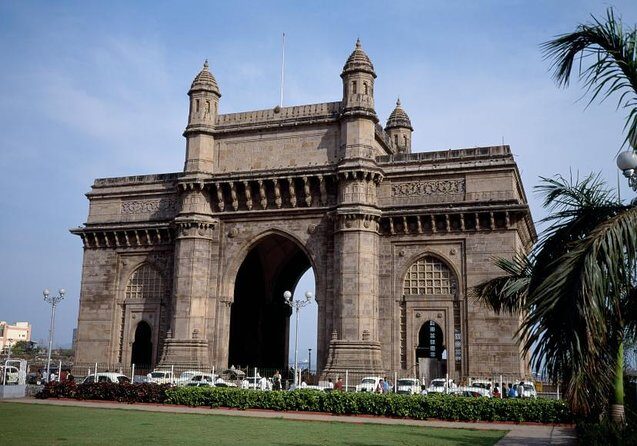
- Gateway of India to Churchgate on foot: a smart way to learn the geography of South Mumbai.
- Mani Bhavan Gandhi Museum entrance included: you don’t have to scramble for ticketing.
- Dhobi Ghat by train: you’ll see Mumbai’s open-air laundry system without treating it like a photo stop.
- Max 10 travelers: smaller groups mean more personal attention when navigating transit.
- Free bottled water and snacks: small perks that matter during a 4-hour run.
Gateway of India: Your easy meeting point and quick orientation
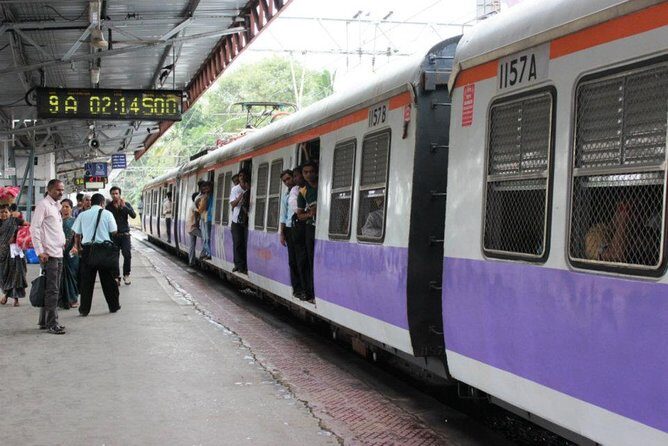
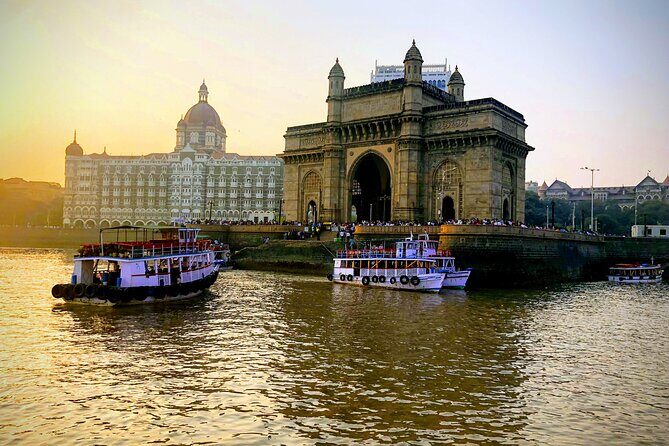
The experience starts at the Gateway of India area, at Apollo Bandar in Colaba. That’s a big, obvious landmark, and it’s also close to the public transportation system, which makes your arrival less stressful. You’ll meet your guide and group there, then the tour shifts from “where am I?” to “okay, I get this city.”
One reason this opening works well is that you’re not dropped into South Mumbai blind. Your student guide is there to set the pace and help you understand what you’re seeing as you walk. That matters because Mumbai’s scale can feel overwhelming at first, even when the sights themselves are famous.
You’re also starting with a gentle momentum. The early portion includes walking through a cluster of major spots, so you build confidence before the bus and train rides. If you’re arriving on a first trip to India, this is the kind of start that lets you enjoy the day instead of constantly checking maps.
You can also read our reviews of more tours and experiences in Mumbai.



Walking the landmarks route: Regal Circle, Kala Ghoda, Churchgate
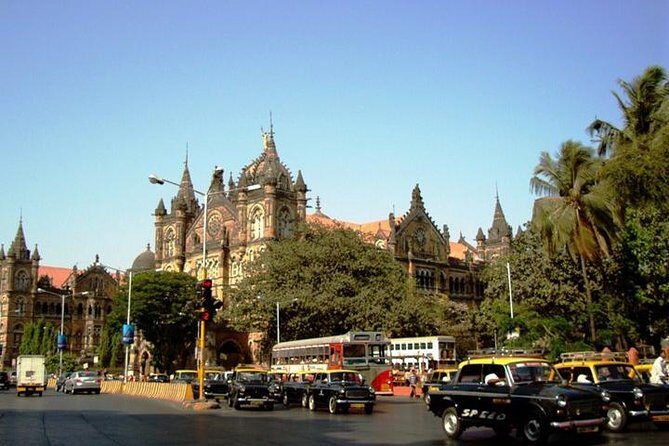
After Gateway of India, the tour works its way through a set of well-known stops: Regal Circle, the Prince of Wales Museum, Kala Ghoda, Bombay University, the High Court, Oval Maidan, and Churchgate. The walking segment isn’t about doing a long hike. It’s about learning the layout of the area by moving through it, with landmarks acting like signposts.
I like this style of sightseeing because it gives you context. When buildings, plazas, and institutions appear in the same order on foot, you start to recognize where you are—and why it matters. It’s also a good setup for photography, since you’re not only catching views from one angle. You’ll see the route from the street-level rhythm of South Mumbai.
Two practical thoughts for this part:
- Wear shoes you can walk in for a couple of hours. The tour is about 4 hours total, and you’ll spend real time on your feet.
- Expect normal city motion. People are moving, vendors are around, and crossings can feel busy. Your guide’s pacing helps you avoid wasting time in confusion.
If you’re the type of visitor who likes to understand how a city is “put together,” this walking-to-transit structure is a strong choice.
Mani Bhavan Gandhi Museum: a focused stop with included access
Next up is the Mani Bhavan Gandhi Museum. The experience includes entrances, so you won’t be searching for what ticket you need once you arrive. That’s a small detail, but it’s a big help when you’re traveling in a place where paperwork and lines can vary by day.
This museum stop adds weight to the tour. The first part gives you famous sights and city layout; Mani Bhavan connects that geography to a bigger story around Gandhi. Even if you already know some history, having it explained by a student guide makes the stop feel more alive and less like a checklist.
You’ll likely appreciate how the museum fits into the day’s rhythm. It breaks up outdoor walking with an indoor focus. It also becomes a mental reset before the more sensory segment at Dhobi Ghat.
One consideration: museum time can be affected by how quickly the group moves through. Since the tour is designed for a small group and public transport, the schedule tends to be “keep things moving.” If you want to linger and read everything word-for-word, plan to treat this as a guided visit with a strong overview, and then return later if the topic pulls you in.
Dhobi Ghat by train: seeing open-air laundry as a real working system
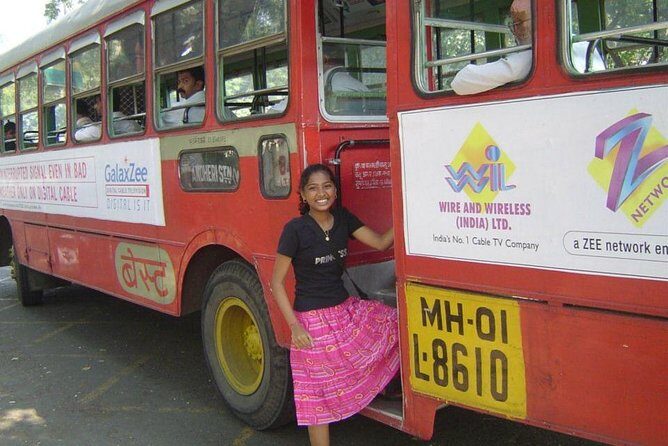
The tour then takes you to Dhobi Ghat via train for a view of the world’s largest open-air laundry system. This is one of those Mumbai moments that’s hard to fake. You can watch a bunch of videos online, but the scale and motion make it different in person.
Here’s what makes this stop valuable: it’s not only about what the place looks like. You’re seeing a working operation in an open-air setting. The perspective shift is the point. Instead of looking at Dhobi Ghat as just a tourist spectacle, the guided structure helps you understand it as daily labor and logistics happening in a public space.
The train segment also matters. Local transit is part of the deal on this tour. That means you’re not just sightseeing from one vehicle window; you’re experiencing how people actually get around. Your guide helps make that feel manageable, especially if you’re new to the city.
What to expect practically:
- You may get close to activity, so be mindful of respectful behavior and personal space.
- Photos can be tricky when there are many moving people. Go for moments rather than perfect frames.
- This is one of the more intense parts of the tour visually and in terms of smells and sounds. That’s also why it’s memorable.
If you have strong sensitivity to crowded areas or strong environmental factors, consider whether this type of “real life” stop fits your comfort level.
Price and value: why $41.60 makes sense for a 4-hour local day
At $41.60 per person (with a mobile ticket and a typical booking window of about 7 days in advance), the price is easiest to justify when you look at what’s included. You’re getting:
- an English-speaking guide
- public transportation during the tour
- entrances to Mani Bhavan
- snacks plus free bottled water
That combo is the real value. A comparable day “on your own” usually turns into a puzzle: you pay for transit, you pay for museum entry, and you still spend time figuring out how to route your day. Here, the guide handles the flow, and the tour includes the museum access.
The one cost you should watch is what’s not included: transport to the meeting point and transport from the end point. That matters because the tour ends around Chhatrapati Shivaji Terminus Area, Fort. If you’re staying somewhere far from that zone, you’ll want to plan your onward travel so you aren’t stuck searching in the final stretch.
Timing-wise, it’s about 4 hours. For a first-timer, that’s a sweet spot: long enough to feel like a real orientation, short enough that you can still do other things the same day.


Small group size and the student guide difference
This tour caps at 10 travelers, and that changes the feel in a good way. Smaller groups mean your guide can adjust if someone needs a slower pace, extra explanation, or help understanding how the transit part works. It also reduces the “marching band” effect that can happen on bigger city tours.
The fact that the guide is a student guide connected to a local non-profit also shapes the conversation. You’ll generally get answers that sound less like memorized facts and more like real perspective. In previous sessions, guides such as Divya, Tanvi, Parveen, Umar, Sahe, and Shell have been praised for energy and clarity, which fits this format perfectly: you’re learning as you move.
If you’re traveling solo or as a couple, the small group structure is especially useful. You get a social experience without sacrificing the ability to ask practical questions.
A practical tip: bring questions. Ask things like how to handle transit, what to do if you miss a connection, or what area to explore next after Churchgate or Fort. Your guide is there for exactly that.
Where this tour fits best (and where it might not)
This is a strong pick for:
- First-time visitors who want an orientation day in South Mumbai
- People who prefer public transit over private cars
- Travelers who like a mix of landmark sights and a real working-life stop
- Anyone who wants a short, guided route that doesn’t feel like a museum-only day
It might be less ideal if:
- You dislike crowded public transport conditions or you get stressed in busy streets
- You want long, free-roam time at each stop. This tour keeps moving to hit both Mani Bhavan and Dhobi Ghat within about 4 hours.
- You’re extremely sensitive to the sensory intensity that can come with an open-air working location.
If you’re unsure, think of it this way: this tour is designed to get you oriented and informed, not to let you linger at every corner like you’re wandering alone.
Should you book Mumbai Local with Mumbai Magic?
I’d book it if you want a smart first-day framework. The route makes sense: Gateway of India as a recognizable start, a walk through major landmarks toward Churchgate, then a purposeful museum stop at Mani Bhavan, and finally the real-life view at Dhobi Ghat with transit included.
It’s also good value for the money because the ticket includes more than just a guide. You’re paying for a guided flow plus public transport, museum entrances, and snacks and bottled water. That’s how you keep a city day from turning into a collection of small extra costs.
If your ideal travel day is slow and quiet, you might prefer something more flexible. But if you want to feel like Mumbai makes sense after just a few hours, this one is built for that goal.
FAQ
Where does the Mumbai Local tour start?
The tour starts at Gateway of India, Apollo Bandar, Colaba, Mumbai.
Where does the tour end?
The tour ends at Chhatrapati Shivaji Terminus Area, Fort, Mumbai.
How long is the tour?
It’s about 4 hours.
How big is the group?
The tour has a maximum of 10 travelers.
What is included in the price?
Included are an English-speaking guide, public transportation, entrances to Mani Bhavan, snacks, and free bottled water.
What transport will we use during the tour?
You’ll use public transportation, including bus and train segments.
Do I get a mobile ticket?
Yes, the tour uses a mobile ticket.
Is transport to and from the meeting point provided?
No. Transport to the meeting point and from the end point is not included.
Can I cancel for a full refund?
Yes. You can cancel up to 24 hours in advance for a full refund.