REVIEW · MUMBAI
Private Maximum Mumbai Tour With Add-On Options
Book on Viator →Operated by Young Tours And Travel · Bookable on Viator
Mumbai hits fast, this tour keeps up. A private guide and air-conditioned car help you cover big sights like Gateway of India and Chhatrapati Shivaji Maharaj Terminus, with a short train ride that shows how the city actually moves. I especially like how it balances major colonial landmarks with real working Mumbai at Dhobi Ghat, and I also like that you get hotel/port pickup and drop-off so your day doesn’t dissolve in traffic. The main drawback: you’re squeezing in a lot of stops, and lunch isn’t included, so plan for snacks and the heat.
What you get feels practical, not touristy for tourist sake. Many stops are ticket-free, while Mani Bhavan Gandhi Museum has admission included, and the schedule keeps breaks short but meaningful. You’ll also get local cuisines and bottled water, which makes it easier to say yes to street food moments near the waterfront.
This is a smart fit for first-timers who want an orientation lap through South Mumbai, plus a guided explanation that turns landmarks into stories you can repeat later. One consideration: because you visit parks, beaches, and an open-air laundry, you’ll want comfortable walking shoes and a light layer for sudden wind off the Arabian Sea.
In This Review
- Key highlights worth centering your day on
- A private intro to South Mumbai, with the train ride as the secret sauce
- Price and value: what $49 buys you that adds up quickly
- Gateway of India to Taj Mahal Palace: Colaba’s ceremonial front door
- Rajabai Clock Tower and Bombay High Court: colonial symmetry with real function
- Chhatrapati Shivaji Maharaj Terminus and the short rail ride: the UNESCO anchor
- Dhobi Ghat: open-air laundries and scale you feel in your bones
- Hanging Gardens, Malabar Hills views, and the Tower of Silence pause
- Mani Bhavan Gandhi Museum: the “why this place matters” stop
- Marine Drive and Chowpatty: sea air, city life, and the food-atmosphere angle
- Antilia: a quick look at the world’s most expensive home
- Guides that make it feel personal: Rahul and Kamlesh as examples
- Who this tour is best for (and who should skip it)
- Should you book this private maximum Mumbai tour?
- FAQ
- How long is the private Mumbai tour?
- Is this tour private or shared with other people?
- What’s included for transportation and pickup?
- Is a train ride included?
- Are meals included?
- Do you need to pay admission fees at the stops?
- What’s the cancellation policy?
Key highlights worth centering your day on

- Private door-to-door pickup and drop-off: you lose less time to Mumbai logistics
- UNESCO-listed rail stop plus a short train ride: you see the system, not just the station
- Dhobi Ghat, an open-air working laundry: one of the most memorable stops on the whole loop
- Mani Bhavan Gandhi Museum with included admission: a focused, human-scale museum stop
- South Mumbai sea views at Marine Drive and Chowpatty: ideal for photos and people-watching
- Photo-stop style look at Antilia: a quick reality-check on modern wealth versus everyday life
A private intro to South Mumbai, with the train ride as the secret sauce
The smartest thing about this tour is the way it’s built like an orientation course. You start in Colaba near the old ceremonial waterfront, then work your way through Fort-era architecture, shift into the rail heart of Mumbai, and end with coastal sights. It’s compact, but it doesn’t feel random.
And that short train ride matters more than it sounds. Mumbai’s trains are not a “thing you watch from afar.” They’re a moving city inside a city. Even a brief ride gives you a sense of pace, crowd energy, and how locals treat the rail network as normal daily infrastructure.
You’ll also travel in an AC vehicle with a private guide. That’s a big deal in a city where heat and traffic can drain your patience fast. If you’ve got limited time, this format is built to reduce wasted hours and keep the story chain tight.
You can also read our reviews of more private tours in Mumbai



Price and value: what $49 buys you that adds up quickly
At $49 per person, this is priced like a budget-friendly private city intro, not a bare-bones group bus tour. The value comes from the bundle:
- A professional guide
- Hotel/port pickup and drop-off
- A private AC vehicle
- A small train ride
- Local cuisines and bottled water
- Private tour format (your group only)
Most single-entry sightseeing adds up quickly once you factor in transport and guiding. Here, the cost is concentrated into the guide + logistics, which is usually where good tours win. Lunch is not included, though, and that’s the one place you’ll likely spend extra—so plan to grab a meal after the tour or add a snack stop your guide recommends.
Also, this tour’s booking pattern suggests it’s popular. The average booking window is about 94 days ahead, which usually means prime times can fill up, especially if you’re traveling during peak seasons.
Gateway of India to Taj Mahal Palace: Colaba’s ceremonial front door
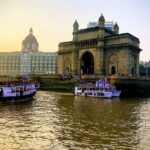
You’ll begin near Gateway of India, a structure linked to the Archaeological Survey of India. It was built in 1924 to commemorate the arrival of King George V and Queen Mary in 1911. Even if you’ve never studied British imperial architecture, this gate is easy to read: it’s designed to feel monumental.
Next door, the tour places you at the Taj Mahal Palace Hotel area. The point here isn’t that you’re going to stay in a five-star landmark. It’s the architecture. The Taj is described as a heritage luxury property with a saracenic revival style, right there in the Colaba region. It’s one of those places where the building itself explains why Mumbai became a global port city.
If you like “look up close” architecture moments, this stretch works well because you’re not stuck in a museum box. You’re walking in the open, with sea air and urban noise underneath.
Practical note: this portion of the day is mostly about sightlines. Don’t expect long indoor time unless your schedule allows it. You’ll get the essence fast, which is good for first-timers.
Rajabai Clock Tower and Bombay High Court: colonial symmetry with real function
From Colaba’s ceremonial landing area, the tour shifts into a legal-and-educational zone where colonial-era buildings still do their jobs. You’ll see the Rajabai Clock Tower lookalike of Big Ben of England and then continue to the Bombay High Court, noted for its colonial architecture and that it’s the main high court for Mumbai.
What I like about this stop pair is contrast. Gateway of India and the Taj feel like public theater. The High Court feels like Mumbai’s governance and institutional gravity—still operating, not staged for tourists. That contrast makes the architecture feel less like wallpaper and more like part of how the city runs.
In plain terms: if you’re the type who likes to understand why a city looks the way it does, this section helps you connect the dots between history and present-day structure.
Chhatrapati Shivaji Maharaj Terminus and the short rail ride: the UNESCO anchor
Then comes Chhatrapati Shivaji Maharaj Terminus—listed as a UNESCO site. It used to be known as Victoria Terminus Station, and the architectural comparison is part of the story: it’s often likened to St. Pancras in London.
This is where you get a strong “grand railway station” feeling. The building is designed with flair, but the function is the real star. It’s a working terminus that still serves as a hub.
And yes, the tour includes a small train ride. This is your chance to experience Mumbai’s rail system as locals do. Even if you don’t ride far, you’ll notice things: the flow of passengers, the quick rhythm of departures, and the sense that the rail system is a backbone, not an attraction.
If you want one moment that makes the rest of the day click, make it the rail stop. It gives context to everything else you’ll see: Mumbai moves fast, and the city’s infrastructure is built to handle that.



Dhobi Ghat: open-air laundries and scale you feel in your bones
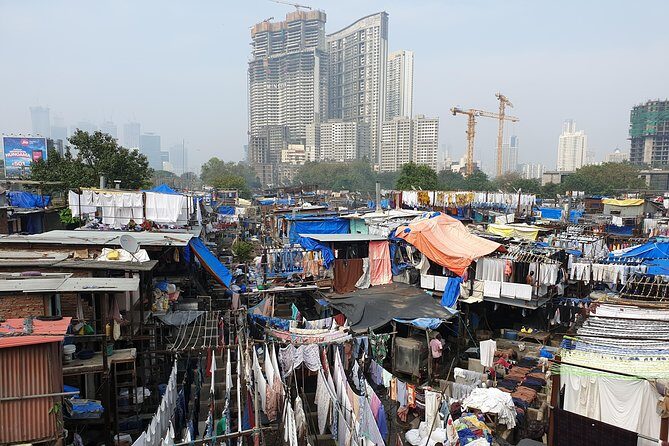
Next up is Dhobi Ghat, described as one of the largest open-air laundries in the world. It includes a community of over 200 families, and it was awarded a Guinness World Records recognition in 2013 for maximum people.
This stop is fascinating because it’s not a curated performance. It’s active work in open air. A good guide makes the difference here, because you want help understanding what you’re seeing: the rhythm of laundry work, the scale of operations, and the human effort behind something most visitors would never think about.
I also think Dhobi Ghat is where the private format really earns its keep. In a city this big, having someone frame the experience for you helps you avoid walking through it like a quick “photo and go” stop.
Consideration: open-air means you’ll feel the weather. Dress for sun and wind, and take the time to look around rather than only shooting from one angle.
Hanging Gardens, Malabar Hills views, and the Tower of Silence pause
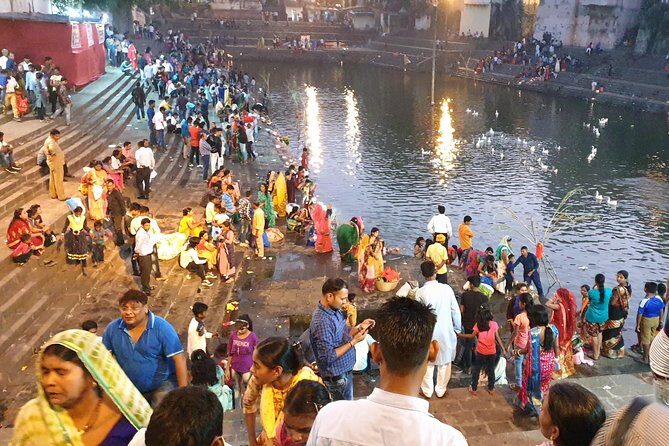
After the intensity of Dhobi Ghat, the tour moves into a calmer, scenic pocket: Hanging Gardens, built in 1881. It sits at the top of Malabar Hills and serves as a covering for a water reservoir beneath it.
This is a useful breather. You get a public park setting and the kind of viewpoint that helps you “read” the geography of South Mumbai from above. It’s the kind of stop where you understand why locals come here when they want a break without leaving the city center.
Right next to it, the tour mentions the Tower of Silence, a Parsi burial ground. Even if you know little about Parsi traditions, the location itself signals respect and cultural specificity. A guide’s explanation helps you look at it correctly—less like a random stop and more like a signpost of how different communities shape Mumbai.
Then there’s a brief scenic stop at a Radisson Hotel Mumbai Andheri MIDC location mentioned as being opposite the Hanging Gardens area, locally known for a Boot House and views over the bay of South Mumbai. The takeaway for you: it’s another viewpoint moment to catch the water-and-sky relationship that makes Mumbai feel different from landlocked cities.
Mani Bhavan Gandhi Museum: the “why this place matters” stop
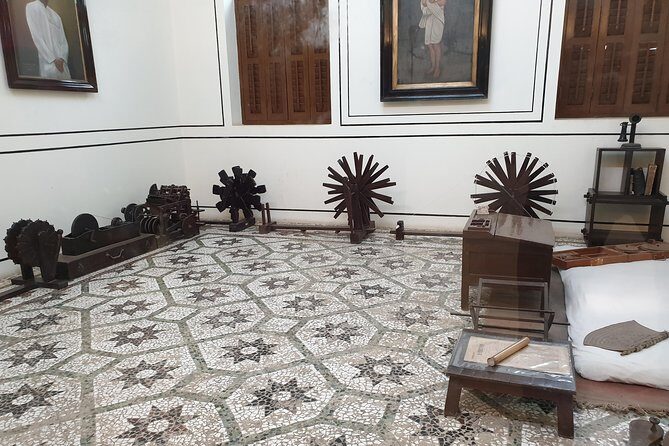
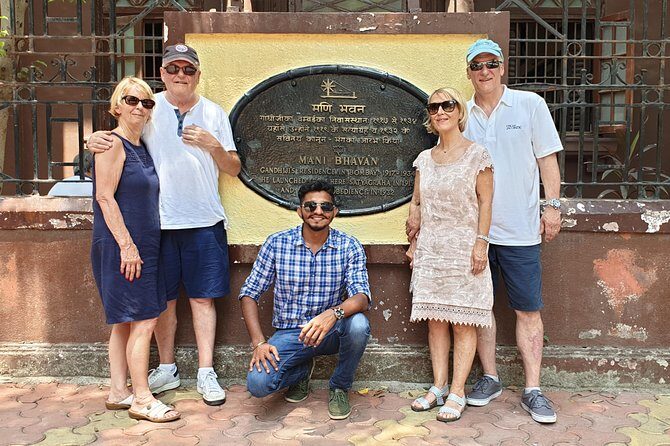
The schedule then shifts into Mani Bhavan Gandhi Museum, with admission included. This was Gandhi’s temporary house, used from 1917 to 1934, and the Satyagraha movement is noted as being launched from this location.
This is one of the most meaningful stops on the loop because it connects place to idea. You’re not just seeing old walls. You’re standing in a specific location where a major political approach was associated with launching and organizing.
The tour gives you about 30 minutes, which is a good window for museums that can run dense. With a guide, you’re not trying to translate everything alone. You should come away with a clearer sense of how political movements can be rooted in everyday rooms and routines, not just in speeches.
Marine Drive and Chowpatty: sea air, city life, and the food-atmosphere angle
You’ll then reach Marine Drive, also known as Queen’s Necklace. It’s a 3.6 km promenade along the sea, and it’s described as one of the most visited areas by people around Mumbai.
Even if you only spend a short amount of time, this is where the city’s mood comes through. You can feel the waterfront energy. It’s a place where the city’s “big scenes” become something locals use like a daily hangout.
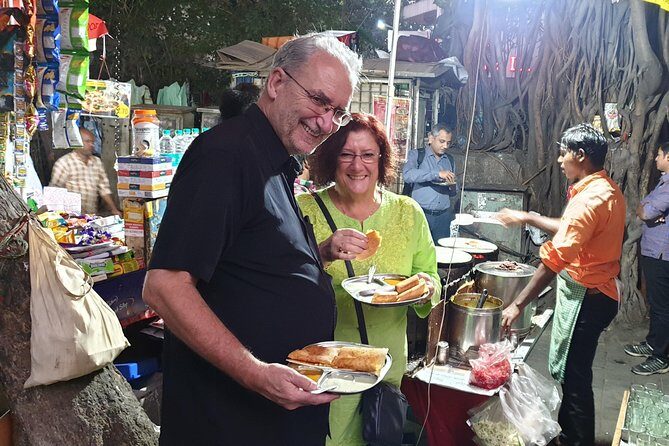
Next comes Chowpatty Beach (Girgaum Chowpatty). The details that matter: it’s surrounded by buildings and it has street food stalls. That’s your chance to experience Mumbai’s snack culture in a way that doesn’t require planning a separate food tour.
This stop also balances the earlier “stone-and-structure” sightseeing. It’s human-scale. You’ll be standing near families, street vendors, and the constant motion of a coastal crowd.
If you like taking breaks that don’t feel like wasted time, this is where the tour nails it.
Antilia: a quick look at the world’s most expensive home
Finally, you’ll see Antilia, described as a 27-floored residential building for a family of six, associated with Mukesh Ambani, and noted as the world’s most expensive house.
This is the kind of stop that can go one of two ways: either it feels like a random “famous building” sight, or it becomes a contrast moment. In this itinerary, it works best as a contrast. After Dhobi Ghat and Chowpatty, you end with a symbol of extreme wealth and global business scale.
Your guide’s framing will decide whether it lands. But even without deep context, it’s hard to miss the story when you’re still thinking about working communities and beach stalls and then you look at a residence built to be an entire private world.
Guides that make it feel personal: Rahul and Kamlesh as examples
The strongest pattern in the tour’s experience is the emphasis on the guide’s role. Guides like Rahul are described as energetic and friendly, with a talent for making Mumbai feel personal rather than just scenic. Another guide named Kamlesh is specifically mentioned as a certified guide, with extra attention to safety and planning—something that matters if you’re solo.
A private tour is only as good as the person guiding you between stops. When the guide can explain what you’re looking at and keep the day running smoothly, the whole route feels worth it. That’s the kind of benefit you can feel immediately in the way the stops connect.
If you want a tour that feels like it adapts to your questions—architecture questions, rail questions, or simple practical ones—this is the right format.
Who this tour is best for (and who should skip it)
This fits you if:
- You’re a first-time visitor who wants an organized South Mumbai introduction
- You like architecture, but also want at least one stop that shows working life
- You want a private guide and AC car to reduce stress
- You can handle quick stops and don’t need a long lunch break
You might want to choose something else if:
- You want a slower pace with sit-down meals built in
- You’re sensitive to open-air conditions (Dhobi Ghat, gardens, and beach stops)
- You dislike photo-op style sightseeing and prefer long indoor museum time every stop
In the 4 to 6 hour range, you’ll be busy. But it’s busy in a way that’s designed to help you learn the city fast, not just to collect stamps.
Should you book this private maximum Mumbai tour?
If you want a high-value intro to Mumbai that mixes big landmarks with at least a couple of “people live here” stops, I’d book it. The inclusion of pickup/drop-off, AC transport, local cuisines, and the short train ride makes the price feel fair. You also get a guided explanation that can turn quick visits into real understanding.
Book it especially if you’re traveling short on time and you care about getting the order right: Gateway and Taj area for the waterfront story, UNESCO rail for the city’s engine, Dhobi Ghat for working Mumbai, Gandhi’s house for meaning, and Marine Drive/Chowpatty for the sea-and-food slice.
Just don’t forget the one practical caution: lunch isn’t included. If you’re the type who needs a proper meal midday, either eat before you start, plan a late lunch after, or ask your guide for quick local options near the waterfront.
FAQ
How long is the private Mumbai tour?
It runs about 4 to 6 hours.
Is this tour private or shared with other people?
It’s private. Only your group participates.
What’s included for transportation and pickup?
You get hotel/port pickup and drop-off plus private air-conditioned vehicle transport.
Is a train ride included?
Yes. The tour includes a small train ride as part of the experience.
Are meals included?
You get local cuisines and bottled water. Lunch is not included.
Do you need to pay admission fees at the stops?
Many major stops are listed as admission ticket free. Mani Bhavan Gandhi Museum admission is included.
What’s the cancellation policy?
You can cancel for a full refund up to 24 hours before the experience’s start time. If you cancel within 24 hours, no refund is issued.