REVIEW · MUMBAI
Elephanta Caves & Island Guided Tour
Book on GetYourGuide →Operated by Linda Tour Mumbai · Bookable on GetYourGuide
Elephanta Caves feel like time travel. On this guided island trip, you see UNESCO-listed rock-cut Shiva sanctuaries and you get the kind of explanation that makes the sculptures click fast, often with local guides like Rajat. The whole day also hangs on small, practical details: how you get there by ferry, what you notice once you reach the caves, and how you plan your time on uneven stone.
What I like most is the tour setup around your day. You get an English-speaking guide, plus entrance fee, ferry tickets, hotel pickup/drop-off (optional), and even bottled water, so you’re not juggling tickets while you’re trying to enjoy the experience. I also love that the guide focuses on the key visual moments in Cave 1, including the signature Shiva faces, and helps with photos so you don’t end up fighting for the right angle.
One heads-up: the ferry ride and the walking can take more time than you expect. The tour can run anywhere from 4 to 9 hours depending on your option, and the steps inside the caves are uneven and can be slippery, so plan for comfort and balance.
In This Review
- Key highlights you should know before you go
- From Gateway of India to Elephanta Island: the ferry part matters
- Where the tour starts: Regal Cinema meeting point and pickup options
- Elephanta Island walk: orientation before the carvings
- Cave 1 in focus: the architecture that makes Shiva feel present
- The other caves and island ruins: don’t skip the extras
- Why the guide changes everything (and yes, they help with photos)
- Price and value: what $39 really buys you in real time
- Getting comfortable: shoes, steps, and a couple of real-world tips
- Conservation reality check: why UNESCO status comes with responsibility
- Where you’ll end up in Mumbai: multiple drop-off points
- Who this tour is for (and who might want a different style)
- Should you book the Elephanta Caves & Island guided tour?
- FAQ
- How long is the Elephanta Caves & Island guided tour?
- How much does it cost?
- Where do I meet the guide?
- Is the tour guided in English?
- Does the price include ferry and cave entrance fees?
- Is hotel pickup and drop-off included?
- Are meals or drinks included?
- What should I bring?
- What’s not allowed on the tour?
- What are the cancellation terms?
Key highlights you should know before you go
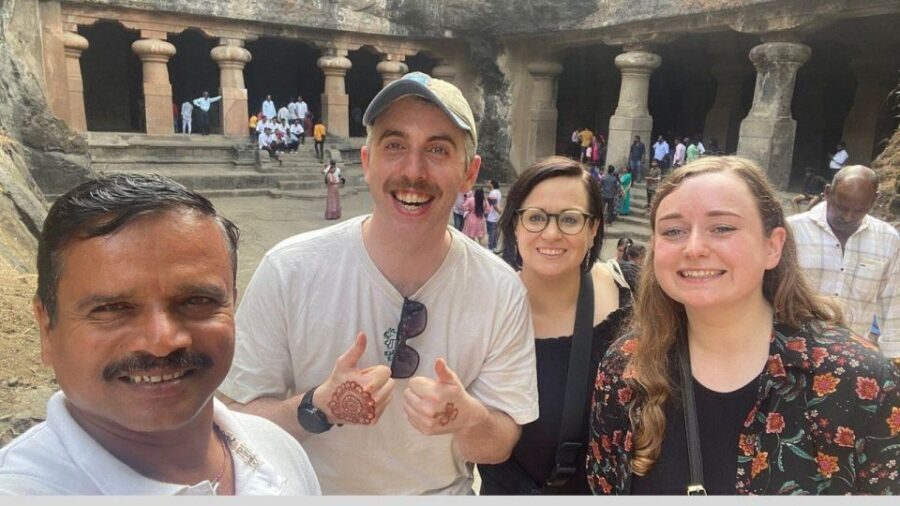
- Local, English-speaking guides such as Rajat, Sam, Manoj, and Nikhil bring the island’s stories into plain language
- Skip-the-ticket-line plus included ferry tickets and entrance fee means less waiting, more seeing
- Cave 1 is the main event with deep, symmetrical space and the famous Shiva face views
- Island archaeology beyond the caves includes older remains (as early as the 2nd century BC) and later Portuguese-era features
- Photo help on the spot: guides point out where to stand for the symbolic Shiva head framing
From Gateway of India to Elephanta Island: the ferry part matters
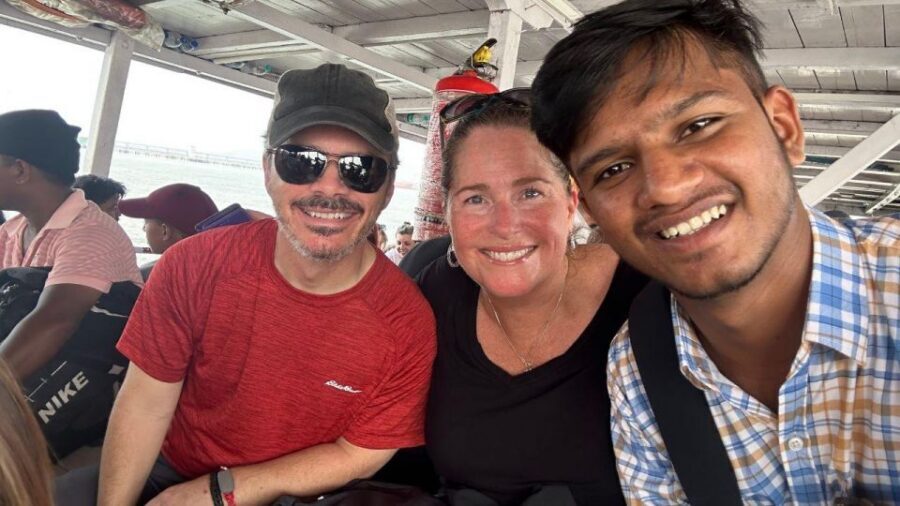
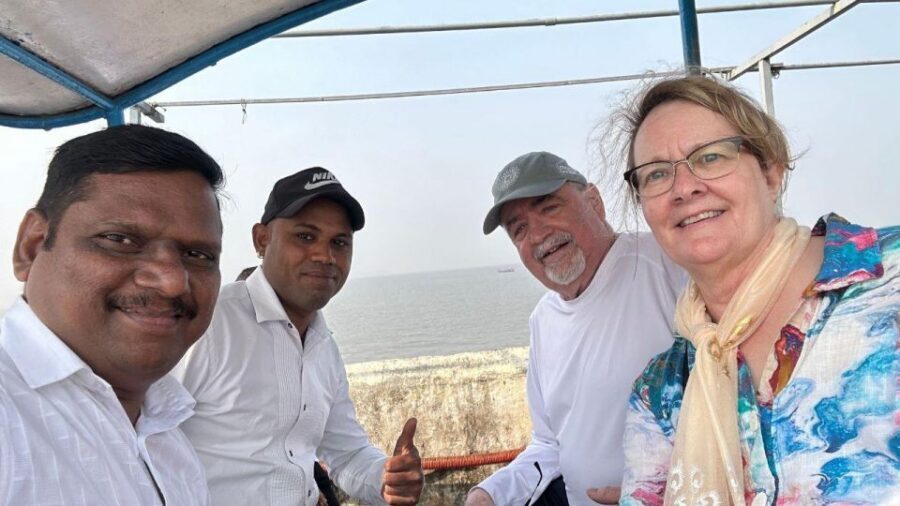
Your day starts near the Gateway of India area, then you head out by ferry. The ride is typically about an hour each way, and it’s not just transportation. It’s a slow breather over Mumbai Harbor, with a chance to look back at the city coastline before you disappear onto the island.
If you want quick structure to your trip, this format helps. You’ll pass by the Gateway of India, then you’re on the water, then you arrive at Elephanta with a guide ready to orient you. There’s also a photo stop later back in Mumbai, so you don’t end the day with only cave memories.
The one practical downside is that the ferry can feel long if you’re expecting a tight, nonstop schedule. But it’s also part of the pacing: you get a chance to shift gears from busy Mumbai to something calmer and more weathered, where the island’s history is the main character.
You can also read our reviews of more guided tours in Mumbai


Where the tour starts: Regal Cinema meeting point and pickup options
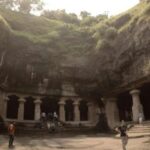
This tour is designed to be straightforward to join. The meeting point can vary by option, but one common starting point is Regal Cinema, and you’re asked to arrive at least 10 minutes early.
Pickup is an option depending on what you choose. If hotel pickup is included in your booking, you meet your guide at your hotel lobby. If not, you’ll meet at the designated point and connect from there.
Why this matters for you: Elephanta is time-sensitive. If you miss the connection, you can end up waiting on the island schedule or losing the best viewing window in the caves. So treat the meeting time like you would a train—show up early and stay calm.
Elephanta Island walk: orientation before the carvings
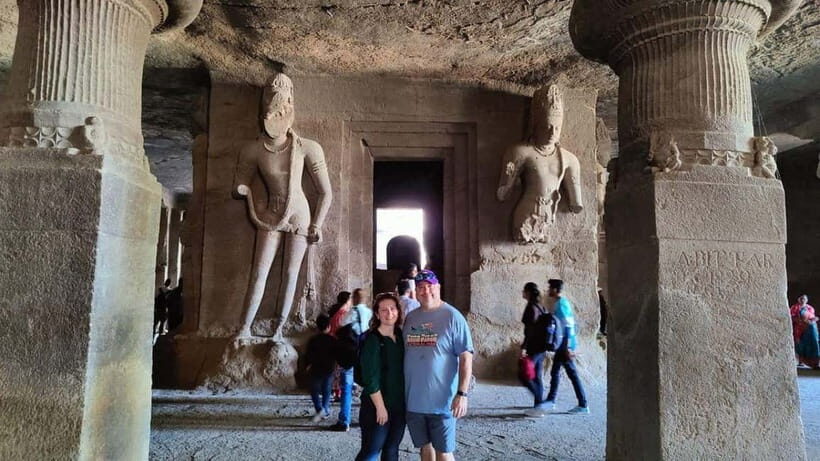
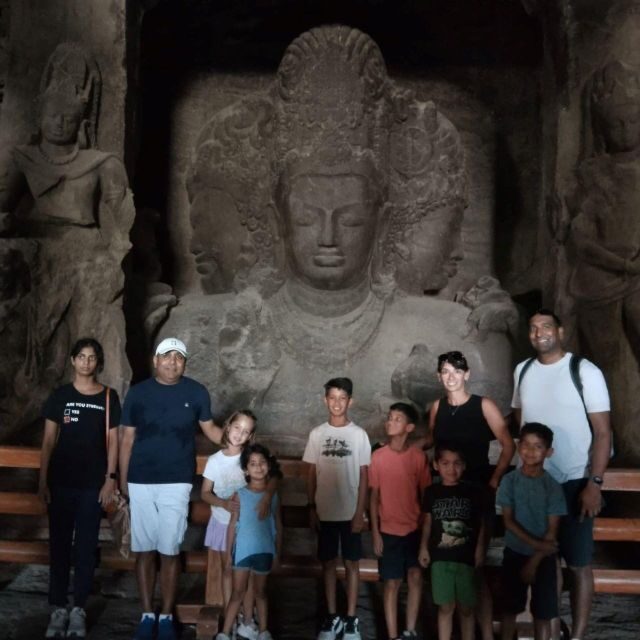
Once you reach Elephanta Island (also called Gharapuri, the city of caves), the tour uses a guided walk before you go deep into the rock-cut spaces. The guide’s job here is more than logistics. It’s about helping you understand what you’re seeing when you enter the caverns.
The island itself has layers. You’re not only stepping into Shiva sanctuaries; you’re also walking on ground with archaeological remains that go back to the 2nd century BC, plus later Portuguese-era features like stupas toward the eastern side of the hillock. There’s also mention of pathways, protection of fallen or broken support points, and preservation work done over time—so the island feels like a living site, not a sealed museum.
This early orientation pays off. When you later stand inside Cave 1, you’ll understand the space as deliberate architecture, not random temple shapes in a rock wall.
Cave 1 in focus: the architecture that makes Shiva feel present
Elephanta Caves are mainly dedicated to the Hindu god Shiva, carved into stone on the island. The most important chamber is Cave 1, estimated about 39 meters from the front access to the back. It’s also described as a roughly 27-meter-square central body, supported by lines of six sections each—so you’re walking into a carefully planned interior, not a cave you simply stumble into.
The guide’s explanation is key here. Cave 1 is the main sight, and it’s the place where you get the symbolic views of Shiva’s faces. Guides like Rajat are known for pointing out exact standpoints so you can frame the three-head Shiva imagery correctly, instead of hoping you’ll figure it out on your own.
If you like context, there’s also a helpful connection to other Indian cave architecture. Elephanta Cave 1’s western-slope layout is said to resemble Dumar Lena cave at Ellora in plan, which helps you place Elephanta within a broader tradition.
Also keep in mind construction dating. The caves were built about the mid-fifth to sixth hundred years AD. That long timeline makes the sculptural details feel intentional: someone wasn’t carving for decoration alone. They were shaping a spiritual and visual experience.
The other caves and island ruins: don’t skip the extras
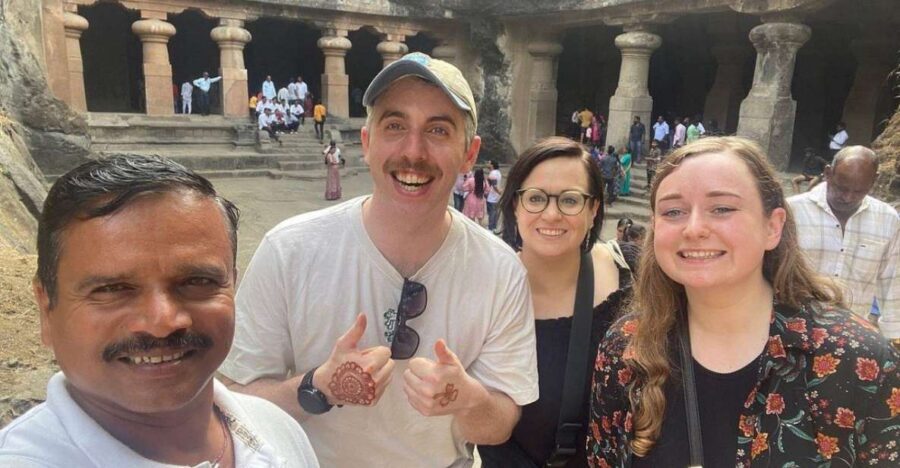
While Cave 1 takes center stage, the island includes additional Hindu caves (five in total) and Buddhist stupa hills dating back to the 2nd century BC. There are also small clusters of Buddhist caves with water tanks. So even if you’re mainly there for Shiva, you’ll likely notice how different religious traditions occupy the same island landscape.
One thing I like about this tour approach is that it treats the island as one whole experience. The caves aren’t isolated rocks; they sit within a place that has had stairs, pathways, and preservation steps laid out for visitors over time. You may see references to protection of fallen areas, preservation of broken veneers, and the presence of a site information center.
For you, that translates to a better visit. If you only focus on the biggest chamber, you’ll miss the way Elephanta tells its story through multiple layers of use.



Why the guide changes everything (and yes, they help with photos)
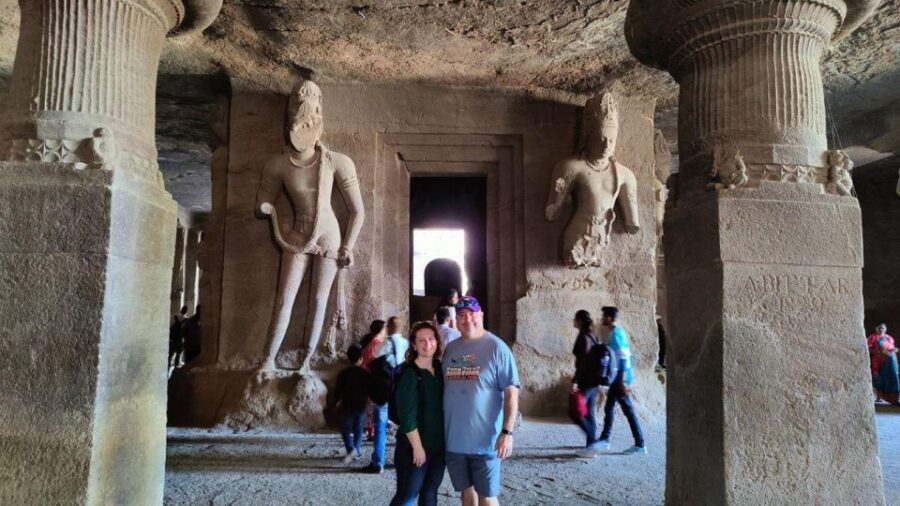
Here’s the pattern in the best experiences: a strong guide turns stone into meaning. Names that stand out in this kind of tour include Rajat, who’s described as extremely informative and able to answer questions with confidence. Some guides are also locals who know the island’s history and culture firsthand, which shows in how they explain daily life around the site, not just ancient facts.
Photo help is part of the value too. In multiple accounts, guides actively take photos and know where to stand for key views inside the cave. That matters because the best viewpoints are not always obvious—especially when you’re surrounded by other visitors and uneven floors.
You’ll also appreciate the practical support. Guides have been described as handling the flow smoothly, helping with restrooms, arriving early at the meeting point, and generally reducing friction so you can focus on the caves.
If you’re traveling solo, this kind of support makes the day feel less like a timed scramble and more like a guided walk with someone who cares.
Price and value: what $39 really buys you in real time

At about $39 per person, this tour is usually good value because it bundles the core costs. You get:
- a guide (English language)
- hotel pickup and drop-off (where selected)
- entrance fee to the Elephanta Caves
- ferry tickets
- mineral water bottle
- skip-the-ticket-line access
And you avoid the most annoying problem with day trips: piecing together ferry times, ticket purchases, and entry rules while you’re already tired from city traffic and crowds.
Now, it’s still not a cheap day out once you add meals. The tour does not include meals or drinks, so budget for that. And the total time can vary widely (4 to 9 hours), which can affect how you plan the rest of your Mumbai schedule.
My takeaway: if you want a day trip that’s organized enough to feel effortless, and you care about understanding what you see, this pricing structure makes sense.
Getting comfortable: shoes, steps, and a couple of real-world tips
Elephanta isn’t about flat paths. You’ll walk on uneven stone steps and corridors, including the stairs that lead up to the caverns from the island pier area. Comfortable shoes are not optional here.
One caution worth taking seriously: stone steps can be slippery, especially when they’re worn smooth. If you’re prone to foot slips, bring shoes with good grip and take the stairs slowly. Also, the tour rules do specify what’s not allowed: alcohol and drugs, and nudity.
For what to bring, the tour is clear: wear comfortable shoes. That’s simple advice, but it’s also the advice that will protect your day the most.
Conservation reality check: why UNESCO status comes with responsibility
Elephanta is a UNESCO World Heritage Site, and the long-term story includes conservation needs. The site has been maintained in line with ongoing work since it was added to the World Heritage List, including repairs to façade and support points to maintain stability.
The tour context also touches on what still needs attention. The conservation needs mentioned include finishing and carrying out a Conservation Management Plan, addressing saline movement and decay of stone surfaces using internationally recognized scientific guidelines, protecting the caves from nearby modern development, and considering uncovering covered stupas.
You don’t need to become a conservation expert during your visit. But you should see these efforts as part of why the caves are accessible and interpretable today. When you step into Cave 1, you’re benefiting from years of careful work—and that’s worth remembering.
Where you’ll end up in Mumbai: multiple drop-off points
After the return ferry ride, you’ll be dropped off at several locations, including Dadar, Mumbai, Regal Cinema, and the Ballard Pier Mumbai / Alexandra Dock / Green Gate area. That flexibility is helpful if you’re staying outside the main downtown zone.
It also reduces the chance you’ll waste time crossing town right after a long day on the island. Just plan your evening buffer like you would after any day trip: you’ll want time to cool down after stairs, sun, and travel.
Who this tour is for (and who might want a different style)
I think this tour fits best if you want:
- guided explanations that connect Shiva sculptures to the space you’re standing in
- an organized day trip with fewer ticket hassles
- photo help so you get the symbolic views without stress
- a small-group or private option feel (the tour offers private or small groups)
If you’re the kind of traveler who prefers to wander independently without a set pace, you might still enjoy Elephanta—but you may find a guided format less flexible than you want. The caves also reward planning: the guide helps you move through the visit in a way that matches what you came to see.
Should you book the Elephanta Caves & Island guided tour?
Book it if you care about understanding what you’re seeing and you want the day to run smoothly from the moment you meet at Regal Cinema. The guide factor is huge here—names like Rajat, Sam, Manoj, and Nikhil show up for a reason: they explain clearly, answer questions, and help with photos at key viewpoints inside Cave 1.
Skip or consider a different approach if you strongly prefer unguided wandering, or if you don’t want to deal with uneven stairs and variable total time (4 to 9 hours). Even then, prioritize footwear and a calm pace. Elephanta is a place where comfort turns into better viewing.
If you’re doing only one “big” cultural day trip from Mumbai, this is one of the best choices because UNESCO-level carvings are the main event—and the tour is built to help you actually see and understand them.
FAQ
How long is the Elephanta Caves & Island guided tour?
The duration is listed as 4 to 9 hours, depending on the selected option and available starting times.
How much does it cost?
The price shown is $39 per person.
Where do I meet the guide?
The meeting point can vary by option, and one specified meeting point is Regal Cinema. You should arrive at least 10 minutes early.
Is the tour guided in English?
Yes, it includes an English language guide.
Does the price include ferry and cave entrance fees?
Yes. The tour includes ferry tickets and the entrance fee to the Elephanta Caves, plus a guide.
Is hotel pickup and drop-off included?
Hotel pickup and drop-off are included if your selected option includes it. If not, you meet the guide at the designated meeting point.
Are meals or drinks included?
No. Meals are not included, and drinks are not included.
What should I bring?
Bring comfortable shoes for walking and climbing stairs.
What’s not allowed on the tour?
The tour rules state no alcohol and drugs and no nudity.
What are the cancellation terms?
You can cancel up to 24 hours in advance for a full refund.