REVIEW · MUMBAI
Mumbai Kanheri Caves & Golden Pagoda – A Buddhist Settlement
Book on GetYourGuide →Operated by Navigate Mumbai Tours · Bookable on GetYourGuide
Mumbai has caves you can walk into. This tour threads Sanjay Gandhi National Park with the Kanheri Caves, and it can also pair in the Golden Pagoda when timing allows, guided by English-speaking leaders like Ravi who explain what you’re looking at.
I especially like the mix of art and atmosphere: rock-cut Buddhist sculptures, inscriptions, and paintings dated roughly from 100 BCE to 1000 CE, set in a working national park. And I like the way the guide keeps things practical—good English, steady pacing, and flexibility when plans shift (like cave closures).
One drawback to plan around: meals aren’t included, so you’ll want to think about lunch or a snack stop on your own.
In This Review
- Key highlights to look for
- Sanjay Gandhi National Park: Mumbai’s green breathing space
- Getting to Kanheri by local bus (and why that’s a good thing)
- Kanheri Caves: rock-cut Buddhist art from 100 BCE to 1000 CE
- What you should watch for inside
- The panoramic view: taking the “city” out of your head
- When plans change: Golden Pagoda as your backup plan
- The full pacing: how the 2.5 to 7 hours usually feels
- Price and value: what $23 actually covers
- Who this suits best (and who might skip it)
- Practical tips for a smoother Kanheri day
- Should you book this Kanheri Caves and Golden Pagoda tour?
- FAQ
- Where is the meeting point?
- What languages are the guides?
- How long is the tour?
- Is pick-up included?
- Does the tour include tickets and transport?
- Are meals included?
- Can I bring a pet?
- What is the cancellation policy?
Key highlights to look for
- Guides who connect the dots between cave scenes and how the Buddhist community used these spaces
- Rock-cut caves spanning centuries, from early Buddhist-era markings through later phases
- A park ride with wildlife odds like deer, monkeys, and even flying foxes (leopards and lions are listed too, though not guaranteed)
- City views from higher ground, including a panoramic look back over Mumbai
- Golden Pagoda as a swap option, which keeps your day from feeling like a loss if caves are unavailable
- A local food moment can happen at the end, including a vegetarian street-food stand in one common route
Sanjay Gandhi National Park: Mumbai’s green breathing space
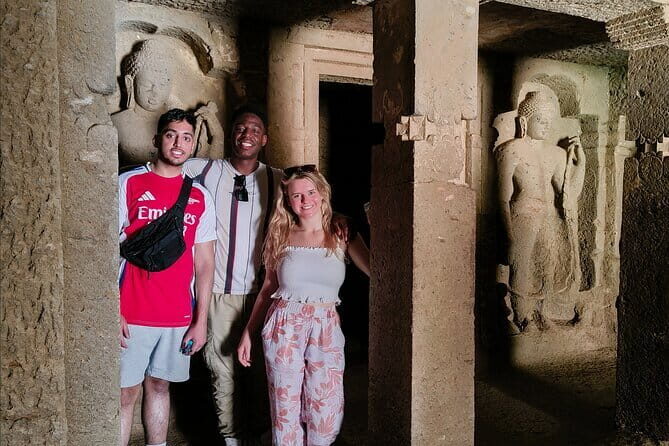
Sanjay Gandhi National Park is one of those places where the city noise drops off quickly. You’re still in Mumbai’s orbit, but the tone changes as you head toward the park entrance and into the protected green area.
For me, the best part of starting here is that the caves don’t feel like something plopped in for tourists. They feel like they grew out of the environment—shade, stone, quiet pockets—while wildlife keeps moving around in the background.
This is also where you’ll understand the value of the tour’s vibe: the highlights lean into spirituality, because the caves weren’t made for quick photos. They were made for long stays—meditation, shelter, meetings, learning—so the setting matters.
You can also read our reviews of more tours and experiences in Mumbai.



Getting to Kanheri by local bus (and why that’s a good thing)

You meet at the main gate of Sanjay Gandhi National Park, then get shuttled by local bus/coach for about 20 minutes. The caves are around 8 km from the main gate, and riding in the park adds a mellow, local feel instead of a sterile drive.
This portion is practical too. The tour handles transport and tickets, and you don’t have to figure out routes while you’re also trying to stay on time. With the guide onboard, you also get context as you pass through parts of the park.
Wildlife is part of the pitch here. You might spot deer and monkeys, and flying foxes are listed as possible sightings. Even when you don’t see lions or leopards, you’re still getting the sense that you’re walking through a living ecosystem, not a theme park.
Kanheri Caves: rock-cut Buddhist art from 100 BCE to 1000 CE
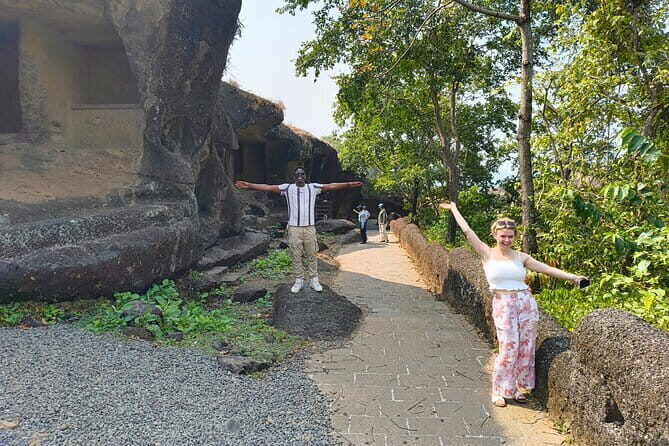
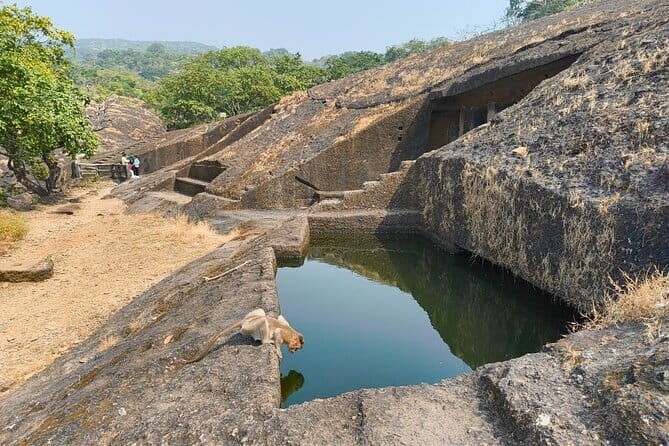
Once you reach the cave area, the heart of the day starts: Kanheri Caves, with a guided visit that runs about 2 hours. This is a guided walkthrough of stone spaces carved out long ago, with Buddhist sculptures, inscriptions, and paintings you can actually study up close.
Here’s what makes Kanheri different from many “walk-in-and-out” heritage sites. The caves weren’t just rooms. They were part of a functioning Buddhist settlement—used for meditation, shelter, meeting, and learning. When the guide frames each cave with that purpose in mind, the carvings stop being random decoration and start feeling intentional.
The date range given for the cave art and inscriptions—roughly 100 BCE to 1000 CE—is another big deal. It means you’re looking at a complex that developed over centuries, not one short construction spree. So if you pay attention to how different carvings and markings feel in style or placement, the site starts to read like a timeline of belief and community life.
What you should watch for inside
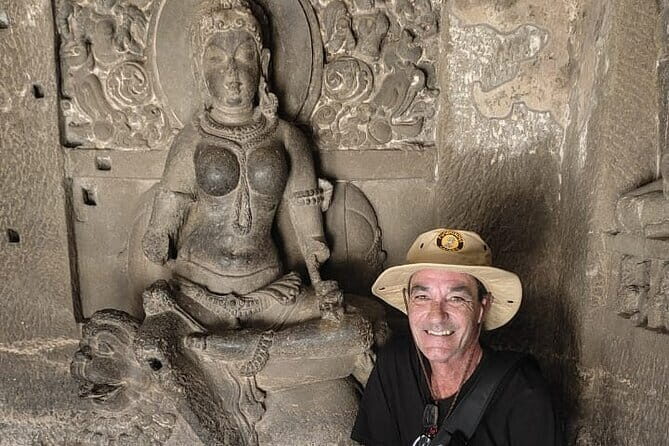
- Sculptures and icon details that show up throughout the complex
- Inscriptions that add meaning beyond what you see at a glance
- Paintings in areas where preservation allows you to make out figures and scenes
- The flow of the settlement, where meditation/shelter/learning spaces likely shaped daily movement
The tour also includes photo time. You’ll want to take advantage of that because once you’re moving on, the best angles can disappear fast. Bring comfortable shoes—there will be uneven stone and stair sections.
The panoramic view: taking the “city” out of your head
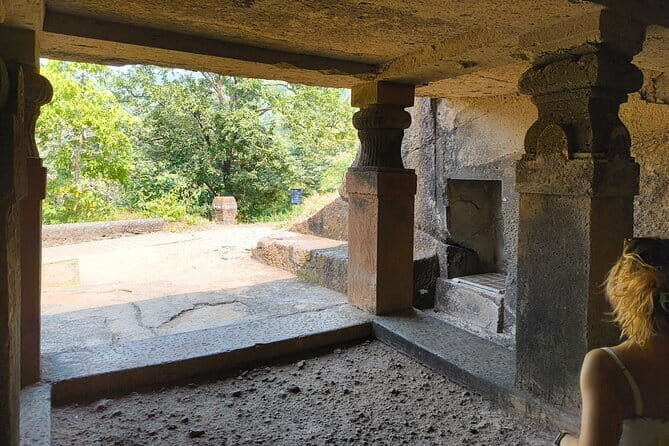
One of the stated highlights is the panoramic view of the city from higher ground. That’s a smart pairing with the caves. You go from ancient stone spaces carved for contemplation, then you look out and see Mumbai spread underneath.
This view doesn’t just provide a nice photo. It helps your brain switch gears. You understand the contrast: the intensity of a megacity nearby, and this older spiritual pocket up against it.
If you’re the kind of person who gets impatient with slow history sites, use this viewpoint as your reward. It’s the moment that tells you the walk was worth it.


When plans change: Golden Pagoda as your backup plan
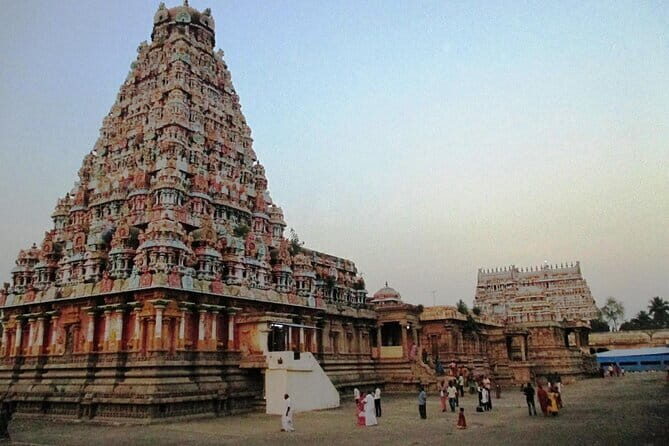
The name includes both Kanheri Caves and the Golden Pagoda, and that matters because sometimes the day changes on the ground. In one documented scenario, the Kanheri Caves were closed due to a major cause, and the guide shifted the plan to the Golden Pagoda instead.
So, think of Golden Pagoda as a strong “Plan B” that keeps your day meaningful. Even if everything runs normally, the Golden Pagoda conceptually matches the theme of the tour—Buddhist spirituality—so it doesn’t feel like a random add-on.
A good guide also makes this practical. One example from the experience shows a guide letting the group choose the alternative and keeping the information flowing so the day still feels like a guided narrative, not a scramble.
The full pacing: how the 2.5 to 7 hours usually feels
The activity duration is listed as 2.5 to 7 hours, and that range makes sense. The fixed parts are the transfer time (with a couple of bus/coach segments around 20 minutes each way) and the cave visit (around 2 hours). The variable part is how much time you spend at the site and whether the day expands to include extra stops like the Golden Pagoda.
If you’re time-limited in Mumbai, aim for the shorter end of the window and be clear about your priorities. If you want the day to breathe—more questions, more walking, more photos—expect to drift toward the longer end.
Also, pace matters for comfort. Wear shoes you trust on steps. Bring a water bottle mindset even though packaged water is included, because warm weather can make a short climb feel longer.
Price and value: what $23 actually covers
At about $23 per person, this tour is priced around guided heritage plus park logistics. What you get included is the big value:
- English-speaking guide (English and Hindi available)
- All entry tickets and transport fees
- Skip-the-ticket-line
- Pick-up and drop-off if you select that option
- Packaged water bottles
Meals are not included. That’s the clearest “missing piece,” and it’s also the part you control. If you plan a simple lunch near where you get dropped off, you won’t lose time later.
To me, the best value angle is the ticket-and-transport bundling. Instead of assembling tickets, hunting bus routes, and decoding signage, you get a guided path. For a city like Mumbai where time can feel expensive, that alone can be worth it.
Who this suits best (and who might skip it)
This fits best if you want a guided, structured day that combines spiritual heritage with a nature setting. It’s especially good for you if:
- You like history when it’s tied to purpose, not just dates
- You want help reading the carvings and inscriptions
- You’re open to a park morning with wildlife odds
It may not be the best match if you need low walking. The tour notes it isn’t suitable for pregnant women, and it also lists pets aren’t allowed. If that’s your situation, you’ll want to pick a different format in Mumbai.
Practical tips for a smoother Kanheri day
A few small choices make a big difference here:
1) Wear comfortable shoes with grip. Stone paths and steps are part of the deal.
2) Bring your patience for wildlife and timing. Park movement can affect how the day feels, even when the schedule is set.
3) Ask questions early. Guides like Ravi are praised for giving lots of facts and answering questions, so start while you’re fresh.
4) Use the viewpoint for your “wrap-up.” After caves and carvings, the panoramic city view helps everything click.
5) Have a meal plan. Since there’s no included meal, decide if you want a late lunch after the tour or a snack on the way back.
If you’re someone who likes photos but hates being rushed, this setup gives you a guided pace plus time to capture memories.
Should you book this Kanheri Caves and Golden Pagoda tour?
I’d book it if you want a guided day that makes Kanheri’s Buddhist art feel understandable, not just impressive. The combination of English/Hindi guiding, skip-the-ticket-line, and park transport at a reasonable price makes this easier than DIY—especially if it’s your first time dealing with Mumbai’s logistics.
I wouldn’t book it if meals, mobility limits, or long walking are major issues for you. And since the schedule can flex (including possible swapping to the Golden Pagoda), it’s smart to keep your day open enough to handle change without stress.
If you can do that, you’ll come away with two kinds of memories: stone-carved spirituality in the caves, and that big view over Mumbai that tells you why this park is such a special break.
FAQ
Where is the meeting point?
You meet at the main gate of Sanjay Gandhi National Park.
What languages are the guides?
The tour is guided in English and Hindi.
How long is the tour?
The duration is listed as 2.5 to 7 hours, depending on the selected starting times and how the day runs.
Is pick-up included?
Pick-up and drop-off are included if you select an option that offers it. Otherwise, you meet at the main gate.
Does the tour include tickets and transport?
Yes. The tour includes all entry tickets and transport fees, plus skip-the-ticket-line.
Are meals included?
No. Meals are not included.
Can I bring a pet?
No. Pets are not allowed.
What is the cancellation policy?
You can cancel up to 24 hours in advance for a full refund.