REVIEW · MUMBAI
Private Half-Day Mumbai Sightseeing Tour by Public Transportation
Book on Viator →Operated by Mystical Mumbai · Bookable on Viator
Mumbai’s rhythm hits you fast. That’s the point of this private half-day tour: you don’t just look at sights, you ride the city’s public transit with your guide and watch how daily life actually moves. I especially like that the plan mixes major landmarks with working neighborhoods, and that transportation fares are included, so you’re not constantly recalculating logistics while you’re trying to enjoy the day.
The best part, with guide Dev, is how talk-driven the tour is. In the short ride segments and station moments, Dev shares personal stories and keeps the conversation flowing, which makes the time fly and turns transit into context, not just transportation. One thing to consider: you’ll be spending a lot of the 4 hours on the go, using buses, local trains, and taxis, so if you want a slow, mostly seated tour, this won’t match your pace.
In This Review
- Key things that make this tour worth your time
- Why Mumbai on public transportation beats a checklist tour
- Dev the guide: conversation-first, not just directions
- Regal Cinema at Colaba Causeway: art deco and movie history
- Chhatrapati Shivaji Terminus (Victoria Terminus): train grandeur in the real world
- BB Dadar Market: flower auctions and the trade behind the color
- Dhobi Ghat: open-air laundry work and the reality of hotel linens
- Chor Bazaar: flea-market energy with a legend attached
- Churchgate station and the dabbawallas delivering 200,000 lunchboxes
- Price and value: $80 for private transit-based sighting
- Practical tips so the route feels easy, not exhausting
- Who this tour suits best
- Should you book this Mumbai public-transport tour?
- FAQ
- What’s the duration of the tour?
- Is this a private tour?
- What transportation is included?
- Where does the tour start and end?
- Are meals included?
- What’s the price per person?
- Can I cancel for a refund?
Key things that make this tour worth your time
- Public transit focus: You ride local buses, trains, and taxis to connect sights with real city life
- Dev’s guiding style: Friendly conversation and personal touches make even station time feel engaging
- Landmark + market balance: Architecture, an open-air laundry industry, and a flea market in one route
- Included fares plus tea and water: Fewer extras to manage, and a practical break built into the tour
- End-to-end route: You start near Colaba and finish at Churchgate, with major stops along the way
Why Mumbai on public transportation beats a checklist tour
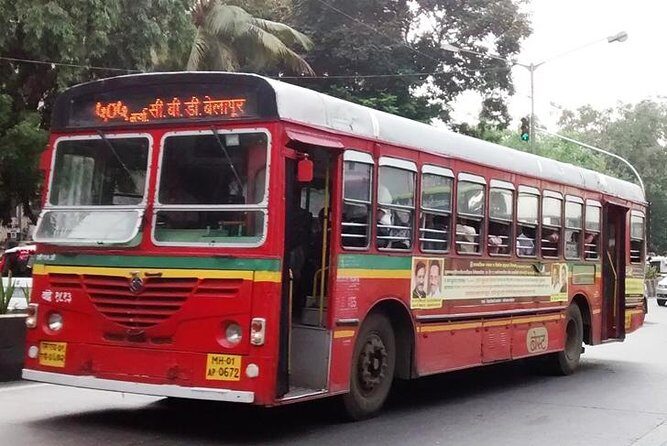
Mumbai can feel like a blur if you only see it from inside a car. The advantage of this tour is that you travel the way locals do: by combining buses, local trains, and taxis, you experience the city’s real tempo. That means you notice small things—where people queue, how station areas feel, how vendors work around foot traffic—because you’re physically part of the flow.
You also get a built-in guide to interpret what you’re seeing. Without that help, it’s easy to treat places like Dhobi Ghat or a market as photo stops. With Dev, those stops feel like living systems: who works there, what the space is used for, and why this part of Mumbai matters.
There’s a tradeoff, of course. A 4-hour plan moves. You’ll need comfortable shoes and a willingness to switch modes quickly. If you’re the type who wants long sits and lots of downtime, you may find the pace a bit tight.
You can also read our reviews of more private tours in Mumbai


Dev the guide: conversation-first, not just directions
This tour gets its strongest praise for one reason: Dev. The standout theme from the experience is the way he talks. He’s not only giving facts; he’s sharing about himself and keeping the ride-time lively. That matters more than you’d think. In a city where stations and streets can be confusing, a guide who communicates well helps you feel calm and in control.
You’ll also benefit from his presence as you move between very different environments—an iconic rail terminus, a flower market, an open-air laundry yard, and a flea market. Good guiding here isn’t about speeding you past places. It’s about helping you look at the details correctly, so you don’t just see crowds or objects—you understand the role they play.
If you want a tour where you can ask questions and get real answers, this fits.
Regal Cinema at Colaba Causeway: art deco and movie history
Your tour starts at the Regal Cinema Building on Chhatrapati Shivaji Maharaj Marg in Colaba. This is a good first stop because it sets the tone. The Regal Cinema is an art deco movie theatre on Colaba Causeway, and the historical note is specific: the first film shown at the Regal was The Devil’s Brother by Laurel and Hardy in 1933.
Even if film history isn’t your thing, it’s useful context for Mumbai. This city has long been a cultural engine, and seeing a theatre like this early helps you connect later stops—markets, stations, and working areas—to the broader idea that Mumbai is always producing culture, not just commerce.
This stop is quick—about 10 minutes—and it’s free to enter, so it works well as a warm-up without eating your schedule.
Chhatrapati Shivaji Terminus (Victoria Terminus): train grandeur in the real world
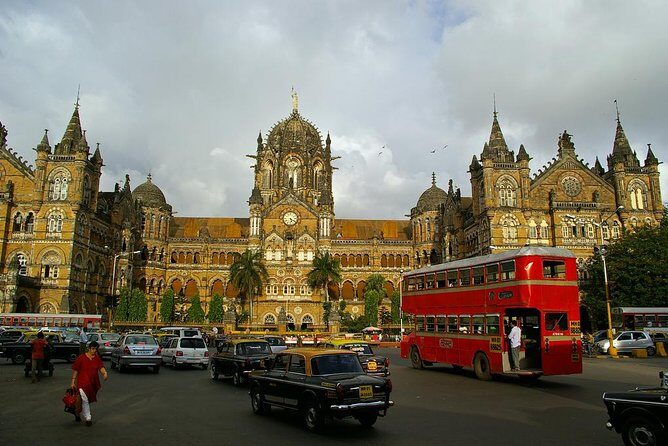
Next comes Chhatrapati Shivaji Terminus (formerly known as Victoria Terminus). You’ll spend around 10 minutes here, and it’s one of those places where even a short visit feels meaningful because the station is so visibly important to the city.
A few details help you read the building:
- Designed by British engineer Frederick William Stevens
- Built in the Victorian Italianate Gothic Revival style
- Construction began in 1878
- It’s one of the busiest railway stations in India
This is not a quiet museum stop. The station functions constantly, and that’s the point. When you see it through the lens of an active railway hub, the architecture feels more than decorative—it feels like infrastructure with ambition.
If you’re someone who likes landmarks with purpose (not just pretty façades), this one hits.
BB Dadar Market: flower auctions and the trade behind the color
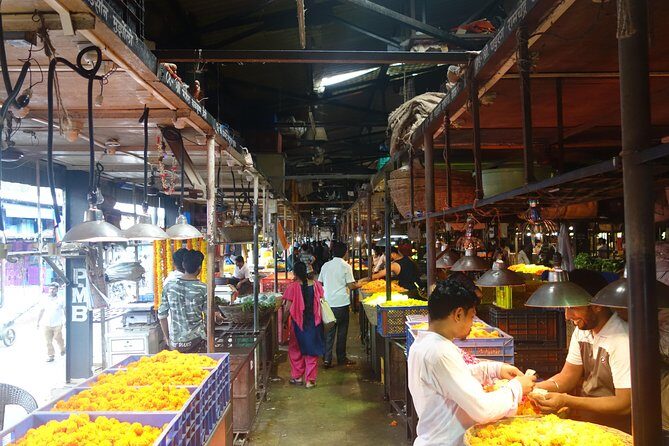
After the rail-world stop, you shift into market life at BB Dadar Market, with about 30 minutes allocated. This is a fresh, practical change of pace: it’s a flower market known for auctions and for a wide variety of blooms.
This stop helps you understand something important about Mumbai: markets aren’t just places to browse. They’re where supply, pricing, and quick decisions happen. Watching flower auctions—without needing to buy anything—gives you a sense of the city’s day-to-day economy.
The advantage of having this in the middle of your route is timing. You’ve already been around major transit and landmark spaces, so switching to a market makes the day feel varied rather than repetitive.
It’s also a good stop for photos, but go gently: people are working, and you’ll get the most out of it by observing without blocking.
You can also read our reviews of more tours and experiences in Mumbai



Dhobi Ghat: open-air laundry work and the reality of hotel linens
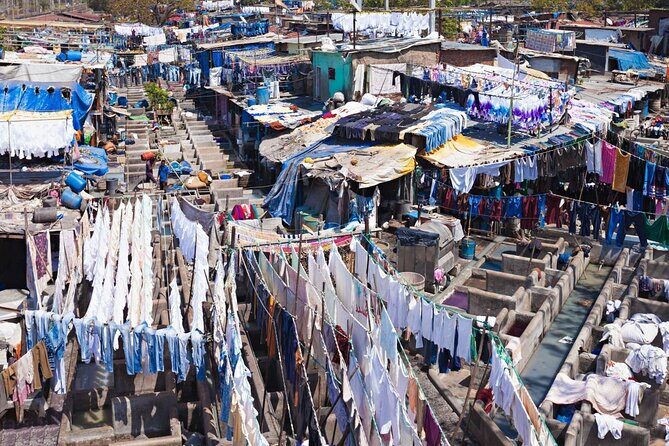
Then you move to one of the most distinctive stops on the itinerary: Dhobi Ghat (about 25 minutes). This open-air laundromat has been in place since 1890, and the idea is simple but powerful—you’re watching industrial laundry in an outdoor setting.
Here’s what makes Dhobi Ghat special:
- The washers are called dhobis
- They work in the open, cleaning clothes and linens for Mumbai’s hotels and hospitals
This isn’t a staged scene. The value comes from witnessing a system that’s kept functioning through generations. If you’ve only experienced laundry as a private, automated process, Dhobi Ghat gives you a different scale of labor and routine.
A heads-up: because it’s working laundry, the environment can be intense in terms of sights and smells. Keep your expectations practical. This is a working neighborhood stop, not a polished attraction. Still, that’s what makes it memorable.
Chor Bazaar: flea-market energy with a legend attached
Next is Chor Bazaar with about 30 minutes. It’s one of the largest flea markets in India, and the name has a story: chor means thief in Marathi and Hindi. There’s also a popular legend tied to lost items—if you lose something in Mumbai, you can buy it back from Chor Bazaar.
Whether you treat that legend as playful local folklore or take it more literally, it helps you understand the market’s role in people’s minds: it’s a place of second chances. You’re not just looking at objects. You’re seeing a market shaped by reuse, resale, and the cultural idea that lost things have a path back.
This stop is where the tour becomes more about wandering with guidance. If you like browsing, you’ll have fun. If you’re shopping-averse, you can still enjoy it by focusing on how people set up, trade, and haggle in the street economy.
Because it’s a market, pace matters. You’ll get the best experience by keeping your expectations flexible and moving at your own comfort level while staying aware of foot traffic.
Churchgate station and the dabbawallas delivering 200,000 lunchboxes
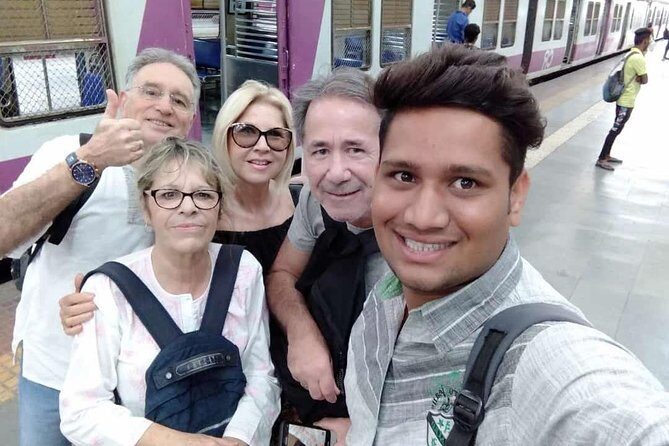
Your tour ends near Churchgate Railway Station, about 20 minutes at the stop. This is a fascinating viewpoint because you get to see dabbawallas, the lunchbox delivery workers, in action.
The key detail here is scale: the dabbawallas organize the delivery of 200,000 lunchboxes every day. That number alone tells you this isn’t casual pickup-and-drop. It’s a real operation, and it’s tied directly to the train network and daily commuter patterns.
If you’ve never seen a system like this up close, it’s one of those moments that quietly reframes how you think about logistics. You’ll come away realizing that Mumbai has multiple layers of organization—some flashy and famous, others practical and deeply effective.
This stop also gives a nice emotional landing at the end of a busy route. Rail stations are where the city shows its structure, and Churchgate adds a human layer to what you saw earlier at Chhatrapati Shivaji Terminus.
Price and value: $80 for private transit-based sighting
At $80 per person for roughly 4 hours, the value depends on what you’d otherwise spend and how you like to travel. The strongest reason this can feel fair is that fare for all transportation is included. Since the plan uses local buses, trains, and taxis, transport costs are part of the experience rather than an extra add-on.
You also get:
- A local guide
- Tea and bottled water
- A private setup for just your group
- Mobile ticket convenience
The tea and water may sound small, but it’s genuinely useful on a half-day plan. It also signals that the tour expects you’ll be moving and will need simple breaks.
The one budget warning is time, not money: because this is a half-day and the route mixes several stops, you should plan your day around it. If you schedule another activity immediately afterward, you may feel rushed or tired.
Practical tips so the route feels easy, not exhausting
I’d treat this like a transit-focused outing, not like a sit-down tour.
- Bring comfortable walking shoes. Markets and station areas can require steady footwork.
- Dress for changing conditions and crowded areas. You’ll be around people a lot.
- Keep your phone ready for quick photo moments, but don’t rush past working spaces—Dhobi Ghat and markets reward patient looking.
- Ask Dev questions during rides. This tour’s best moments often happen when conversation turns the sights into stories.
Also, since the tour uses public transportation, you’ll be in the city’s mainstream rather than a fenced-off tourist lane. That’s part of the charm. It’s also why having a guide matters.
Who this tour suits best
This tour is a great match if you want:
- A first-time-friendly overview of Mumbai that goes beyond monuments
- A practical way to see the city using real transport rather than only cars
- A guide who talks, not just points
It’s especially good for people who learn by watching how systems work—railways, markets, neighborhood industries, and lunch delivery logistics. The guide’s conversational style also makes it a solid choice for families, since the experience has been enjoyed by a parent and daughter pairing.
If you’re extremely mobility-limited or you only want a mostly car-based sightseeing day, you may prefer a different format. This one is designed around movement and public spaces.
Should you book this Mumbai public-transport tour?
I’d book it if you want the city’s “how it runs” feeling, not just surface photos. Dhobi Ghat, Chor Bazaar, and the lunchbox operation at Churchgate are all the kinds of stops that become more meaningful when you reach them the local way—and Dev’s conversation makes the travel time feel like part of the show.
I’d skip it if you’re chasing a slow, comfort-first itinerary or if you don’t like being in busy public environments. But if you’re curious about Mumbai’s everyday systems, this private 4-hour route is a smart use of time.
FAQ
What’s the duration of the tour?
The tour lasts about 4 hours.
Is this a private tour?
Yes. It’s private, and only your group participates.
What transportation is included?
Fare for transportation used during the tour is included, and the route uses local buses, trains, and taxis.
Where does the tour start and end?
It starts at the Regal Cinema Building in Colaba and ends near Maharshi Karve Rd in Churchgate.
Are meals included?
Tea and bottled water are included. Food and other drinks are not included unless specified.
What’s the price per person?
The price is $80.00 per person.
Can I cancel for a refund?
Yes, you can cancel for a full refund if you cancel at least 24 hours in advance of the experience start time.