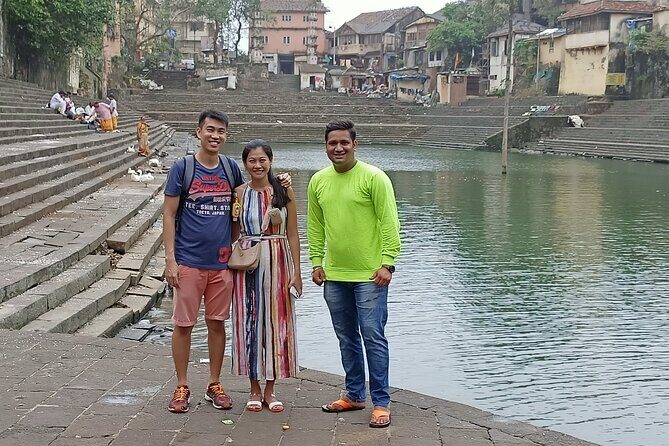
Two hours, and Dharavi feels real. This 15-person guided walk moves between the commercial waste and manufacturing side and the residential markets where people run small businesses and crafts. It’s the kind of tour where the route itself helps you understand how the neighborhood works, not just what you see from the outside.
I also like the pace. The tour is designed for easy mobility and leaves time for questions, which is a big part of why the guides get consistently high marks for being kind and very informative. The main thing to consider is that it requires good weather, and you’ll be walking through tight lanes for the full 2 hours.
In This Review
- Key Points You’ll Actually Care About
- A 2-Hour Walking Circuit Through Mumbai’s Dharavi
- Commercial Dharavi: Recycling Centers and Small Manufacturing
- Residential Dharavi: Markets, Schools, Leather, and Pot Making
- What the Small Group and Guide Quality Really Mean
- Price and Value: Why $8.95 Makes Sense for Two Hours
- Picking Your Day in Mumbai Weather and Getting There
- Who This Dharavi Tour Suits Best (and Who Might Want Another Option)
- Should You Book the Mumbai – Dharavi Slum Tour?
- FAQ
- How long is the Mumbai – Dharavi Slum Tour?
- What is the group size?
- Is pickup available?
- Where do I meet for the tour?
- What areas will the tour cover?
- Is the tour mostly walking?
- Does the tour run in bad weather?
- Can I cancel for a full refund?
- Do I get a mobile ticket?
Key Points You’ll Actually Care About
- Small group of 15 keeps the walk manageable and personal
- Commercial-to-residential route shows how work and community connect
- Recycling and manufacturing in action includes a plastic recycling setup that people find memorable
- Artisans’ studios and craft work like pottery and textiles help explain day-to-day skills
- Schools, markets, and leather work bring more than industry to the picture
- Optional door-to-door transfers can save you the headache of figuring out Mumbai transport
A 2-Hour Walking Circuit Through Mumbai’s Dharavi
If you only have a short window, this 2-hour walking tour is built for getting your bearings fast. Dharavi is one of those places where it’s easy to feel lost when you’re on your own, so having a guide who can steer you through the right sections matters.
The tour’s big strength is the way it mixes two sides of life in one visit. You start with the Commercial area, where you’ll see waste management, recycling, and manufacturing activities. Then you move into the Residential area, where you’re shown local markets, schools, leather work, pot making areas, and the narrow alleys people actually use day after day.
That split is also why this experience tends to hit emotionally. You come in expecting industry and photos, and you leave seeing a community that runs on routine, craft, and entrepreneurship.
You can also read our reviews of more tours and experiences in Mumbai.



Commercial Dharavi: Recycling Centers and Small Manufacturing
This is where the tour earns its reputation for being eye-opening in a practical way. In the Commercial area, you’ll observe waste management and recycling and watch small-scale manufacturing happening at working speed.
One highlight people often remember is the plastic recycling activity. Even if you’re only catching pieces of the process, you get the sense of how materials move through hands and systems in a place where resources are constantly being reused and repurposed.
What I like about this portion is that it doesn’t feel like a one-stop photo op. You’re guided to understand how industries connect to the local economy and how people build livelihoods around production. That matters because Dharavi is often discussed in extremes, but on the ground it’s businesses, workshops, and daily problem-solving.
You may also see artisan studios connected to crafts such as pottery and textiles, plus other manufacturing work. The value here is context: you don’t just see the final item, you’re pointed toward the working environment behind it.
Residential Dharavi: Markets, Schools, Leather, and Pot Making
After the Commercial side, the tour shifts gears in a way that helps the whole visit make sense. In the Residential area, you’re taken through local markets and past community spaces like schools, so you’re not only viewing industry. You’re also seeing education and neighborhood commerce in the same walking route.
This section is also where details like leather industry and pot making areas come into focus. Those crafts are part of what people mean when they talk about Dharavi’s entrepreneurial culture. It’s not just about one factory. It’s lots of small operations that keep going because people know how to make, sell, and support each other’s work.
And then there are the narrow alleys. This isn’t just scenic. They’re the practical streets of the settlement. Walking them with a guide helps you understand the built environment without needing to figure out navigation on your own.
A good tip for how to approach this part: don’t race through. If the guide pauses to explain an area, give yourself the mental space to connect what you saw earlier in the Commercial zone to what you see here in daily life.
What the Small Group and Guide Quality Really Mean
This tour caps at 15 travelers, which is more than a comfort detail. In a dense area like Dharavi, smaller groups move with fewer bottlenecks and fewer distractions for the people doing the work. You’re less likely to feel like you’re rushing a crowd through someone’s neighborhood.
The guide role is a big deal here. The experience is repeatedly praised for being well organized, informative, and paced so you can ask questions. That combination matters because Dharavi isn’t a museum layout. It’s a living place, and good guidance helps you keep your questions respectful and useful.
If you care about learning rather than collecting images, you’ll likely appreciate the way the guide steers you toward understanding small-scale industries and how residents live and work. Many people also call the tour humbling, and you’ll probably feel that too once you see how much gets produced and managed in tight spaces.
Price and Value: Why $8.95 Makes Sense for Two Hours
At $8.95 per person, this tour is priced like a budget activity, but the structure supports more than just sightseeing. You’re paying for guided access to sections that can be hard to visit independently, plus a route that connects Commercial and Residential life.
The main value isn’t only the low cost. It’s the combination of:
- A guided walking route (not a self-guided wander)
- Small-group size for mobility and attention
- Access to working areas such as recycling setups and craft studios
- Time to ask questions so you leave with a clearer picture
If you’re comparing options, consider what you’d spend on a guide elsewhere in Mumbai for a similarly focused, small-group experience. Even with local transport costs, this one stays easy to justify.
There’s also an upgrade option if you want less hassle: door-to-door hotel transfers from anywhere in Mumbai. That can be worth it if you don’t want to spend your day figuring out transit, especially if you’re staying farther from the meeting area.


Picking Your Day in Mumbai Weather and Getting There
This experience is clear about one thing: good weather matters. If conditions are poor, the tour can be changed or refunded, so plan your schedule with some flexibility.
It’s a walking tour, and the route includes narrow lanes, so your best friend is practical footwear. You’ll be moving for about 2 hours (approx.), and you’ll likely want to stay comfortable rather than thinking about your feet every five minutes.
The meeting point is Third Wave Coffee, Tip Road, Unit no.58, Ground, Ram Mahal, Senapati Bapat Marg, Marinagar Colony, Station, Mahim, Mumbai, Maharashtra 400016, India. The tour ends back at the same meeting point.
It also helps that it’s near public transportation. If you’re not using the transfer upgrade, you still have a reasonable way to get there without building your whole day around traffic.
Finally, this tour uses a mobile ticket, and confirmation is received at the time of booking. That’s one less thing to juggle when you’re in a city that moves fast.
Who This Dharavi Tour Suits Best (and Who Might Want Another Option)
This tour is a great fit if you:
- Want a short, guided introduction to Dharavi in a way that connects work and community
- Prefer small-group experiences over large crowds
- Like learning from a guide who can answer questions on the spot
- Are interested in recycling, small manufacturing, and craft work like pottery, textiles, and pot making
It may feel less suitable if you:
- Can’t do a walking route through narrow alleys
- Are likely to have trouble with weather-dependent plans
- Expect a hands-off, keep-your-distance style of tour (this one is about seeing and understanding life up close with guidance)
If you want something more focused on history alone, you might find this tour’s emphasis on living industry and daily life is a different angle. But if your goal is to understand how people work and build businesses in Dharavi, the design fits well.
Should You Book the Mumbai – Dharavi Slum Tour?
I’d book it if you want a guided route that stays organized, paced, and genuinely instructive in just 2 hours. The small group size, the focus on recycling and manufacturing, and the shift into residential life are the three pieces that make this tour feel more complete than a quick street walkthrough.
If you’re on a tighter budget, the $8.95 price is hard to beat for what’s included. And if you value convenience, check the door-to-door transfer upgrade so you can spend less time navigating and more time paying attention.
Just go with the right mindset: this is a working neighborhood, so be ready to learn and reflect as you move.
FAQ
How long is the Mumbai – Dharavi Slum Tour?
It runs for about 2 hours.
What is the group size?
The tour has a maximum of 15 travelers, keeping it small-group.
Is pickup available?
Yes. Pickup is offered, and there’s also an upgrade for door-to-door hotel transfers from anywhere in Mumbai.
Where do I meet for the tour?
The meeting point is Third Wave Coffee, Tip Road, Unit no.58, Ground, Ram Mahal, Senapati Bapat Marg, Marinagar Colony, Station, Mahim, Mumbai, Maharashtra 400016, India. The tour ends back at the meeting point.
What areas will the tour cover?
You’ll visit both the Commercial area and the Residential area of Dharavi, including waste management/recycling, manufacturing activities, local markets, schools, and craft or industry areas like leather and pot making.
Is the tour mostly walking?
Yes. It’s described as a small-group walking tour through Dharavi.
Does the tour run in bad weather?
It requires good weather. If it’s canceled due to poor weather, you’ll be offered a different date or a full refund.
Can I cancel for a full refund?
Yes. You can cancel up to 24 hours in advance for a full refund. If you cancel less than 24 hours before the start time, it won’t be refunded.
Do I get a mobile ticket?
Yes. This experience includes a mobile ticket, and you’ll receive confirmation at booking.