REVIEW · MUMBAI
Mumbai City Tour with Option to Add Elephanta Caves
Book on GetYourGuide →Operated by Indian Golden Triangle tours · Bookable on GetYourGuide
Mumbai can feel like a movie set if you don’t have a guide. This 1-day tour is built to help you connect the dots fast, from colonial-era landmarks to everyday street scenes, with an expert English-speaking guide. I love the way you get British heritage sights mixed with lived-in Mumbai moments, and I also like that the route includes photo-worthy, specific stops like Rajabai Clock Towers and the Dhobi Ghat laundry view. One thing to consider: if you add Elephanta Caves, the day gets more timed around the boat schedule, so you’ll want to plan for a longer stretch on your feet.
You’ll ride in a comfortable air-conditioned vehicle, usually picking up from south Mumbai, and you’ll get hotel pickup and drop-off to reduce hassle. A big plus is that you’re not just watching monuments from the curb—you’re guided through why places were built, how they changed, and what to look for while you’re there. The only real drawback is the entrance fees for attractions, which are not included, so your final cost will be higher once you confirm the sites you enter.
I went into this type of tour worried it might feel like a checklist. It doesn’t. You get a steady pace with a guide who can adapt to your questions, and that flexibility really matters in a city as big and layered as Mumbai. In the guide experience, the name Zaheed comes up in the best way—people highlight his follow-through and clear explanations—so you can expect a more thoughtful tour than a rushed drive-by.
In This Review
- Key highlights you’ll actually notice
- How the guided format makes Mumbai easier to read
- Price and value: what $90 covers (and what adds up)
- The full route: what you’ll see and why it’s worth your time
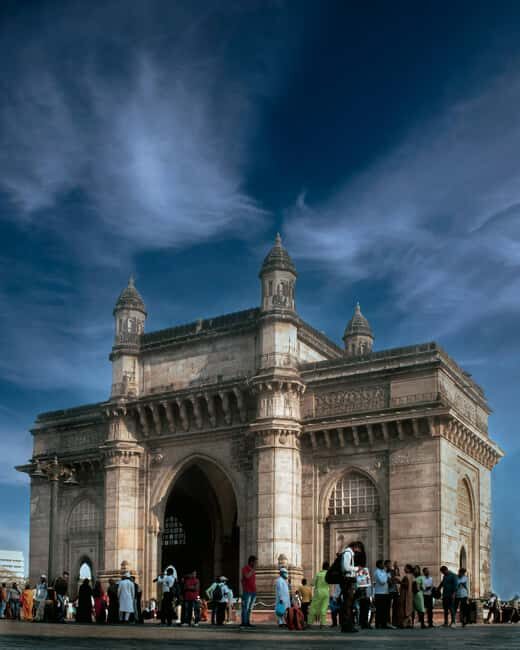
- Gateway of India: more than a pretty waterfront stop
- Taj Mahal Palace Hotel: a landmark tied to a famous refusal story
- Mumbai University and Rajabai Clock Towers: the British heritage design language
- Watson’s Hotel Ruins and the Tata story connection
- Oval Cricket Ground: a quick hit of local culture
- Bombay High Court: colonial architecture with modern gravitas
- Victoria Terminus (CST): UNESCO-level reason to pause
- Driving past Marine Drive and Chowpatty Beach: views with timing flexibility
- Mani Bhavan and Gandhi Museum: a focused look at political life
- Kamala Nehru Park: skyline viewpoint and the Old Woman’s shoe
- Hanging Gardens and Tower of Silence area: engineering meets cultural practice
- Dhobi Ghat: open-air laundry you see in action
- British heritage extras: Flora Fountain, Hutatma Chowk, Telegraph Office, India Post, Kala Ghoda
- Elephanta Caves option: what the add-on changes in your day
- What “a guide who adapts” looks like in real life
- Who this tour suits best (and who might prefer a different plan)
- Practical tips before you go
- Should you book this Mumbai city tour with Elephanta option?
- FAQ
- Is this a full-day tour?
- What’s included in the tour price?
- How much are entrance fees?
- Can I skip the ticket line?
- Do I need to choose the Elephanta Caves option in advance?
- What languages are the live guides available in?
- Where are pickup and drop-off locations?
- What’s the cancellation policy?
Key highlights you’ll actually notice
- Gateway of India context: why it was built for King George V and Queen Mary
- Colonial architecture stops that make sense: CST (UNESCO), Bombay High Court, Mumbai University heritage buildings
- Real Mumbai scenes: Dhobi Ghat open-air laundry and the daily rhythm around Chowpatty
- Views with landmarks: Marine Drive passes plus Kamala Nehru Park’s skyline angle and the Old Woman’s shoe viewpoint
- Elephanta Caves add-on: a boat ride option if you want to add major cave history
- Friendly, responsive guiding: strong feedback on guide explanations and car-driver teamwork
How the guided format makes Mumbai easier to read
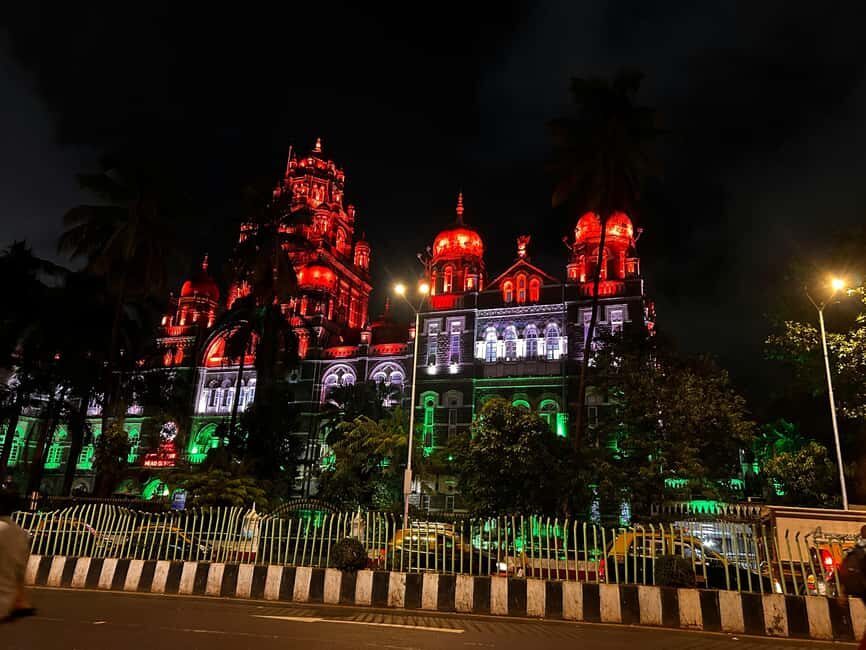
Mumbai is one of those cities where the best parts are scattered. You can drive around for hours and still feel like you’re missing the story. This tour’s whole value is that it gives you a guided lens—so when you see a clock tower, a train station, or a stone facade, you also understand what it was built to do and why it matters today.
I like that you’re not stuck doing only high-profile landmarks. You also get the everyday texture: places where life happens in public, like Dhobi Ghat, where the laundry process is visible rather than hidden. That contrast is what makes the day feel like Mumbai, not just a photo album.
The tour is set up as a private group. That matters more than people think: you can ask questions without feeling like you’re holding up a big bus crowd, and the guide can adjust the flow if your pace is slower or faster.
You can also read our reviews of more city tours in Mumbai



Price and value: what $90 covers (and what adds up)
The base price is $90 per person for a 1-day city tour, and the itinerary is designed around a professional English-speaking guide, plus hotel pickup/drop-off (south Mumbai) and transport in an air-conditioned vehicle. That’s already a lot of practical overhead you’d otherwise pay for yourself with taxis and separate tickets.
Plan on entrance fees for attractions, though. The tour notes that entrance fees can total INR 1600 per person, and that food and drink are not included. So the real question becomes: do you want to pay a single guided day fee, then top up entrance tickets when you arrive, or would you rather DIY and risk wasting time figuring out what’s worth entering?
If you care about seeing both major monuments and real working Mumbai sights—without spending your day negotiating transport and routes—this format usually feels like good value. If you’re trying to minimize spend to the absolute minimum and only want outdoor views, then you might feel the entrance fees add pressure.
The full route: what you’ll see and why it’s worth your time
This tour is structured to move through south and central sights efficiently, using drives plus timed stops. You start in Mumbai with pickup, then you spend the day sightseeing, and you end back at Mumbai with drop-off. The guiding style is practical: you’re not just told where to stand. You’re told what to look for.
Gateway of India: more than a pretty waterfront stop
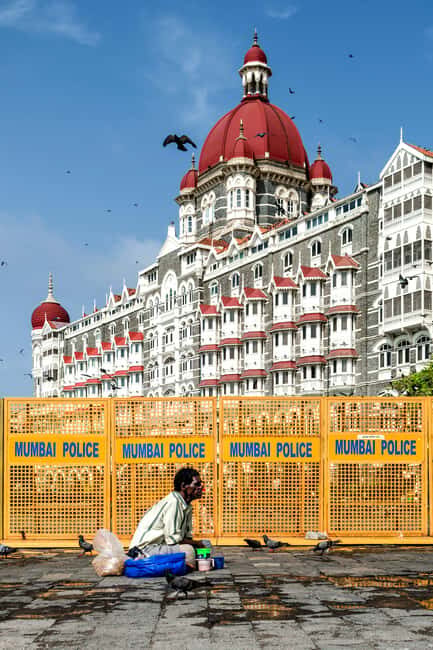
You’ll visit Gateway of India, built to welcome King George V and Queen Mary into India. That detail turns a famous landmark into something more meaningful. It’s not just a background for photos; it’s a statement piece—meant to frame an event and project power and presence.
A waterfront setting like this also helps with orientation. After Gateway, you’ll get a clearer sense of where the colonial-era “public face” of the city sits compared to the daily street scenes you’ll see later.
Taj Mahal Palace Hotel: a landmark tied to a famous refusal story
Next up is a classic sighting: Taj Mahal Palace Hotel. The tour’s own notes include an interesting backstory at Watson’s Hotel Ruins—how Tata was refused entry into that hotel, and so he built the Taj Mahal Hotel. Whether you remember every name or not, the takeaway is strong: some of the city’s landmarks came from social access and status barriers, and the architecture carries those stories forward.
If you like your travel with human motivation behind it, this kind of anecdote adds flavor fast.




Mumbai University and Rajabai Clock Towers: the British heritage design language
You’ll also stop at Mumbai University, including the British heritage building built in 1857, plus Rajabai Clock Towers, often described as the Big Ben of India. The phrase might sound like a marketing line, but in person it works because you can compare the idea—clock tower as civic identity—without needing a lecture.
Here’s what you should watch for: the clock tower isn’t just a tall structure. It signals how the city’s leaders wanted time, education, and authority to feel visible.
Watson’s Hotel Ruins and the Tata story connection
The route includes Watson’s Hotel Ruins, which acts like a bridge between old glamour and new ambition. The Tata refusal angle is the clue for what to pay attention to: remnants become narrative anchors. You’re seeing how a city can preserve scars and also transform them into something bigger.
Even if you only spend a short moment here, I’d treat it as a storytelling stop, not a long photo stop.
Oval Cricket Ground: a quick hit of local culture
One of the itinerary highlights is Oval Cricket Ground, described as the place where India’s most beloved sport is played. You don’t need a long stay to feel why it’s included. Cricket is a language in Mumbai, and the guide’s framing helps you connect it to how public life gathers around sports and shared viewing culture.
Bombay High Court: colonial architecture with modern gravitas
You’ll also pass Bombay High Court, noted for beautiful British heritage architecture. Courts are built for authority, but the structure often becomes part of the city’s visual memory. If you’re the kind of person who likes noticing symmetry and imposing entrances, this is a good stop to slow down for a minute.
Victoria Terminus (CST): UNESCO-level reason to pause
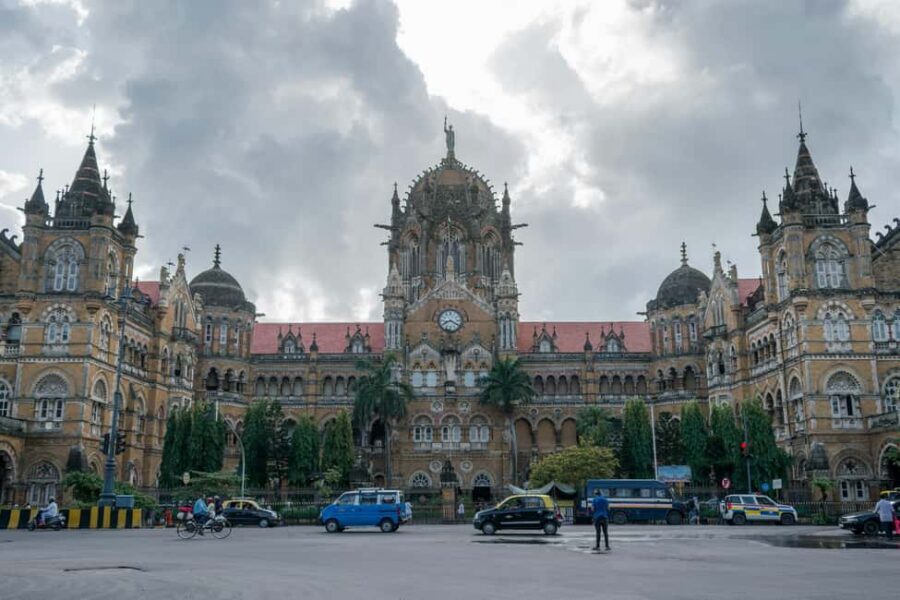
A big landmark on this route is Victoria Terminus Train Station (CST), listed as a UNESCO World Heritage Site. This is the kind of place where standing on the right spot makes you see details you’d miss from a distance—arches, station scale, and the way the building reads as both transport hub and statement.
If you’ve ever admired railway architecture in other countries, you’ll feel that connection immediately. If you haven’t, it’s still worth pausing because it helps you understand how Mumbai became a major gateway city.
Driving past Marine Drive and Chowpatty Beach: views with timing flexibility
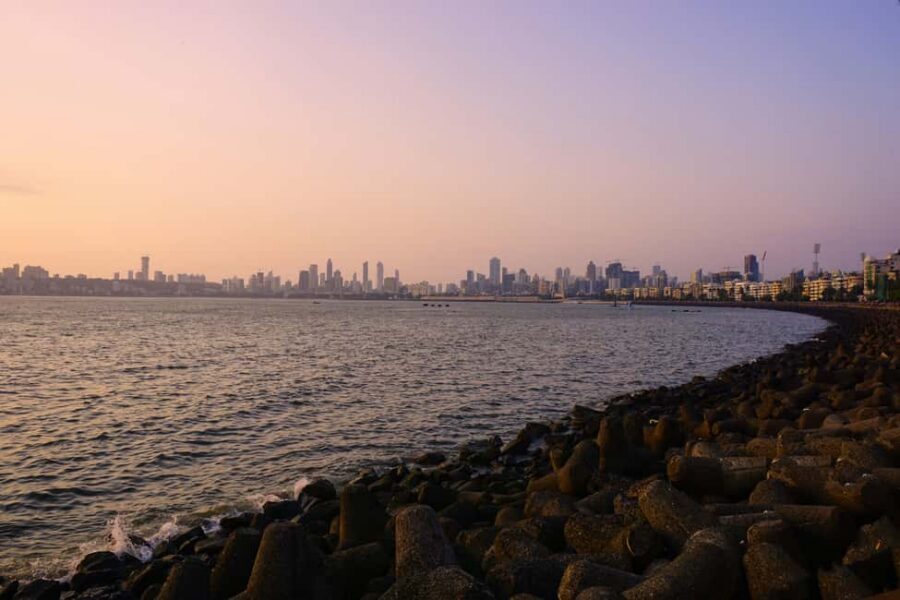
The tour includes drive-past sights like Marine Drive and Chowpatty Beach. You may not get long walking time here, depending on your schedule that day, but it’s still worth it. Marine Drive is one of those skyline lines you recognize instantly once you’ve seen it once.
Practical tip: if your tour timing leans toward late afternoon or evening, you’ll likely get nicer light for city views. If it’s mid-day, still enjoy the scene, just don’t expect the same glow.
Mani Bhavan and Gandhi Museum: a focused look at political life
You’ll visit Mani Bhavan (Gandhi Museum). This stop shifts the tone from architecture to people and ideas. It helps ground your understanding of modern Indian history inside the city.
What I like about this inclusion is that it avoids making the day purely about buildings. It gives you at least one moment where you’re reminded that Mumbai’s importance is not only structural—it’s also political.
Kamala Nehru Park: skyline viewpoint and the Old Woman’s shoe
Next is Kamala Nehru Park, including a skyline view and the famous Old Woman’s shoe. This is a good stop if you like quirky landmarks and view points. It’s also helpful for your mental map: after this, the city feels more “readable” from above.
The Old Woman’s shoe is the kind of thing you’ll remember even if you forget exact dates. The point here is perspective.
Hanging Gardens and Tower of Silence area: engineering meets cultural practice
The itinerary includes Hanging Gardens, described as gardens built on top of water tanks near the Tower of Silence, a Parsi burial place. That combination—topography, water-tank engineering, and cultural geography—makes the stop more interesting than a normal garden visit.
It’s worth paying attention to how the city’s built form uses space. Even if you don’t spend long here, the idea sticks: Mumbai stacks functions.
Dhobi Ghat: open-air laundry you see in action
Finally, you’ll visit Dhobi Ghat, the open-air laundry where clothes are washed in full view of the public. This is one of the highest-impact inclusions on the whole route. It’s not staged for tourists; it’s part of the city’s everyday economy.
If you’re sensitive to crowds or prefer quieter environments, you should expect a busy atmosphere. But if you want Mumbai’s real rhythm, this is the kind of stop that changes how you see the city.
British heritage extras: Flora Fountain, Hutatma Chowk, Telegraph Office, India Post, Kala Ghoda
As you move through the day, the tour also drives past other British heritage buildings, including Flora Fountain & Hutatma Chowk, the Telegraph Office, the India Post Office Building, and the Kala Ghoda area. These add texture and help you see the colonial-era city planning as a network, not isolated monuments.
Elephanta Caves option: what the add-on changes in your day
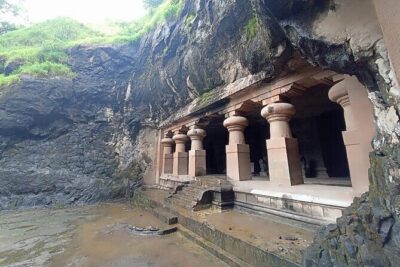
If you choose the Elephanta add-on, the tour includes a boat ride to Elephanta Caves. That’s a meaningful swap: it adds a major historic attraction, but it also shifts your day toward ferry timing and additional on-the-water travel.
The caves are typically the kind of destination you’ll want to do with a guide, because the visuals make more sense when someone gives you the orientation—what you’re seeing and how to interpret it. If you’re short on time in Mumbai and want one “big ticket” extra, this add-on is the natural way to get it in without planning your own transportation puzzle.
Just remember: entrance fees are not included, so you’ll want to budget for cave site entry on top of your base tour price and any other stop tickets.
What “a guide who adapts” looks like in real life
One theme that stands out in the experience feedback is the guide’s ability to match your pace and priorities. The name Zaheed comes up with strong praise for clear explanations and follow-through, and that’s exactly what makes the difference between a drive-by tour and a lived-in one.
If you’re the type who likes asking why something was built, or you want context rather than just directions, you’re in the right place. And if you care more about photos, you’ll still be better served because the guide can steer you to the best angles and explain which stops are truly worth entering.
Also: the driver’s friendliness is mentioned as part of the overall comfort. In a city where traffic can surprise you, that matters. You want a smooth day, not a tense one.
Who this tour suits best (and who might prefer a different plan)
This tour is a great fit if you want:
- A one-day overview of Mumbai that includes both landmark architecture and working-city sights
- A guide who can explain the “why,” not just the “where”
- A private-group feel where you can ask questions and move at a sensible pace
You might prefer a different setup if:
- You hate crowds and especially want quiet, low-traffic stops all day
- You’re only interested in fully outdoor sightseeing and want to avoid entrance fees
- You plan to do many other activities the same day, because the route is packed and the Elephanta option adds more scheduling pressure
Practical tips before you go
- Wear comfortable shoes. You’ll be moving between multiple stops across a full day, including public, active areas like Dhobi Ghat.
- Bring sunscreen and a hat. Even when the schedule includes drives, you’ll spend time outside at viewpoints and landmarks.
- If you’re adding Elephanta, build in buffer time. Boat timing means you can’t treat the day as fully free-form.
- Plan to spend extra on entrance tickets. The tour flags INR 1600 per person as an estimate for entrance fees.
Should you book this Mumbai city tour with Elephanta option?
If you’re trying to make Mumbai make sense in a single day, I’d book it. The combination of Guided British-heritage architecture plus everyday scenes like Dhobi Ghat is what makes the tour feel balanced instead of one-note. The private-group setup and professional guide, along with the strong feedback on explanation quality, are exactly what you want when you’re seeing a city this big.
Choose the Elephanta Caves add-on if you want a major history anchor and you’re okay with a more schedule-driven day. If you’d rather keep things lighter, you can still get a strong Mumbai overview without it.
For most visitors who want value, context, and a smooth, guided flow, this is a smart one-day plan.
FAQ
Is this a full-day tour?
Yes. It’s listed as a 1-day Mumbai city sightseeing tour.
What’s included in the tour price?
You get a professional English-speaking guide, hotel pickup and drop-off (south Mumbai), transport by air-conditioned vehicle, and a boat ride to the Elephanta Caves only if you add the option.
How much are entrance fees?
Entrance fees to attractions are not included. The tour data lists entrance fees as INR 1600 per person.
Can I skip the ticket line?
Yes, the tour includes skip the ticket line.
Do I need to choose the Elephanta Caves option in advance?
The add-on is offered as an option to add Elephanta Caves, and the boat ride is included if you select it.
What languages are the live guides available in?
English, Spanish, and French.
Where are pickup and drop-off locations?
Pickup and drop-off are provided for south Mumbai.
What’s the cancellation policy?
Free cancellation is available up to 24 hours in advance for a full refund.