REVIEW · MUMBAI
Mumbai City Tour With Laundry And Hotel Transfers (South Mumbai)
Book on Viator →Operated by Showcase India Tourism Company · Bookable on Viator
South Mumbai can feel like a maze, so this tour helps you decode it. You’ll move through iconic sights, stop for context at places like Mani Bhavan and the Jain Temple, then end with real Mumbai scenes such as dabbawalas at Churchgate and laundry at Dhobi Ghat. The big practical win is that the guide handles most entry fees, so you’re not constantly doing math or scrambling for tickets.
Two things I really like: first, the driver-cum-guide brings 25+ years in hospitality and an English-speaking, caring approach that makes the whole route feel safe and straightforward. Second, most entry fees are included, with all fees and taxes covered, so the tour runs on budget instead of surprises.
One thing to consider: it’s a good chunk of walking in a busy city, and it depends on good weather, so plan on comfortable shoes and a bit of flexibility if conditions are rough.
In This Review
- Key highlights worth your attention
- South Mumbai in 3 to 4 hours: a route that actually makes sense
- Price and value: why $41.39 feels fair for this mix
- The guide experience: safe, English-speaking, and built for real questions
- Gateway of India: the landmark start that anchors everything
- Badhwar Park: fishermen’s homes and the life behind the postcard
- Mani Bhavan Gandhi Museum: non-violent freedom struggle in one focused stop
- Jain Temple – Mumbai: intricate stonework and zodiac detail
- Hanging Gardens and the water story: why South Mumbai grew where it did
- A major contrast stop: the Zoroastrian Tower of Silence experience
- Mukesh Ambani’s residence: wealth you can’t ignore, even when you try
- Churchgate Railway Station and dabbawalas: the lunch system behind the skyline
- Chowpatty Beach: a family beach and street food energy
- Dhobi Ghat: where manual laundry turns into a live city operation
- Chhatrapati Shivaji Terminus: the former Victoria Terminus and the train backbone
- Afghan Church (St. John the Evangelist): British war memory in a working neighborhood
- Horniman Circle Garden and the Fort-area feel: planning the city’s open space
- Marine Drive promenade and the Rajabai Clock Tower: the skyline-and-stone combo
- What you’ll likely notice most: this isn’t just sights, it’s systems
- Small-group logistics that keep the pace comfortable
- Who this tour suits best
- Should you book this South Mumbai with laundry and transfers?
- FAQ
- FAQ
- How long is the Mumbai City Tour With Laundry and Hotel Transfers?
- What is the price per person?
- Does the tour include pickup or transfers?
- Is this a small group tour?
- Is admission included for the stops?
- What is not included in the tour price?
- Is there a mobile ticket?
- When will I get confirmation after booking?
- Is the tour affected by weather?
- What is the cancellation window?
Key highlights worth your attention

- Most entry fees included, so you can keep your hands out of your pockets at key monuments
- Small group (max 6), which makes questions and pacing actually workable
- Dhobi Ghat laundry stop, showing thousands of manual wash processes at once
- Gandhi Museum and Jain Temple, mixing freedom-struggle storytelling with intricate religious art
- Churchgate + dabbawalas, a real system behind lunch delivery across offices
- Marine Drive and Fort-area landmarks, including the Rajabai Clock Tower stop
South Mumbai in 3 to 4 hours: a route that actually makes sense

This is the kind of tour that helps you get your bearings fast, because it’s built like a guided walk with sensible stops. South Mumbai can be overwhelming even when you’re standing in the most famous places. The magic here is that you’re not just looking at postcard spots. You’re also learning why they’re connected, and how daily life fits around the big monuments.
With pickup included and a small maximum group size, the day feels organized rather than chaotic. You’ll typically spend short stretches at each site, then move on. That timing matters. If you’ve ever tried to do South Mumbai solo, you know how quickly “I’ll just see a few things” turns into a long afternoon of backtracking and missed entrances.
Also, the guide approach is a real part of the value. This is a driver-cum-guide setup with over 25 years in hospitality, and the tone is caring and reassuring. You’re not left wandering or guessing what to do next.
You can also read our reviews of more city tours in Mumbai



Price and value: why $41.39 feels fair for this mix

At $41.39 per person for roughly 3 to 4 hours, the price is mostly about what you’re getting handled for you. You’re paying for guiding, plus pickup/transfer-style convenience, plus admission coverage.
The tour states that all fees and taxes are included, and it also notes that most entry fees to monuments are part of the package. That’s important in a city where entry charges can add up fast, especially when a route includes multiple ticketed stops like Mani Bhavan Gandhi Museum, the Jain Temple, Hanging Gardens, Churchgate-area spots, Chowpatty, Dhobi Ghat, Chhatrapati Shivaji Terminus, Afghan Church, Horniman Circle Garden, and the Fort-area clock tower stop.
On the flip side, the tour does not include snacks. That means you should plan to buy water and a small bite if you get hungry, or eat before you start. But you still come out ahead when so many “annoying little costs” are already covered.
One more value point: the tour includes a mobile ticket. In practice, that usually means fewer delays at entry points, and you spend more of your energy looking, not figuring out paperwork.
The guide experience: safe, English-speaking, and built for real questions
A lot of city tours say the guide is friendly. This one specifically emphasizes a driver-cum-guide with more than 25 years in hospitality, and it also notes English ability. That combination matters because it affects how smoothly the day goes.
You’ll be moving through areas where street flow, queueing, and entrances can be confusing. Having a guide who’s used to hosting people helps you stay calm. It also helps that the tour avoids the usual marketing trick of hiding what’s covered. The information here is straightforward: most entry fees are included, so you’re not hit with surprise payments for basic access.
In the small-group format (up to 6 people), you also get room for conversation. You’re not just hearing facts. You can ask what something means, why a building looks the way it does, or how local routines work around the sights.
Gateway of India: the landmark start that anchors everything
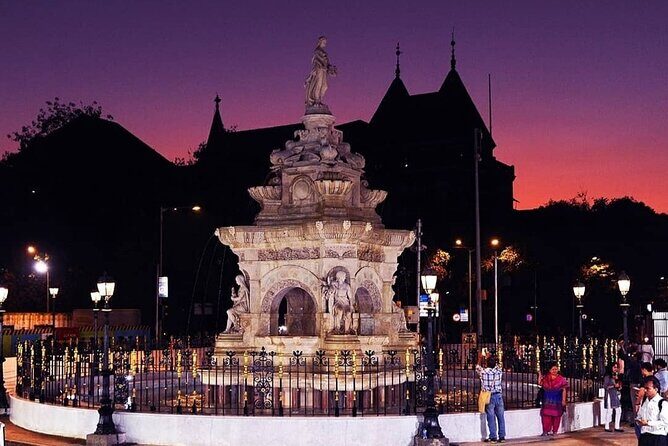
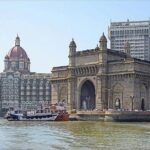
The tour opens at Gateway of India, one of the most recognizable symbols of British-era commemoration. The connection here is specific: it was built by the British to mark the arrival of King George V and Queen Mary to India.
This stop is usually quick, with about 20 minutes and an admission ticket included. Think of it as a “context checkpoint.” You look at the monument, you understand what it was built to represent, and then you’re ready for the next stops that show how South Mumbai layers different eras on top of each other.
A practical tip: even when a stop is short, take 2 minutes to step back and notice the scale. The gateway is famous, but it’s more impressive when you see how it sits in its coastal setting.
Badhwar Park: fishermen’s homes and the life behind the postcard
Next up is Badhwar Park, described as an area that shows a fishermen’s village feel, with idealistically built homes for hardworking fishermen who head out early and return early morning.
This is a short visit (about 10 minutes) and the admission ticket is free. That makes it easy to treat as a breather between more structured monument stops. You’ll get a sense that Mumbai’s identity isn’t only buildings and empires. It’s also routines: who works, when they work, and how that shapes the look of a neighborhood.
If you’re the type who likes to understand a city through daily life details, this stop is a nice palate cleanser.





Mani Bhavan Gandhi Museum: non-violent freedom struggle in one focused stop
You’ll then reach Mani Bhavan Gandhi Museum, where Gandhi’s house is now converted into a museum. The emphasis is on a brief idea of India’s freedom struggle presented in a non-violent manner under the mentorship of Mahatma Gandhi.
Expect around 20 minutes, with admission included. This is one of the stops that turns your walk into something more meaningful, because it adds a human scale to the grand landmarks around South Mumbai.
Practical note: museum time can feel slower than outdoor sights. Keep an eye on how much you’re reading versus looking. If you only have a short window, focus on the main narrative points the guide highlights.
Jain Temple – Mumbai: intricate stonework and zodiac detail
The tour includes Jain Temple – Mumbai, a historic place of worship known for intricate stone carvings and a dome painted with the zodiac.
You’ll likely spend about 10 minutes and admission is included. It’s a short stop, but Jain temples are the kind of architecture that rewards even brief attention. The carvings and the painted dome are visual “information,” not decoration. Even at a glance, you’ll notice how the design is built to guide attention upward.
Consider this a good stop for photos, but also for respectful looking. Religious spaces usually have their own pace, so keep the focus on the artwork and the structure.
Hanging Gardens and the water story: why South Mumbai grew where it did
Hanging Gardens is next, connected to water tanks and the idea that the place is from which the city receives water. You’ll also hear about the Boot House and more around the area.
Time is about 15 minutes with admission included. The “hanging gardens” name sounds like pure aesthetics, but here the connection is functional. It’s a reminder that big cities don’t happen by magic. They happen because water infrastructure and engineering allow people to live, work, and build.
If you’re the type who likes city design, you’ll appreciate this stop more than you might expect.
A major contrast stop: the Zoroastrian Tower of Silence experience
The itinerary includes the cremation process of the Zoroastrian community, referencing a Dakhma, also known as the Tower of Silence. It’s described as a circular, raised structure built for ex-carnation, where dead bodies are exposed.
This is a sensitive stop, and it’s also a very specific part of Mumbai’s religious history. Expect a short window. The value is in perspective: you see how different communities historically managed life and death in ways that shaped architecture and neighborhood identity.
A consideration: because it involves religious and death-related practices, the tone here is usually about learning and respect. Keep your questions thoughtful, and follow the guide’s pace.
Mukesh Ambani’s residence: wealth you can’t ignore, even when you try
Another contrast stop is the House belonging to Mukesh Ambani, described as built at a cost of USD 200 million and rumored to be paying USD 100,000 as electricity bill per month.
This is not a “tour inside” type of stop; it’s more about the sight and what it represents in Mumbai’s modern story. If you like comparing older monuments with contemporary power, this is that kind of moment.
Keep expectations realistic. You’re seeing an exterior view and learning framing, not getting a guided tour of the home.
Churchgate Railway Station and dabbawalas: the lunch system behind the skyline
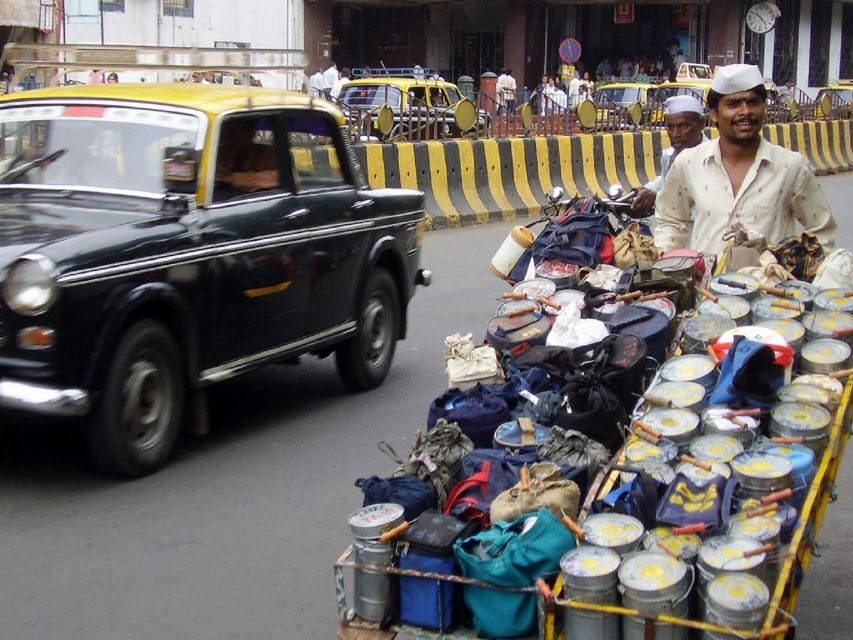
At Churchgate Railway Station, you’ll learn about the dabbawalas, who deliver lunch boxes to offices across the city. The itinerary frames it as deliveries to major and minor government and private offices around Mumbai.
This stop is about 10 minutes with admission included. It’s one of the most practical, everyday parts of the tour because it explains a system you might hear about in Mumbai even if you’re not planning to use it yourself.
Here’s what I think you’ll enjoy most: you’re seeing the city’s efficiency culture in action. It’s not about monuments. It’s about coordination.
Chowpatty Beach: a family beach and street food energy
Then it’s Chowpatty Beach, described as a family beach where people come after busy work schedules. It’s also famous for street food served in the evening, with Indian families returning on weekends.
You’ll spend about 15 minutes and admission is included. Even if you don’t eat, the point is to understand how Mumbai relaxes. Beaches are often treated like downtime, but Chowpatty also works like a social calendar.
If you’re doing this tour during a busy time, expect more people and more noise. That’s not a problem; it’s the setting.
Dhobi Ghat: where manual laundry turns into a live city operation
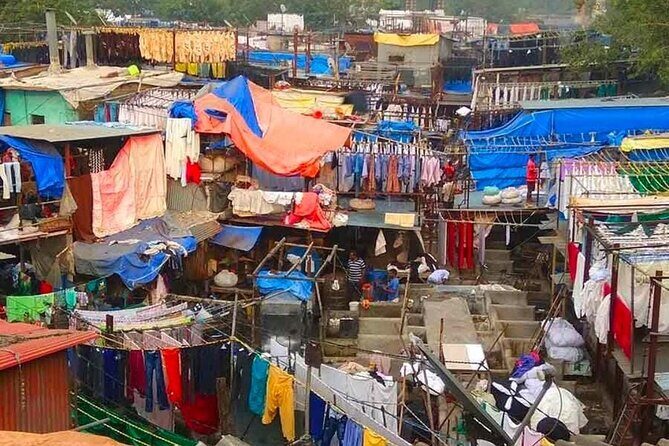
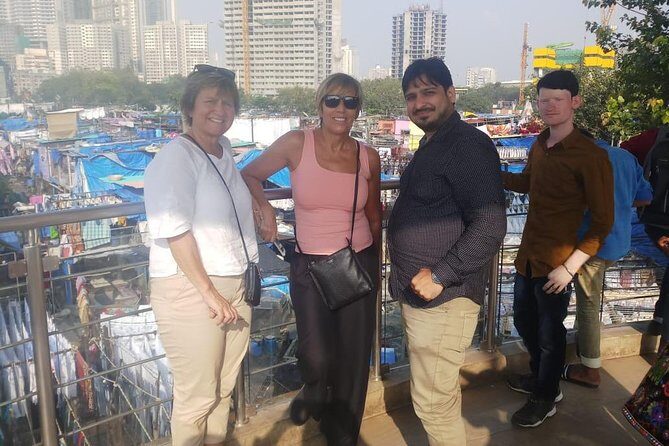
Now the “laundry” in the tour title becomes real. Dhobi Ghat is described as witnessing around 5000 manual washing of clothes at a time, and it’s noted as a 150-year-old British made laundry with contracts from star hotels and various government undertaken companies like Indian Railways.
This is about 10 minutes with admission included. Even in a short window, you’ll see the scale and the rhythm. It’s labor-intensive and organized, and it gives you a very different Mumbai picture from the colonial monuments and upscale skyline views.
Practical advice: this is one of those places where you’ll want to be ready for smells, steam, and close-up movement. If you’re sensitive to strong odors or crowded working areas, keep your expectations flexible.
Chhatrapati Shivaji Terminus: the former Victoria Terminus and the train backbone
The tour includes Chhatrapati Shivaji Terminus, formerly known as Victoria Terminus, described as the head of central trains to and fro various parts of the city.
Expect about 10 minutes with admission included. This stop works well because it’s a living landmark. It isn’t just something you look at and leave. It’s a transit engine still shaping how the city moves.
If you’re into architecture, even a brief visit can be enough to notice the monumental feel compared with the surrounding streets.
Afghan Church (St. John the Evangelist): British war memory in a working neighborhood
Next is Afghan Church, known as the Church of St. John the Evangelist. The description says it was built by the British to commemorate the dead of the First Afghan War and the disastrous 1842 campaign.
You’ll spend about 15 minutes and admission is included. Like Gateway of India, this is another British-era reminder, but with a different tone. Instead of celebration, it’s remembrance.
This stop is also useful for context: South Mumbai’s colonial architecture isn’t only about grand monuments. It includes churches, cemeteries, and structures tied to specific historical events.
Horniman Circle Garden and the Fort-area feel: planning the city’s open space
The tour stops at Horniman Circle Garden, described as a large open space with grand buildings in the middle of the walled city. It also notes that the area was known as Bombay Green in the 18th century, while the area around it was called Elphinstone Circle.
Time is brief, around 5 minutes, with admission included. The value here is a quick reset. You get a view into how the city’s planners carved out breathing room inside dense areas.
If you want to understand South Mumbai as a planned district rather than random streets, this is a quick clue.
Marine Drive promenade and the Rajabai Clock Tower: the skyline-and-stone combo
The itinerary also includes the coast walk connected with Marine Drive’s road and promenade. It mentions that the road and promenade were constructed by philanthropist Bhagojisheth Keer and Pallonji Mistry, and that it’s a C-shaped six-lane concrete road along the coast of a natural bay. At the northern end, it leads into other major sights.
Then you reach the Rajabai Clock Tower, located in the Fort campus of the University of Mumbai, standing at a height of 85 meters.
These Fort-area moments are short, but they help you connect what you’ve already seen. It’s where the tour starts to feel like a guided “best of” architectural walk: water edge, campus towers, and big-street geometry.
Tip for photos: if the light is harsh, step into the shade near building edges and then look for framing that catches both tower shape and street lines.
What you’ll likely notice most: this isn’t just sights, it’s systems
A theme connects many of the stops: Mumbai runs on systems, not just scenery. The dabbawalas delivery system is one. Dhobi Ghat laundry scale is another. Even the waterfront and city water connection ties into infrastructure.
The tour’s design helps you spot that pattern because it alternates between:
- big landmarks (Gateway of India, Chhatrapati Shivaji Terminus)
- museum and religious spaces (Mani Bhavan, Jain Temple, Afghan Church)
- working city scenes (dabbawalas, Dhobi Ghat, Chowpatty street food timing)
If you like travel that explains how a place functions, not just how it looks, this route fits that mood.
Small-group logistics that keep the pace comfortable
This tour caps at 6 travelers, which is key. With more people, short stops become rushed and you’re stuck waiting for the group to move. With a smaller group, you can actually spend a few real minutes at each site without feeling like you’re on a conveyor belt.
You also get hotel-transfer-style pickup. The tour notes it’s near public transportation, which is helpful if you’re staying somewhere central or if your hotel is walkable to transit.
Because it requires good weather, treat it like an outdoor-heavy afternoon. Dress for walking, keep water handy, and plan for some crowded street conditions.
Who this tour suits best
You’ll probably like this tour if:
- you want South Mumbai highlights in a short timeframe without ticket hassle
- you care about context and explanations, not just photos
- you’re curious about everyday Mumbai, especially laundry at Dhobi Ghat and lunch delivery via dabbawalas
- you prefer a small group and a guide who speaks English and takes safety seriously
You might not love it as much if:
- you dislike walking around busy areas
- you need lots of time at each monument (this is built for short, well-chosen stops)
- you’re extremely sensitive to the working-laundry environment at Dhobi Ghat
Should you book this South Mumbai with laundry and transfers?
If you want a practical, well-paced South Mumbai overview that mixes monuments with lived-in city life, I’d book it. The value is strong because all fees and taxes are included and most entry fees are covered. Add the small group size, English-speaking driver-cum-guide, and the standout inclusion of Dhobi Ghat, and you get a tour that feels more like a guided orientation than a checklist.
If you’re short on time and you want the kind of route where you leave with a clearer mental map of South Mumbai, this fits well. Just go in prepared for walking and for the reality of Dhobi Ghat being a working place, not a museum set.
FAQ
FAQ
How long is the Mumbai City Tour With Laundry and Hotel Transfers?
It runs about 3 to 4 hours.
What is the price per person?
The price is $41.39 per person.
Does the tour include pickup or transfers?
Yes, pickup is offered as part of the experience.
Is this a small group tour?
Yes. The maximum group size is 6 travelers.
Is admission included for the stops?
Most entry fees to the monuments are included, and all fees and taxes are listed as included.
What is not included in the tour price?
Snacks are not included.
Is there a mobile ticket?
Yes, the tour includes a mobile ticket.
When will I get confirmation after booking?
Confirmation will be received at the time of booking.
Is the tour affected by weather?
Yes. It requires good weather, and if it’s canceled due to poor weather you’ll be offered a different date or a full refund.
What is the cancellation window?
You can cancel for free up to 24 hours in advance for a full refund, based on local time.