REVIEW · MUMBAI
Mumbai: Dharavi Slum and Dhobi Ghat Tour with Train Ride
Book on GetYourGuide →Operated by Tours By Walk · Bookable on GetYourGuide
Two worlds, one guided walk in Mumbai. You’ll spend a few hours moving between Dhobi Ghat and Dharavi, with a Mumbai local train ride in the middle. It’s an intense, real-glass look at how people work, trade, and get on with life in one of India’s biggest cities.
What I especially liked: the tour leans hard on local storytelling, with guides such as Bhaarti and Abhishek speaking from lived experience. I also like the pacing shift of the Mumbai local train ride, which turns the trip from a museum-style outing into something that feels like commuting.
One thing to consider: this is a sensitive subject. You should be mentally ready for close-up views of hardship and packed living spaces, and there’s a dress rule that doesn’t allow short skirts or skirts.
In This Review
- Key things you’ll notice on this tour
- Starting at Third Wave Coffee: fast orientation before the day starts
- Dhobi Ghat’s open-air laundry and the viewing deck photo spot
- Hopping on the Mumbai local train ride: how it changes the feel of the day
- Walking through Dharavi: resilience, work, and community businesses
- Train + walking flow: what the 3-hour reality feels like
- Dress code and on-the-ground comfort: small rules that matter
- Price and value at $26 per person: what you get for the money
- Who should book this tour (and who should pause first)
- A note on guides: why names show up for a reason
- Should you book this Mumbai Dharavi and Dhobi Ghat tour?
- FAQ
- How long is the tour?
- Where does the tour start and where does it finish?
- What’s included in the price?
- Is this a small-group tour?
- What language is the guide?
- What should I wear? Are skirts allowed?
- Is there a free cancellation option?
- Can I reserve without paying right away?
- What are the main parts of the experience?
Key things you’ll notice on this tour

- Dhobi Ghat open-air laundry: watch garments being cleaned by a working community
- Viewing deck moments: get a strong photo angle while hearing how the place works
- Local guide connection: guides like Bhaarti or Abhishek can share first-hand context
- Mumbai local train ride: feel the rhythm of daily commuting firsthand
- Dharavi alleys + businesses: see enterprise and effort up close, not just headlines
Starting at Third Wave Coffee: fast orientation before the day starts
Your tour begins at Third Wave Coffee, a handy, easy-to-find meetup point that helps you get your bearings before you go into the denser parts of the city. From there, your English-speaking guide sets the tone and gives you the basic map of where you’re headed and how the stops connect.
Because the group is small (limited to 10), you’re not stuck waiting for a crowd. That matters in places like Dharavi where the lanes are tight and movement is slower. It also helps with questions, especially when you’re trying to understand what you’re seeing in plain terms.
You can also read our reviews of more tours and experiences in Mumbai.



Dhobi Ghat’s open-air laundry and the viewing deck photo spot
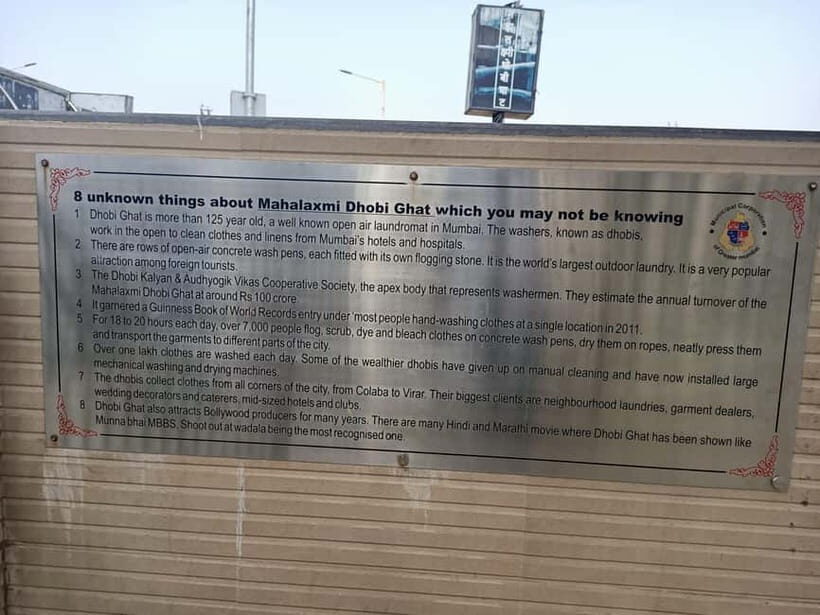
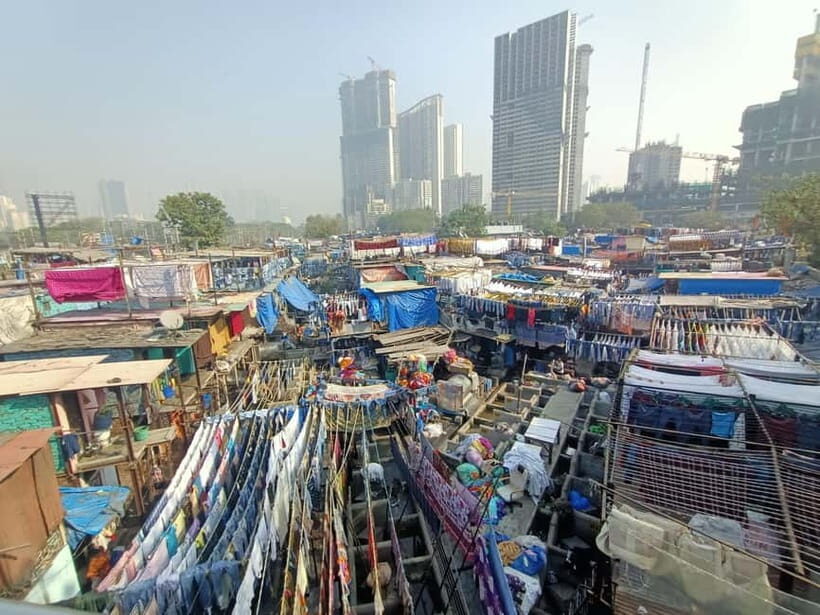
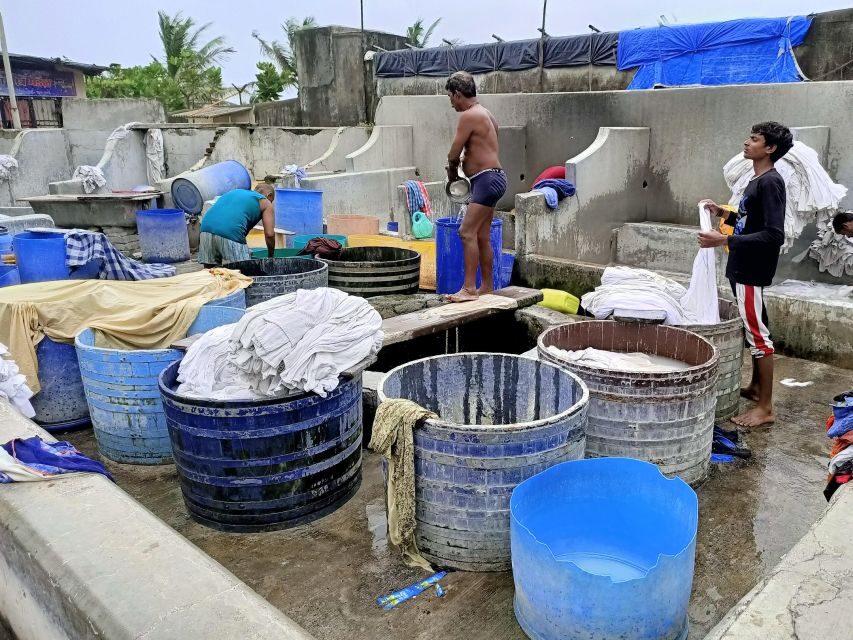
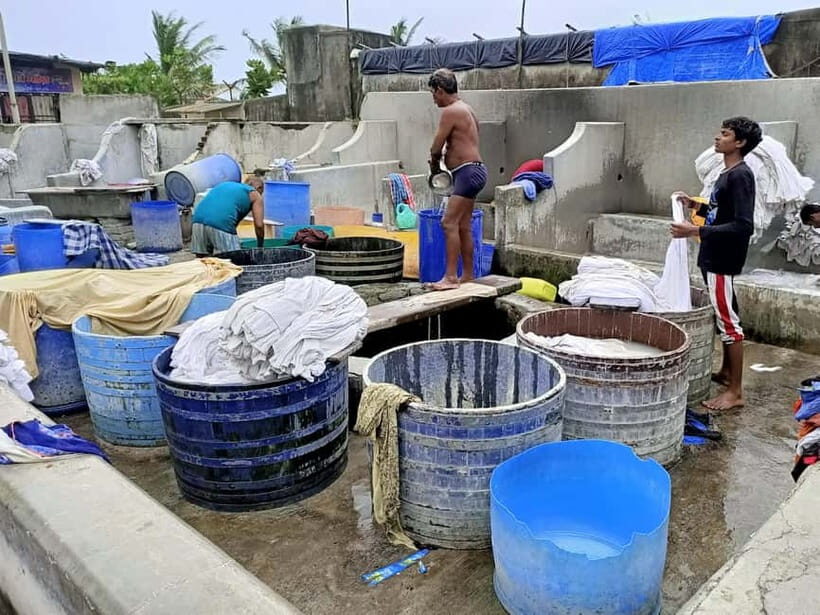
Dhobi Ghat is the star of the laundry side of the day. This is Asia’s largest open-air laundry, and the whole setup works like a daily production line. You’ll see people at work cleaning and sorting garments, and it’s hard not to stare because it’s so public, so practical, and so organized given the space.
What I found most useful is the way the tour explains what you’re actually looking at. It’s not just “laundry happens here.” You get the human side: who does what, how the work fits into Mumbai life, and why this place still functions at scale. If you like understanding systems behind everyday scenes, you’ll get a lot out of this.
Then there’s the viewing deck angle. From above, you can see the activity spread out below, and you get a clean shot that doesn’t require shoving into tight areas. In one review, the guide’s explanation paired perfectly with the viewpoint for photos with context, which is exactly the kind of combo I like on tours.
A practical note: Dhobi Ghat is active and you’ll be walking. Wear comfortable shoes and be ready for sights, smells, and the steady motion of real work.
Hopping on the Mumbai local train ride: how it changes the feel of the day
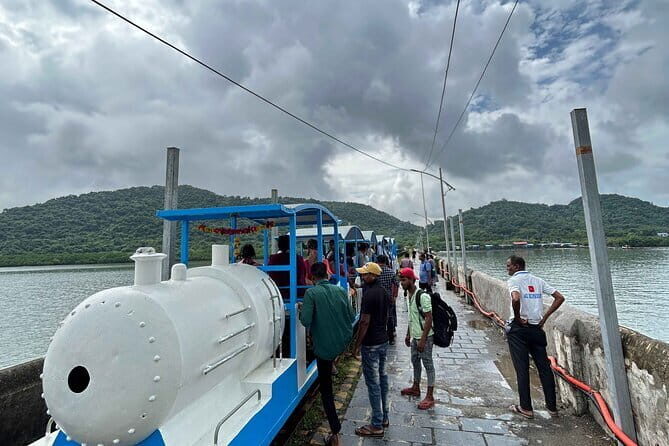
After Dhobi Ghat, you’ll switch gears and ride Mumbai’s local trains. Even if you’re not a train person, this is the kind of experience that makes everything else make more sense.
On a local train, you see the city’s scale and pace immediately. The carriages are packed, people move like they know the routine, and you feel the “commute energy” that guidebooks can’t replicate. One review even described the open doorways and wind effect, which is exactly the sort of sensory detail that turns a transport segment into a memory.
Value-wise, this ride matters because it connects neighborhoods in a way driving or taxis don’t. You’re not just going from Point A to Point B; you’re experiencing how locals actually travel between parts of the city. And since your tour includes train tickets, you’re not left trying to figure out how to do it safely and smoothly on your own.
Walking through Dharavi: resilience, work, and community businesses

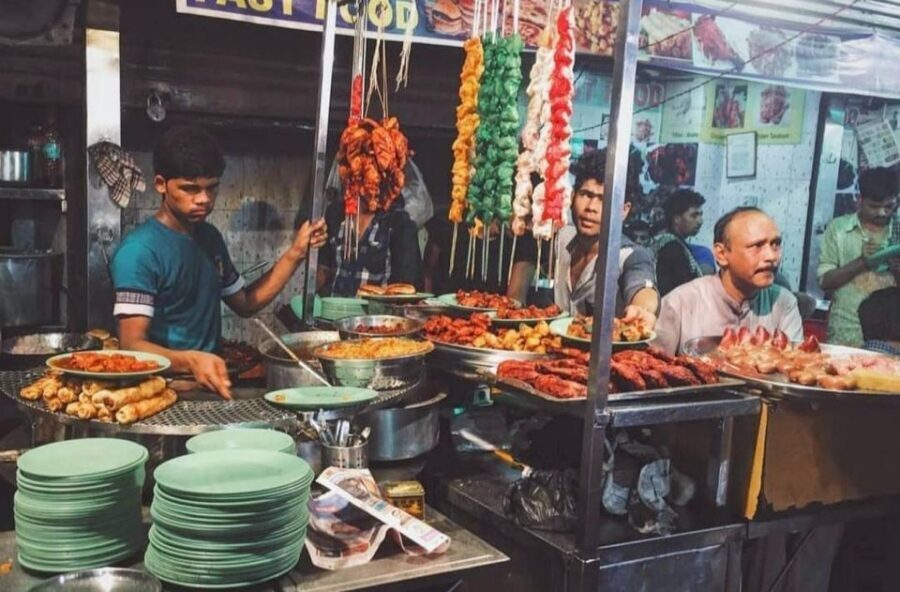
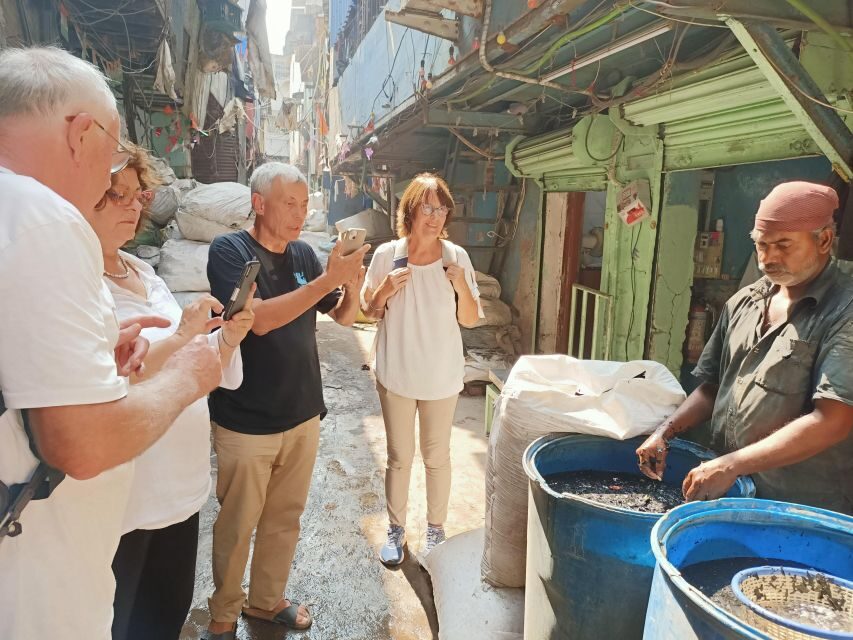
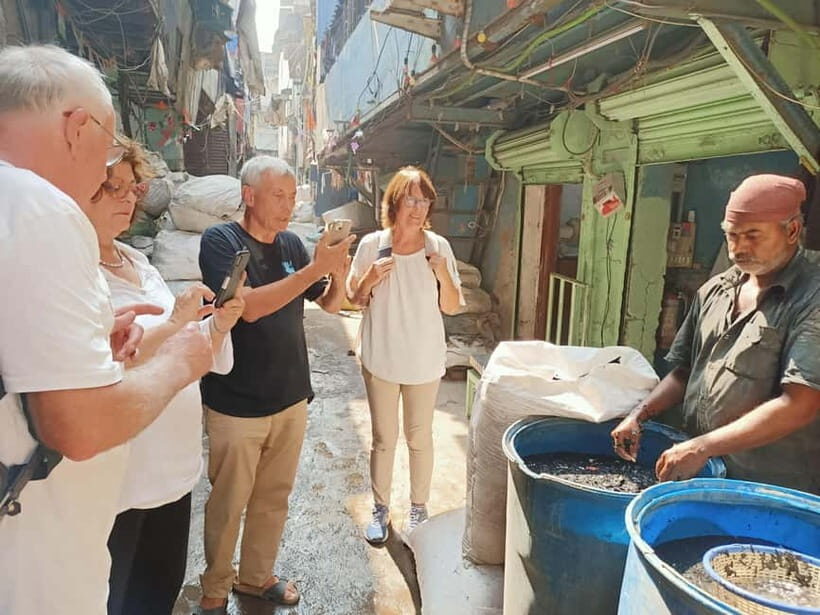
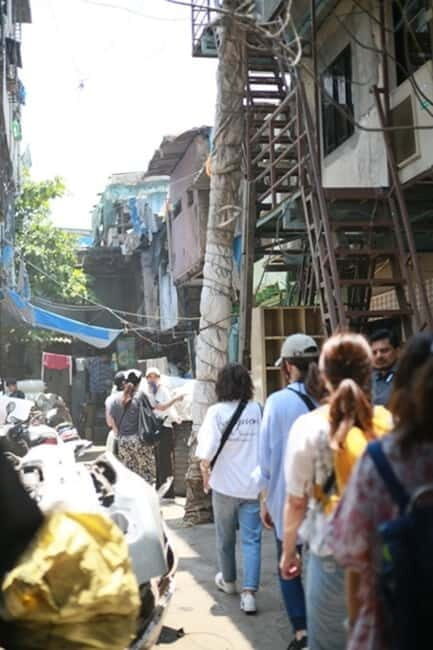
Dharavi is not a single image. It’s a dense network of lanes, homes, and businesses where people build livelihoods with the tools they have. This tour’s strength is that it doesn’t treat Dharavi like a “scary stop” or a simple poverty story. You get a guided walk focused on resilience, entrepreneurship, and community spirit.
The best part is the guide connection. In multiple reviews, guides shared that they live in Dharavi themselves. That changes the whole tone. Instead of hearing facts only from the outside, you get answers that sound lived-in, like how questions about work, daily routines, and community needs are handled from the inside.
During the walking time in Dharavi (about two hours), your guide leads you through the labyrinth-like alleys and points out businesses and everyday scenes. One guide in particular (Alkama was mentioned in a review) made the laundry-to-slums connection feel logical by tying in the work ethic and how long hours translate into family income. Even if your interests differ, that kind of framing helps you interpret what you’re seeing without turning it into guessing.
A respectful reminder: this is someone’s neighborhood. Keep your voice steady, ask before taking close-up photos, and don’t treat doorways and workspaces like museum exhibits. If you keep your curiosity polite, you’ll get far more from the experience.
Train + walking flow: what the 3-hour reality feels like

The tour is listed as 3 hours total, so the day runs on a tighter schedule than some longer “slums and landmarks” formats. That’s good if you want impact without burning a full half-day.
In practice, you’ll want to think of the timing like this:
- A start at Third Wave Coffee where you’ll get your briefing
- Dhobi Ghat first, so you can see the working laundry while your brain is still in sightseeing mode
- The local train ride as the transition
- Dharavi as the main walking focus, where your guide’s stories help you process the sights
- Ending at the Dhobi Ghat Viewing Deck area
Because time is limited, the tour is designed to hit essential scenes and then move on. That’s not a drawback; it’s part of why the price is low and why the tour suits people who want a focused, structured look at two very different Mumbai realities.



Dress code and on-the-ground comfort: small rules that matter
There’s a clear restriction: short skirts and skirts are not allowed. So plan clothing that follows that rule and still lets you walk comfortably through tight lanes and busy work areas.
Also, think about the usual Mumbai basics: you’ll be outside, you’ll be walking, and you’ll be in active spaces. Bring water sense (the tour includes bottled mineral water), and plan on sensible footwear. If you’re the type who gets overwhelmed by crowds or sensory intensity, go in with a calm mindset.
The guides included on this style of tour often set expectations early. That’s another reason a small group helps: you can adapt faster instead of getting lost in the chaos of a bigger crowd.
Price and value at $26 per person: what you get for the money
At $26 per person for about 3 hours, this tour is priced as a value option. You’re not just paying for sightseeing; you’re paying for three practical things bundled together:
- An English-speaking guide who can explain what you’re seeing (and, in some cases, do it from first-hand experience)
- Train tickets, so you don’t have to sort out the local system on your own
- Bottled mineral water for the basic comfort layer
In many cities, a short guided tour plus a transport add-on costs more than you’d expect. Here, the price keeps the focus on getting you into Dhobi Ghat and Dharavi with context, and getting you there via local train rather than a private transfer.
What you shouldn’t expect at this price: long, drawn-out stops. This is a compact experience. But if you want a grounded, structured look at both places, you’ll likely feel like the time and money line up.
Who should book this tour (and who should pause first)
This tour is a strong fit if you:
- Want a guided visit that includes a real Mumbai local train ride
- Like understanding how everyday work creates community identity
- Prefer small-group outings (max 10) with room for questions
- Are comfortable with sensitive themes and up-close living environments
You might pause if you:
- Want a totally comfortable, low-emotion sightseeing day
- Dislike walking through dense, crowded spaces
- Need a very “controlled” experience with minimal sensory input
And if you’re choosing between only one Dharavi option and one Dhobi Ghat option, this pairing makes sense. They’re connected by work, routines, and the city’s economy—so the day feels cohesive instead of random.
A note on guides: why names show up for a reason
Several guide names came up in standout reviews: Bhaarti, Abhishek, Hardik, and Alkama. The consistent thread isn’t just friendliness. It’s that guides often speak as insiders to the place, which makes explanations feel practical instead of scripted.
If you care about authenticity, that insider perspective is one of the main reasons this tour earns high marks. Even when you’re not getting the exact same guide each day, the format appears built around guides who can answer real questions and guide you through the tight geography with confidence.
Should you book this Mumbai Dharavi and Dhobi Ghat tour?
I think you should book it if you want a short, high-impact Mumbai experience that mixes work life and neighborhood reality. The Dhobi Ghat view from the viewing deck, the local train ride, and the Dharavi walk with first-hand style storytelling work together in a way that feels more meaningful than doing just one side of the story.
Skip it only if you’re looking for comfort-first sightseeing or you know you’re not ready for close-up hardship themes. If you can handle that and you like guided structure with a small group, this is one of the more direct ways to see the city’s everyday pulse.
FAQ
How long is the tour?
The tour duration is listed as 3 hours.
Where does the tour start and where does it finish?
It starts at Third Wave Coffee and finishes at the Dhobi Ghat Viewing Deck.
What’s included in the price?
The tour includes an English-speaking tour guide, train tickets, and bottled mineral water.
Is this a small-group tour?
Yes. The group is limited to 10 participants.
What language is the guide?
The tour guide speaks English.
What should I wear? Are skirts allowed?
Short skirts and skirts are not allowed.
Is there a free cancellation option?
Free cancellation is available up to 24 hours in advance for a full refund.
Can I reserve without paying right away?
Yes. The tour offers a reserve now & pay later option, so you can book your spot and pay nothing today.
What are the main parts of the experience?
You’ll visit Dharavi, ride the Mumbai local train, and explore Dhobi Ghat, including the viewing deck area.