REVIEW · MUMBAI
Mumbai By Shantaram With Private Tour Guide
Book on Viator →Operated by Private India Guided Tours · Bookable on Viator
Mumbai can feel like two cities at once. That’s the real appeal of this private day tour—film-glam landmarks sit right beside places that show the daily grind of millions. You’ll cover major sights like the Gateway of India and Chhatrapati Shivaji station, but you’ll also spend real time at Dhobi Ghat and Dharavi, where life runs on its own rules.
I especially like that the format stays practical: hotel pickup/drop and an air-conditioned private car keep the day moving, even when traffic tries to slow you down. And in past days, guides like Sanjay and Anisa have been praised for clear storytelling and smart city context, which matters a lot in a place this big and layered.
One consideration: you’ll be walking and riding for hours, and the tour includes places where topics can be intense—especially Dhobi Ghat and the Dharavi section. If that kind of contrast feels heavy, plan your mindset (and bring comfortable shoes).
In This Review
- Key highlights you’ll actually notice
- The point of this day: Mumbai’s two stories in one route
- Hotel pickup and the private-car advantage
- Dhobi Ghat: the open-air laundry that runs on tradition
- Dharavi: understanding a neighborhood, not just a headline
- Chhatrapati Shivaji station and the High Court: where Mumbai shows off
- Colaba: the Arabian Sea edge and the Shantaram flavor
- Gateway of India and the Taj Mahal Palace: Mumbai’s grand symbols
- Time, comfort, and what $87 buys you
- Who this private tour fits best
- Should you book this Mumbai Shantaram private tour?
- FAQ
- How long is the Mumbai by Shantaram private tour?
- Where does the tour start and end?
- Is this tour private or shared?
- What’s included in the price?
- Are admission tickets included?
- Is food included?
- Is airport pickup included?
- What is the cancellation policy?
Key highlights you’ll actually notice

- Private guide, private car: you’re not squeezed into a bus with strangers all day.
- Shantaram-style city contrast: film-famous Mumbai alongside Dhobi Ghat and Dharavi life.
- Big landmark hits with time to breathe: Gateway of India, Colaba area, and UNESCO-listed Chhatrapati Shivaji station.
- Most stops are ticket-free: you only have to think about admission at Dhobi Ghat.
- Guides that explain, not just point: Sanjay and Anisa came up in feedback for history and communication.
- A one-day structure that respects your time: about 7 to 8 hours total.
The point of this day: Mumbai’s two stories in one route
Mumbai is famous for movies, but it’s also famous for real life—work, community, and neighborhoods that don’t exist to entertain you. This tour is built around that contrast. One part of your day moves through the polished symbols: grand colonial-era buildings, famous waterfront views, and the kinds of places people photograph for a reason. Then the itinerary turns toward places you can’t really understand from a screen.
The Shantaram angle matters here. Instead of treating the city like a checklist, the route is designed to help you connect what you see on the streets to what you’ve heard about Mumbai in books and stories—then reality does the rest. It’s not about shock for shock’s sake. It’s about balance: fame and hardship, history and the present day.
You can also read our reviews of more guided tours in Mumbai


Hotel pickup and the private-car advantage

The day starts simply: you’re picked up from your hotel in Mumbai, then you hop into an air-conditioned private car with bottled water in the ride. That sounds basic until you’ve tried to move around Mumbai on your own. A private car changes the feel of the day because you’re not constantly negotiating transport, stops, and timing.
It also keeps your guide’s job easier. When you’re not losing time to logistics, the guide can spend more moments on what matters—why a building is there, what a landmark represents, and how different parts of the city connect.
This is also a true private setup: only your group participates. If you like a slower pace for questions, or you want to focus on a specific angle (architecture, neighborhood life, history), that’s where private works best.
Dhobi Ghat: the open-air laundry that runs on tradition

Dhobi Ghat is the first big “real life” stop, and the description tells you exactly what to expect: an open-air laundry that takes up an entire block, often described as the largest in the world. The scale is part of the story—so is the human rhythm behind it.
It’s hereditary work, meaning the laundresses come from families tied to the place. That changes how you should look at it. Instead of treating it like an attraction, I’d treat it like a working environment that happens to be visible.
Practical note: Dhobi Ghat admission is not included, so factor that into the day. You’re likely to need a small ticket purchase on-site, and it’s one place where the tour price doesn’t cover everything.
What to watch for: the tour gives you about 30 minutes here. That’s enough time to understand the concept and see how the work flows—but not enough for long wandering. If you want more time, you might need a custom extension.
Dharavi: understanding a neighborhood, not just a headline
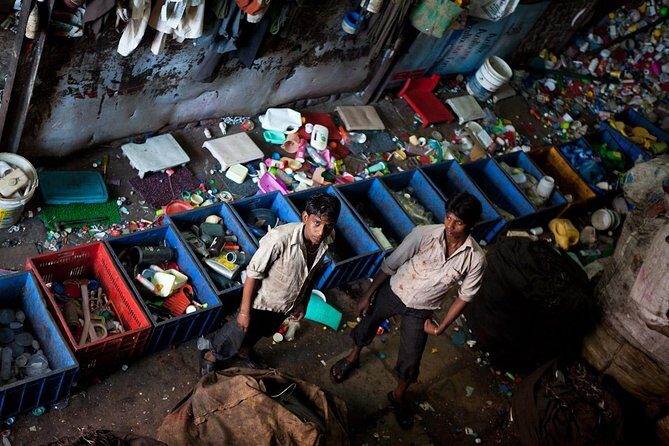
Next comes Dharavi, one of the most talked-about places in India. The tour frames it with numbers—around 1 million people living in 215 hectares—and that size matters. You’re not walking through a tiny set. You’re moving through a dense, living community.
It’s also where the emotional tone can change fast. The city’s contrast isn’t subtle once you arrive. This stop is about learning who lives there and how people make daily life work. The idea isn’t to turn it into entertainment, and you’ll get the most out of it if you stay curious and respectful.
You get about 2 hours here, and that timing is smart. It’s long enough to move beyond surface-level impressions, but short enough that the tour can still cover the other major landmarks afterward without turning into a marathon.
Why this portion is valuable: most city tours treat neighborhoods like backdrops. Here, the tour’s wording makes it about people and living reality—so you’re guided to look at the place as a home, not a problem from a distance.
Chhatrapati Shivaji station and the High Court: where Mumbai shows off
After the more intense parts of the day, you shift into architecture and power. One stop is Chhatrapati Shivaji station, described as one of the most beautiful train stations in Mumbai and the largest in India, with UNESCO World Heritage status. It also took 10 years to build, which hints at the ambition behind it.
Even if trains aren’t your focus, stations are often where cities show off their identity—routes, history, and movement all in one spot. This is one of those stops where you can simply look up and appreciate craftsmanship: the scale, the details, and the sense that the city planned something meant to last.
Then you move to the High Court Principal Bench. The description calls it colonial-style with towers and spiers, plus stone carving. A specific detail is mentioned: a bas-relief featuring a one-eyed monkey holding the scales of justice. That’s the kind of “wait, what am I looking at?” moment that a good guide turns into a story, not just decoration.
Both of these stops are around 30 minutes, which is perfect. You get enough time to absorb the buildings without burning your whole day chasing photos.
You can also read our reviews of more private tours in Mumbai





Colaba: the Arabian Sea edge and the Shantaram flavor
Colaba is where the tour shifts into the more cinematic mood. It’s on the shore of the Arabian Sea, and the description notes that Europeans have lived there since ancient times, with today’s mixture of hotels and activity.
This area fits the Shantaram vibe because it’s the kind of neighborhood where stories gather. Even if you don’t care about film lore, Colaba gives you the city’s “public face”: streets with energy, a sense of history stacked on top of modern life, and those waterfront views that make Mumbai feel unmistakable.
You’re given about 1 hour here, which is a good balance. It’s enough to get your bearings in the area and enjoy the waterfront setting, but not so long that you drift off into decision fatigue.
Tip for your day: plan to use Colaba time for wandering with a purpose—pick a direction, pick one landmark or street feature you want to see, then stop when your feet start complaining. Mumbai rewards short, intentional strolling.
Gateway of India and the Taj Mahal Palace: Mumbai’s grand symbols
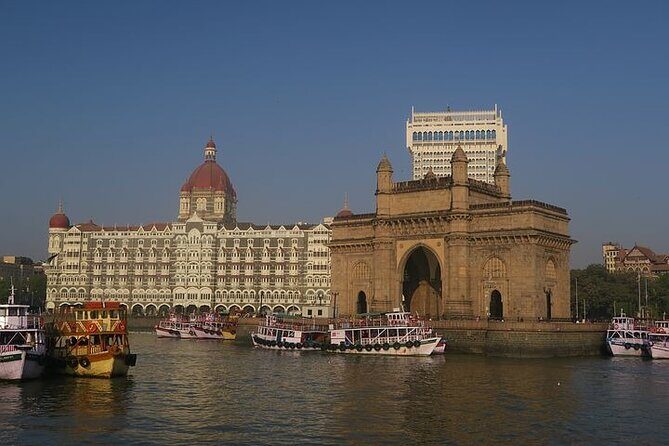
Then comes the big visual payoff: Gateway of India. You’ll spend about 30 minutes here, including time for the famous arch. The tour description explains its role as the triumphal arch tied to independence—basically a ceremonial “departure” point after independence.
This is one of those stops where people naturally want photos. The best way to do it is to watch your timing and angle. Get your shot, then take a few minutes to simply look at the setting: sea lines, crowd movement, and the way the structure anchors the skyline.
Right nearby is The Taj Mahal Palace, Mumbai, described as the most expensive and popular hotel in the city and located close to the Gateway. You’ll get another 30 minutes here. Even if you don’t go inside, seeing the hotel’s position gives you context for why this area became such an icon.
This pair of stops works well because it connects meaning to place. Gateway of India gives the “symbol,” and the Taj Mahal Palace shows how Mumbai turned that prominence into a long-term landmark.
Time, comfort, and what $87 buys you
At $87 per person for roughly 7 to 8 hours, the value depends on what you compare it to. You’re not just paying for a guide’s talking time. The tour includes:
- Hotel pickup and drop
- An air-conditioned private car
- Bottled water
- All taxes, parking fees, and fuel charges
- Private tour guide fee
For many people, that’s the real value: you’re buying a low-stress structure for a day in a sprawling, high-energy city. The tour also offers a mobile ticket and group discounts, which can make pricing better if you’re traveling with someone.
The costs you do need to plan for:
- Food and drinks are not included (the listing suggests $20 per person)
- Airport pickup and drop is extra at $40 per booking
- Dhobi Ghat admission is not included
If you want a day that mixes major landmarks with neighborhood life, and you want it done with a guide who can explain what you’re seeing, this price can make sense—especially if you’d otherwise have to arrange transport, pay for multiple ticketed experiences, and lose time figuring things out.
Who this private tour fits best
This works best for people who:
- Want a full-day city orientation with both famous sights and more complicated realities.
- Prefer a private guide who can answer questions at your pace.
- Have limited time and still want depth (about 7–8 hours is tight, so private helps).
- Like architecture, history context, and also the human side of the city.
It may not be the best match if you strongly dislike confronting inequality or if you expect only “pretty postcard” Mumbai. The route is designed for contrast, and you’ll feel it.
Should you book this Mumbai Shantaram private tour?
I’d book it if you want one day that gives Mumbai a sense of meaning, not just a pile of photos. The combination of UNESCO-listed rail architecture, iconic waterfront landmarks, and real community stops gives you a wider city picture than most half-day sightseeing plans.
I’d think twice if you’re short on patience for intense topics or if you’re traveling with very limited mobility and walking time will be tough. The stops are time-boxed, but you’ll still be out and about.
If you do book, set yourself up for success: wear comfortable shoes, plan for Dhobi Ghat admission and food costs, and come with curiosity. The guides mentioned in feedback—like Sanjay and Anisa—have been praised for making the city understandable, which is exactly what you want in a day this packed.
FAQ
How long is the Mumbai by Shantaram private tour?
It runs about 7 to 8 hours.
Where does the tour start and end?
The tour includes hotel pickup and drop in Mumbai, and it ends with a return to your hotel.
Is this tour private or shared?
It’s a private tour/activity. Only your group participates.
What’s included in the price?
Included are hotel pickup/drop, an air-conditioned private car, bottled water, all taxes/parking/fuel, and the private tour guide fee.
Are admission tickets included?
Most stops list admission ticket free, but Dhobi Ghat admission is not included.
Is food included?
No. Food and drinks are not included, with a stated cost of $20.00 per person.
Is airport pickup included?
No. Airport pick up and drop is extra at $40.00 per booking.
What is the cancellation policy?
You can cancel for a full refund if you cancel at least 24 hours in advance. If you cancel within 24 hours, the amount paid is not refunded.