REVIEW · MUMBAI
Mumbai Bicycle Tour
Book on Viator →Operated by Reality Tours & Travel Pvt Ltd · Bookable on Viator
Morning traffic turns into a bike lane. This Mumbai bicycle tour starts at 6:15am in Colaba and mixes easy cycling with real sights like Chhatrapati Shivaji Terminus and Crawford Market. I love the local guide commentary that puts famous buildings into everyday context, and I love finishing with breakfast at Madras Cafe after riding past Marine Drive and ending at Sassoon Dock.
One main consideration: two market stops can be intense for the senses, with strong smells in the meat and fish areas. Go in with an open mind, and it’s part of what makes the tour feel real rather than staged.
In This Review
- Key things I’d circle on your map
- 6:15am in Colaba: why the timing is half the deal
- Gateway of India: first stop, first wow (and first boatside light)
- Fort-area back lanes and the commute at CST
- Crawford Market: where local wholesale shopping feels educational
- Bombay Panjrapole: feeding cows, learning the rules of the place
- Mumbadevi Temple: a meaningful pause before the sea
- Marine Drive (3 km) on a bike: calm views right when you need them
- Sassoon Dock: fish-market chaos, up close and real
- The bikes, helmets, and the road feel in Mumbai
- Breakfast at Madras Cafe: the nice finish after the action
- Price and value: is $39.14 a fair deal?
- Who should book this Mumbai bicycle tour
- Should you book? My take
- FAQ
- FAQ
- What time does the Mumbai bicycle tour start?
- Where is the meeting point?
- Where does the tour end?
- How long is the tour?
- What’s included in the price?
- Is hotel pickup and drop-off included?
- Is the ride difficult?
- What major places will you visit?
- Do the stops require paid admission?
- What is the group size limit?
- What’s the cancellation policy?
Key things I’d circle on your map
- 6:15am Colaba start means you’re on quieter streets before heat and crowds take over
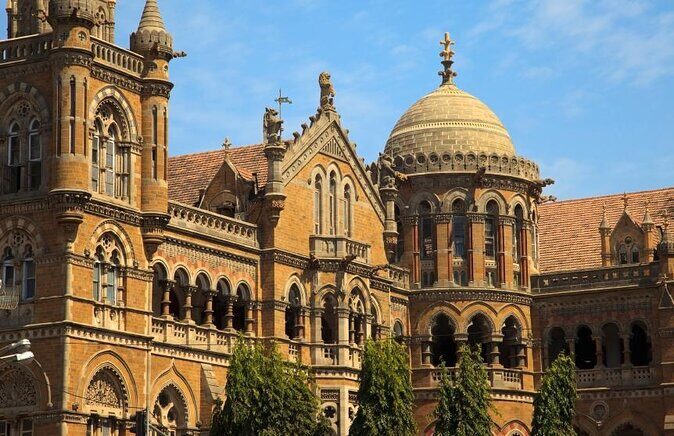
- UNESCO CST station + film-recognition factor with the Victorian Gothic look from Slumdog Millionaire
- Crawford Market electricity trivia plus a close-up view of local wholesale shopping
- Panjrapole cow shelter with more than 350 sacred cows and other animals
- Marine Drive on two wheels along the 3 km promenade with calm morning views
- End at Madras Cafe for breakfast and time to swap stories with your guide and group
6:15am in Colaba: why the timing is half the deal
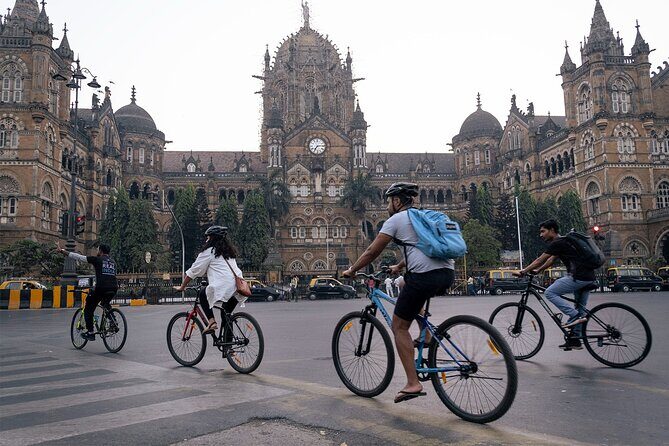
This tour is built around an early wake-up call, and that’s not a gimmick. Starting at 6:15am out of Cusrow Baug Colony in Apollo Bandar, Colaba puts you on the road while temperatures are lower and traffic is less chaotic than later in the day.
You’ll feel the difference right away. The ride stays at a relaxed pace and covers mostly flat terrain, which helps you focus on the places and the commentary instead of fighting your bike. Even so, you are riding through a real city. You should expect some street crossings and motion around you, not a closed-course feeling.
You can also read our reviews of more tours and experiences in Mumbai.
Gateway of India: first stop, first wow (and first boatside light)
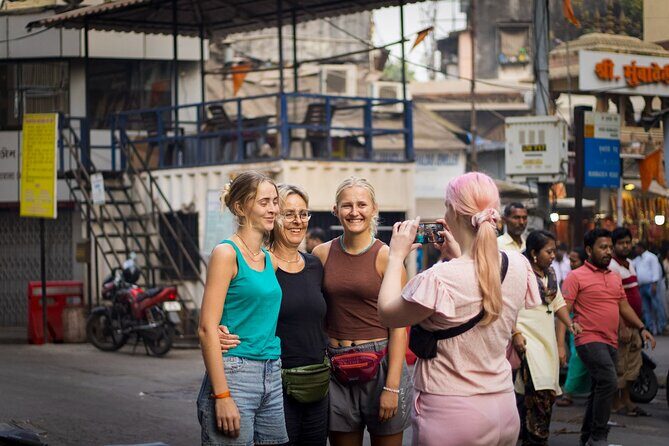
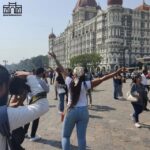
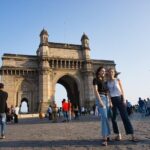
You begin near the Gateway of India, where Hindu and Islamic architectural styles meet at the waterfront. Since 1924, this has been a first landmark for arrivals by boat, so it carries a sense of how the city has welcomed visitors for a long time.
In the morning light, it also works as a calm opener. You’ll get the landmark photo, sure, but more importantly, you’ll get orientation. It helps you place the rest of South Mumbai in your head before you start weaving through side streets.
Fort-area back lanes and the commute at CST
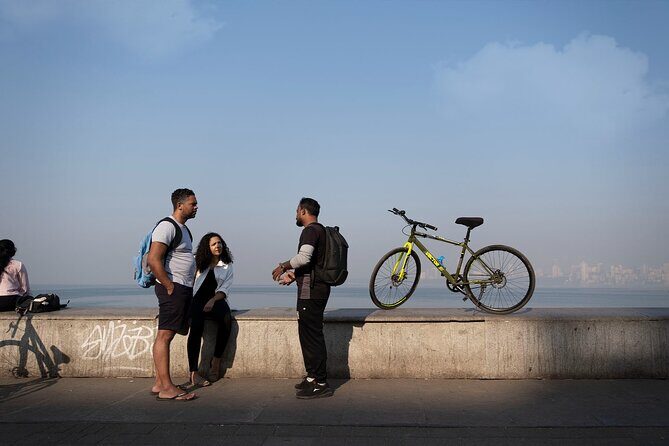
After you get moving, the route shifts into smaller roads—away from the biggest arteries and into the lanes where you see daily life at street level. This is where the bicycle format shines. You can watch how people move without being stuck in a car window that only shows blur.
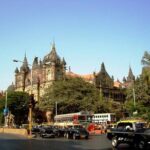
A key moment is the ride-by focus on the morning commute into Chhatrapati Shivaji Terminus (CST), one of India’s busiest railway stations. CST is a UNESCO World Heritage site, and it’s one of those places where the outside alone is worth the detour. If you’ve seen Slumdog Millionaire (the 2008 film), you might recognize the Victorian Gothic styling.
You don’t just get a quick exterior glance and move on. You also get a sense of scale—thousands arriving, the station acting like a machine with people inside it. That’s the point: the tour gives you context for why the station is more than a postcard.
Crawford Market: where local wholesale shopping feels educational
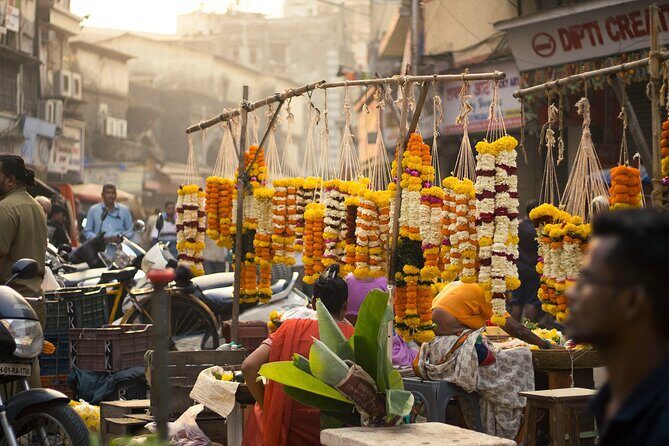
From CST, you head to Crawford Market, one of the largest wholesale fruit, vegetable, and meat markets in the city. This is a stop where you’ll likely notice how the city eats, supplies itself, and keeps the day running.
Two details make it extra interesting. First, the market is huge, so you get a real look at the flow of goods rather than a curated display. Second, it’s noted as the first building in India to get electricity, which turns a practical market stop into a quick lesson about how modern infrastructure arrived in everyday places.
Practical note: expect lots of activity and close quarters. That’s normal here. If you’re the kind of person who likes quiet museums only, this is the stop where you decide whether you’re in the mood for raw reality.
Bombay Panjrapole: feeding cows, learning the rules of the place
Next comes Bombay Panjrapole, a cow shelter with more than 350 sacred cows and other smaller animals. This stop shifts the vibe from commerce to care, and it’s one of the more memorable contrasts on the route.
You’ll have a chance to feed the animals, which turns learning into something physical and immediate. It’s also a moment of respect. Instead of treating the place like a photo backdrop, you spend time behaving appropriately around animals that are part of the local religious and cultural world.
Even if you’re not sure how you feel about animal shelters in general, this one is worth seeing because of the scale. More than 350 sacred cows means it’s not a small hobby project. It’s a working part of city life.

Mumbadevi Temple: a meaningful pause before the sea
After the cow shelter, you’ll stop at Mumbadevi Temple, described as the historical Hindu temple that Mumbai was named after. That’s a big statement, and it helps explain why these stops matter beyond sightseeing.
This is also your reset moment. You take a break from the bikes, walk in, and look around at a religious site that’s central to the city’s identity story.
If you like religious architecture but hate long lectures, this stop hits the sweet spot. It’s brief, visual, and anchored by the guide’s context, not by a formal program that eats your time.
Marine Drive (3 km) on a bike: calm views right when you need them
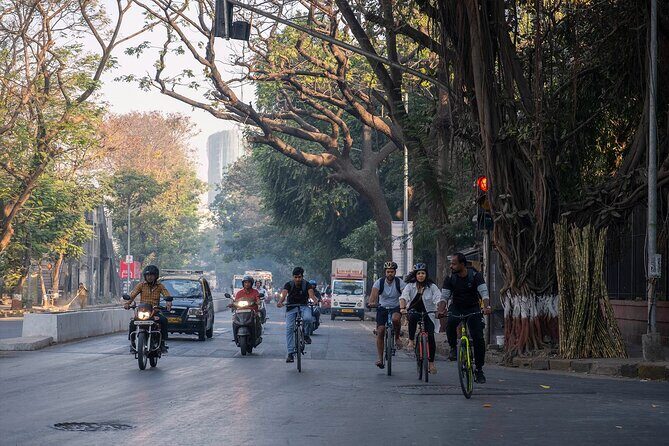
Then you glide along Marine Drive, cycling about 3 km along the Arabian Sea promenade. In the evenings, it’s described as packed with friends and couples, but in the morning, it’s practically empty.
That’s why this stop feels like a reward. You go from markets and temples into open sea air and wide views. It gives your body a break too, especially if the earlier streets made you tense up a little.
Look for the long lines and the curve of the promenade. Even if you’ve seen Marine Drive in photos, seeing it from a bike seat changes the experience. You’re not just looking at it. You’re moving with it.
Sassoon Dock: fish-market chaos, up close and real
The tour ends at Sassoon Dock, where you get to see the busy side of South Mumbai’s fishing area. This is the market stop with the most sensory intensity.
The scene here includes fishermen unloading fish and women and children cleaning shrimp. It’s hands-on work, fast and focused, and it feels very different from markets that exist mainly for visitors.
This is also where you should expect smells. If market odors bother you easily, bring strategies mentally. Wear clothes you’re comfortable with, and don’t judge the city by the intensity of one moment. It’s doing what it does every day.
If you can handle it, you’ll come away feeling like you saw how food gets to people, not just where people buy it.
The bikes, helmets, and the road feel in Mumbai
You’re on a standard guided cycling setup: bicycle and helmet included, plus an English-speaking guide. Most riding is over flat terrain, and the pace stays relaxed.
That said, Mumbai roads can feel like a lot at first. In multiple experiences shared by past participants, guides made the crossings feel manageable and safe, even when the traffic looked intense. Names that came up include Raj, Rishi, Hitesh, Rajesh, Sabine, Matthias, and Javed, which tells me this isn’t a one-off guide performance. It’s a practiced team approach.
One detail worth acting on: if your helmet fit is off, say something right away. One participant pointed out that they were given a child-sized helmet when they needed an adult fit. You don’t want to ride with something uncomfortable or unsafe. Ask for an adjustment at the start, not halfway through.
Also, keep your expectations realistic. A bike tour won’t erase the fact that this is a real city. It just makes you part of it in a way cars rarely allow.
Breakfast at Madras Cafe: the nice finish after the action
You end at Madras Cafe on Colaba Causeway (near Aziz Mansion). The tour includes breakfast there, served at the end after you’ve cycled, walked, and stopped for multiple sights.
This is a smart close. You’re not rushed into one final quick bite. You’re sitting down with your guide and the group, swapping highlights while you digest what you just saw.
Breakfast in South Mumbai also works as a gentle cultural landing. You’ve spent the morning around major civic landmarks, religious spaces, animal shelter, and working markets. A shared meal helps it all connect into one story instead of feeling like separate photo stops.
Price and value: is $39.14 a fair deal?
At $39.14 per person, this is priced in the low-to-mid range for a guided activity, and what makes it feel like value is the combo of inclusions.
You get:
- bicycle
- helmet
- English-speaking guide
- breakfast at the end
And the stops listed are marked with free admission tickets. That matters because you’re not stacking extra costs on top for each viewpoint.
The trade-off is logistics. Hotel pickup and drop-off aren’t included, so you’ll need to get yourself to the meeting point in Colaba. If you’re staying far away, that transport cost or time can eat into the good value.
If you want my simple math: you’re paying for a structured morning, a bike you don’t have to rent, and a local guide who helps you understand what you’re seeing. For many people, that’s cheaper than doing it all solo with taxis and multiple tour apps.
Who should book this Mumbai bicycle tour
This tour fits best if you want:
- a fast way to see major South Mumbai sights in one morning
- street-level context, not only monuments
- an active but manageable ride (flat terrain, relaxed pace)
You’ll likely enjoy it if you’re the type who likes markets, early city life, and getting a close-up look at how Mumbai functions before it heats up and crowds arrive.
It’s less ideal if you strongly dislike animal interactions (even respectful ones) or you can’t handle smells at working fish/meat areas. Also, if helmets are a deal-breaker for you, don’t assume the fit will be perfect. Check it immediately when they hand it to you.
Should you book? My take
Book it if you want an efficient, low-cost way to see a lot of Mumbai that you’d struggle to string together on your own. The 6:15am start, the guide-led context, and the ending breakfast make it feel like a complete morning experience, not just a bike rental with stops.
Skip it if you want quiet, low-sensory sightseeing. This tour includes real markets and real working areas. That’s the trade you make for authenticity.
If you do book, I’d plan to:
- arrive a little early so you can settle in and confirm your helmet fit
- bring patience for active streets and close quarters
- set your expectations for what a working fish and meat area smells like
FAQ
FAQ
What time does the Mumbai bicycle tour start?
The tour starts at 6:15am.
Where is the meeting point?
You meet at Cusrow Baug Colony, Apollo Bandar, Colaba, Mumbai, Maharashtra, India.
Where does the tour end?
The tour ends at Madras Cafe (Aziz Mansion), Shahid Bhagat Singh Rd, Railway Colony, Apollo Bandar, Colaba, Mumbai 400005, India.
How long is the tour?
It runs for about 3 hours 45 minutes.
What’s included in the price?
It includes a bicycle, helmet, an English-speaking guide, and breakfast at the end.
Is hotel pickup and drop-off included?
No, hotel pickup and drop-off are not included.
Is the ride difficult?
The tour cycles at a relaxed pace over flat terrain, and most people can participate. The minimum age is 7 years.
What major places will you visit?
You’ll see Gateway of India, Chhatrapati Shivaji Terminus (CST), Crawford Market, Bombay Panjrapole, Mumbadevi Temple, Marine Drive, and Sassoon Dock.
Do the stops require paid admission?
The listed admission tickets for stops are free.
What is the group size limit?
The tour has a maximum of 25 travelers.
What’s the cancellation policy?
You can cancel for a full refund up to 24 hours before the experience’s start time. If you cancel less than 24 hours before, the amount paid is not refunded.