REVIEW · MUMBAI
Kanheri Caves and Sanjay Gandhi National Park
Book on Viator →Operated by World of Bollywood Tours · Bookable on Viator
Buddhist caves hide in Mumbai’s green edge. This tour is a two-part mix: Kanheri Caves’ rock-cut Buddhist sculptures and a timed break in Sanjay Gandhi National Park for tiger/lion safari. I love the hillside setting inside the forest, and I love how the carvings date back to the early centuries BC—real stone evidence, not just ruins behind glass.
One thing to plan for: you need good weather, and the caves are set into uneven rock. Wear grippy shoes and expect some walking on natural surfaces.
You’ll also get human help. In one experience with Rahil, pickup and navigation of entrance fees and expectations made everything feel smoother, especially once you’re dealing with a park setting outside central Mumbai.
In This Review
- Key highlights worth your attention
- Kanheri Caves: 109 rock-cut Buddhist monuments on a forest hillside
- What to look for inside the caves (and how to enjoy the time)
- Sanjay Gandhi National Park: your safari window after the caves
- Price and value: what you pay for with this Kanheri + safari combo
- Pickup, private group time, and guide help that actually matters
- Timing, weather, and what to pack for a smooth day
- Should you book this Kanheri Caves + safari tour?
- FAQ
- How long is the tour?
- Is pickup included?
- Are entrance tickets included?
- What’s included in the price?
- Is this tour private?
- What is the cancellation policy, especially for weather?
Key highlights worth your attention
- 109 caves and rock-cut monuments in a forested hillside complex
- Buddhist viharas carved for living, studying, and meditating
- Sculptures and relief work tied to the 1st century BCE (and earlier carving phases)
- Basalt rock outcropping setting the scene for the architecture
- A focused safari window inside Sanjay Gandhi National Park
- Pickup + local guidance that can save time at the park entrance
Kanheri Caves: 109 rock-cut Buddhist monuments on a forest hillside
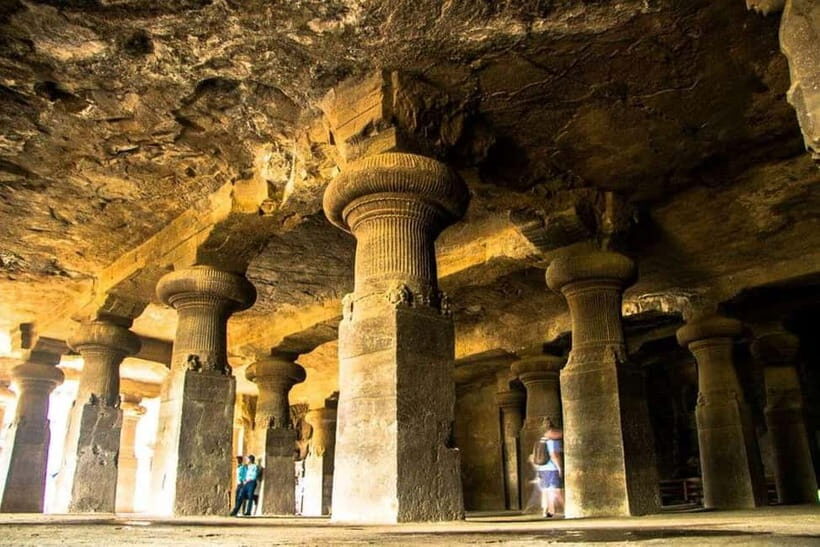
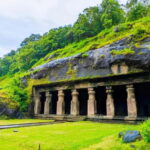
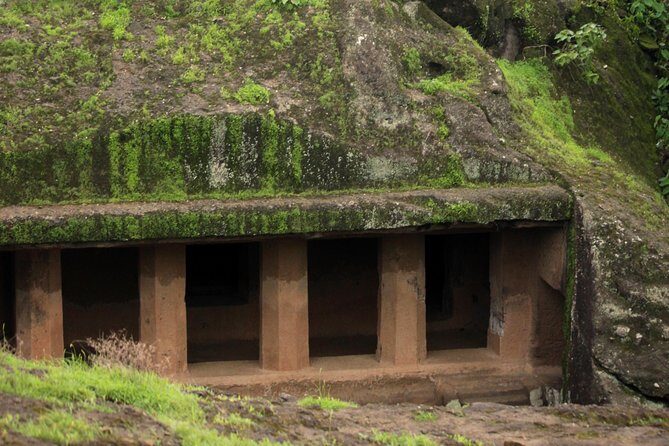
Kanheri Caves sit on the western outskirts of Mumbai, tucked into a green forest zone that feels far quieter than the city. This isn’t a small stop. The complex includes 109 caves and rock-cut monuments—a whole hillside story carved into basalt.
What I find most compelling is the purpose. Many of the caves weren’t just sightseeing props. They were viharas, meaning spaces connected with living and routines for monks—study, meditation, and daily life. As you move through the site, it helps to picture monks going about quiet work in stone rooms, surrounded by the forest sounds that still linger.
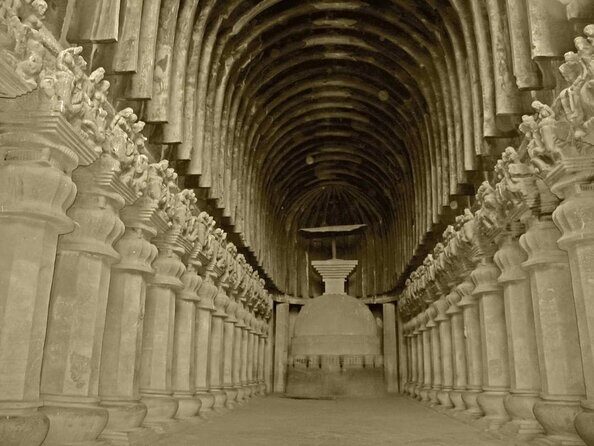
The artwork is the second reason this place earns time. Inside you’ll see Buddhist sculptures and relief carvings, plus pillars and rock-cut stupas. There are also paintings and inscriptions mentioned as part of the site’s story. Even if you don’t read every inscription, the sheer amount of carved space signals that this was a serious learning center, not a one-off temple stop.
If you’re the type who likes to connect art to real places, Kanheri is a strong match. It’s not only about the age of the carvings. It’s about the setting: a carved hillside inside a national park environment. You get that rare combo of ancient stone and living nature around it.
Practical note: you should treat this as a light-to-moderate walking experience. Caves often mean steps, uneven ground, and narrow passages. You’ll get more out of the visit if you pace yourself rather than trying to race from cave to cave.
You can also read our reviews of more tours and experiences in Mumbai.



What to look for inside the caves (and how to enjoy the time)
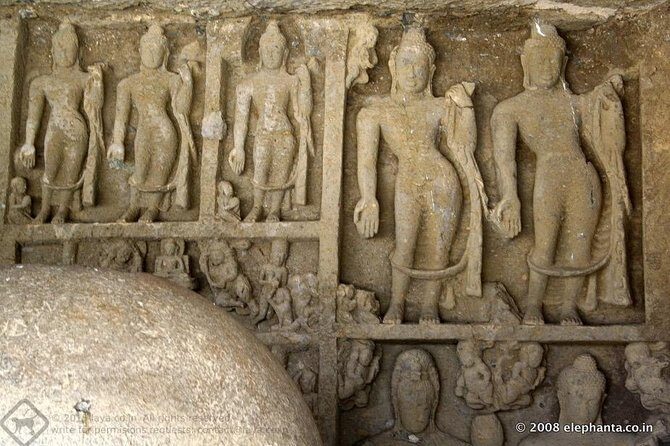
Kanheri is spread out. The best way to enjoy it is to stop often and look slower than you think you need to. You’ll typically have around 4 hours here, which is enough time to see the scale of the complex without feeling trapped in a too-fast checklist.
Here’s what I’d pay attention to first:
- Figures and sculpture details: the site is known for Buddhist sculpture dating from the early period, including the 1st century BCE era.
- Reliefs and carved storytelling: relief work tends to reward a little extra time because you can spot repeating motifs and layout patterns.
- Monastic spaces: since the caves functioned as viharas, it helps to notice the layout as functional rooms rather than just decorative walls.
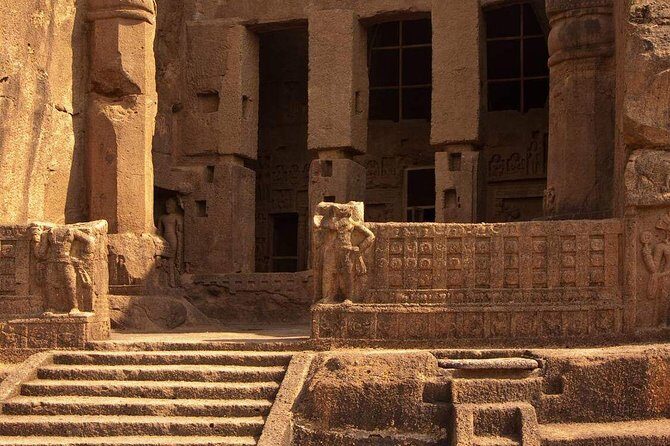
- Stupas and pillars: rock-cut stupas and carved pillars give you visual “landmarks” as you move.
A helpful mindset: you’re not just viewing objects. You’re reading a working landscape. The caves were carved out of a massive basaltic rock outcropping, so the architecture is tied to the rock itself. That means shapes, surfaces, and textures matter. Even with basic observation, you’ll start to see how builders adapted religious spaces to the geology.
If you have a guide, use them early. One big win from the Rahil-led experience was how much smoother everything became around entrance expectations and navigation inside the park area. That kind of guidance matters because a site like this can feel big and confusing if you’re trying to figure out timing on your own.
Also, plan your energy. Four hours in caves plus forest paths can feel longer than the clock says. I like to take small pauses—look at one area, then step back and reset. You’ll remember more, and you won’t feel rushed when the next section opens up.
Sanjay Gandhi National Park: your safari window after the caves
After Kanheri, you’ll head to Sanjay Gandhi National Park. The schedule gives you about 1 hour here, and the intent is clear: time for a tiger/lion safari.
A one-hour safari slot is not a full-day wildlife expedition. So go in with the right expectations. I’d treat it as a high-value add-on: you get the national-park setting right after the ancient-caves stop, without losing the day to logistics.
This pairing works because the geography complements the timeline. Kanheri was shaped by ancient religious life in a rock-carved environment. Sanjay Gandhi brings you back to the living ecosystem around Mumbai. Even if you’re focused on wildlife, the park setting itself is part of the payoff—trees, open areas, and the sense of being inside a real protected zone rather than just visiting a fenced attraction.
One consideration: safari experiences depend on conditions. The tour is listed as requiring good weather, and that matters for wildlife viewing and overall comfort. If the conditions aren’t right, you may not get the kind of viewing window you were hoping for.
If you’re the type who needs a long, slow safari for maximum animal spotting, you might find this time a bit short. But if you want a tight, well-planned day where you see both ancient stone and national-park wildlife time, this structure makes sense.
Price and value: what you pay for with this Kanheri + safari combo
The price is $100 per person. For a 5 to 6 hour outing, that’s not just “entry tickets.” The deal includes all fees and taxes, plus coffee and/or tea and refreshments.
Value-wise, here’s how I’d think about it:
- You’re paying for a guided flow between two major areas: Kanheri Caves and Sanjay Gandhi National Park.
- You’re also paying for convenience. Pickup is offered, and a private format keeps it focused on your group rather than mixing you with an unknown crowd.
- You’re getting meal support in the form of coffee/tea and refreshments. That can be surprisingly helpful in Mumbai, where hunger plus heat plus walking can wreck a good plan.
The schedule lists admission ticket free for both stops. That’s a big factor in the value equation. If entrance fees were on top of the tour price, this would feel very different.
What’s not included is also clear: alcoholic drinks are not included. If that matters to you, plan ahead.
One more practical value point: this is typically booked about 7 days in advance on average. That tells me there’s demand for this exact pairing—caves plus safari time. If your dates are set, I’d reserve early rather than gambling on last-minute availability.
Pickup, private group time, and guide help that actually matters
Logistics can make or break half-day tours. This one includes pickup offered and a private tour/activity format, so only your group participates. That usually means less waiting, less reshuffling, and more flexibility when something takes longer than planned.
The Rahil-led experience highlighted something important: a good guide can handle the small friction points that slow you down. The help came through pickup, navigation at the entrance, and explaining what to expect. That sounds simple, but it’s exactly the kind of thing that lets you spend time looking at caves and animals—not staring at signage and trying to guess the order of operations.
Another practical feature is the mobile ticket. That’s great if you want fewer printed documents and less time spent with paper at the start.
And yes, this tour is marked as near public transportation, so you’re not totally stuck if you prefer to meet somewhere by transit. Still, pickup is the easiest option if you want the day to feel smooth.


Timing, weather, and what to pack for a smooth day
The tour runs about 5 to 6 hours total. You spend roughly 4 hours at Kanheri and about 1 hour at Sanjay Gandhi National Park. That distribution makes sense: the caves are the heavy-lift stop, while the park is your safari add-on.
The big condition is good weather. Since caves and a forest park both sit outdoors, rain or poor conditions can affect comfort and the overall plan. If the tour is canceled because of weather, you should expect an alternate date or a full refund.
So what should you bring?
- Comfortable, grippy shoes for cave paths and uneven surfaces
- Water and sun protection, since you’ll be outdoors before and after the cave sections
- A light layer, because parks can feel cooler near shade, and you’ll likely spend time moving between spots
Also, treat this as an active cultural visit, not a sit-down museum day. You’ll get more out of it if you keep a steady pace and stop to look rather than trying to cover every corner in one push.
Should you book this Kanheri Caves + safari tour?
I think this is a smart booking if you want a single-day win: early Buddhist stone art at Kanheri Caves, followed by a timed wildlife experience in Sanjay Gandhi National Park. It’s especially good value if you’re happy with a short safari window and you appreciate having a guide handle entrance and park expectations.
Book it if:
- You want ancient Buddhist caves with real atmosphere, not just a quick photo stop
- You like guided convenience, including pickup and smooth navigation
- You can commit to good weather and comfortable walking shoes
- You want a focused half-day plan that fits into a Mumbai itinerary
Skip it if:
- You expect a long, full-day safari with maximum chances for wildlife
- You hate uneven outdoor walking or want a fully minimal walking plan
If your goal is a balanced day of stone history + park-time wildlife, this tour hits the right notes. And with a guide like Rahil involved in at least one experience, you’ll likely feel less stressed at the key moments and more interested in what you’re actually looking at.
FAQ
How long is the tour?
It runs about 5 to 6 hours total. Kanheri Caves is scheduled for around 4 hours, and Sanjay Gandhi National Park is about 1 hour.
Is pickup included?
Pickup is offered. The experience is also set up so you can get back to where you started, and in at least one case the guide handled pickup and drop-off to the hotel.
Are entrance tickets included?
The schedule lists admission ticket free for both Kanheri Caves and Sanjay Gandhi National Park.
What’s included in the price?
All fees and taxes are included, along with coffee and/or tea and refreshments. Alcoholic drinks are not included.
Is this tour private?
Yes. It’s a private tour/activity, so only your group participates.
What is the cancellation policy, especially for weather?
You can cancel for free up to 24 hours in advance for a full refund. The experience requires good weather, and if it’s canceled due to poor weather you’ll be offered a different date or a full refund.