Mumbai’s laundry tells a bigger story. This 3-hour walk through Dharavi and Mumbai’s open-air washhouses, Dhobi Ghat, mixes everyday work, local entrepreneurship, and a short local train ride that gives you a real feel for how the city moves.
I really like two things here. First, the tour is led by a local English-speaking guide (with names like Priti, Ruba, Subhan, and Ruqaiyya showing up in recent tours), so you get explanations you can actually follow, not just vague pointing. Second, the value is strong: you’re not only seeing Dharavi and the laundry, you’re also getting a 15-minute local train ride, bottled water, and Dhobi Ghat admission wrapped into a low price.
One thing to consider: you’ll be walking in close, busy areas for about 3 hours, and the experience depends a lot on how your guide communicates. If you’re sensitive to English clarity or prefer deeper storytelling, that’s worth keeping in mind.
In This Review
- Key highlights you’ll care about
- Why Dharavi and Dhobi Ghat belong on your Mumbai checklist
- Meeting at Third Wave Coffee: quick logistics that matter
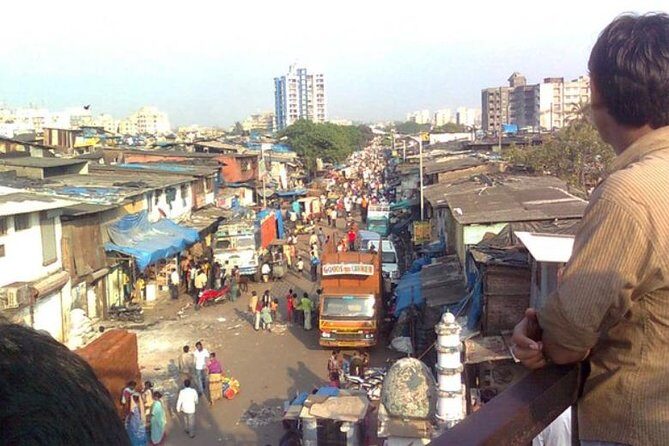
- Stop 1 in Dharavi: seeing the working city behind the headlines
- Stop 2 at Dhobi Ghat: the world’s outdoor laundry at human scale
- The 15-minute local train ride: reading Mumbai like a pro
- What you actually get for about $9.29
- The real role of your guide (Priti, Ruba, Subhan, Ruqaiyya, and more)
- Safety, comfort, and etiquette in a working neighborhood
- Who should book this Dharavi and Dhobi Ghat tour
- Quick decision guide: should you book?
- FAQ
- How long is the Mumbai Dharavi Slum & Dhobi Ghat Laundry Tour?
- What is the price per person?
- Is bottled water included?
- Does the tour include admission to Dhobi Ghat?
- Do I need private transportation?
- How many people are in a group?
- Is there a local train ride?
- Is free cancellation available?
Key highlights you’ll care about
- Dhobi Ghat scale: see an outdoor laundry where over 100,000 clothes are washed daily.
- Dharavi beyond headlines: you learn how small industries (leather, plastic recycling, pottery) shape life there.
- Local train ride: a short ride that helps you read Mumbai’s rhythm fast.
- Small group size (max 15): easier questions, less crowding, more control of the pace.
- Included basics: bottled water, plus admission for Dhobi Ghat.
- Guides who handle questions well: people like Priti, Ruba, Subhan, and Ruqaiyya are repeatedly praised for helpful explanations and calm pacing.
Why Dharavi and Dhobi Ghat belong on your Mumbai checklist
Some parts of Mumbai are famous, but not always understood. This tour is built around two places that explain the city’s everyday engine: work, trade, and how people make systems function—often with limited resources and a lot of skill.
I like that it doesn’t just point at buildings. It focuses on how things happen. In Dharavi, that means small-scale industries and neighborhood life. At Dhobi Ghat, it means the hand-washing methods and shared workflow that keep Mumbai’s laundry moving.
You can also read our reviews of more tours and experiences in Mumbai.



Meeting at Third Wave Coffee: quick logistics that matter
Your tour starts back at Third Wave Coffee on Tip Road (Unit 58, Ground, Ram Mahal, Senapati Bapat Marg, Mahim area). The end point is the same meeting spot, so you’re not left guessing where to regroup later.
Two practical tips: wear comfortable shoes, and give yourself extra time if you’re arriving after travel fatigue. One review noted a bit of trouble finding the cafe after landing—so if you’re jet-lagged, treat the meeting location like it’s your next appointment, not a casual meetup.
Also note this runs in a small group (up to 15), and it’s near public transportation. That’s good news if you like local transit and want to keep the day simple without paying for private rides.
Stop 1 in Dharavi: seeing the working city behind the headlines
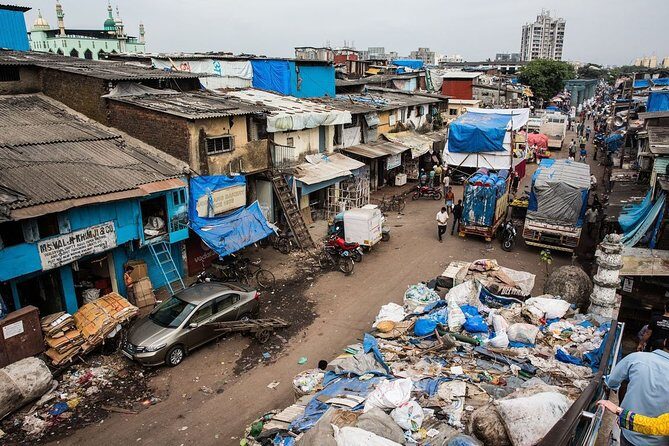
Dharavi is often talked about in big, blunt terms. On this tour, the focus is narrower and more useful: the streets where people live and work, and the entrepreneurial energy that shapes daily life.
Expect a guided walk through residential zones and working areas. The goal isn’t shock value. It’s context: how residents sustain livelihoods through small industries and shared neighborhood systems.
You’ll also hear about the bigger industrial picture in a way that’s easier to picture than a history lesson. The tour highlights things like:
- a major leather industry,
- plastic recycling,
- and the pottery community of Kumbhar Wada, described as centuries old.
What makes this stop valuable is the pacing. You’re not just passing through. The guide helps you connect what you see to why people do it—work patterns, trade needs, and how the community adapts.
A drawback to keep in mind: it’s a working area. That means it can feel intense and crowded at times. If you’re the type who needs lots of personal space for photos and questions, you may want to keep expectations realistic and move carefully with your group.
Stop 2 at Dhobi Ghat: the world’s outdoor laundry at human scale
Dhobi Ghat is the showpiece here. This is described as the world’s largest outdoor laundry, with over 100,000 clothes washed daily using time-honored, hand-washing methods.
In practical terms, you’ll see laundry work happening in open air. You’re not looking at a museum setup. You’re watching a working system—people, routines, and coordination that keeps garments flowing through the city.
This stop is also a nice contrast to Dharavi’s variety of industries. Dharavi can feel like many types of work living side by side. Dhobi Ghat is one job, repeated at enormous scale, which makes it easier to understand how effort turns into output.
One more practical note: your guide will set expectations for what you’re allowed to photograph and how to behave respectfully. If you want good photos, ask questions early in the visit and follow their lead. In a place where people are working, your timing matters as much as your camera.
The 15-minute local train ride: reading Mumbai like a pro
Half the “getting it” in Mumbai is movement. This tour includes a short local train ride (about 15 minutes), which is a smart addition even if you’re not a transit nerd.
Why it helps: the train shows you Mumbai’s speed and density in a way walking alone can’t. You get a quick lesson in how locals travel—how quickly people board, how routines connect stations, and how the city keeps flowing.
If you’re wondering about platforms and directions, take the guide’s advice seriously. One tour experience mentioned a guide helping with train and platform details to reach another destination afterward. That kind of practical guidance is exactly what makes a short ride feel useful instead of random.


What you actually get for about $9.29
Let’s talk value, because the price is unusually low for this combo.
For about $9.29 per person, you’re getting:
- around 3 hours of guided time,
- a local English-speaking guide,
- Dhobi Ghat admission included,
- a local train ride,
- bottled water,
- and a small group capped at 15.
The absence of private transportation is the main trade-off. If you prefer door-to-door comfort, you’ll need to handle your own transit to the meeting point. But since the start area is near public transportation, you’re not stuck—just responsible.
Also, the mobile ticket and group discounts are small details, but they matter on travel days. Fewer moving parts means less stress, which is the most underrated part of “value.”
The real role of your guide (Priti, Ruba, Subhan, Ruqaiyya, and more)
The tour lives or dies on the guide’s communication. In the experiences you provided, guides like Priti, Ruba, Subhan, and Ruqaiyya are repeatedly praised for things that matter on the street: clear English, comfortable pacing, and answers that help you connect dots.
You can also watch for a few good signs. A strong guide will:
- keep the group moving at a pace that doesn’t cut off questions,
- explain what you’re seeing in simple terms,
- and treat the area respectfully, especially when you’re taking photos.
One caution from the information you shared: guide English levels and storytelling depth can vary. So if you care a lot about explanation style, bring your curiosity—then ask follow-ups. A good guide can turn a few seconds of conversation into real understanding.
Safety, comfort, and etiquette in a working neighborhood
This kind of tour is different from sightseeing-only days. Here, you’re moving through a community that’s actively working and living.
In practice, the small group size helps. With up to 15 people, your guide can manage spacing, route, and timing so you’re not wandering into the wrong pocket of a street or blocking work.
Comfort tips that won’t be glamorous but will help:
- Wear shoes you can walk in for hours.
- Keep your phone/camera ready, but don’t treat photography like you’re on vacation mode.
- Ask how the guide wants you to behave around laundry and homes.
There’s also an emotional side. A review described feeling a little uneasy as a Westerner with a camera. That reaction isn’t wrong. If you feel that too, lean into respect: move quietly, ask before photographing close-up scenes, and let your guide guide you on boundaries.
Who should book this Dharavi and Dhobi Ghat tour
This is a strong fit if you want Mumbai beyond the usual postcard stops. It’s for travelers who like learning through real places—where people do business, recycle, craft, and wash clothes that keep the city functioning.
You’ll likely enjoy it if you:
- like guided walking tours,
- enjoy local transit moments (the train ride is a bonus),
- and want a structured way to understand Dharavi and Dhobi Ghat.
It may be less ideal if you:
- can’t handle walking in crowded, working areas,
- need lots of personal space at all times,
- or expect a very specific style of narration every time (since guide communication quality can vary).
Quick decision guide: should you book?
I’d book this tour if you want a grounded, street-level understanding of how Mumbai works—through Dharavi’s industries and Dhobi Ghat’s outdoor laundry system—plus the quick realism check of the local train ride.
Skip it (or book with extra realistic expectations) if you’re mainly looking for scenic highlights, or if the idea of walking through a working neighborhood makes you uncomfortable.
If you do book, show up prepared: comfortable shoes, a curious mindset, and a respectful attitude toward the people doing the work. That combination is what turns this from a checkbox activity into one of the most memorable parts of your Mumbai trip.
FAQ
How long is the Mumbai Dharavi Slum & Dhobi Ghat Laundry Tour?
The tour lasts about 3 hours.
What is the price per person?
The price is $9.29 per person.
Is bottled water included?
Yes. Bottled water is included.
Does the tour include admission to Dhobi Ghat?
Yes. Dhobi Ghat admission is included. Dharavi is listed with admission ticket free.
Do I need private transportation?
No private transportation is included. The meeting point is near public transportation.
How many people are in a group?
The tour has a maximum of 15 travelers.
Is there a local train ride?
Yes. You’ll get a 15-minute ride on Mumbai’s local train.
Is free cancellation available?
Yes, you can cancel for a full refund up to 24 hours before the experience starts.