REVIEW · MUMBAI
Kanheri Cave with Global Vipassana Pagoda Tour in Private Vehicle
Book on Viator →Operated by Shreeji Tours n Travels · Bookable on Viator
A day of caves and quiet views beats a standard city loop. You’ll spend the morning in Kanheri Caves and then head to the Global Vipassana Pagoda for a more peaceful, coastal change of pace. The key is the private format: you’re not just shuffled around.
I like two things a lot. First, you get a guide who helps you make sense of what you’re seeing inside the basalt caves, including how the site developed across centuries. Second, the tour is strong on value because admission fees are included, plus the basics like bottled water and hotel pickup in an air-conditioned vehicle.
The main consideration is that you’ll be on rock-cut paths and steps, and parts can feel uneven or damp. Wear supportive shoes, bring a hat, and keep in mind Kanheri Caves are closed on Monday, so plan your dates accordingly.
In This Review
- Kanheri + Vipassana: key highlights at a glance
- How this private-vehicle tour works in real life
- Kanheri Caves: basalt caves with Buddhist art across centuries
- The 4-hour cave visit: what the guide should help you see
- Steps, uneven rock, and damp stone: your physical comfort checklist
- Global Vipassana Pagoda: peace, a massive stone dome, and ocean air
- The 3-hour pagoda visit: what you’ll likely spend your time on
- Private vehicle comfort: the underrated part of this day
- Price and value: is $87 per person worth it?
- Timing, weather, and the Monday cave reality
- What to bring (and what to skip)
- Who this tour suits best
- A practical, honest recommendation: should you book?
- FAQ
- What time does the tour start?
- How long is the Kanheri Caves and Global Vipassana Pagoda tour?
- Is this a private tour or a group tour?
- Does the price include admission tickets?
- Are meals included?
- Is hotel pickup and drop-off included?
- What language is the guide?
- What should I wear or bring for the caves?
- Are Kanheri Caves open every day?
- What happens if the weather is bad?
Kanheri + Vipassana: key highlights at a glance
- Private hotel pickup and drop-off in an air-conditioned vehicle, with tolls, parking, and gate entry handled.
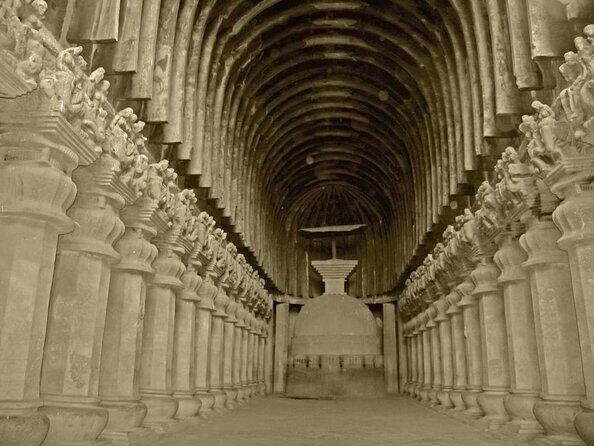
- Kanheri Caves with your own local English-speaking guide, covering the caves and monuments in Sanjay Gandhi National Park.
- Admission tickets included for both stops, so your costs don’t balloon once you arrive.
- Global Vipassana Pagoda meditation hall on a peninsula between Gorai creek and the Arabian Sea.
- Moderate physical effort: expect steps and uneven stone, so good grip shoes matter.
How this private-vehicle tour works in real life
This is a private tour built around two locations that are both outside central Mumbai. You start with hotel pickup around 9:00 am, then the day unfolds as: Kanheri Caves first, Global Vipassana Pagoda second, and a return to your hotel afterward. The total time usually lands around 8 to 10 hours, which includes travel.
Because it’s private, you can move at a pace that actually works for you. If you want to stop longer to study carvings or ask extra questions, your guide can generally flex. If you’re tighter on energy, you can keep the day moving without feeling like you’re on a strict group cattle schedule.
You can also read our reviews of more private tours in Mumbai



Kanheri Caves: basalt caves with Buddhist art across centuries
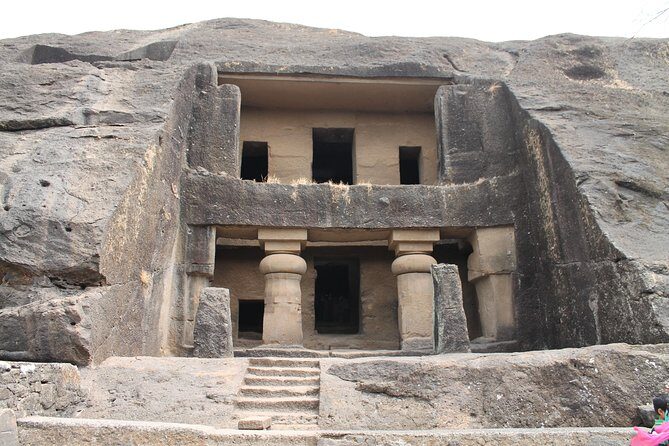
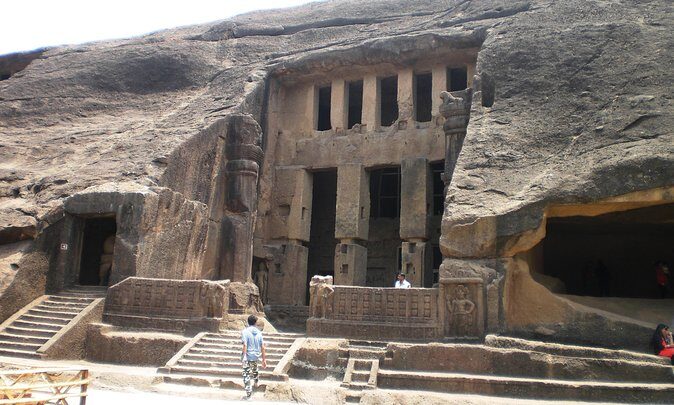
Kanheri Caves sit inside Sanjay Gandhi National Park, on the outskirts of Mumbai in the Sanjay Gandhi area. This complex is famous for a big reason: it’s a whole cluster of caves and rock-cut monuments carved from basalt, with activity that stretches from the early centuries (as early as the first century) to much later periods.
What you’re looking at inside the caves is a mix of Buddhist sculptures, relief carvings, paintings, and inscriptions. The site’s role also changes over time. By the third century, Kanheri had become an important Buddhist settlement on the Konkan coast, and you can feel that significance in the scale and variety of what remains.
A small but helpful detail for your visit: the name Kanheri is tied to the Sanskrit meaning of black mountain, which fits the dramatic basalt outcrop you’re walking around.
The 4-hour cave visit: what the guide should help you see
The Kanheri stop runs for about 4 hours, and that time matters because you’re not just looking at one cave. You’re moving through a complex with 109 caves and monuments carved into the hillside.
With a good guide, the caves stop feeling like random holes in rock and start feeling like a connected story. You’ll get context about the carvings and how the site developed across centuries, plus practical help with the route.
One theme that comes up in the way this tour is described: guides pay attention to where to slow down. That can be especially useful if you want to understand small details in the carvings instead of just snapping photos and moving on.
Steps, uneven rock, and damp stone: your physical comfort checklist
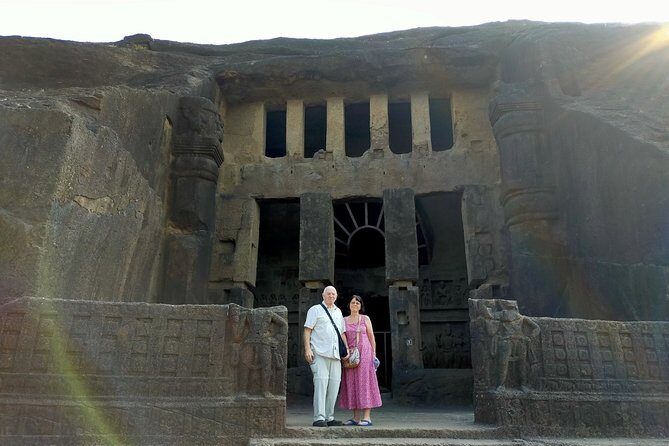
Kanheri is hillside access with rock-cut steps, so it’s not a flat stroll. The tour is marked for moderate fitness, and the sensible approach is to treat it like a short hike with stairs, not a museum hallway.
From what you can expect on-site, a few practical tips can make the visit more enjoyable:
- Wear trekking or sport shoes with grip.
- Bring a cap or hat for sun exposure.
- Plan for breaks and slower pacing on rough sections.
Even on a comfortable day, some stone can be uneven, and certain parts may feel damp. Your guide can usually help with small navigational issues, including pointing out safer footing or a better pace between caves.
Global Vipassana Pagoda: peace, a massive stone dome, and ocean air
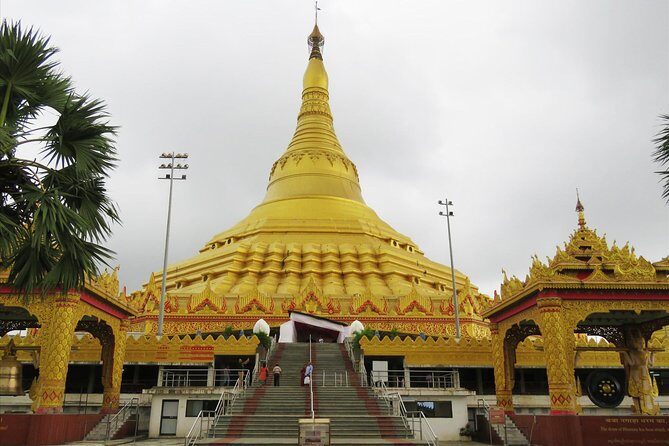
After the caves, you head to the Global Vipassana Pagoda, a meditation hall near Gorai in north-west Mumbai. The site is built on donated land on a peninsula between Gorai creek and the Arabian Sea, so the mood changes fast from forest-cave quiet to salt-air calm.
A few details to look for once you’re there:
- It was inaugurated on 8 February 2009 by then-President Pratibha Patil.
- It’s intended as a monument of peace and harmony.
- It honors Sayagyi U Ba Khin (1899–1971), a Vipassana teacher who helped Vipassana return to India.
- The center includes the world’s largest stone dome built without supporting pillars.
Also, you may travel by boat to reach the pagoda area. That’s one of those small logistics details that ends up being a highlight because it gives you time to settle your head after the stairs at Kanheri.



The 3-hour pagoda visit: what you’ll likely spend your time on
The pagoda stop lasts about 3 hours. That’s long enough to see the main meditation hall and take in the surrounding structure without feeling rushed. It’s also a good time to shift your focus from art-in-stone to the atmosphere the place is designed for.
If you enjoy architecture and big-scale design, you’ll probably spend extra time near the dome area. If you’re more into the calm side of travel, you’ll appreciate that this stop has a built-in “slow down” feel, especially after the cave route.
Private vehicle comfort: the underrated part of this day
Mumbai traffic can be unpredictable, and long road time can eat your energy. That’s exactly why the air-conditioned private vehicle matters here. You’re not fighting crowds or transfers, and you’re not stuck waiting for shared pickups.
This tour includes bottled water, plus pickup and drop, and the day’s toll, parking, and gate entry fees are covered. That sounds small, but it helps you avoid the classic India day-travel friction: energy drains from admin tasks, and those add up quickly on a long day.
Price and value: is $87 per person worth it?
At $87 per person, the value comes from what’s included rather than just the headline price. Your ticket cost isn’t one big “tour fee” that quietly adds entry costs later.
Here’s what you’re getting covered:
- Air-conditioned private transportation
- Hotel pickup and drop-off
- Local English-speaking guide
- Admission tickets included for Kanheri and the pagoda
- Bottled water
- Toll, parking fees, and gate entry
Meals are not included, so plan for lunch on your own. Depending on how your guide operates that day, you might be offered suggestions for where to eat, and in at least one case the guide helped with choosing an Indian-cuisine order. Still, treat lunch as optional logistics you handle during the day.
If you’re traveling with a friend or partner, private tours can stop feeling expensive fast, because you’re paying for convenience, direct guidance, and covered entry costs.
Timing, weather, and the Monday cave reality
Two scheduling factors can make or break this trip.
First, Kanheri Caves are closed on Monday. If your schedule includes Monday, you’ll need a different day or a different plan.
Second, the experience depends on good weather. If conditions are poor, the tour may be canceled, and you’ll be offered a different date or a full refund. For you, that means packing and planning like you’re doing an outdoor day: light layers, breathable clothing, and water-conscious habits.
One useful tip: if you can aim for an early start within the 9:00 am window, you’ll likely find the caves feel quieter and more contemplative than later in the day. That calm makes it easier to appreciate details in the carvings.
What to bring (and what to skip)
You don’t need a climbing rack for this day, but you do need comfort.
Bring:
- Cap or hat
- Trekking or sport shoes with grip
- A light layer if the day turns cooler
Consider:
- A small day bag for water and essentials
- Sunglasses if the light is bright in the park
Skip overpacking. You’ll be carrying things up and down steps, and this is one day where simple beats heavy.
Who this tour suits best
This tour fits you best if you like:
- Art and sacred sites with a real guide explaining what you’re seeing
- A calmer “two-tempo” day: caves in the morning, meditation-hall quiet later
- Hotel-to-destination convenience without the hassle of arranging transport
It’s also a solid fit for people who want a structured day but still want the option to pause. The private guide format helps with that.
If you’re extremely sensitive to stairs or you prefer fully flat walks, you might find the Kanheri section challenging. The pagoda stop is likely gentler in comparison, but the caves are the main physical test.
A practical, honest recommendation: should you book?
If you want a guided Kanheri Caves visit without the stress of coordinating entry and local navigation, this is a smart way to do it. The strongest reasons to book are the included admission tickets, the private air-conditioned pickup, and the chance to actually understand what you’re looking at instead of just walking past stone.
I’d book if you’re comfortable with steps and can plan for a full day away from the hotel. I’d also double-check your calendar for Monday, since Kanheri is closed.
If you want a first taste of Mumbai beyond the city streets, this tour is a clean, worthwhile pairing: basalt carvings in a national-park setting, then peace-focused architecture by the sea.
FAQ
What time does the tour start?
The tour start time is 9:00 am.
How long is the Kanheri Caves and Global Vipassana Pagoda tour?
It typically runs about 8 to 10 hours total, including both stops.
Is this a private tour or a group tour?
It’s a private tour/activity. Only your group participates.
Does the price include admission tickets?
Yes. Admission tickets are included for Kanheri Caves and the Global Vipassana Pagoda.
Are meals included?
No. Meals are not included, so you’ll need to plan lunch on your own.
Is hotel pickup and drop-off included?
Yes. Pickup and drop-off from your Mumbai hotel are included, with an air-conditioned vehicle.
What language is the guide?
The guide is a local English-speaking guide.
What should I wear or bring for the caves?
You should have moderate physical fitness, and you’ll want to bring a cap or hat and wear trekking or sport shoes.
Are Kanheri Caves open every day?
No. Kanheri Caves are closed on Monday.
What happens if the weather is bad?
This experience requires good weather. If it’s canceled due to poor weather, you’ll be offered a different date or a full refund.