REVIEW · MUMBAI
Jewish Heritage Tour
Book on GetYourGuide →Operated by Mystical Mumbai · Bookable on GetYourGuide
Jewish Mumbai tells its story in streets and stone. This half-day tour mixes a quick orientation on India’s Jewish communities with real stops you can see and walk around. I like that you get illustrated handouts and notes before the buildings start rolling past your window.
I especially like the chance to visit the Shaar Harahamim synagogue in Mumbai, built in 1796 by Samaji Hasaji Divekar (Samuel Ezekiel Divekar), a Bene Israeli. I also like Dhobi Ghat, because Mumbai’s outdoor laundry system is one of those places where you understand daily life in minutes, not hours.
One thing to plan around: shorts aren’t allowed, so bring long pants or other respectful clothing for the synagogue areas.
In This Review
- Key highlights I’d mark on your mental map
- Getting oriented before the landmarks: the Jewish story in plain terms
- Sassoon Docks and the Baghdadi Jewish footprint in morning light
- Gateway of India area: Kenneseth Eliyahoo Synagogue and David Sassoon Library
- Shaar Harahamim: the Gate of Mercy built in 1796
- Magen David Synagogue and the city’s taller signals
- UNESCO-grade Mumbai: Victoria Terminus and the Municipal Building sights
- Dhobi Ghat: seeing everyday life through a working outdoor laundry
- City-view drive: Marine Drive, Chowpatty, Oval Maidan, and more
- How the price stacks up for a 4-hour, hotel-pickup heritage tour
- What to wear and who this tour is best for
- Should you book the Jewish Heritage Tour in Mumbai?
- FAQ
- FAQ
- How long is the Jewish Heritage Tour?
- How much does it cost per person?
- Is hotel pickup included?
- What’s included in the tour price?
- Is lunch included?
- What languages are the guides available in?
- Are there any dress code rules?
- Where does the tour start?
- Is cancellation free?
Key highlights I’d mark on your mental map
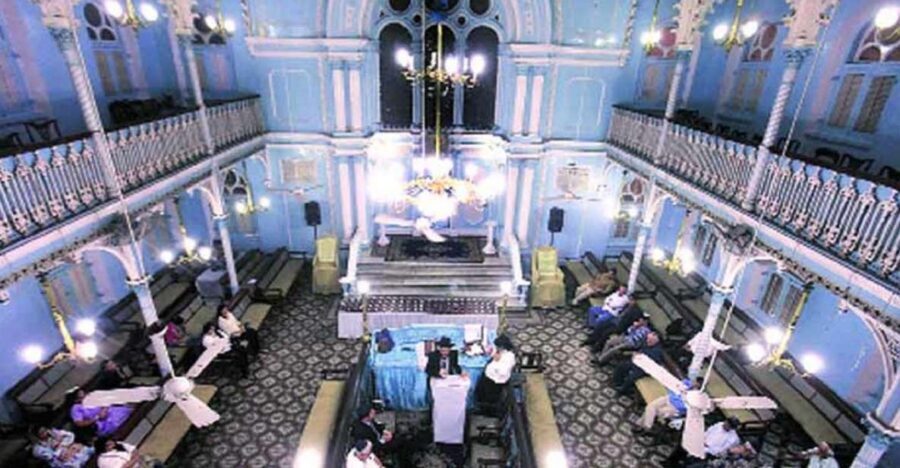
- Shaar Harahamim (1796): the oldest synagogue in Mumbai, tied to Samaji Hasaji Divekar (Samuel Ezekiel Divekar)
- Dhobi Ghat: a working outdoor laundry system you see up close in Mumbai
- Sassoon Docks: built by the Baghdadi Jewish Sassoon family, with morning movement
- Kenneseth Eliyahoo Synagogue and David Sassoon Library: city landmarks with strong Jewish connections
- Magen David Synagogue: tall blue Gothic style that dominates the skyline here
Getting oriented before the landmarks: the Jewish story in plain terms
You start with a short orientation about India’s Jewish communities. It covers when Jewish people arrived in India (about 2,000 years ago), where they lived across the subcontinent, and how different sects shaped their culture. The guide uses illustrated handouts and notes, so you’re not just hearing names—you’re also getting something you can review later.
This part matters because Mumbai can look like one city layered on top of another. Without a framework, you might notice a synagogue building and then move on. With the orientation, you’ll understand that these places aren’t random monuments; they’re part of a long story of migration, community life, and adaptation.
And yes, the tour is only 4 hours. The orientation helps you make those hours count, especially if you’re the type who likes context before photos.
You can also read our reviews of more historical tours in Mumbai


Sassoon Docks and the Baghdadi Jewish footprint in morning light
The tour begins at Sassoon Docks, where you can see how trade and community can share the same physical space. These docks were built by an influential Baghdadi Jewish family, the Sassoons, and the mornings bring visible activity. Even if you’re not a history buff, docks are easy to read: ships, movement, and the practical rhythm of work.
What I like here is the connection between architecture and economics. Jewish communities weren’t only building places of worship; many also shaped commercial life through networks tied to ports. Sassoon Docks gives you that sense of where money moved, where people met, and how a minority community became part of Mumbai’s commercial engine.
If you go on a day when the light is good, you’ll also get strong street-level views. Early hours tend to be better for photos because you catch the docks without the day’s heaviest heat.
Gateway of India area: Kenneseth Eliyahoo Synagogue and David Sassoon Library
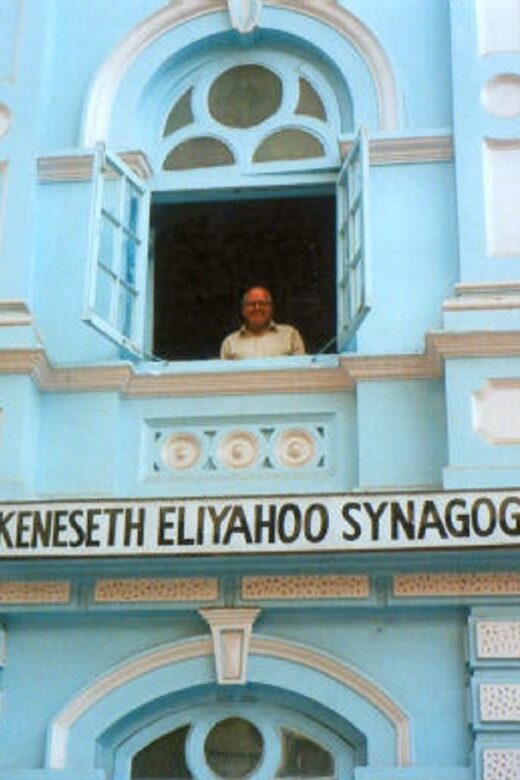
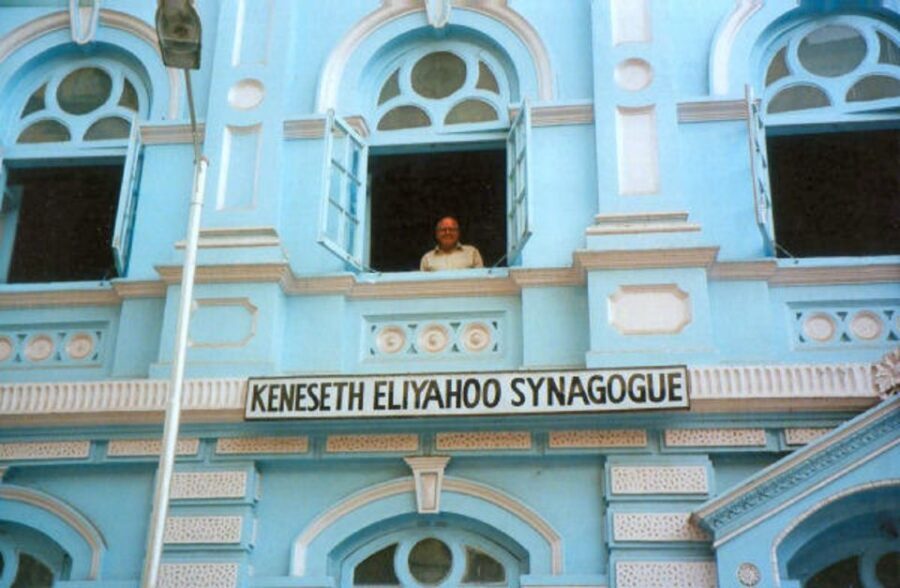
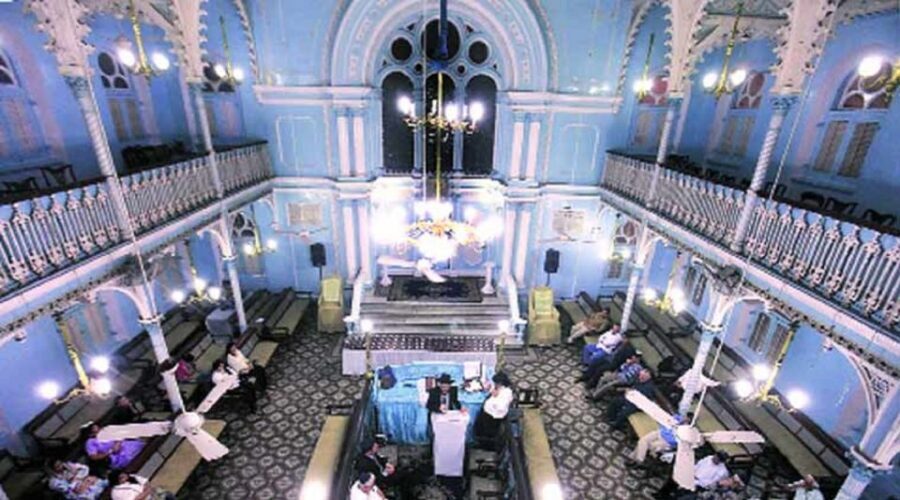
From Sassoon Docks, you drive toward the Gateway of India area. Along the way, you’ll see Kenneseth Eliyahoo Synagogue with its beautiful interiors, plus the David Sassoon Library. These are the kinds of stops that can feel easy to skip if you’re rushing between famous monuments—but here they help the story feel human.
Synagogues aren’t just dramatic exteriors. The interiors (as the tour describes them) remind you that community life happens inside: prayer, tradition, and the day-to-day religious calendar. The David Sassoon Library adds another layer—learning and literacy as part of how communities sustain themselves across generations.
Even from the road, the presence of these sites gives you a map. You start to recognize clusters: where worship sits next to civic identity, and where a library can feel like a cultural anchor, not an afterthought.
Shaar Harahamim: the Gate of Mercy built in 1796
Now you get to one of the tour’s major anchors: Shaar Harahamim, also known as the Gate of Mercy Synagogue. It’s described as the oldest synagogue in Mumbai, built in 1796 by Samaji Hasaji Divekar (Samuel Ezekiel Divekar), a Bene Israeli.
This stop is worth treating with a little extra attention. When a place is tied to a specific builder name, you can connect architecture to a person and a community role. Instead of seeing a building, you’re seeing the result of decisions made by real people centuries ago.
Also, the tour’s framing helps you understand what Bene Israeli means in context: one branch of Jewish communities in western India with its own cultural pattern. You don’t need to memorize definitions on the spot. Just listen for how the guide links community identity to the synagogue’s role over time.
Practical tip: since shorts aren’t allowed, plan your outfit early. If you’re thinking, I’ll just bring something quick from the hotel, don’t wait until the last minute. You want to arrive comfortably dressed for synagogue etiquette.
Magen David Synagogue and the city’s taller signals
After Shaar Harahamim, the drive continues to the Magen David Synagogue. The tour highlights it as a tall blue building with a Gothic feel that towers over other buildings in the area. This is the kind of contrast that’s useful in Mumbai: you get older religious architecture, then a visually dominant synagogue that reads instantly from the street.
When I’m on a city tour, I like when one stop is clearly “for the senses.” Magen David is that. It’s not subtle. It’s also a reminder that religious community identity isn’t frozen in one style. Over time, communities express themselves in how they build, what they choose visually, and how they want the neighborhood to recognize them.
If you’re into architecture, take note of how the Gothic feel changes your first impression. If you’re not, it still works because the building is so visible that it makes the rest of the walk-and-drive segments easier to track.



UNESCO-grade Mumbai: Victoria Terminus and the Municipal Building sights
The tour also brings you to Victoria Terminus, a UNESCO World Heritage site, and the Bombay Municipal Building. These aren’t Jewish-only stops, but they matter because they place Jewish heritage inside the wider Mumbai story.
Victoria Terminus is one of those names you’ll hear for a reason. UNESCO status usually means a site has special architectural or historic significance, and this one helps you connect the city’s growth to how different communities lived alongside each other. The Municipal Building adds civic context: the structures of government and administration that sit beside religious neighborhoods.
Here’s the value for you: this tour doesn’t treat heritage like a museum case. It treats it like city geography—where synagogues, libraries, docks, and civic buildings overlap in space and time.
And since the tour is by A/C car, you can move between these points without turning the day into a full walking marathon.
Dhobi Ghat: seeing everyday life through a working outdoor laundry
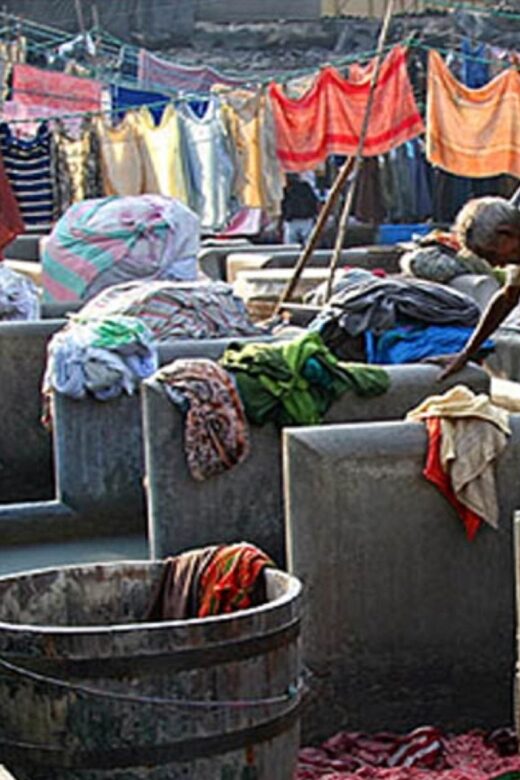
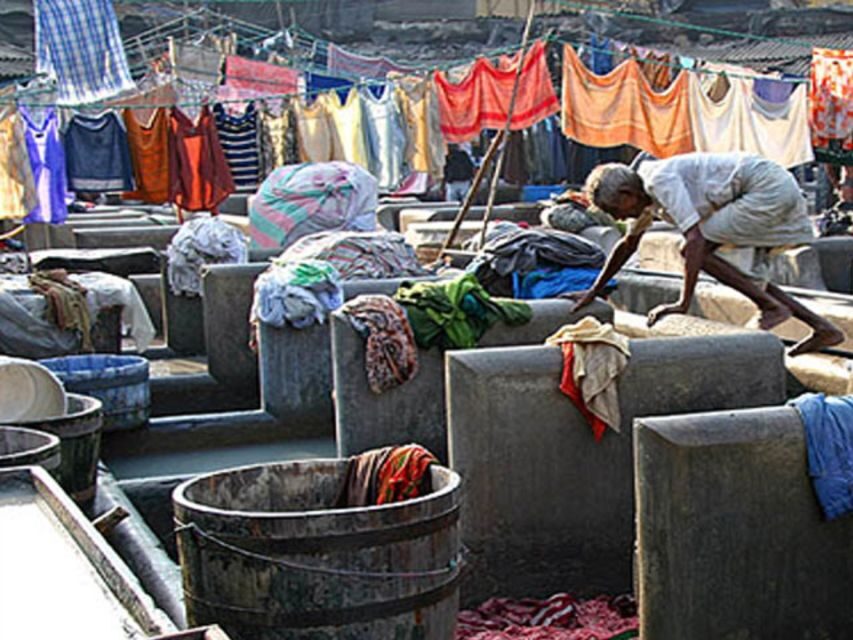
Then comes Dhobi Ghat, Mumbai’s unique outdoor laundry system. This is one of the most memorable stops because it’s not about a single landmark—it’s about a process.
You’ll get to see how laundry is done in an outdoor setting, and that turns your perspective from architecture to daily life. Even with only 4 hours total, Dhobi Ghat gives you a grounding reality check. Mumbai isn’t just postcard views. It’s people doing practical work, day after day, with systems built around the city.
If you’re the kind of traveler who likes to understand how a place runs, Dhobi Ghat will click. It’s also visually striking, so it’s easy to take photos, but try to keep it respectful since it’s a working space.
One caution: keep an eye on heat and sun exposure. The tour includes an A/C car, but outdoor viewing still depends on the weather and the time of day.
City-view drive: Marine Drive, Chowpatty, Oval Maidan, and more
Between major stops, you drive through Marine Drive/Chowpatty, Oval Maidan, High Court, Bombay University, Flora Fountain, and many more unseen places. The list is long on purpose. Mumbai is layered, and those stretches act like a moving timeline.
Marine Drive and Chowpatty help you grasp Mumbai’s relationship with the sea and public space. Oval Maidan and the High Court area point toward the city’s institutional feel. Bombay University signals education and youth, and Flora Fountain gives you another civic visual anchor.
This is also where the guide’s role really helps. You’re not just cruising. You’re getting little bits of context that make the city look organized, even if you know it’s not.
How the price stacks up for a 4-hour, hotel-pickup heritage tour
At $71 per person, this tour sits in a sweet spot for a half-day in Mumbai—especially because it includes hotel pickup and an A/C car, plus a live guide. For 4 hours, that’s a lot of movement through multiple key areas, including older synagogue sites and major city landmarks like Victoria Terminus.
What makes it feel like good value is the mix:
- heritage education via orientation handouts and notes
- multiple specifically named Jewish-related stops (Sassoon Docks, Kenneseth Eliyahoo Synagogue, Shaar Harahamim, Magen David)
- one high-impact everyday-life stop (Dhobi Ghat)
- plus city-sight driving that rounds out the geography
The main cost trade-off is what you don’t get: lunch isn’t included. If you’re hungry, you’ll need to plan a meal on your own either before or after. Also, because the tour is short, you’ll get a curated slice, not a slow, linger-all-day kind of visit.
Still, if you want a solid overview with real places and not just a long bus ride, this price-to-content ratio feels practical.
What to wear and who this tour is best for
Since shorts aren’t allowed, pack long pants and comfortable shoes. You’ll likely be outdoors at Dhobi Ghat and around synagogue areas, so dress for weather and for respect.
This tour is a great fit if you:
- want Jewish heritage in Mumbai with specific stops and names
- like a guide who provides handouts and notes, not just quick talk
- enjoy short, focused city tours that still include everyday places like Dhobi Ghat
- want hotel pickup and A/C comfort for a condensed day
It might not be your best match if you want deep, slow time inside every building or you prefer tours that are mostly walking. This one is built around driving between highlights and making the 4 hours count.
Should you book the Jewish Heritage Tour in Mumbai?
I’d book it if you want a balanced mix of specific Jewish landmarks and Mumbai reality, without spending the whole day. Shaar Harahamim is the kind of stop you’ll remember because it’s tied to a named builder and a date (built in 1796). Dhobi Ghat is the kind of stop you’ll remember because it shows how people live, work, and keep a system running.
Book it sooner rather than later if you have limited time in the city and you want something that uses that time efficiently. If you’re traveling with someone who enjoys architecture, civic landmarks, and culture in the same trip, this also works well.
FAQ
FAQ
How long is the Jewish Heritage Tour?
The tour lasts 4 hours.
How much does it cost per person?
It costs $71 per person.
Is hotel pickup included?
Yes. Pickup is included from your hotel in Mumbai.
What’s included in the tour price?
The tour includes an A/C car and a live guide.
Is lunch included?
No, lunch is not included.
What languages are the guides available in?
The live tour guide is available in German, Spanish, and English.
Are there any dress code rules?
Yes. Shorts aren’t allowed.
Where does the tour start?
It starts at Sassoon Docks.
Is cancellation free?
You get free cancellation up to 24 hours in advance for a full refund.