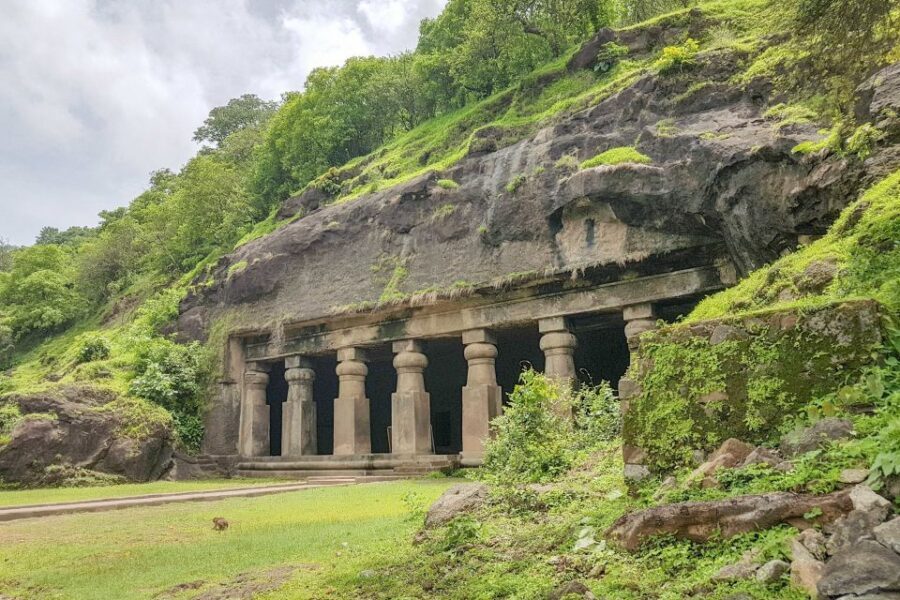
Two thousand years of study, carved in stone. Visiting Kanheri Caves feels like stepping onto an ancient campus: it’s a Buddhist university site within Sanjay Gandhi National Park, shaped by centuries of learning from the 1st century BC to the 10th century AD. Kanheri Caves are more than old caves—you’ll get context for what monks and students did there.
I love the way the guide brings the site to life through details like sculptures, relief carvings, paintings, and inscriptions. You’ll also get a clearer sense of daily spiritual practice by visiting key worship areas like the Grand Chaitya and the stupa.
One thing to plan for: the visit includes time walking/hiking up to the caves, and the tour requires good weather. If conditions are bad, the operator may offer a different date or a full refund.
In This Review
- Key things to know before you go
- Kanheri Caves in Sanjay Gandhi National Park: What You’re Really Visiting
- The 8-Hour Rhythm From Mumbai: Pickup, Drive, and On-Site Time
- Stone Learning: Sculptures, Reliefs, Paintings, and Inscriptions
- Grand Chaitya and the Stupa: How Meditation Shaped the Architecture
- Guides Who Actually Explain: Pankaj and Madhu in Action
- Price and Value: What You Get for About $160
- Getting the Most Out of the Caves Walk
- Who Should Book This Day Trip (and Who Might Skip It)
- Should You Book Kanheri Caves With Five Senses Walks?
- FAQ
- How long is the Kanheri Caves guided tour?
- What time does the tour start?
- Is pickup included from my hotel or cruise terminal?
- Is admission included?
- Is this tour private?
- Does the tour use a mobile ticket?
- What happens if the weather is poor?
- What is the cancellation policy?
Key things to know before you go
- A real national park setting: Kanheri sits inside Sanjay Gandhi National Park (87 sq km), so you’re touring in an active conservation area.
- More than caves: you’re looking at a Buddhist learning center where students and teachers gathered over many centuries.
- Focus on stone learning: carvings, paintings, and inscriptions are treated as clues—not just decorations.
- Grand Chaitya + stupa visit: the tour connects architecture to meditation practice.
- Guides make it click: guides such as Pankaj and Madhu are highlighted for strong explanations and patient pacing.
- Pickup and private-group feel: pickup is offered, and it’s a private tour for your group.
Kanheri Caves in Sanjay Gandhi National Park: What You’re Really Visiting
Kanheri Caves aren’t just “ancient rock rooms.” They’re part of a Buddhist university complex that helped shape learning and teaching across centuries. The site functioned as a major center of Buddhist education, active from roughly the 1st century BC through the 10th century AD. That time span matters because it explains why you’ll see evidence of different phases of religious life—places of gathering, meditation, worship, and commemoration.
Also, the setting changes how you experience the caves. Kanheri sits inside Sanjay Gandhi National Park, so you’re not touring a city monument. You’re climbing into a protected green space where the air feels different, and the site naturally slows you down. It’s easier to imagine daily routines when the environment still feels like it belongs to the site.
If you like travel that mixes culture with atmosphere, this is a strong match. You’ll be looking at architecture and art, but you’ll also be moving through the park and paying attention to the shapes and positioning of structures.
You can also read our reviews of more guided tours in Mumbai


The 8-Hour Rhythm From Mumbai: Pickup, Drive, and On-Site Time
This is built as a full day: about 8 hours total, starting at 8:00 am. In practice, that means you’ll spend part of your morning getting from Mumbai into Sanjay Gandhi National Park, then around 5 hours exploring the caves with a guide.
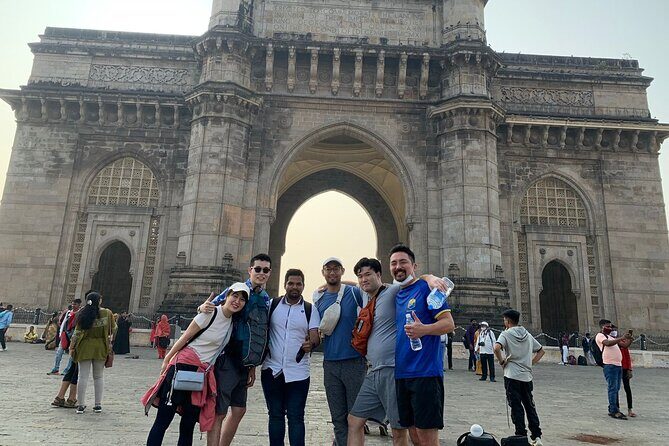
Pickup is offered from your hotel or cruise terminal, which is a real convenience in Mumbai. It also helps you avoid wasting the best part of the day negotiating transit. The tour format is private for your group, so you’re not stuck blending into a big crowd.
One practical note: the drive through Mumbai can be part of the experience, since guides sometimes talk through what you’re passing as you head out of the city. In the accounts you’ll find, guides like Madhu were praised for keeping the conversation going during the journey, not just during the cave visit.
Good weather matters here. The tour explicitly requires it, and if it’s canceled due to poor conditions, you’ll be offered a different date or a full refund. So if the forecast looks shaky, I’d treat that as a signal to plan your day with flexibility.
Stone Learning: Sculptures, Reliefs, Paintings, and Inscriptions
The core of the visit is how your guide reads the stonework. You’ll spend the bulk of the time moving through areas where you can see sculptures, relief carvings, paintings, and inscriptions. What makes Kanheri special is that these features weren’t created in isolation. They were part of a living religious world where teachers taught and monks gathered.
Here’s what I like about this approach from a visitor standpoint: it turns sightseeing into interpretation. Instead of only taking photos, you’ll understand what each type of carving or text might be communicating—who it was for, what it celebrated, and why it mattered to practitioners at the time.
You’ll also see how the site’s layout supports spiritual life. Even if you don’t read the inscriptions, the guide helps you connect the visuals to purpose: gathering, contemplation, devotion, and learning. That makes the caves feel more like a campus and less like a museum corridor.
If you’re the type who enjoys “how do we know this?” moments, you’ll likely appreciate that the tour treats artistic elements as evidence, not just decoration.
Grand Chaitya and the Stupa: How Meditation Shaped the Architecture
Two stops that help you understand the site’s spirit are the Grand Chaitya and the stupa. These aren’t random highlights. They represent how sacred space was organized for meditation and focus.
The Grand Chaitya is described as where monks used to gather to meditate. That detail alone changes how you look at the space. You’re not only seeing structures—you’re imagining behavior: sitting, breathing, focusing, returning again and again. The guide’s explanations help you connect the architectural choices to spiritual routine.
Then there’s the stupa, which supported concentration during meditation. In Buddhist traditions, stupas are associated with reverence and remembrance. At Kanheri, the tour notes that a relic of a great teacher would typically be found inside the stupa. Even if you can’t see every element clearly from the viewing angles, the concept gives the site emotional weight.
This is one reason the guided approach matters. If you visit on your own, it’s easy to see “old buildings.” With a guide, you see the intention behind them—why these spaces were placed where they were, and what the community expected monks to do there.
Guides Who Actually Explain: Pankaj and Madhu in Action
A day trip can be great or forgettable depending on the guide. In this case, names like Pankaj and Madhu come up with strong praise, and it makes sense: both were described as highly informed and patient, with a knack for making the art and ideas understandable.
Pankaj is highlighted for being an outstanding guide with knowledge that refreshed people, plus engaging conversation about Buddhism and how it evolved in India. Madhu was described as an encyclopedia of knowledge, with patience, and the ability to examine the significance of each of the sculptures you see.
That “significance” piece is the difference between collecting facts and building understanding. For example, when the guide talks through why certain sculptures mattered or what the carvings could represent, the caves stop being a checklist and start being a story.
There’s also the human side of good guiding. One account notes the tour was adjusted easily to accommodate an unexpected illness that happened during the hike up to the caves. That kind of flexibility matters because Kanheri involves walking up. If someone needs pacing adjustments, having an operator and guide who can respond makes the day feel safer and more respectful.



Price and Value: What You Get for About $160
At $160.00 per person, this isn’t the cheapest way to see Kanheri. But it’s also not overpriced when you break down what’s included and what’s handled for you.
First, admission to the caves is included. That saves time and keeps the day smoother. Second, you get a guided visit for about 5 hours on-site, which is long enough for real explanation—not just a quick walkthrough. Third, pickup is offered from your hotel or cruise terminal, and you’ll be traveling as a private group, which usually means less waiting and less friction.
There are also practical add-ons that support convenience: the tour uses a mobile ticket, and you can benefit from group discounts. The company behind the tour, Five Senses Walks, positions itself around supporting local livelihoods by employing local guides and supporting local businesses. While you can’t measure that on the spot, it’s still a meaningful value signal when you’re choosing where your travel dollars go.
Bottom line: if you want Kanheri as an experience with context—art, religion, and architecture explained in plain language—this price can feel reasonable. If you only want quick photos and don’t care about meaning, you might question whether a guided format is worth it.
Getting the Most Out of the Caves Walk
Kanheri includes a hike up to the caves, and the tours are paced around that reality. Even though the exact route details aren’t spelled out here, the site clearly involves uneven outdoor walking and steps. Bring shoes that you trust on rough ground.
Plan for the weather. Since the tour requires good weather, you’ll want a light plan in your schedule for contingencies. If you’re visiting during a season when storms or heavy rain are common, I’d keep other flexible activities available nearby.
Also, expect that a guided day can be mentally active. You’ll be seeing lots of carvings and inscriptions, plus hearing explanations about meditation spaces and how a Buddhist university functioned. So bring water, take short breaks when your guide offers them, and don’t try to force speed. This is the kind of place where going slowly usually means seeing more.
Who Should Book This Day Trip (and Who Might Skip It)
This tour is a good fit if you want a structured, guided experience at a major Buddhist site and you like understanding what you’re looking at. You’ll especially enjoy it if:
- you want more than a quick sightseeing stop and you like learning from an on-the-ground guide
- you appreciate connecting art and architecture to how people practiced religion
- you prefer pickup and a private group feel instead of DIY navigation
It might be a less ideal match if:
- you strongly dislike hilly walking, since the tour involves a hike up to the caves
- you’re traveling when you can’t be flexible about weather-related changes
- you only want minimal explanations and prefer to spend your time moving quickly
That said, the tour notes that most travelers can participate, which suggests the pacing is designed to be workable for a wide range of visitors—especially with a guide who can adjust when needed.
Should You Book Kanheri Caves With Five Senses Walks?
I think this is worth booking when you want Kanheri to feel like an actual ancient university, not just a collection of caves. The combination of a long guided time on-site, a focus on sculptures and inscriptions, and visits to the Grand Chaitya and stupa creates the kind of coherence that makes the day stick.
If you care about value, the included admission and the pickup help justify the cost. If you care about comfort, the private group format and the ability to adjust plans if someone needs help during the hike are real advantages.
My practical recommendation: book it if you’re physically up for a cave hike and you’re traveling with enough flexibility for weather. If either of those is a problem, consider planning a different day or a different style of visit.
FAQ
How long is the Kanheri Caves guided tour?
The tour lasts about 8 hours total, with around 5 hours spent exploring Kanheri Caves on-site.
What time does the tour start?
The start time is 8:00 am.
Is pickup included from my hotel or cruise terminal?
Yes. Pickup is offered from your hotel or cruise terminal.
Is admission included?
Yes. The admission ticket is included for the Kanheri Caves portion.
Is this tour private?
Yes. It’s a private tour/activity, and only your group will participate.
Does the tour use a mobile ticket?
Yes. A mobile ticket is included.
What happens if the weather is poor?
This experience requires good weather. If it’s canceled due to poor weather, you’ll be offered a different date or a full refund.
What is the cancellation policy?
You can cancel up to 24 hours in advance for a full refund. If you cancel less than 24 hours before the start time, the amount paid will not be refunded.