REVIEW · MUMBAI
Dharavi Slum Walking Tour: Mumbai’s Inspiring Small Industries
Book on Viator →Operated by Explore Mumbai Tours · Bookable on Viator
Dharavi is bigger than you expect. A guided walk here shows Mumbai’s everyday economy up close, with stops that balance the workshops side and the residential lanes inside Dharavi, including a visit to Kumbharwada pottery colony.
I love how the tour is set up for real-world observing, not distant sightseeing. Two highlights for me are the hands-on look at small-scale work (recycling and making) and the chance to see the Kumbharwada pottery stop during the same route.
One thing to consider: you’ll walk through very tight spaces, including narrow alleys where comfort depends on your personal preferences—this is not a wide, comfy promenade.
In This Review
- Key things to know before you go
- A Two-Hour Walk Through Dharavi’s Real Economy
- Meeting at Third Wave Coffee: Simple Start, Clear Direction
- The Commercial Side: Recycling and Small-Scale Manufacturing
- A quick reality check on comfort
- Transition to Residential Lanes: Homes, Workshops, and Daily Life
- Kumbharwada Pottery Colony: Craft Skills You Can Watch in Motion
- What Makes the Guides a Big Deal (Sharon and Ruqaiyya)
- Price and Value: Why This Costs so Little
- Who This Tour Fits Best (and Who Might Want Another Plan)
- Practical Tips for a Respectful, Comfortable Walk
- Should You Book This Dharavi Slum Walking Tour?
- FAQ
- How long is the Dharavi slum walking tour?
- Where does the tour start?
- What is included in the tour?
- Do I have to buy an admission ticket?
- Is hotel pickup and drop-off available?
- Is this tour private?
- Can I use public transportation to get there?
- What is the cancellation policy?
Key things to know before you go
- Two-hour walking format that focuses on both work life and home life in Dharavi
- Start point at Third Wave Coffee (Tip Road, Mahim area) for an easy meet-up
- Kumbharwada pottery colony visit inside Dharavi as a planned craft stop
- Commercial + residential route showing recycling, garment making, leather work, and daily routines
- Optional hotel pickup and drop-off if you want the least-stress day
- Private tour for your group (not mixed with strangers)
A Two-Hour Walk Through Dharavi’s Real Economy
Dharavi can sound intimidating from a distance. Up close, what hits you is the energy of ordinary work: people making things, sorting materials, repairing, and trading. This tour keeps the focus on daily life and small industries, not on shock value.
The route is about two hours, which is a good length for first-timers. Long enough to see variety, short enough that you’re not dragging yourself through a whole day on foot. It’s also guided by a local, so you’re not left guessing what you’re looking at.
A big plus is the way the tour balances the two halves of Dharavi. You spend time with the more commercial activity, then you move toward areas that feel more residential—small homes alongside private and government buildings, plus workshops tucked into the same neighborhoods.
You can also read our reviews of more walking tours in Mumbai


Meeting at Third Wave Coffee: Simple Start, Clear Direction
The tour starts at Third Wave Coffee on Tip Road (Mahim area). That matters more than you might think. A consistent meeting point helps you avoid that awkward late-morning scramble in a big city.
It’s also described as near public transportation, which is helpful if you want to save money on transfers. If you prefer door-to-door, you can choose hotel pickup and drop-off as part of the transfer option. Either way, the goal is a hassle-free start.
Since the tour is private for your group, you’re not fighting for space with a crowd. In a walking tour context, that often means a calmer experience, especially when you’re moving through narrow lanes and shared work areas.
The Commercial Side: Recycling and Small-Scale Manufacturing
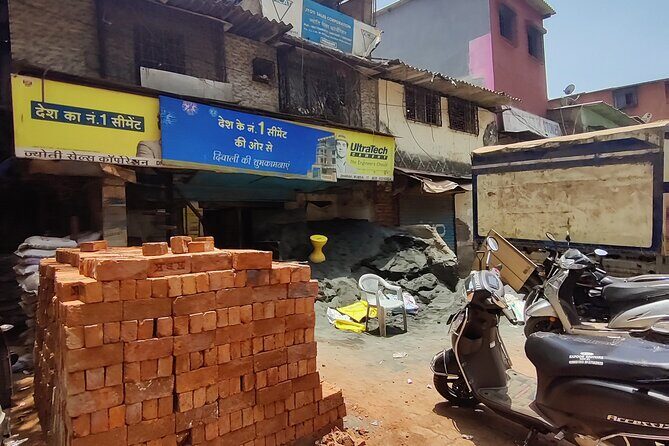
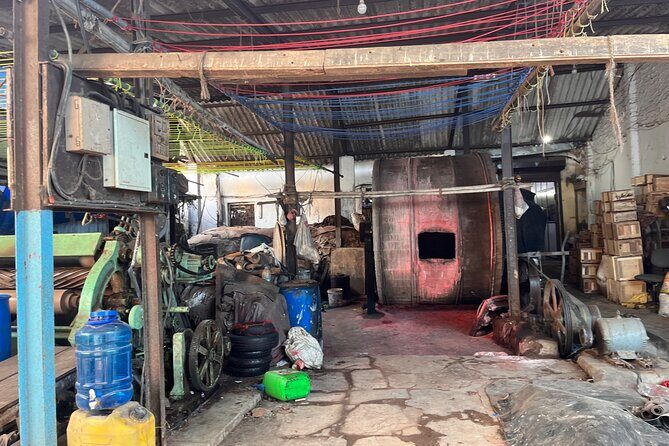
You begin with the busy, work-heavy section of Dharavi. This is where the industries show up fast. You’ll see activity connected to recycling and manufacturing, including work involving plastic, cardboard, aluminum, and garment creation.
What I like about this part is the practical lesson it gives you. You’re not just watching finished products—you’re seeing inputs, sorting, and making processes. Even if you’ve never studied how these supply chains work, you can piece together the logic in a few minutes: waste becomes raw material, and raw material becomes an income stream.
It’s also a section where photography can be tricky, but not impossible. The tour is described as having guided walking that supports safety while you capture photos. Still, keep expectations realistic: you may need to pause quickly, lower your camera, and respect the workflow around you.
A quick reality check on comfort
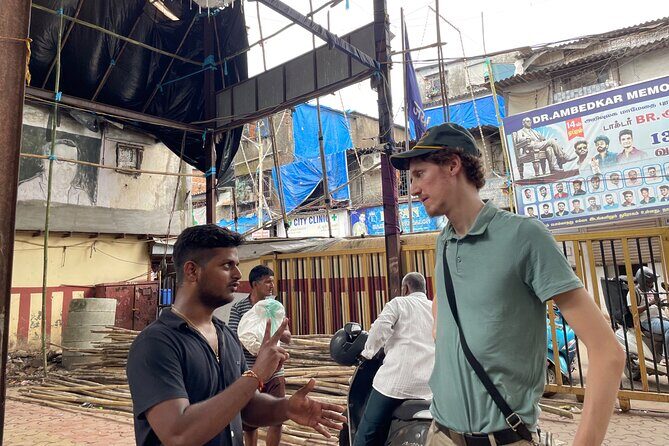
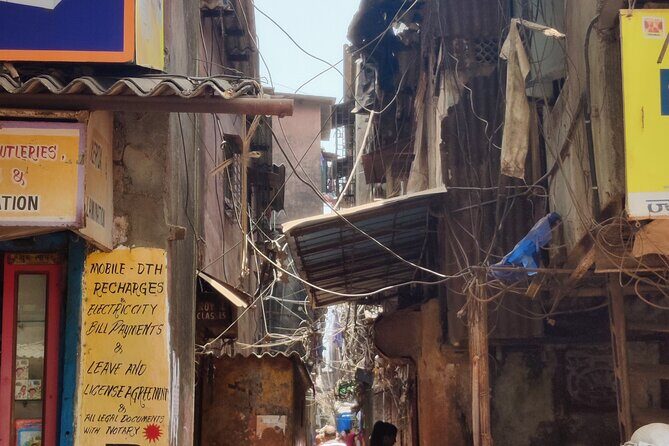
This is an up-close walk. One of the strongest pieces of feedback emphasizes that you’re walking in extremely narrow alleys—around two feet wide. If you prefer plenty of room to pass without thinking, plan for some discomfort and slow your pace.
Transition to Residential Lanes: Homes, Workshops, and Daily Life
After the work side, the tour shifts toward the residential areas, where daily life is woven together with services and jobs. You’ll see small-roofed houses and the overlap between homes and other structures, including government and private buildings.
You’ll also notice leather workshops in this residential section. That’s the kind of detail that helps you understand Dharavi isn’t separated into one zone for living and another for working. Industries happen in the same areas where people live, and the tour keeps drawing your attention to that practical mix.
This is where a good guide really matters. The best tours don’t just point at scenes; they explain why things look the way they do and how the system functions for residents. In a couple of strong comments, guides were praised for being engaging and for sharing insights from their own local perspective.





Kumbharwada Pottery Colony: Craft Skills You Can Watch in Motion
A key scheduled stop is the Kumbharwada pottery colony within Dharavi. This is one of those moments that changes the mood of the walk from fast-moving industries to slower, craft-focused attention.
Even if you don’t buy anything, watching pottery work gives you a clear sense of what skill looks like in a real production setting. You can see repetition, technique, and the pacing of the craft. It also offers variety—so you’re not stuck seeing only recycling and manufacturing scenes.
From a value standpoint, this stop is smart. It adds a cultural craft element to a tour that could otherwise feel purely industrial. And it gives you a concrete place to anchor what you learned about the neighborhood’s work.
What Makes the Guides a Big Deal (Sharon and Ruqaiyya)
This tour’s quality often comes down to the guide’s ability to connect details to daily reality. Two guide names show up clearly in the positive feedback: Sharon and Ruqaiyya.
- Sharon was praised for deep insights and for being engaging across multiple tours in Mumbai, suggesting you’ll get more than surface-level storytelling.
- Ruqaiyya was highlighted for being personable and very informative, with a clear sense of pride in Dharavi and firsthand perspective.
You can’t always choose your guide, but if you book and have a special preference, it’s worth asking. If Sharon is available, that’s a strong sign you’ll get a thoughtful experience rather than just a route.
Price and Value: Why This Costs so Little
At $9.51 per person, this tour sits in the budget-friendly zone for a guided, two-hour experience in a major city. The price also feels reasonable because it includes a planned visit to Kumbharwada and a guided route that covers both commercial and residential areas.
Two more value boosters:
- Admission Ticket Free is indicated, so you’re not stacking extra entry costs on top of the ticket price.
- The option for group discounts and mobile tickets makes planning easier, especially if you’re traveling with friends.
If you want hotel pickup and drop-off, that can add convenience value. Even without transfers, the meeting point’s location and proximity to public transport can keep your day from turning into a logistics puzzle.
On cancellation: the policy is described as free cancellation up to 24 hours in advance, which is a comfort if your Mumbai schedule is still flexible.
Who This Tour Fits Best (and Who Might Want Another Plan)
This tour fits best if you’re curious about how cities really work. You like learning from everyday businesses, seeing how recycling and making operate, and understanding how residents live alongside the work that sustains them.
It also fits you if you want a safe, guided experience focused on walking and respectful understanding, not a drive-by look.
Who should consider a different option: if you dislike tight spaces, plan around the narrow alleys issue. One of the most direct cautions from feedback is that this is very up close, including very narrow walking passages. If you need lots of physical space, this may not feel comfortable.
Also consider your preference for balance. One note suggests the tour could feel more industrial than housing-focused for some people. If you want a mostly residential feel, go in knowing that industries and recycling are a core part of the route.
Practical Tips for a Respectful, Comfortable Walk
This is a working area and a living area. That means you’ll have to act like it’s real life, because it is.
- Wear comfortable shoes. You’ll be walking through a neighborhood with tight lanes.
- Bring a camera thoughtfully. Use it when it makes sense, and be ready to pause for people at work.
- Move slowly through narrow areas. If you’re with a group, keep spacing so you’re not brushing into others.
- If you’re sensitive to cramped walking, consider mentally preparing for tight turns and close quarters.
The best result comes from adopting a mindset of learning: watch how people move, how materials flow, and how daily routines connect with small businesses. That approach makes the experience feel meaningful rather than uncomfortable.
Should You Book This Dharavi Slum Walking Tour?
Book it if you want an honest, guided way to understand Dharavi’s small industries—especially if the idea of seeing recycling, garment creation, and leather work sounds like the kind of city education you enjoy. The Kumbharwada stop gives you a craft anchor, and the two-hour timing keeps it manageable.
Skip or rethink if you strongly dislike narrow spaces or you’re seeking wide-open views. This walk is close by design. You’re there to see what work and daily life look like from within the neighborhood, not to stay outside and observe from afar.
If you’re ready for a real-world Mumbai experience—one that’s guided, focused, and grounded in everyday skills—this tour is a strong buy for the money.
FAQ
How long is the Dharavi slum walking tour?
It’s about 2 hours.
Where does the tour start?
The meeting point is Third Wave Coffee on Tip Road, Mahim area (Ram Mahal, Senapati Bapat Marg area).
What is included in the tour?
You get a guided walk to learn about residents’ daily lives and small businesses, including a visit to the Kumbharwada pottery colony within Dharavi.
Do I have to buy an admission ticket?
No—admission ticket is free as listed for the experience.
Is hotel pickup and drop-off available?
Yes. There’s an optional transfer that includes hotel pickup and drop-off.
Is this tour private?
Yes. It’s listed as a private tour/activity, meaning only your group participates.
Can I use public transportation to get there?
The meeting point is described as near public transportation, so it should be reasonably easy to reach.
What is the cancellation policy?
You can cancel for a full refund up to 24 hours in advance of the experience start time. If you cancel less than 24 hours before, it isn’t refunded.