REVIEW · MUMBAI
Cruise to Mumbai Historical Tour
Book on Viator →Operated by Altaf Husain · Bookable on Viator
Four hours can change how you see Mumbai. This private, guided route stitches together Gandhi’s legacy, colonial-and-modern city sights, and Mumbai’s working waterfront—without you having to figure out a thing.
I like how the tour is built for limited time: multiple major stops in about 4 hours, with a guide keeping you moving and explaining what you’re seeing. I also like the mix of ticket-included highlights—like Mani Bhavan Gandhi Museum and viewpoints at Malabar Hill—so you can spend your energy on the experience, not paperwork.
One thing to consider: the schedule is tight, and not every site is covered with included entry—Crawford Market is listed as not included—so plan a little extra if you want to go inside or shop.
In This Review
- Quick reasons this tour works
- Why Mumbai’s history is easiest in four hours
- Pickup, mobile ticket, and the real-world flow of the day
- Mani Bhavan Gandhi Museum: start with Gandhi’s Mumbai
- South Mumbai: the old empire vibe meets today’s power
- Malabar Hill: sea views and a different kind of Mumbai
- Sassoon Dock and Dhobi Ghat: where Mumbai works
- Sassoon Dock: an old fish-market hub
- Dhobi Ghat: an open-air laundry scene
- Crawford Market: plan for your own spending
- Coffee and timing: included comfort, plus a small food note
- Price and value: what you’re really paying for
- Who should book this tour, and who should pass
- Should you book this Mumbai historical tour?
- FAQ
- How long is the Mumbai historical tour?
- Is this tour private?
- Does the tour include pickup and a mobile ticket?
- Are museum or site entry tickets included?
- Is coffee or tea included?
- What is the price per person?
Quick reasons this tour works
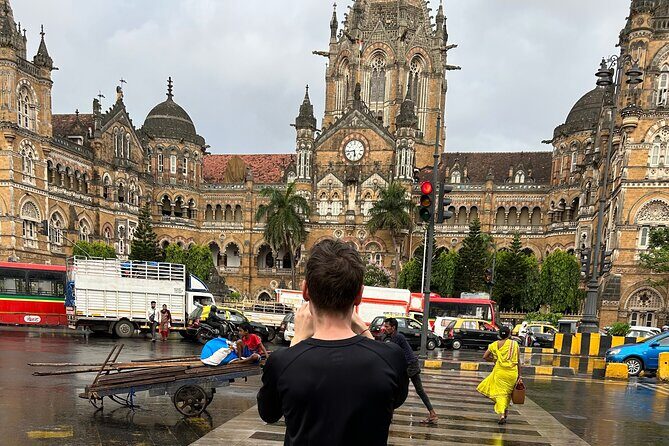
- Private guide attention for a true Q&A experience, not just a bus ride
- Ticket-included museums and viewpoints at key stops like Mani Bhavan and Malabar Hill
- Sassoon Dock and Dhobi Ghat show Mumbai’s everyday rhythms, not just monuments
- Four-hour pacing is ideal when you’re short on time and want the main story beats
- Pickup offered plus a mobile ticket to keep the day smooth
- Guides like Ali and Altaf are mentioned by name, and they focus on managing Mumbai’s real-world logistics
Why Mumbai’s history is easiest in four hours
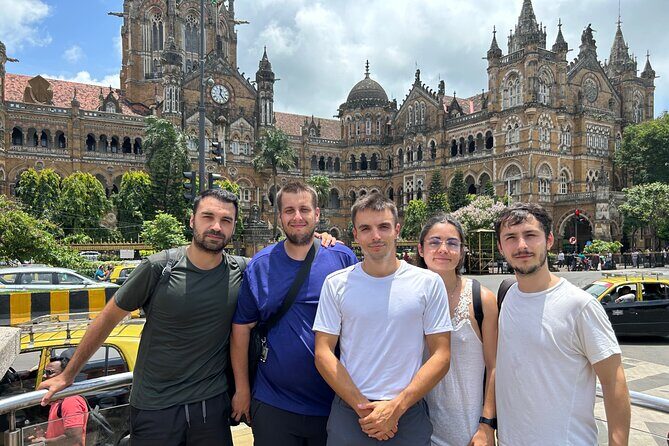
Mumbai is a city of contrasts—old and new living side by side, big money and everyday labor visible within the same neighborhoods. The tricky part is that getting context usually takes time, and time is what most short trips don’t have.
This tour’s main value is that it compresses the big themes into a manageable window. You’ll hit Gandhi’s personal chapter of India’s freedom struggle at Mani Bhavan, then move through South Mumbai where colonial-era streets and modern finance sit close together. After that, you shift from political history to daily life with Sassoon Dock and Dhobi Ghat, and you finish at Crawford Market, one of the city’s well-known places to see commerce up close.
If you’re the type who hates standing around guessing what matters, this format is made for you. With a private guide, you’re not stuck reading between the lines—you get the line directly.
You can also read our reviews of more boat tours in Mumbai


Pickup, mobile ticket, and the real-world flow of the day
On paper, this sounds simple: private tour, pickup offered, mobile ticket, about 4 hours. In practice, that setup matters in Mumbai. Roads, crowds, and route changes are part of the day, and having someone manage the movement helps you spend your attention where it belongs—on the sights.
The experience is also set up as a private activity, meaning it’s just your group. That’s a big deal for comfort and timing. If your group moves slower, you’re not stuck with a loud script and a hard headcount.
A couple of practical notes to know:
- The tour lists a total weight per passenger of 265 lbs, so if that’s relevant for your group, it’s worth checking before booking.
- It’s noted as near public transportation, which can help if you’re arriving on your own and want easier options for getting to the meeting point area.
- Reviews mention guides arranging a car and driver to handle Mumbai road chaos, which is exactly the kind of friction you want reduced.
Mani Bhavan Gandhi Museum: start with Gandhi’s Mumbai
Your first stop is Mani Bhavan Gandhi Museum. This place matters because it’s not an abstract Gandhi statue story. The museum is tied to Gandhi’s residence in Mumbai from 1917 to 1934, when many aspects of the freedom struggle took shape.
Even with a short visit—about 15 minutes with admission included—you’ll get the key idea: Gandhi wasn’t only a public figure. He had a base, a routine, and a place where political work was organized. That makes the rest of the day’s history easier to understand. You’re seeing Mumbai, yes—but you’re also seeing how the freedom movement looked from inside the city.
What I like about this stop: the entry is included and the timing is realistic. You get the foundation without losing your afternoon to a long museum crawl.
Possible drawback: 15 minutes is not enough for deep reading of every display. If you’re the slow, long-museum type, you may want to treat this as orientation and come back later on your own.
South Mumbai: the old empire vibe meets today’s power
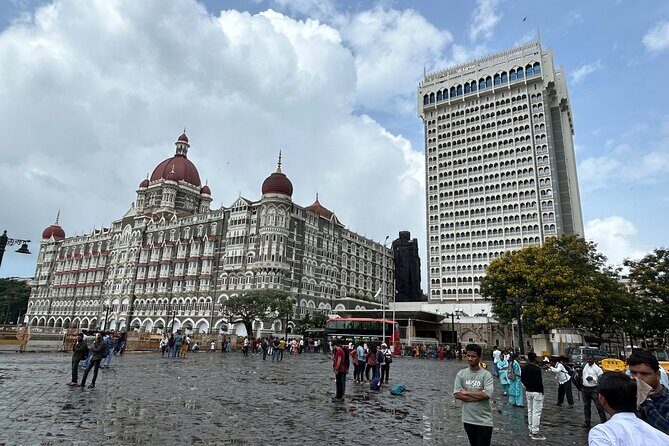
Next up is South Mumbai, often called SoBo. This district is described as the historical and financial heart of Mumbai, which tells you two things right away: you’ll see old structures and you’ll see modern business energy.
Your time here is about 1 hour, and entry is free. That’s helpful because it keeps the budget simpler and lets you focus on street-level impressions: colonial-era architecture mixing with modern skyscrapers, plus the daily life that fills markets and sidewalks.
This is a good section of the tour for “connect-the-dots” thinking. Once you’ve seen Gandhi’s foundation at Mani Bhavan, South Mumbai helps explain the city’s other big story: the rise of Mumbai as a major commercial center. Even if you don’t remember every building name, you’ll feel the shift in scale—then you’ll understand why the waterfront and markets that follow are such a core part of the city.
Tip for making the most of this hour: ask your guide what you should focus on. In South Mumbai, a guide can point out which buildings are worth noticing and how the streets connect to the rest of the day.
Malabar Hill: sea views and a different kind of Mumbai
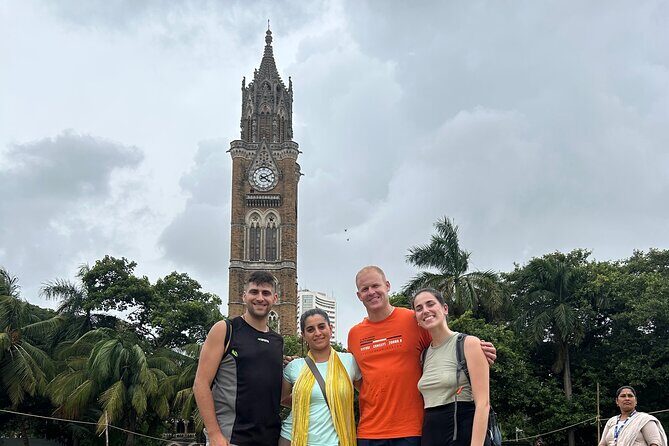
Then you move to Malabar Hill, a well-known upscale residential area in South Mumbai. The description highlights three things that matter for your visit: greenery, panoramic views of the Arabian Sea, and the fact that prominent personalities are associated with the area.
Your stop is about 30 minutes, and admission is included. With a viewpoint-focused agenda, you’re not paying to stand inside a building—you’re paying (indirectly) for time with context and a guide who can point out what you’re seeing from this vantage.
This is also where the tour’s balance shows. After market and dock imagery, Malabar Hill offers a pause—literally. It gives you space to look outward and understand how geography shapes the city. Sea views aren’t just scenic; they help you grasp why Mumbai’s waterfront became the city’s engine.
Possible drawback: if your group prefers food markets and street life over scenic viewpoints, this can feel like a break from the action. Still, the panoramic aspect is exactly the kind of stop that makes a short history tour feel complete.
You can also read our reviews of more historical tours in Mumbai






Sassoon Dock and Dhobi Ghat: where Mumbai works
Two of the most memorable stops in the tour are tied to labor and daily routines: Sassoon Dock and Dhobi Ghat.
Sassoon Dock: an old fish-market hub
Sassoon Dock is described as one of the oldest and most busy fish markets in Mumbai, in the Colaba area of South Mumbai. It has been a vital hub for the fishing community since the late 19th century.
Your time here is about 30 minutes, with admission included. That short window is perfect because you’re not trying to do everything—you’re trying to see how the city feeds itself and how trade is organized at ground level.
This stop also adds texture to your day. Earlier, you were in museums and city districts. Here, the story becomes practical: commerce, work schedules, and the visible teamwork of a dock.
Dhobi Ghat: an open-air laundry scene
After that, you visit Dhobi Ghat (also called Mahalaxmi Dhobi Ghat). This is described as an iconic open-air laundry facility and one of the largest and oldest of its kind in the world.
Admission is free, and your visit is about 15 minutes. That brevity is intentional. This isn’t the kind of place where you need an hour to understand the concept—you need time to observe and learn what you’re looking at.
What I like about these two stops together: they anchor the tour in lived reality. Gandhi’s era shows political organizing; South Mumbai shows power and finance; Sassoon Dock and Dhobi Ghat show how the city’s systems run day to day.
Crawford Market: plan for your own spending
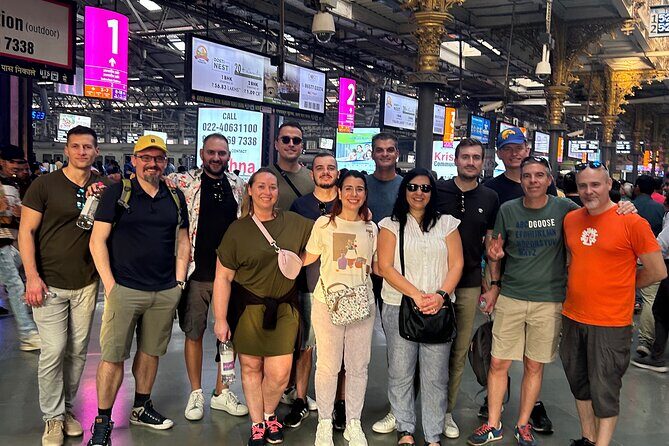
Your next stop is Crawford Market, also known as Mahatma Jyotiba Phule Mandai. It’s a historic market where you’ll find many kinds of goods—fruits and vegetables are mentioned in the description, plus more shopping variety around the stalls.
Your time here is about 30 minutes, and admission is not included.
This matters because markets are often a “pay-as-you-go” experience. Even if you don’t plan to buy much, you might want to check prices or pick up small items. And if you want to go inside particular areas where entry might apply, you’ll need to budget.
How to enjoy this stop without getting overwhelmed: treat it like a photo-and-people-watching walk with a mission. Ask your guide what’s worth seeing in the market and what you can safely ignore.
Coffee and timing: included comfort, plus a small food note
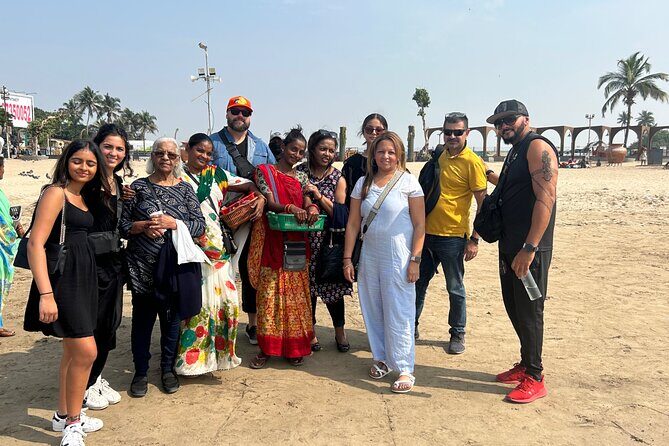
The tour includes coffee and/or tea. That’s a nice touch in a city where you may be walking, looking, and taking in a lot of sensory detail.
Snacks are not included. Since the schedule spreads across several neighborhoods and your stops are time-boxed, I’d plan to either eat before you meet up or bring a small snack if your body runs on a predictable schedule. It’s not about being fussy; it’s about not letting hunger cut your attention.
Also, the experience is noted as requiring good weather. If the forecast looks rough, that can affect your day’s comfort, especially at open-air stops.
Price and value: what you’re really paying for
At $135 per person, this is not the cheapest way to tour Mumbai. The value comes from what’s bundled:
- A private guide giving you focused attention and story context
- Pickup offered and a plan to move efficiently through key areas
- Included entry at several major stops (Mani Bhavan and Malabar Hill are explicitly listed as included)
- A 4-hour structure that works when you don’t have time for longer independent sightseeing
If you were trying to assemble this on your own, you’d spend time figuring out routes, buying tickets, and deciding what’s worth your limited energy. This tour charges for the trade-off: you pay to reduce friction and speed up understanding.
One more value signal: it’s a popular booking, commonly made about 18 days in advance on average. That suggests the timing works for typical itineraries, especially when people are building a short Mumbai day around cruise or airport schedules.
Who should book this tour, and who should pass
This tour is a strong fit if:
- You want a clear, curated route without hunting for context
- You’re interested in how Mumbai’s story connects politics, city growth, and everyday work
- You like a guide who can answer questions and keep the day moving
It might be less ideal if:
- You want to spend long hours in museums or markets without time limits
- You dislike viewpoints and prefer constant street-level browsing
- You’re traveling with a group that needs very flexible pacing for breaks
Should you book this Mumbai historical tour?
I’d book it if your goal is simple: see the major highlights of South Mumbai’s story arc in about four hours, with a guide to connect the dots. The ticket-included stops at Mani Bhavan and Malabar Hill, plus practical window-dressing of Sassoon Dock and Dhobi Ghat, make this more than a list of landmarks. It’s a guided storyline.
I’d hesitate only if your group is tightly budgeted and you hate the idea of extra costs at places like Crawford Market where entry isn’t included. Also, if you know your schedule doesn’t allow for good weather, you’ll want to think twice since the experience expects decent conditions.
If you want a short, well-organized taste of Mumbai history and daily life, this is the kind of tour that helps you get your bearings fast.
FAQ
How long is the Mumbai historical tour?
It lasts about 4 hours.
Is this tour private?
Yes. It’s a private tour/activity, meaning only your group participates.
Does the tour include pickup and a mobile ticket?
Pickup is offered, and you receive a mobile ticket.
Are museum or site entry tickets included?
Admission tickets are included for Mani Bhavan Gandhi Museum and Malabar Hill. Crawford Market is listed as admission not included.
Is coffee or tea included?
Yes. Coffee and/or tea are included.
What is the price per person?
The price is $135.00 per person.