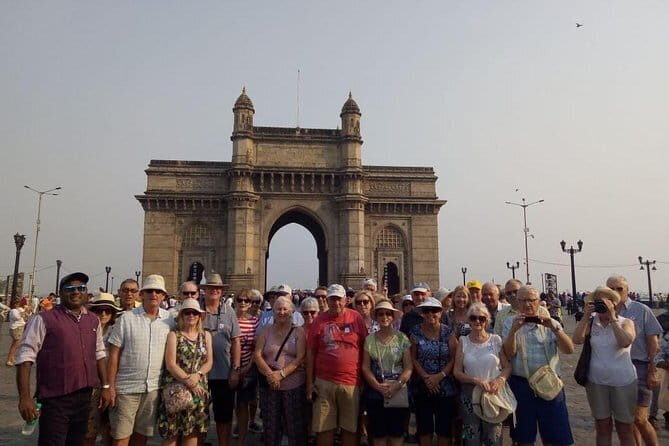
REVIEW · MUMBAI
Dharavi Slum & Dhobi Ghat Mumbai: Private Guided Tour
Book on Viator →Operated by Explore Mumbai Tours · Bookable on Viator
Two worlds of Mumbai work side by side. This private guided tour pairs Dhobi Ghat’s open-air, manual laundry scene with a Dharavi walk that focuses on real industries—pottery, leatherwork, recycling, and textiles—so you get past the stereotypes. I especially like the photo-friendly vantage point at Dhobi Ghat, and I like how the Dharavi guide keeps things respectful and practical, often with strong question-and-answer energy from guides like Priti and Shruti.
One thing to consider: you’re outdoors for part of the time and walking through busy lanes, so comfort matters more than fashion—wear shoes you can move in.
In This Review
- Key things to know before you go
- Dhobi Ghat’s open-air laundry views (and why they’re worth your time)
- Dharavi as a working map of Mumbai’s economy
- What your guide’s style changes (Priti, Shruti, Max, and Ruba)
- Timing, meeting points, and how to plan your day
- Price and value: why $17.57 can make sense here
- Photography: get the angles without turning it into a show
- Who should book this tour (and who might skip it)
- Should you book Dharavi Slum & Dhobi Ghat?
- FAQ
- How long is the tour?
- Is this a private tour or a group tour?
- What’s included in the price?
- Do I need to pay admission tickets?
- Where do we meet for the tour?
- Where does the tour end?
- Will I have time to take photos at Dhobi Ghat?
- Is there a lot of walking?
- What is the cancellation policy?
Key things to know before you go
- Dhobi Ghat without the chaos of crowds inside: you get a clear view from a designated vantage point, plus context on how it runs.
- Dharavi as an enterprise, not a shock stop: the focus stays on how people earn a living through small-scale industry.
- English-speaking guidance that answers questions: guides you may hear about include Priti, Shruti, Max, and Ruba, known for being prompt and informative.
- Best-use photography positioning: the tour is built around getting strong angles at Dhobi Ghat.
- Private, small-group feel with essentials handled: bottled water and train tickets are included, plus mobile ticket delivery.
Dhobi Ghat’s open-air laundry views (and why they’re worth your time)
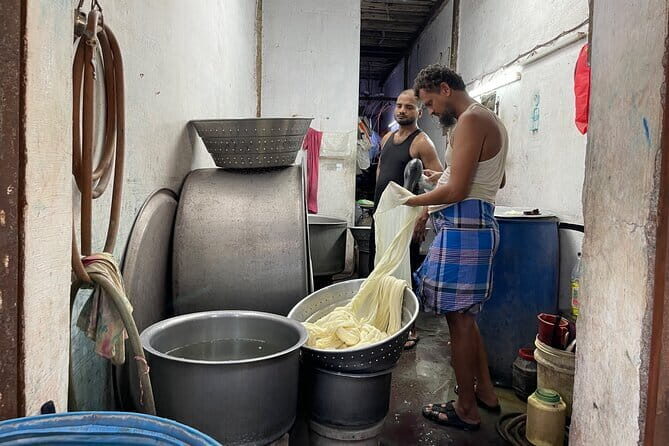
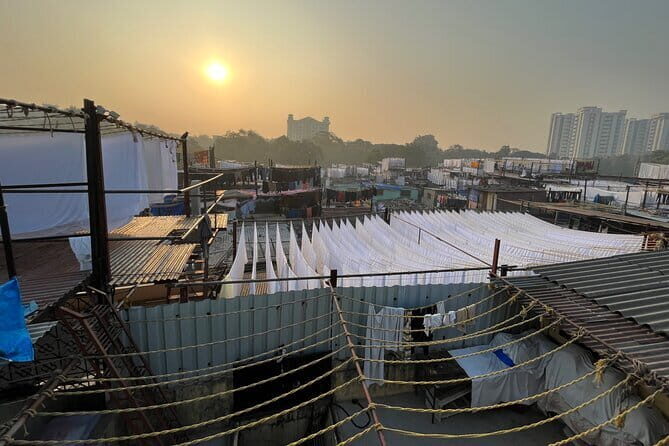
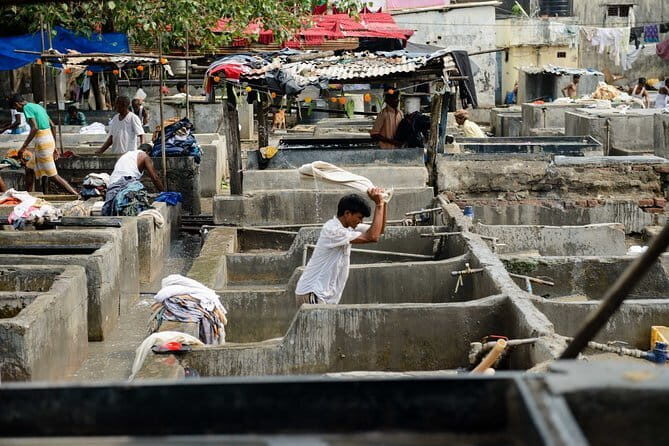
Dhobi Ghat is one of those Mumbai scenes you’ve probably seen in photos. Then you arrive and realize it’s not a static landmark—it’s a working system. Here, Mumbai’s dhobis (traditional washermen) have manually washed clothes for more than a century, serving hotels, hospitals, and households across the city. On this tour, you don’t go inside. Instead, you get a designated view from outside so you can take in the scale and the rhythm without turning it into a spectacle.
The practical win is how focused the stop is. You’ll spend about 15 minutes at Dhobi Ghat with an expert guide explaining daily routines and the history and significance of the place. That’s enough time to understand what you’re seeing: lots of movement, clothes drying in layers, and the constant cycle of wash, dry, and press. It’s also long enough to take photos without feeling rushed.
A quick mindset shift helps here. If you treat Dhobi Ghat like a museum, you’ll miss what matters. Treat it like a workplace. Watch the workflow. Notice the organization within the apparent chaos. When you do that, the place becomes easier to process—and your photos come out better because you’re capturing patterns, not just people.
You can also read our reviews of more guided tours in Mumbai


Dharavi as a working map of Mumbai’s economy
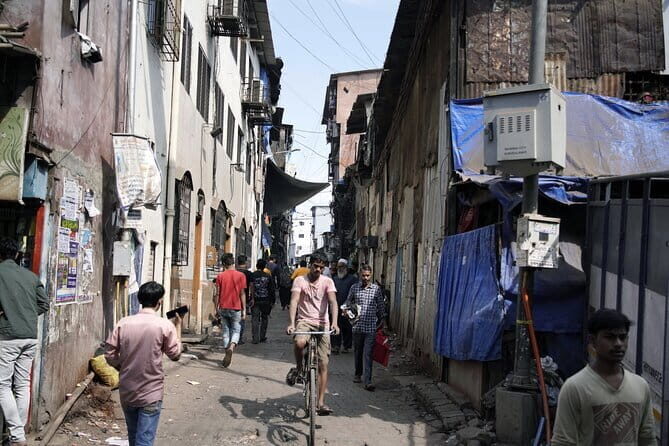
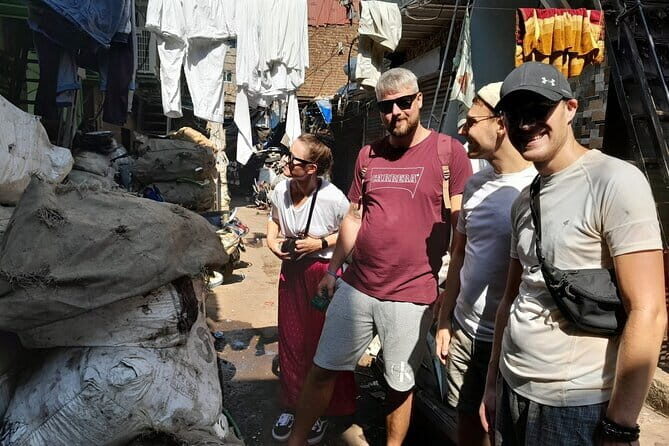
The Dharavi portion is where this tour earns its keep. The message is simple: Dharavi isn’t only about poverty in a headline sense. It’s also a working hub of small-scale industries. As you walk through the lanes, your guide explains the history, the economy, and the community spirit behind the businesses that power day-to-day life.
This is a walking experience, about two hours, and the lanes are narrow. That means you’ll need to go slow and stay aware of foot traffic. The guide also helps you frame what you’re seeing so you don’t accidentally turn the visit into a pity parade or a curiosity hunt.
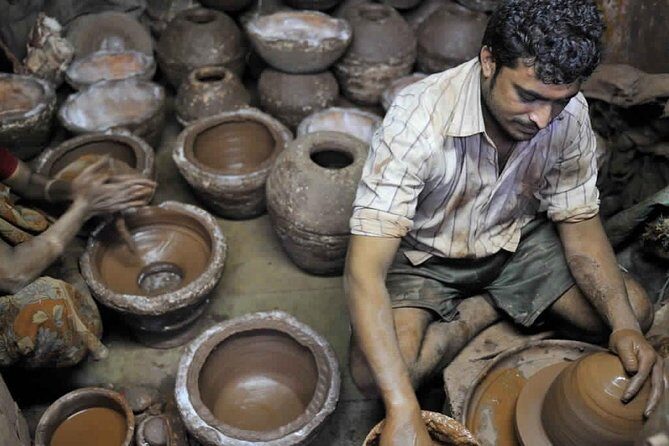
What makes the stop especially worthwhile is the industry focus. You’ll see and learn about work linked to pottery, leatherwork, recycling, and textile production. That gives you something concrete to connect to. Instead of leaving with a vague sense of Dharavi as a single label, you can leave with a clearer picture of how the neighborhood operates—how skills, materials, and production link together.
You’ll also interact with locals and see businesses in action. That’s where a respectful guide matters. The goal isn’t to stare. It’s to understand. With a good guide, you’ll get explanations that help you read the place like a system: supply, labor, craft, and recycling cycles that keep things moving.
What your guide’s style changes (Priti, Shruti, Max, and Ruba)
A “private guided tour” sounds like a checkbox. In reality, the guide is the difference between a tour that just shows and a tour that teaches you how to look.
This tour is run with professional English-speaking guides, and the quality shows in how they handle questions and pacing. Names that come up with standout service include Priti and Shruti—people mention them as prompt, friendly, and very informative. Other guide names connected with great experiences include Max and Ruba, both praised for attention to requests and for giving real insight into daily life.
So here’s the practical advice: come with questions. Not the sensational kind. Ask about how laundry and industry work, how residents make livelihoods, what changes over time, or what surprised the guide most when they started guiding. If your guide has a background in explaining complex local life clearly, you’ll feel the benefit fast.
Also, because it’s private, you can keep the tone respectful and personal. You’re not stuck listening to someone else’s pace while you try to understand your own surroundings.
Timing, meeting points, and how to plan your day
The full tour runs about 3 hours. Your schedule is built around two short, focused blocks:
- Dhobi Ghat: about 15 minutes, with a vantage point and guide explanation
- Dharavi: about 2 hours of walking and discussion
That timing structure is helpful if you’re trying to fit Mumbai sights into a packed day. It’s not a half-day commitment, and it’s not a rushed sprint either. You get enough time at Dharavi to understand the “enterprise” angle, while Dhobi Ghat stays short and purposeful.
For logistics, you’ll start at Third Wave Coffee (Tip Road, Unit 58, Ground floor, Ram Mahal, Senapati Bapat Marg, Marinagar Colony, Station, Mahim, Mumbai, Maharashtra 400016, India). Your tour ends at Dhobi Ghat (Shanti Nagar, Lower Parel, Mumbai, Maharashtra, India). From there, the tour guide concludes your visit and it’s easy to head back via Uber or train.
A small planning tip: set aside a little mental energy for the change in environments. Dhobi Ghat is active and focused on laundry. Dharavi is a denser neighborhood with industry. If you expect it to feel like the same kind of “sightseeing,” you’ll get frustrated. If you expect two different kinds of working life, you’ll enjoy the contrast.
Price and value: why $17.57 can make sense here
The price is listed as $17.57 per person, which is strikingly low for a private guided experience. The value comes from what’s included and what’s excluded.
Included basics you can count on:
- bottled water
- train tickets
- a professional English-speaking guide
- mobile ticket
- admission is free for the stops listed as ticket-free
You’re also getting the structure of the tour—short time at Dhobi Ghat with the right vantage point, then two hours with a guide built for explaining Dharavi’s industries and community context.
One consideration: because Dhobi Ghat is a viewing stop (not an inside visit), you shouldn’t expect a guided walkthrough inside buildings. It’s about seeing the working laundry operation clearly and learning what’s behind it.
Still, if you want a guided, respectful approach that connects Dhobi Ghat and Dharavi to the way Mumbai functions day to day, the cost-to-hours ratio works out well—especially with transport tickets and bottled water taken care of.
You can also read our reviews of more private tours in Mumbai





Photography: get the angles without turning it into a show
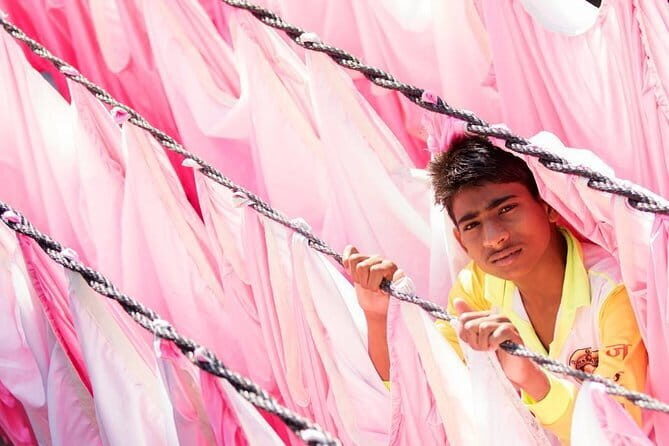
Dhobi Ghat is the easier photo stop. The tour specifically provides exclusive vantage points for the best photography, which means you’re not wandering blindly hoping you’ll find the right angle. You’ll be guided to a clear view where you can capture the scale of drying racks and the workflow of laundry without blocking people.
For Dharavi photography, the tour doesn’t promise any specific filming permissions or interior access. So treat cameras as respectful tools, not trophies. Keep your focus on understanding: photographs should help you remember what you learned, not replace the learning itself.
In both places, think about timing. Dhobi Ghat runs continuously. Dharavi moves continuously. The best photos usually happen when you’re patient and paying attention to the “how things work” details your guide explains.
Who should book this tour (and who might skip it)
This tour is a strong fit if you:
- want an English-speaking guide who explains what you’re seeing in plain terms
- like understanding city life through work and industries
- appreciate a respectful approach over shock-value sightseeing
- have about three hours and want a meaningful use of it
You might want to skip or adjust your expectations if you’re looking for a fully indoor experience or a slow, relaxed stroll. This tour includes walking in Dharavi and involves outdoor viewing at Dhobi Ghat.
Also, it’s not presented as a one-size-fits-all lifestyle fantasy. It’s a working-city tour, so you’ll get best results when you travel with flexibility and a little curiosity for how communities keep daily systems running.
Should you book Dharavi Slum & Dhobi Ghat?
I’d book it if you want Mumbai that feels real and connected—laundry as a living operation, and Dharavi as a neighborhood of trades and economic activity rather than a single story. The biggest reasons to choose this format are the short, well-explained Dhobi Ghat viewing and the Dharavi focus on industry and community context. With guides like Priti or Shruti called out for being particularly informative, you’re likely to leave with a clearer understanding instead of just pictures.
If you’re deciding last-minute, my rule is simple: if you can handle walking and prefer learning over gawking, this tour is a good use of time.
FAQ
How long is the tour?
The tour is about 3 hours (approximately).
Is this a private tour or a group tour?
It’s a private tour/activity. Only your group participates.
What’s included in the price?
Bottled water, train tickets, and a professional English-speaking guide are included.
Do I need to pay admission tickets?
Admission tickets are listed as free for the stops included in the tour.
Where do we meet for the tour?
The meeting point is Third Wave Coffee, Tip Road, Unit no.58, Ground, Ram Mahal, Senapati Bapat Marg, Marinagar Colony, Station, Mahim, Mumbai, Maharashtra 400016, India.
Where does the tour end?
The tour ends at Dhobi Ghat, Shanti Nagar, Lower Parel, Mumbai, Maharashtra, India.
Will I have time to take photos at Dhobi Ghat?
Yes. The tour includes designated vantage points meant for the best photography at Dhobi Ghat.
Is there a lot of walking?
There is walking during the Dharavi portion (about 2 hours). It moves through narrow lanes.
What is the cancellation policy?
Free cancellation is available. You can cancel up to 24 hours in advance for a full refund. Changes within 24 hours can’t be accepted, and cancellations inside 24 hours don’t get refunded.