REVIEW · MUMBAI
Banganga Walkeshwar Walking Tour
Book on Viator →Operated by Mumbai Dream Tours · Bookable on Viator
A place where Mumbai’s past still feels lived-in. The Banganga Walkeshwar Walking Tour takes you through Walkeshwar and around Banganga Tank, where daily life, worship, and legends share the same steps. It also strings this local world into a wider first-time look at the city, with an English-speaking guide and private transportation between stops.
I especially like two things: the guide-led detail at the temples and tank area, and the fact that the walk shows how people actually use these spaces. The stories around the 18 surrounding temples and the Deepstambhas pillars make the site easier to understand (and a lot more memorable).
One consideration: there’s no food or drink included, so plan small snacks and water for a 2.5-hour outing, especially if you’re sensitive to walking on steps and in narrow lanes.
In This Review
- Key things that make this tour worth your time
- Walkeshwar and Banganga: why this part of Mumbai feels different
- Stop 1 at Walkeshwar: the 18-temple circuit you can actually follow
- Banganga Tank: the steps that do everything
- The narrow streets around Banganga: temples, homes, and dharamsalas
- Dhobi Ghat in the same walk: open-air laundry and British-built history
- How the tour fits a first-time Mumbai plan
- Price and what you actually get for about $18
- What to expect day-of: tickets, timing, and the pace
- Who this tour suits best (and who might want another option)
- Guides matter here: Ajay, Dhaval, and Sid as examples
- Should you book the Banganga Walkeshwar Walking Tour?
- FAQ
- How long is the Banganga Walkeshwar Walking Tour?
- Where do I meet for the tour?
- Is food included?
- Are there admission tickets to pay?
- How big is the group?
- What is the cancellation policy?
Key things that make this tour worth your time
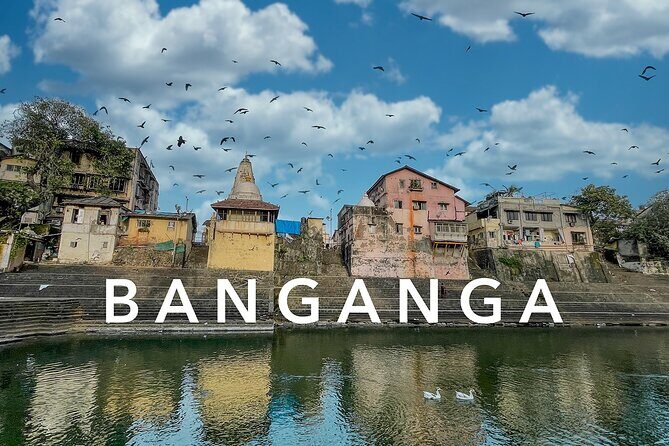
- Banganga Tank steps in everyday use for kids, social time, drying laundry, and puja
- Walkeshwar’s 18 temples plus stories that help you “read” what you’re seeing
- Deepstambhas pillars of light with a local legend connected to saint burials
- Dhobi Ghat’s open-air laundry context, including its British-built history
- Small size (up to 15) with an English-speaking guide and free entry
Walkeshwar and Banganga: why this part of Mumbai feels different
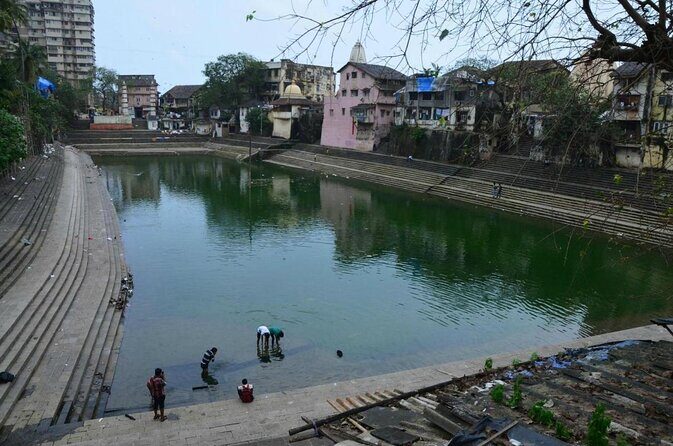
Mumbai gets described as modern and nonstop, but Walkeshwar and Banganga tell another story. Here, the pace slows for a simple reason: the key spaces are religious and communal, not just photo spots. You’re walking through a living neighborhood where people come for worship, conversation, and daily chores.
The tour is built around that kind of observation. You start at Walkeshwar, then move to Banganga and its surrounding streets, with time focused on what makes this area distinctive. Even if you’re short on time, it’s a great way to get your bearings in Mumbai’s spiritual geography without racing from one landmark to the next.
What makes it work is the guide angle. Tours can list places, but this one helps you understand what you’re looking at. That showed up clearly in feedback on guides like Ajay and Sid, who were praised for being well-informed and for turning the walk into something you remember—like a place with an explanation, not just a destination.
You can also read our reviews of more walking tours in Mumbai



Stop 1 at Walkeshwar: the 18-temple circuit you can actually follow
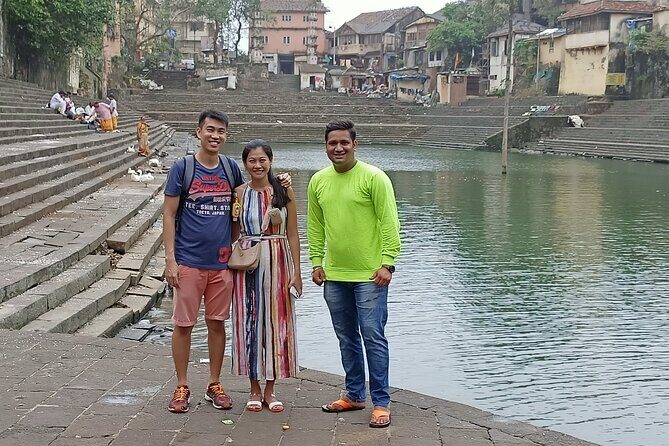
Walkeshwar is where the tour’s storytelling gets practical. You’re not just standing at one temple; you’re guided through an area described as the oldest continually inhabited place in Mumbai. That matters because it sets expectations: this isn’t a “new built” attraction where everything is staged.
One of the most specific things you’ll experience is the 18 temples around the area. The tour’s approach is straightforward: you take a walk to see them, and the guide shares the deeper stories behind what you’re passing. If you like religious architecture, inscriptions, or the little clues in a place’s layout, this kind of guided circuit is ideal because it turns the environment into a map in your head.
You’ll also hear about memorial stones—called pallias—that are described as memorials of dead warriors, and that are worshiped by Gujaratis. That’s the sort of detail that helps you notice what you’d otherwise gloss over. Instead of only seeing stone and ornament, you start asking what it’s for and who it serves.
Two more elements anchor the Walkeshwar portion. First are the Memorial Stones, which link faith to community memory. Second is the way the area connects to Banganga Tank itself, setting up the next stop so you’re not switching topics midstream.
A realistic note: walking between multiple temples means you’ll spend time on foot, and you’ll likely pause often. This tour’s timing reflects that. The Walkeshwar portion is set at about 2 hours, which is long enough to feel like a real neighborhood visit rather than a quick hit.
Banganga Tank: the steps that do everything
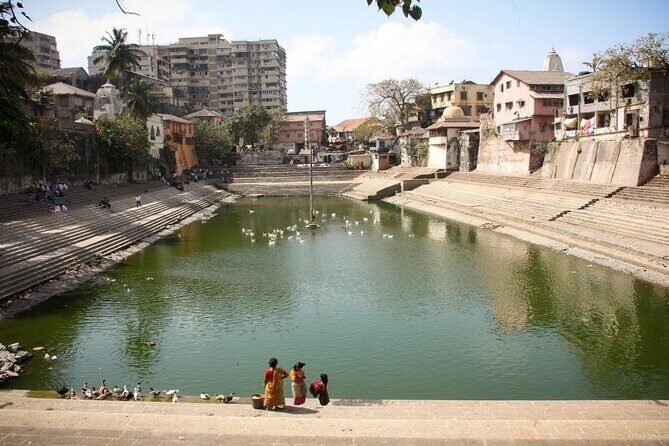
After Walkeshwar, you reach the part that makes people slow down: Banganga Tank and Walkeshwar Temple. The description of the steps is the key—these steps serve many purposes. They’re a play area for children, a social hub for residents, a spot to dry washing, and a place where people perform puja.
That list is more than a neat fact. It tells you how to “read” what’s happening. When you see children around the water, or someone working with laundry, or worship taking place at the edges of daily life, you’ll understand it as the normal rhythm of the place—not a performance for visitors.
Another standout feature is the Deepstambhas—pillars of light that mark the entrance to Banganga Tank and also mark significant temples nearby. What adds local flavor is the legend that a saint is said to be buried under each pillar. Whether you treat that as faith, folklore, or both, it gives you a reason to look closely at the entrance points and the way temples announce themselves.
If you’re the kind of person who likes learning how cultural spaces function—who uses them, how they’re used, and what people believe—this is the heart of the tour. You get “social context” without needing a classroom.
The narrow streets around Banganga: temples, homes, and dharamsalas
From the tank area, you shift into the street around Banganga. This is where the tour becomes less about grand monuments and more about urban texture. The street is described as narrow and lined with temples, homes, and dharamsalas—religious rest houses.
This matters because it explains why Banganga doesn’t feel like an isolated site. It’s woven into residential life. You’re seeing the edges of Mumbai’s faith network, including how people make space for visiting worshippers through these rest houses.
There’s also a more sensitive context the guide is likely to cover. The area is described as home to slum-dwellers who have occupied it for past few decades. That isn’t included as a shock factor; it’s part of the real setting around the tank. If you come with empathy and patience, the tour gives you a better understanding of how sacred spaces exist alongside tough living conditions.
One practical takeaway for you: expect the area to be active and close. Narrow lanes usually mean you’ll move slowly, and you’ll want to keep your attention on where you’re stepping and where others are going. A guide helps keep that smooth.
Dhobi Ghat in the same walk: open-air laundry and British-built history
The second major stop is Banganga moving toward Dhobi Ghat, described as the second largest laundry in Mumbai. Here, you see open air laundry that was built by the British.
Even if you’re not a “laundry person,” this works as a cultural snapshot. Dhobi Ghat turns the idea of labor into something visible and time-bound. You’ll also likely notice how faith and daily life keep sharing space across the tour: worship steps earlier, work and washing here.
This segment is set at about 30 minutes. That short timing is a plus if your schedule is tight. It also means you can observe without getting exhausted or overloaded.
One thing I appreciate about this design: the tour doesn’t treat Dhobi Ghat like a generic factory view. The guide’s job is to provide context so you understand what you’re seeing—especially the historical note that it was British-built, which gives visitors a start on how colonial-era infrastructure shaped everyday city routines.




How the tour fits a first-time Mumbai plan
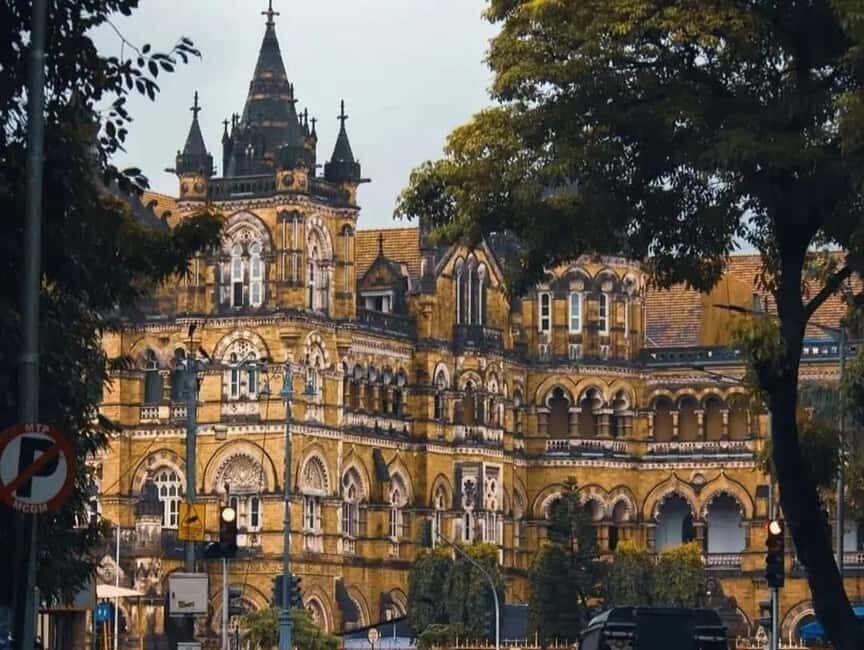
This tour is built for people who want an introduction to Mumbai that goes beyond one famous viewpoint. The overview emphasizes seeing iconic landmarks like Victoria Terminus, plus commentary tied to places such as the Gateway of India, Bombay High Court, and Hanging Gardens.
Even if your feet are focused on Walkeshwar and Banganga, the wider city framing matters. It helps you connect what you’re learning in a smaller neighborhood to the bigger map of Mumbai. If you’re arriving with limited time, that combination makes sense: a neighborhood walk where you learn to look, plus driving/commentary where you get context about the larger city.
Guides also affect how well that context lands. In one set of feedback, Dhaval was praised for being ready when people arrived and for driving around popular tourist spots with care and a smile, turning logistics into part of the experience instead of an inconvenience. That kind of hosting can matter a lot in Mumbai, where traffic and pacing can make or break a day.
The tour ends back at the meeting point, which helps you keep your plans tidy afterward.
Price and what you actually get for about $18

At $18.13 per person for roughly 2 hours 30 minutes, this is priced like a focused, local experience rather than an all-day production. Value comes from two places: a guide who explains details at the Walkeshwar/Banganga core, and an experience that includes entry points marked as admission ticket free for the covered stops.
That “admission ticket free” line matters. A lot of guided walks look cheap until you realize you’re paying entry fees along the way. Here, at least the itinerary’s temple-and-tank segments are set up as ticket-free, which keeps the total cost predictable.
You also get an English-speaking guide, plus private transportation between attractions is part of the overall concept. And the tour is small, with a maximum of 15 travelers. Small size generally means fewer bottlenecks when you pause for explanations.
One more timing angle: the average booking window is about 40 days in advance. That’s a sign this walk has a steady demand, likely from people who specifically want older Mumbai and the religious-city feel. If you’re traveling during a busy season, it’s wise to lock it in earlier rather than later.
What to expect day-of: tickets, timing, and the pace
You’ll use a mobile ticket. Confirmation is provided at the time of booking, so you should plan on having that on your phone. The experience begins at Hotel Banganga Arogya Bhavan, Walkeshwar (Malabar Hill), Mumbai 400006, specifically listed at Shop No. 91, Road, Shubash Chowk, Walkeshwar, Malabar Hill, Mumbai, Maharashtra, India.
From a pacing standpoint, the structure is clear:
- Walkeshwar: about 2 hours
- Banganga/Dhobi Ghat area: about 30 minutes
That adds up to the whole experience length listed at about 2 hours 30 minutes. Since food and drink aren’t included, I’d treat this like a walking window where you eat before or after, not during.
Also, bring realistic expectations. This is a neighborhood walk around active religious spaces and a working laundry area. That means the flow can be affected by worship schedules and everyday activity. The guide’s job is to keep you oriented and help you see what’s happening without turning it into a rushed checklist.
Who this tour suits best (and who might want another option)
This tour fits you if you like:
- guided interpretation of temples and place meaning
- walking through older, still-used parts of the city
- learning how worship and daily life share the same physical space
It’s also a strong fit for first-time Mumbai visitors who want more than icons. You get the chance to hear why these places matter, not just where they are.
If you’re the type who wants a lot of museum-style indoor time or fully controlled environments, this might feel more “real-world” than you prefer. The walk involves narrow streets and steps by the tank, plus open-air areas, so it’s not the best choice if you’re looking for a fully sheltered experience.
Guides matter here: Ajay, Dhaval, and Sid as examples
One reason this tour performs well is guide quality. Ajay was highlighted as well informed and passionate, with detailed explanations that even helped someone who had lived in Mumbai for over 20 years understand Walkeshwar/Banganga better.
Dhaval was praised for showing up ready and for careful driving around major tourist spots while keeping things friendly and smooth. Sid was also singled out for giving strong information and telling great stories, including when the route discussed slum and market context.
You won’t control which guide you get, but these names show the kind of hosting standard this tour seems to aim for: explanation, story, and attention to how you experience the places.
Should you book the Banganga Walkeshwar Walking Tour?
If your goal is to understand Mumbai at street level—religion, neighborhood life, and a working city corner—yes, I think you should consider booking. The price is reasonable for guided time, and the ticket-free nature of the covered stops keeps it financially straightforward.
Book it especially if:
- you like walking tours where the guide explains what you’re seeing
- you want Walkeshwar/Banganga as a focused introduction to older Mumbai
- you’re okay with active religious and working environments
Skip it if you’re strictly seeking only the biggest skyline-style attractions or you’d rather have food included during the tour. In this one, you’re paying for a guided look at places where daily routines matter. Plan your snacks and let the guide do what they’re best at: turning a small area into a clear, meaningful experience.
FAQ
How long is the Banganga Walkeshwar Walking Tour?
The tour runs about 2 hours 30 minutes in total, with the Walkeshwar portion about 2 hours and the Banganga/Dhobi Ghat portion about 30 minutes.
Where do I meet for the tour?
Meet at Hotel Banganga Arogya Bhavan, Shop No. 91, Road, Shubash Chowk, Walkeshwar, Malabar Hill, Mumbai, Maharashtra 400006, India.
Is food included?
No. Food and drink are not included, so you’ll want to plan snacks and water on your own.
Are there admission tickets to pay?
The itinerary lists admission ticket free for both the Walkeshwar stop and the Banganga stop.
How big is the group?
The tour has a maximum of 15 travelers.
What is the cancellation policy?
You can cancel for a full refund up to 24 hours before the experience’s start time. If you cancel less than 24 hours before, the amount paid is not refunded.