REVIEW · MUMBAI
Private Mumbai Sightseeing Tour
Book on Viator →Operated by Mystical Mumbai · Bookable on Viator
Four hours is all you need to get your bearings. This private Mumbai sightseeing tour strings together major landmarks in the south city with a flexible plan, so you can steer the day toward what you care about most. I like the air-conditioned transport with hotel/port/train pickup, and I also like the stop-by-stop guidance from a professional art historian guide. One thing to keep in mind: the schedule is tight, so you may not have time for more than quick looks at some big-ticket places (like inside Chhatrapati Shivaji Terminus).
You’ll also get the best part of private touring in a place like Mumbai: less waiting around, fewer awkward gaps between sites, and a guide who can adjust on the fly if crowds or traffic shift your timing. Still, if you’re sensitive to sound or comfort, make sure you’re in a vehicle where you can clearly hear your guide, since one review flagged that an uncomfortable ride and weak audio can ruin the experience.
If you want a half-day sampler that hits the iconic stuff without feeling like a rush job, this tour is built for that.
In This Review
- Key highlights at a glance
- A Half-Day Plan That Actually Connects the Dots
- Price and value check: $90 per person for a focused route
- Pickup, comfort, and hearing your guide in real traffic
- Banganga Tank: a quiet start at a 12th-century tank
- Gateway of India and the Taj Mahal Palace Hotel photo moment
- Mani Bhavan Gandhi Museum: a small stop with big meaning
- Haji Ali and a Jain Temple: faith stops that broaden the city
- Chhatrapati Shivaji Terminus (CST): UNESCO rail drama
- Marine Drive and Rajabai Clock Tower: colonial silhouettes and city views
- Kamala Nehru Park: a break with a quirky boot-shaped landmark
- Dhobi Ghat: the world’s outdoor laundry in action
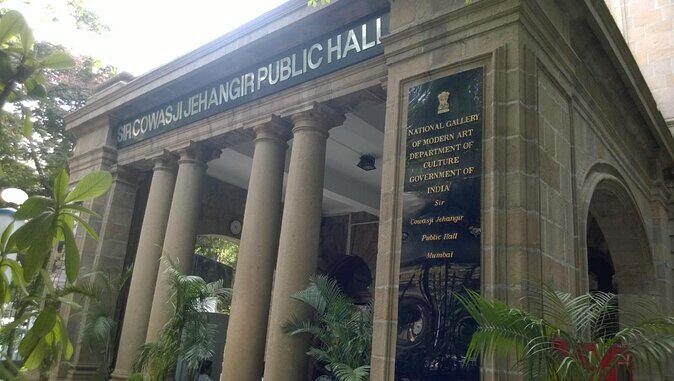
- National Gallery of Modern Art and David Sassoon Library: art and architecture stops
- Taj Mahal Palace again: finishing with a heritage five-star landmark
- Who this private tour is best for
- Should you book this Private Mumbai Sightseeing Tour?
- FAQ
- How long is the private Mumbai sightseeing tour?
- What does the tour cost?
- Is pickup and drop-off included?
- What’s included in the tour price?
- Are admission tickets included?
- What are the main stops you’ll visit?
- Is food included?
- Is this tour private?
- Is the itinerary flexible?
- Can I cancel for a full refund?
Key highlights at a glance
- Hotel, port, or train-station pickup and drop-off so you don’t waste time figuring out logistics
- Private air-conditioned vehicle to move between far-apart sights in the south city
- Professional art historian guide guiding your stops with context, not just names
- UNESCO hit list: Chhatrapati Shivaji Terminus plus the wider architectural ensemble stops
- Gandhi + faith stops in one route: Mani Bhavan, Haji Ali, and a Jain temple
- Dhobi Ghat photo stop at the world’s largest outdoor laundry
A Half-Day Plan That Actually Connects the Dots
Mumbai can feel like a puzzle when you only have a few hours. The city’s big landmarks aren’t clustered neatly in one neighborhood, so you either take on lots of transit on your own or you trust a route designed for short time. This tour is built around the idea of moving efficiently through the southern city while still giving each stop a little meaning.
The flexibility is a real value add. After pickup, your guide sets off with a suggested sequence, then asks you what you want to see. That means you’re not stuck with a rigid script if you’re more interested in religious heritage, architecture, or a single marquee photo stop like the Gateway of India.
The other smart design choice: you’re not just going to one famous monument and calling it done. You’ll sweep through water/temple heritage (Banganga), colonial-era landmarks (Gateway and Rajabai Clock Tower), freedom-era memory (Mani Bhavan), and everyday Mumbai life (Dhobi Ghat).
You can also read our reviews of more private tours in Mumbai


Price and value check: $90 per person for a focused route
At $90 per person for about 4–5 hours, this isn’t a budget street-walk tour. You’re paying for three things that matter in Mumbai: a private setup, a guide who can explain what you’re seeing, and air-conditioned transport that reduces the stress of traffic and navigating.
Here’s how I’d think about the value:
- If you’d otherwise spend money on drivers/taxis plus pay for a guide separately, this price starts to look reasonable.
- A private guide saves time. You get context at each stop, which can turn a quick photo stop into a “now I understand what I’m looking at” moment.
- The itinerary is packed enough to feel productive, but not so many stops that it becomes chaotic (at least on paper).
One caution: because it’s a half-day, most sites are short visits. If you’re the type who wants long, slow museum time or to go deep into complex interiors, you’ll likely wish you had more hours.
Pickup, comfort, and hearing your guide in real traffic
The tour includes pickup and drop-off from your hotel, port, or railway station, and it runs by air-conditioned vehicle. That’s important in Mumbai, where getting from Point A to Point B can eat your limited time fast.
You also get bottled water, plus the comfort factor of not starting your day sweaty and frazzled. And because it’s a private tour, you’re not managing other people’s pace or last-minute restroom breaks for a larger group.
That said, one review flagged a possible problem: if the vehicle feels uncomfortable or the air conditioning makes it hard to hear the guide, the experience can suffer. Before you go, it’s worth being clear with the operator that you want a vehicle where the guide audio is audible—especially if you’re sharing the ride with others who may be sensitive to sound.
Banganga Tank: a quiet start at a 12th-century tank
The day begins at Banganga, an ancient tank whose origins date back to the 12th century. It’s part of the Walkeshwar temple complex in Malabar Hill, so even though the stop is timed around 20 minutes, you’ll see it as more than a pretty water feature.
Why it matters: starting with a water/temple landmark helps you understand Mumbai’s layers. The city didn’t start with skyscrapers and film studios. It has older sacred geography, and tanks like this one connect ritual life and urban space.
What to expect: you’ll get a short look and a sense of how the complex fits into the broader area. The pace is not for lingering, so if you want extra time for photos or reflection, you’ll need to ask your guide at the start whether you can extend it slightly.
Practical tip: wear comfortable, loose clothing. You may be walking near religious spaces where modesty and ease matter.
Gateway of India and the Taj Mahal Palace Hotel photo moment
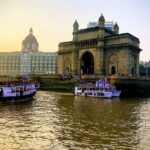
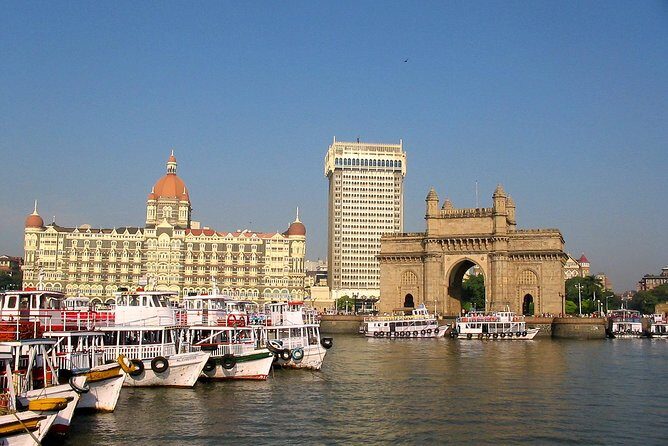
Then comes the famous arch: the Gateway of India. It was built to commemorate the 1911 landing of King George V and Queen-Empress Mary at Apollo Bund. Even if you’ve seen it in photos for years, the real thing hits differently because it’s set in a busy coastal setting rather than a museum context.
You also get a nearby look at the Taj Mahal Palace Hotel, opened in 1903. This is one of those Mumbai “history you can touch” pairs: the gateway memorializing imperial arrival, and the hotel representing the era’s hospitality and wealth.
What to expect in the allotted time: roughly 20 minutes at the Gateway area. That’s enough for a few standout photos and to understand the basic backstory, but it’s not enough for a long wander along the full waterfront.
A smart way to use this stop: do your main photos first, then spend the remaining minutes listening to your guide’s context about the gateway’s role in colonial-era symbolism and how it became a lasting Mumbai landmark.



Mani Bhavan Gandhi Museum: a small stop with big meaning
From the coastal landmark zone, you’ll move to Mani Bhavan Gandhi Museum. This is Gandhi’s former residence in Mumbai, and it served as his headquarters for about 17 years, from 1917 to 1934. The tour includes admission here, which is a nice touch because it turns one stop from “look at it from outside” into a real museum moment.
Why this stop is powerful: it’s a reminder that Mumbai wasn’t just the site of British-era monuments. It was also a place where major political ideas and organizing moved from theory into action.
What to expect: about 25 minutes at the museum. That’s enough to see key exhibits and learn the gist, but you won’t be able to read every panel and take your time like you would in a full museum visit.
If you care about India’s independence story, this is one of the stops I’d prioritize even more than the photo-heavy monuments, because it adds purpose to the route.
Haji Ali and a Jain Temple: faith stops that broaden the city
Next up: Haji Ali. This is a revered Muslim tomb, and people come from across India to pay respects. You’ll get the sense of a living religious site—one with both pilgrimage energy and everyday reverence.
Then there’s a Jain temple stop with intricate stone carvings and a dome painted with zodiac motifs. The zodiac design detail matters because it shows how art and belief are intertwined in architecture. It’s not just decoration; it’s symbolism you can actually see.
Timing here is shorter (about 15 minutes at the Jain temple). So treat these as viewpoint-and-interpretation stops. Your guide’s job is crucial here: you’ll likely understand what you’re seeing faster than if you were on your own.
Consideration: religious sites can have changing rules for visitors depending on the moment and local activity. If you want to move comfortably, bring modesty-friendly clothing (loose, not overly revealing) and be ready to follow guidance on where to stand and what to avoid.
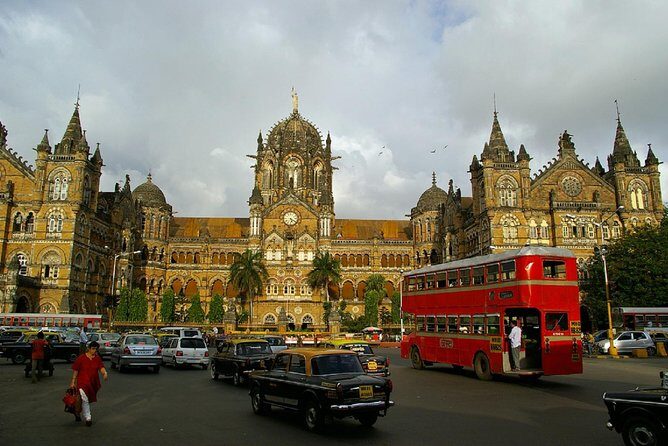
Chhatrapati Shivaji Terminus (CST): UNESCO rail drama
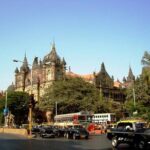
Chhatrapati Shivaji Terminus is a UNESCO World Heritage Site, and the station is known for being a magnificent, bustling place. It’s also famous for appearing in films—because, honestly, it looks like it belongs in a movie.
The best part of this stop on a short schedule: even if you can’t do a long deep-dive, CST gives you that “stop the clock” feeling. It’s architecture plus motion. You’ll pause around 25 minutes and get a guided sense of why it’s UNESCO-worthy and what makes the station such a landmark.
One real drawback to note: this tour is timed, so you might not have the option to go inside or fully explore areas beyond what’s practical in the stop length. If that’s a must for you—if you want to wander every corner—plan to add extra time on another day.
Marine Drive and Rajabai Clock Tower: colonial silhouettes and city views
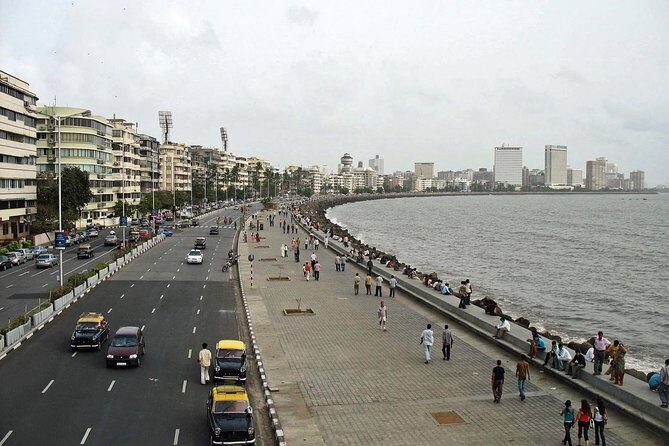
After CST, you’ll drive around Marine Drive, often called the Queens Necklace. This is one of the best “Mumbai skyline” drives because the road hugs the waterfront and gives you an easy way to see how the city turns its face toward the sea.
From there, you’ll see the Rajabai Clock Tower, about 85 meters tall. It’s part of the Victorian and Art Deco Ensemble of Mumbai, which was added to the UNESCO World Heritage list in 2018. That UNESCO connection matters: it’s not random old buildings—it’s a recognized architectural grouping.
Timing: the clock tower stop is short (around 10 minutes). Use it like this: get one good photo angle, then ask your guide what architectural features to look for so you leave with more than a postcard.
Kamala Nehru Park: a break with a quirky boot-shaped landmark
Next is Kamala Nehru Park, a favorite for young and old since it was set up more than 65 years ago. The most distinctive feature is the boot-shaped structure that the park is known for.
Why it’s worth including: it gives you a pause in the middle of monuments and religious sites. Plus, parks in city centers give you a different kind of city view—less architecture close-up, more people-and-lifestyle perspective.
Timing: about 25 minutes. That’s enough to reset, take a breather, and let the day’s intensity level off.
Dhobi Ghat: the world’s outdoor laundry in action
Now for one of Mumbai’s most unusual everyday sights: Dhobi Ghat, described as the world’s largest outdoor laundry. You’ll see row upon row of colorful clothing hung to dry in the sun.
This is one of those experiences that’s hard to capture on a phone camera unless you understand what you’re looking at. Laundry lines here aren’t just background—they’re part of a working system with deep local rhythm.
Timing: about 20 minutes. That should be enough for photos and a guided explanation of how the place functions and why it matters culturally.
Small practical note: this is a photographic stop, but you’ll also want to be respectful. Don’t block work areas and don’t rush. Let your guide set the pace so you can watch what’s happening without turning it into a spectacle.
National Gallery of Modern Art and David Sassoon Library: art and architecture stops
The route also includes stops connected to culture and design, including the National Gallery of Modern Art (opened to the public in 1996) and the David Sassoon Library, a heritage structure in Mumbai. The library idea is attributed to Albert Sassoon.
What makes these stops valuable on a half-day: even if you don’t have time for deep reading, you still get a sense of Mumbai’s cultural institutions beyond film and landmarks. It’s a shift from monuments and faith sites into the world of collections and public architecture.
Because the itinerary timing is short, treat these as quick “see it, notice details, move on” stops—best used for learning a few key points from your guide rather than trying to do everything.
Taj Mahal Palace again: finishing with a heritage five-star landmark
Your day ends with the Taj Mahal Palace Hotel area again (briefly), which is built next to the Gateway of India and is described as a heritage five-star property in the Saracenic Revival style.
Why this finish works: it closes the loop on the coastal colonial-era theme. You start at Gateway of India, you learn the context, and then you return for a final look at the hotel next to it so the whole picture feels complete.
Timing: short, around 10 minutes.
Who this private tour is best for
This tour fits best if you:
- have only 4–5 hours and need to hit key south Mumbai landmarks
- want a private experience with a guide who can explain what you’re seeing
- prefer the comfort of air-conditioned transport over piecing together multiple rides
- care about a mix of landmark architecture and meaningful cultural stops (Gandhi, faith sites, and everyday life)
It’s also a strong choice if you’re on a cruise or short stopover, since the tour includes port pickup and is designed to work even when you’re short on time.
If you’re the type who wants long museum hours, detailed interior exploration, or very slow pacing, you might find the schedule too condensed. In that case, you’d likely want a longer private tour version or a second day focused on one area.
Should you book this Private Mumbai Sightseeing Tour?
I’d book it if your goal is to get the main city story fast without doing heavy research or planning under time pressure. The value is in the combination: private guide + air-conditioned transport + a route that mixes the iconic with the meaningful (Gateway, UNESCO CST, Mani Bhavan, Haji Ali, Dhobi Ghat).
I’d be cautious if:
- you’re sensitive to comfort or sound in the vehicle
- you want to spend lots of time inside major sites (this is a half-day plan)
- you’re expecting a deep museum day rather than a guided overview
Overall, this is the kind of tour that helps you leave Mumbai feeling like you understood what you saw, not just that you collected photos.
FAQ
How long is the private Mumbai sightseeing tour?
It runs for about 4 to 5 hours.
What does the tour cost?
The price is $90.00 per person.
Is pickup and drop-off included?
Yes. Pickup and drop-off are included from your hotel, port, or railway station.
What’s included in the tour price?
Included are a professional art historian guide, hotel/port pickup and drop-off, an air-conditioned vehicle, bottled water, and fuel surcharge.
Are admission tickets included?
Admission is included for Mani Bhavan Gandhi Museum. Other listed stops are shown as free admissions.
What are the main stops you’ll visit?
You’ll see places such as Banganga, Gateway of India, Haji Ali, Mani Bhavan Gandhi Museum, a Jain Temple, Chhatrapati Shivaji Terminus, Rajabai Clock Tower, Kamala Nehru Park, Dhobi Ghat, plus stops connected to the National Gallery of Modern Art and the David Sassoon Library, with a final look at Taj Mahal Palace.
Is food included?
No. Food and drinks are not included.
Is this tour private?
Yes. It’s private, so only your group participates.
Is the itinerary flexible?
Yes. The itinerary is described as flexible, and you can tell your guide what you want to see.
Can I cancel for a full refund?
Free cancellation is available up to 24 hours in advance for a full refund.