REVIEW · MUMBAI
Private Guided Open Jeep Tour in Fort & Colaba
Book on Viator →Operated by M/s Khaki Tours · Bookable on Viator
A jeep ride through old Mumbai hits different. This private open-Jeep safari turns the Fort & Colaba streets into an urban photo walk, with a guide who connects big landmarks to how the city grew. You’ll get wind-in-your-hair views plus stops built for looking closely, not just passing by.
I especially like the photo-first route—you’re moving through classic architecture and civic spaces with plenty of chances to frame shots. The second thing I love is the private format, where you get a host who can shape the pace around your group; one architecture and history specialist named Sagar is specifically called out for the way he brings buildings and stories together.
The main consideration is weather. Because it’s an open Jeep, the tour can be rescheduled in adverse conditions, so plan to keep your day flexible.
In This Review
- The Best Bits at a Glance
- Open Jeep Comfort in Mumbai: Wind, Photos, and Reality
- Your Private Vehicle: What Personal Really Means
- The Start Point That Keeps Things Simple
- Stop-by-Stop: Town Hall to Horniman Circle (Where the Story Begins)
- Kala Ghoda Art District: Turning Architecture into a Photo Walk
- Gateway of India and Oval Maidan: Landmark Energy Without the Crowds-Feeling
- CST Precinct and Crawford Market: Street-Level Texture on Wheels
- Dhobi Talao and DN Road: Where Hidden Details Tend to Live
- Ballard Estate and Hutatma Chowk: A Strong Finish with City-Scale Views
- Why Khaki Tours’ Heritage Mission Fits This Style of Tour
- Price and Value: What $59.26 Buys You in Real Terms
- Best Timing, Weather, and Photo Prep
- Should You Book the Private Open Jeep Tour in Fort & Colaba?
- FAQ
- How long is the Private Guided Open Jeep Tour in Fort & Colaba?
- Where does the tour start and end?
- What areas are covered during the ride?
- Is hotel pickup included?
- How many guests fit in one vehicle on a private booking?
- What happens if the weather is bad?
The Best Bits at a Glance

- Open-Jeep urban safari gives you sky-and-street views that closed vehicles can’t match
- Architecture + history storytelling focused on how Mumbai evolved
- Private group in one vehicle keeps the experience personal and photo-friendly
- Fort & Colaba route hits major landmarks plus street-level districts
- Bottled water included to help you stay comfortable for the full 2.5 hours
- Morning and afternoon times make scheduling easier
Open Jeep Comfort in Mumbai: Wind, Photos, and Reality
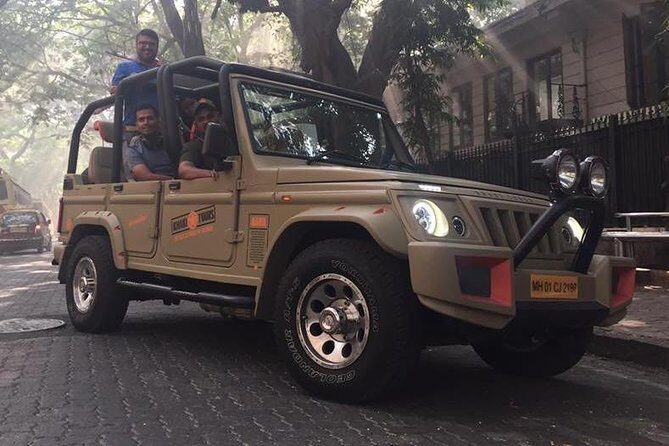
This tour is built around one big idea: see Mumbai like you’re in motion through the city’s layers. The open Jeep format matters more than it sounds. In a normal car, you often end up looking at reflections and windows. Here, you’re looking straight out. That’s what makes the architecture feel more immediate, and it’s also what helps your photos look less like drive-by snapshots.
You’re on the vehicle for about 2 hours 30 minutes, which is long enough to feel like a real “tour,” but short enough that you’re not trapped in transport all day. You also get bottled water, which is a nice practical touch when you’re out taking pictures and listening at the same time.
One practical tip: since this is open-air, plan for the basics you’d use for a photo outing—comfortable clothes, sunglasses if you need them, and a camera strap you can trust. And because smoking and drinking are strictly prohibited, you won’t be dealing with distractions in the vehicle.
You can also read our reviews of more guided tours in Mumbai

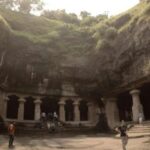
Your Private Vehicle: What Personal Really Means

This is a private tour/activity, so you’re not sharing your guide time with strangers coming from five different hotels. That changes the feel. Your host can keep the story flowing for your group, and you can pause for photos without feeling awkward about it.
The vehicle can accommodate up to 5 guests in addition to the host and the driver. That’s a sweet spot. For a couple or small family, you get a true private ride. For a group up to five, you can split the attention—someone can focus on photos while someone else asks questions—and still keep the tour moving.
There’s also group discount availability, which can make the per-person cost feel more reasonable if you’re traveling with friends. The tour includes all taxes, fees, and handling charges, so you’re not constantly doing surprise math mid-booking.
One more detail that helps you plan: hotel pickup and drop-off are not included. The tour starts back at the meeting point, so your job is simply to get to the start location on time (details below).
The Start Point That Keeps Things Simple
You’ll meet at The Asiatic Society, Mumbai (Town Hall, Fort). The exact meeting address listed is Town Hall, WRJP+P8M, Shahid Bhagat Singh Rd, Fort, Mumbai, Maharashtra 400023, India. The tour ends back at the same meeting point.
If you like easy mornings, this is good news. You’re not trying to track down a changing pickup spot across town. Also, it’s noted as near public transportation, so you can build your day around whatever transit option you’re using.
The organizer recommends arriving at least 10 minutes prior. For a photo-heavy ride, those extra minutes are worth it. You’ll settle your camera, confirm you’re in the right place, and avoid the stress of being rushed.
Stop-by-Stop: Town Hall to Horniman Circle (Where the Story Begins)
The ride starts in the Fort area, hitting Town Hall & Horniman Circle early. This is a smart opening choice. Civic and heritage-linked spaces tend to be good “anchors” because they give you a reference point for what comes next—big façades, formal architecture lines, and the kind of public spaces that help explain why a city grows the way it does.
On this kind of route, your guide’s job is to connect visual clues to the bigger narrative: how Mumbai moved from its earlier identity to what it became later. You’ll notice how the city’s architecture and layout start to feel like a map of evolution, not random landmarks.
A drawback to be aware of with this first segment: early stops are often where you’re most eager to photograph. If you rush it, you can miss the storytelling rhythm. I’d treat the first part as your “set your eyes” moment. Listen first, then shoot once you understand what to look for.
Kala Ghoda Art District: Turning Architecture into a Photo Walk
Next up is Kala Ghoda Art District. This stop works well because it shifts your attention from purely civic forms to a more artistic streetscape feel. Even without getting out for long periods, the open Jeep view helps you notice details you might ignore from street level.
This is a good moment to slow your camera down. Instead of chasing the biggest building in frame, try focusing on how buildings meet the street—corners, edges, and façade textures. That’s where “urban safari” tours tend to pay off: you come away with photos that look like you looked, not like you just clicked.
If you’re the type who loves facts, this is also where a guide explanation can make your photos better. When you understand what the area represents in the city’s transformation, the architecture stops being scenery.
You can also read our reviews of more private tours in Mumbai
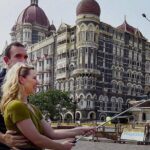

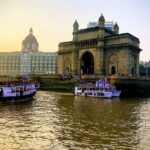
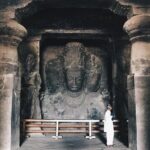
Gateway of India and Oval Maidan: Landmark Energy Without the Crowds-Feeling
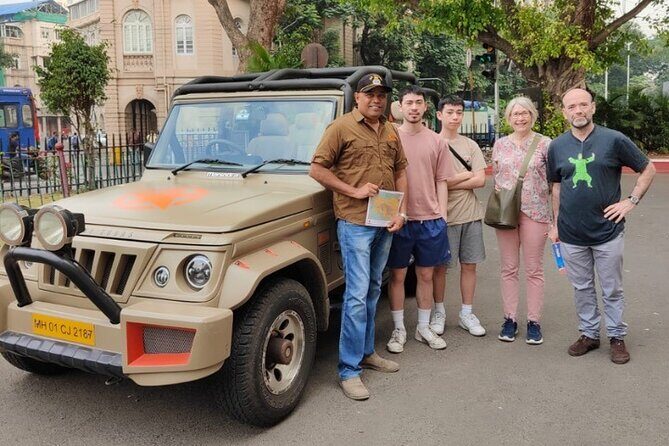
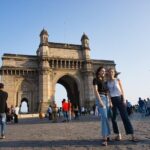
The route includes Gateway of India and Oval Maidan. Even if you’ve seen these names before, the key here is the format. You’re not standing in one place for hours. You’re moving through the view corridor, which helps you get pictures from different angles.
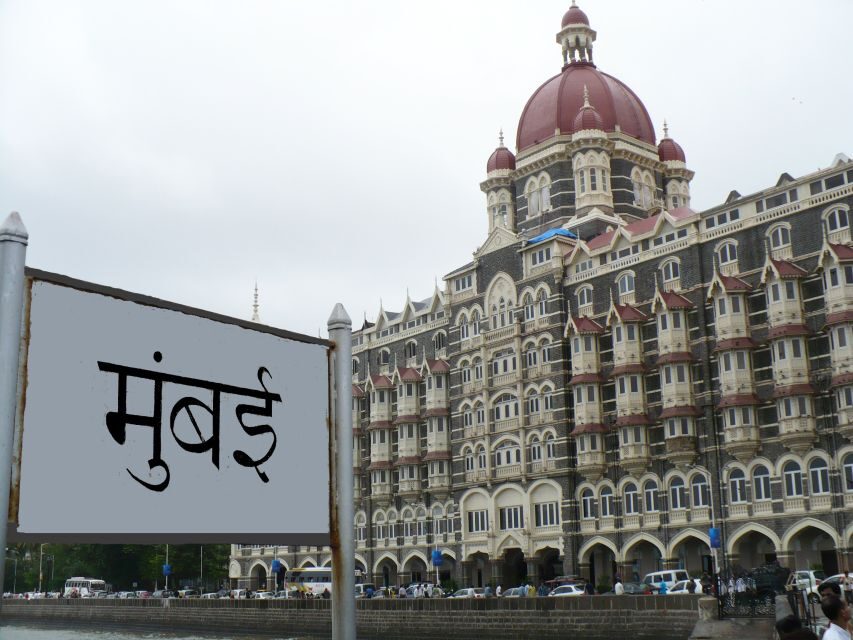
Gateway of India tends to act like a visual “headline,” and Oval Maidan gives you a wider sense of the city’s public space layout. Together, they help you read Mumbai as both a historic port-city influence and a modern civic center.
One thought if you’re sensitive to glare: open-air viewing can create strong light reflections depending on the time of day. If you can choose between morning and afternoon tour times, pick the one that matches how you like your lighting for photography.
CST Precinct and Crawford Market: Street-Level Texture on Wheels
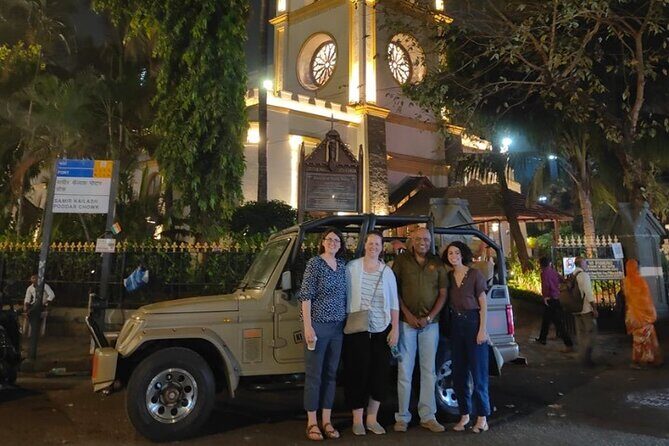
You’ll pass through the CST precinct and Crawford Market. These are the kinds of stops where the city’s everyday energy shows up quickly in street-level detail. The open Jeep helps here because you’re not confined to one perspective. You can take in the front façades, shopfront patterns, and the way people and vehicles flow around major hubs.
This part of the route is also where you’ll likely feel the pace. A 2.5-hour tour doesn’t give you time to linger like a walking tour might. Instead, it delivers quick, concentrated “look and learn” moments—especially useful if you want to experience multiple districts in one go.
If you’re hoping to do heavy shopping or long browsing at markets, plan for that separately. This is a ride focused on architecture, history context, and photo opportunities—not time for a deep stall-by-stall wander.
Dhobi Talao and DN Road: Where Hidden Details Tend to Live
The itinerary continues with Dhobi Talao and DN Road. These are the stops that can feel like the real “get off the beaten path” portion of the experience. You’re moving through areas that can be less tidy in presentation, which often makes the street photography more interesting.
The tradeoff with this section is comfort. In dense urban stretches, you may spend more time adjusting your position for photos. Keep your phone or camera securely held or strapped, and don’t wait until the last second to get ready—small timing changes matter when you’re on an open vehicle.
If you’re traveling with friends, agree on a simple plan before you arrive: one person takes wide shots, another captures details, and one person watches for any guide cues about where to look.
Ballard Estate and Hutatma Chowk: A Strong Finish with City-Scale Views
The ride ends with Ballard Estate and Hutatma Chowk. Ending with these kinds of zones helps you leave with a fuller picture of how Mumbai feels across different eras and urban styles.
This final stretch is also a great time to check your photos. Do you have the landmark shots you wanted? Do you have enough “in-between” frames that show the city’s texture? Open Jeep tours tend to reward people who think in sets—wide establishing images plus a few close-up details.
If you’re tired, that’s normal. After a long photo and listening session, your eyes want a break. The good news is you’re near the finish, so you’re not stuck far from your meeting point. The tour ends back at the start, letting you fold the rest of your day into your own plans.
Why Khaki Tours’ Heritage Mission Fits This Style of Tour
This experience is provided by M/s Khaki Tours, an association of heritage enthusiasts. Their mission is described as Heritage Evangelism, and they’ve run events like walks, jeep rides, cruises, day trips, children’s workshops, photo walks, and food walks. They’ve also contributed toward restoring minor landmarks in the city.
What that means for you on the Jeep: the tour isn’t just “names and dates.” It’s framed as a way to see Mumbai’s evolution from its earlier roots to its current identity, and to notice cultures visible in streets and lanes. In practice, that often translates to a host who connects architecture, city layout, and human stories in a way that’s meant to keep you curious after the ride ends.
When an organization runs multiple heritage formats, you usually get a host who’s comfortable explaining on the fly. That matters on a moving vehicle—there’s no time for a long lecture, so you need clear, story-shaped guidance.
Price and Value: What $59.26 Buys You in Real Terms
At $59.26 per person, this is priced like a guided city experience, not a luxury splurge. The value improves if you look at what’s included and how it’s delivered:
- A private open-Jeep vehicle with a host and driver
- Bottled water
- All taxes, fees, and handling charges
- Mobile ticket
- A route that’s built for photo opportunities and architecture viewing
The only real “hidden variable” is transportation to the meeting point. Hotel pickup and drop-off aren’t included, so factor in how you’ll reach The Asiatic Society/Town Hall area at the start. If you’re already staying nearby or you’re comfortable with local transit, this becomes an easy win.
Also, this tour is designed for groups up to five guests per vehicle. If you’re traveling as a small party, you’re effectively paying for a private storytelling and photo setup, which tends to feel more reasonable than paying the same rate for a shared group tour.
Best Timing, Weather, and Photo Prep
This experience requires good weather. If conditions are adverse, the organizer can reschedule. That’s not a small detail for an open Jeep, so keep that in mind when you pick your day.
In terms of scheduling, you’ll have numerous morning and afternoon tour times, which is a real advantage in Mumbai. It helps you match the ride to your energy level and the time of day you prefer for photos.
For what to bring, you can keep it simple:
- A camera or phone with enough storage for lots of frames
- A strap or secure hold for an open-vehicle ride
- Sunglasses if you’re sensitive to glare
- Light layers if you want comfort for listening time
And since the rules say smoking and drinking are strictly prohibited, you should arrive ready with your own water habits in mind. Luckily, bottled water is included, so you won’t need to scramble for that.
Should You Book the Private Open Jeep Tour in Fort & Colaba?
I’d book it if you want Mumbai to feel like a living city you can read through its architecture, not just a checklist of sights. The open Jeep format is the main reason. It’s made for photography, and it keeps the city close to you—wind, angles, and views included.
You’ll also enjoy it if you like learning that’s tied to what you can see right now. With an architecture and history focus (including an expert host like Sagar), the ride is built to give context as you move.
I’d skip or rethink if your schedule is inflexible or you’re traveling on a day you can’t spare for weather-related rescheduling. Open-air tours depend on conditions, and this one is explicit about that.
If you want a 2.5-hour, private, photo-ready “urban safari” that covers multiple districts in one smooth loop, this is a solid choice.
FAQ
How long is the Private Guided Open Jeep Tour in Fort & Colaba?
The tour runs for approximately 2 hours 30 minutes.
Where does the tour start and end?
It starts at The Asiatic Society, Mumbai (Town Hall, Fort) and ends back at the same meeting point.
What areas are covered during the ride?
The ride covers Town Hall & Horniman Circle, Kala Ghoda Art District, Gateway of India, Oval Maidan, CST precinct, Crawford Market, Dhobi Talao, DN Road, Ballard Estate, and Hutatma Chowk.
Is hotel pickup included?
No. Hotel pickup and drop-off are not included.
How many guests fit in one vehicle on a private booking?
One vehicle can accommodate up to 5 guests in addition to the host and the driver.
What happens if the weather is bad?
The tour requires good weather. If it’s canceled due to poor weather, you’ll be offered a different date or a full refund.