REVIEW · MUMBAI
Private Dharavi Slum, Dabbawala & Dhobi Ghat tour with Transport
Book on Viator →Operated by Discover Activities · Bookable on Viator
Churchgate is where Mumbai’s lunch system comes alive. This private tour connects three very different parts of daily life: dabbawallas delivering tiffins, the open-air laundry at Dhobi Ghat, and a local look at recycling work in Dharavi. I like that it’s guided and built around real, working neighborhoods rather than just photos and quick stops. One thing to consider: you’ll be on the move for several hours, so wear shoes that handle uneven footpaths and expect a warm, street-level schedule.
You get round-trip hotel transfers, a private vehicle, and bottled water, which makes a big difference in a city like Mumbai where time and comfort matter. You’ll also start at Churchgate and work your way through the day, with admission tickets included for the main stops. The main drawback for some people is that this is not a sit-and-watch performance; it’s a hands-on, close-up view of how people earn a living, so you’ll want to be mentally ready for what you see.
If you want a smarter way to understand South Mumbai and what’s happening just beyond it, this is a strong match. It’s especially good when you care about context: who does what, why it matters, and how thousands of small jobs add up.
In This Review
- Key things I’d mark in my planner
- Churchgate Railway Station and the dabbawala lunch pipeline
- Dhobi Ghat near Mahalaxmi: municipal laundry at street level
- Dharavi and the recycling area: seeing work behind the headlines
- Transport, timing, and why the private format helps
- Price and value: what $70 includes (and what it doesn’t)
- Who this tour fits best (and who should think twice)
- Should you book this Dharavi, dabbawala, Dhobi Ghat tour?
- FAQ
- How long is the tour?
- Where does the tour start and where does it end?
- Is hotel pickup and drop-off included?
- What will I see at Churchgate Railway Station?
- What is Dhobi Ghat like on this tour?
- What part of Dharavi does the tour focus on?
- Is this tour private?
- Are admission tickets included?
- Is food included?
- What is the minimum age?
- What is the cancellation policy?
Key things I’d mark in my planner
- Churchgate dabbawallas in action: see the tiffins arrive and transfer from wooden carts to the lunch chain
- Dhobi Ghat by Mahalaxmi Station: a guided walk through Mumbai’s open-air municipal laundry area
- Dharavi with a recycling focus: learn about how locals contribute to the city’s recycling programs
- Round-trip hotel transfers + private vehicle: less friction, more time at the stops
- Free bottled water: a small inclusion that helps you stay steady through the day
- Guide-led, private format: only your group, with explanations tied to what you’re seeing
Churchgate Railway Station and the dabbawala lunch pipeline
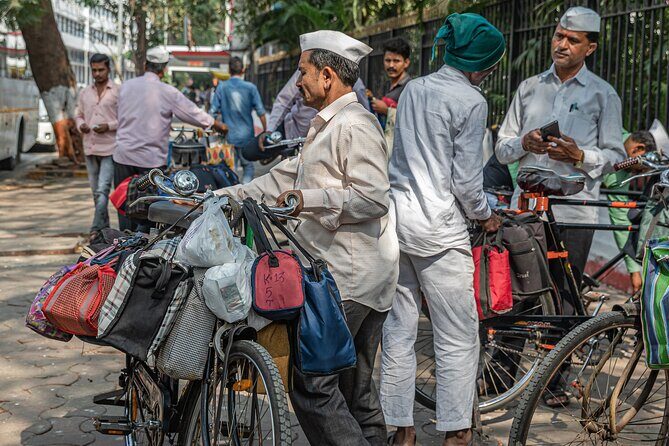
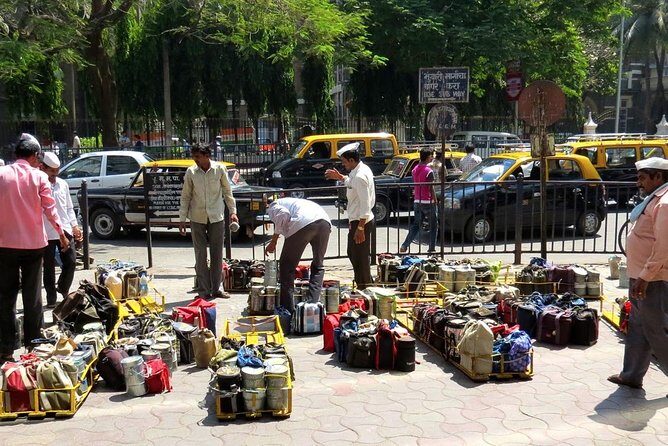
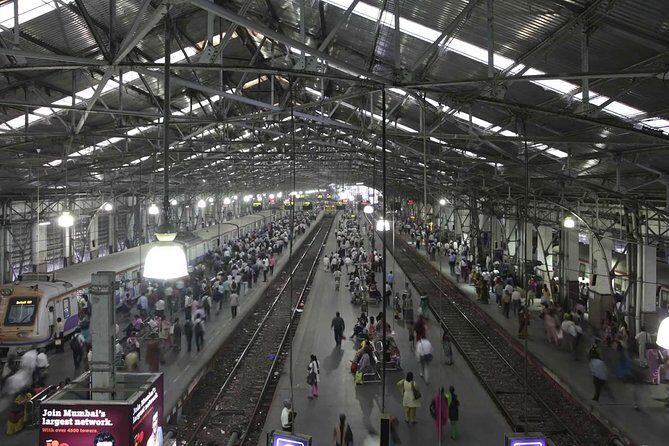
Your day starts at Churchgate Railway Station, a practical choice because it’s right in the middle of Mumbai’s commuting rhythm. Instead of treating the dabbawallas like a roadside attraction, you’re guided through the workflow: you’ll watch the dabbawallas disembark with the dabbas (tiffins) and see how the lunches move out from the rail scene in wooden carts.
Why this part works so well is timing and scale. Dabbawalas handle thousands of lunches with a system that depends on steady routines. When you see that transition from train to cart, the whole idea stops being abstract. You start connecting logistics with daily trust: someone’s lunch, on time, delivered through a chain of roles you can actually witness.
A nice bonus here is that there’s an admission ticket included for the stop, and the schedule gives it about an hour. That’s not a super long time, but it’s enough to get the main picture, listen to the guide explain the process, and ask questions without rushing yourself.
The only catch: you’re at a railway station. That means noise, crowds, and fast movement. You’ll do best if you treat it like a working transport hub, not a museum. Keep your phone handy for notes (not constant filming), and give your guide a chance to guide rather than trying to outrun the pace.
You can also read our reviews of more private tours in Mumbai



Dhobi Ghat near Mahalaxmi: municipal laundry at street level
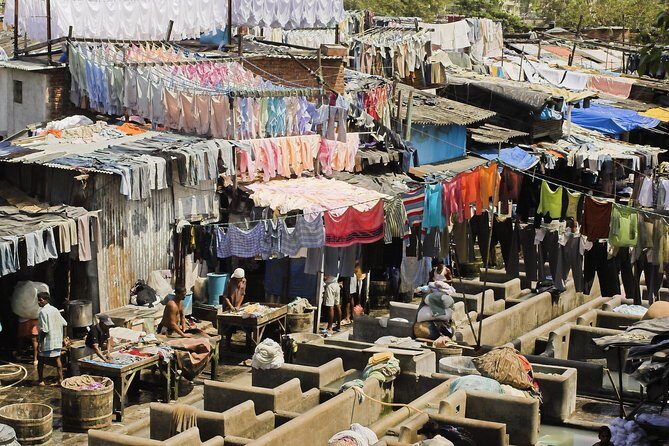
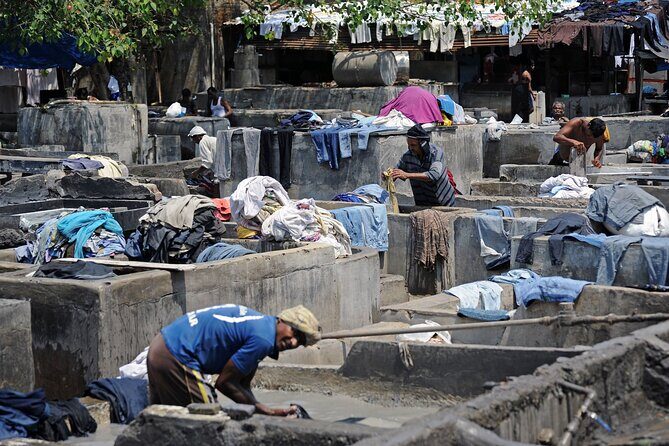
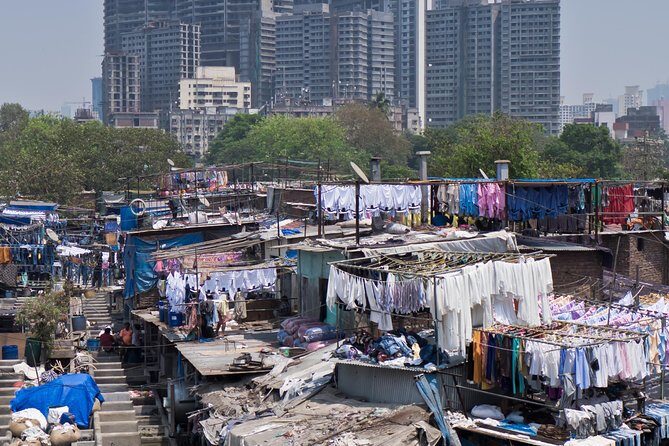
After Churchgate, you move toward Dhobi Ghat, centered around the Mahalaxmi Railway Station area. The key detail is that it’s not “somewhere nearby.” The station sits next to municipal dhobi ghats, so the laundry scene feels built into the neighborhood’s everyday movement.
This stop runs about two hours, and it includes an admission ticket. That matters because it signals that you’re not just passing by from the outside—you’re meant to get real context from a guide in the actual working area.
Dhobi Ghat is one of those places where you learn fast just by observing. Water use, routines, and the sheer number of tasks happening in parallel create a kind of living system. A guide helps you turn what could be just visual noise into something understandable: what the work looks like at different stages, how cleanliness and labor connect, and why this kind of communal setup is practical in a dense city.
A practical thing I like about this tour’s pacing is that Dhobi Ghat isn’t the final stop. You still have Dharavi ahead, so your guide can keep the day’s story moving—first logistics (dabbawallas), then essential services (laundry), then local industry and recycling (Dharavi). It’s a cleaner way to learn than doing three unrelated “spots.”
Consider one drawback: open-air and active work means you may get closer to the realities of a working environment than you expected. If you’re sensitive to sights or smells, give yourself permission to focus on understanding the process rather than forcing comfort. And yes, free bottled water is included, which you’ll appreciate here.
Dharavi and the recycling area: seeing work behind the headlines
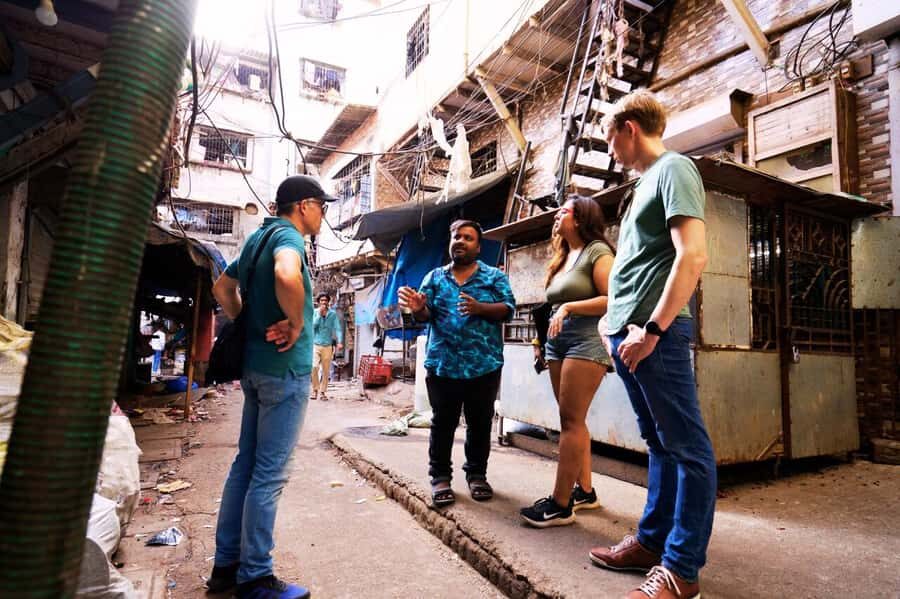
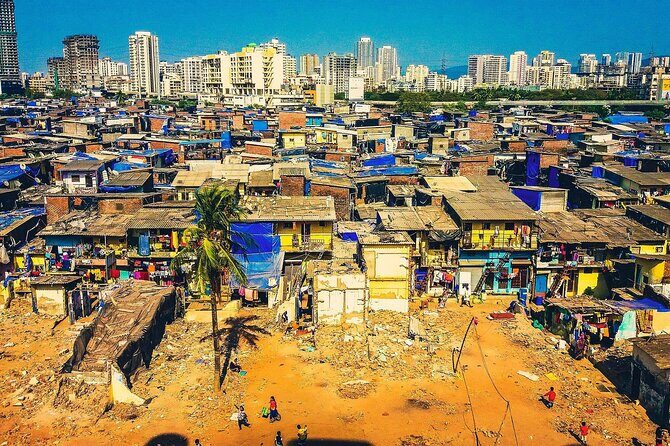
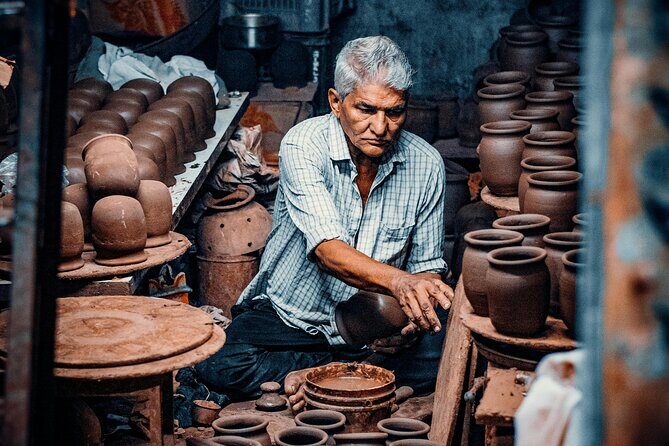
The Dharavi portion of the tour is built around a specific angle: you’ll visit the Dharavi slum area with a local guide and then go to a recycling area. The focus is on how local residents contribute to Mumbai’s large recycling programs.
That matters because Dharavi is often discussed in big, sweeping terms. This tour tries to bring it down to mechanisms—what people do, how materials flow, and how local work connects to citywide systems. Instead of treating the area like a single monolith, you get a more job-focused view, which is usually the most useful way to understand places with complex economics.
The Dharavi segment runs about two hours. That’s enough time to do two things well: listen and observe. You’ll likely learn how recycling work fits into daily life and how residents’ efforts support broader resource cycles. You may also notice how knowledge is passed along through routines rather than speeches—something that’s easy to miss if you’re only looking at buildings or crowds.
One consideration: Dharavi is densely populated and highly active. You’ll want to stay aware of your surroundings and follow your guide’s direction. And because this is a close-up experience, it helps if you approach it with respect and curiosity, not shock. A good guide is the difference between a voyeuristic walk and a meaningful visit—and this tour is set up for guided context.
Transport, timing, and why the private format helps
This is a private tour, meaning it’s only your group. That’s a big deal for places like these, where pace and navigation can make or break the experience. With a private setup, your guide can slow down when you ask questions and adjust the order of attention based on what you’re most interested in.
You also get round-trip hotel transfers and transport by private vehicle. You start at 10:00 and the tour runs roughly 4 to 7 hours. That window is wide enough to cover different comfort levels, but it also means you should plan your day around being out for half a day. If you try to cram shopping or additional tours right afterward, you’ll likely feel it.
You’ll also receive a mobile ticket, which is helpful in a city where check-in lines and paper tickets can be annoying. And free bottled water keeps you going when you’re standing, walking, and listening for a few hours.
Here’s the practical truth: South Mumbai to Mahalaxmi and then onward makes for a logical route when you want to connect these locations without fighting transit complexity. This isn’t a “hop off the train and figure it out” day. It’s designed to reduce friction so you can focus on what’s happening at each stop.
If you’re the type who likes structure and clarity, you’ll appreciate that the day is organized into three distinct areas with ticketed time blocks. If you hate schedules, you may feel the fixed nature of the 10:00 start and timed stops. Still, private tours usually offer a better feel than group buses because you can adapt within the day.
Price and value: what $70 includes (and what it doesn’t)
At $70 per person, the value comes from what’s bundled, not just the sightseeing. This price includes:
- a professional guide
- transport by private vehicle
- round-trip hotel transfers
- bottled water
- and admission tickets for the stops
That’s the real math in Mumbai. When hotel pickup, entry tickets, and a dedicated guide are included, you’re not spending extra time and money piecing together logistics. For a day like this, that convenience is worth a lot.
What’s not included is food and drinks. The good news is this is a half-day style itinerary, so you can plan a meal around it rather than paying for meals inside the tour flow. I’d treat the day like: light plan in the morning, then a proper lunch or late meal afterward depending on how hungry you get.
Also keep in mind the booking rhythm: it’s commonly booked about 14 days in advance on average. If you have firm travel dates, you’ll do better by booking earlier rather than hoping last-minute availability lines up.
One more value point: the tour is private, and private format usually costs more when you do it on your own. Here, you’re essentially buying a guided route and transport solution that would be more work to assemble yourself.



Who this tour fits best (and who should think twice)
This tour fits you well if you want a grounded look at Mumbai’s working systems: lunch delivery, laundry services, and recycling labor. It’s a strong choice if you like getting context from a guide and you’re okay with street-level reality.
It’s also a good fit for first-timers who want to understand how “everyday infrastructure” works—especially if you’re staying in South Mumbai or Colaba, since the tour ends with drop-back there.
You might think twice if you prefer scenery over systems, or if you want a more relaxed, low-walking day. Also, because the experience includes close-up views of real working environments, it’s not a “sit back and watch from a distance” tour.
If you care about guide quality, you’ll like that the experience has been praised for strong guiding. One guide name that shows up in feedback is Sajid, noted as friendly and able to explain the inner workings of all three areas clearly. That’s the kind of skill that turns a set of stops into an actual story.
Should you book this Dharavi, dabbawala, Dhobi Ghat tour?
If you want one private half-day to connect three major sides of Mumbai’s daily life, I’d book it. The transport + hotel pickup alone makes it easier, and the admission-ticket stops keep you from wondering whether you’re doing “enough” to justify the day. The guided structure also helps you see beyond surface impressions—especially at Dhobi Ghat and the Dharavi recycling area.
Skip it only if you’re chasing a purely sightseeing vibe or you strongly dislike active, real-world workplaces. Otherwise, this is a very practical way to experience Mumbai as a functioning city, not just a set of famous landmarks.
FAQ
How long is the tour?
The tour lasts about 4 to 7 hours (approx.). It’s scheduled to start at 10:00 and the time is divided between Churchgate, Dhobi Ghat, and the Dharavi recycling area.
Where does the tour start and where does it end?
The tour starts at Churchgate Railway Station. At the end, the tour drops you back at your South Mumbai/Colaba hotel.
Is hotel pickup and drop-off included?
Yes. Round-trip hotel transfers are included, with pickup by the guide from your hotel and return drop-back at the end of the tour.
What will I see at Churchgate Railway Station?
You’ll see dabbawallas disembarking with the dabbas (tiffins) and how the lunch containers move in wooden carts. There’s an admission ticket included for this stop.
What is Dhobi Ghat like on this tour?
You’ll visit Dhobi Ghat near Mahalaxmi Railway Station, where the municipal dhobi ghats are located. The stop includes admission and is guided for about 2 hours.
What part of Dharavi does the tour focus on?
The focus is on Dharavi with a local guide and a visit to a recycling area, where you learn about how local residents contribute to Mumbai’s recycling programs.
Is this tour private?
Yes. It’s described as a private tour/activity, meaning only your group participates. Group discounts may be available.
Are admission tickets included?
Yes. Admission tickets are included for the main stops (Churchgate, Dhobi Ghat, and Dharavi).
Is food included?
No. Food and drinks are not included. The tour includes bottled water, but you’ll need to plan your own meals.
What is the minimum age?
The minimum age is 18 years.
What is the cancellation policy?
You can cancel for a full refund if you cancel up to 24 hours in advance of the experience’s start time. If you cancel less than 24 hours before, you won’t receive a refund.