REVIEW · MUMBAI
Mumbai Dharavi Slum, Dhobi Ghat & Dabbawala Lunchbox Tour
Book on GetYourGuide →Operated by Cityscape Mumbai Tours · Bookable on GetYourGuide
A laundry line and a slum lane reshape your sense of Mumbai. I like how this tour connects three work worlds that usually sit in separate mental boxes: Dharavi’s small industries, Dhobi Ghat’s open-air washing, and the dabbawala lunch delivery system that keeps homes fed across the city. The other thing I really like is the way the route is paced with a local English guide who explains how it all fits together, so the scenes stop feeling like isolated sights and start making practical sense.
One thing to consider: this is a walking-heavy outing, and it’s not suitable for wheelchair users or people with mobility impairments. If you’re heat-sensitive, bring water, a hat, and sunscreen, because the “historic and real” parts of Mumbai are outdoors for good reason.
In This Review
- Key things that make this tour work
- Why This 3.5-Hour Route Feels Like a Mumbai Reality Check
- Getting There and Back: Simple Pickup, One Clear Plan
- Dabbawala Lunchbox Tour: The Delivery Math That Makes Mumbai Run
- Dhobi Ghat: Open-Air Laundry That’s More Than a Photo Stop
- Dharavi Lanes and Workshops: Where Resilience Looks Like Work
- How the Best Guides Keep the Tour Clear and Respectful (Ravi, Subhan, Javed, and Yash)
- Walking, Sun, and Photo Tips That Actually Help
- Price and Logistics: Is $17 Real Value Here?
- Who This Tour Suits Best (and Who Should Rethink It)
- My Booking Call: Should You Do It?
- FAQ
- How long is the Mumbai Dharavi, Dhobi Ghat & dabbawala lunchbox tour?
- What places do you visit on this tour?
- Is the tour guide available in English?
- Does the price include the guide and transportation?
- Are meals included?
- What should I bring to the tour?
- Is this tour suitable for wheelchair users or mobility impairments?
Key things that make this tour work
- 3.5 hours, three major systems: Dharavi work life, Dhobi Ghat laundry, and dabbawala delivery.
- All-inclusive for the on-tour side: local guide plus local transport included in the price.
- Small group feel: more time to ask questions and look closely.
- Open-air sights, so come prepared: comfortable shoes, hat, sunscreen, and water matter.
- Guides matter here: names like Ravi, Subhan, Javed, Jay/Jawwad, and Yash show up in feedback for clear, respectful explanations.
- Value for money: $17 covers a structured, guided experience that’s hard to replicate on your own safely.
Why This 3.5-Hour Route Feels Like a Mumbai Reality Check
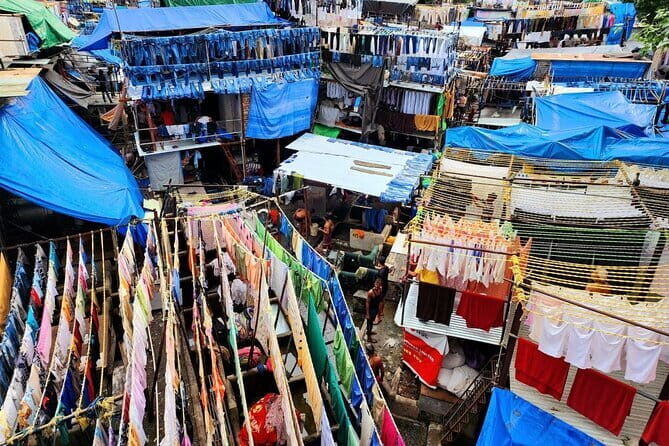
Mumbai can look like chaos from street level. This tour turns that chaos into systems you can actually understand.
At $17 per person, you’re paying for three things: a local guide who can translate what you’re seeing, time on foot to get close, and local transport to keep the schedule realistic. For many visitors, the “value” isn’t just the sights. It’s the guided framing. Without that, Dharavi can feel like an abstract headline, Dhobi Ghat can feel like a photo spot, and the dabbawala idea can feel like a trivia fact. With the guide, those same moments become a clearer picture of how thousands of people solve everyday problems.
The timing is also smart. You’re not doing a full day of long commutes and museum-line energy. You get a focused route that’s intense in meaning, not in hours.
You can also read our reviews of more tours and experiences in Mumbai.



Getting There and Back: Simple Pickup, One Clear Plan
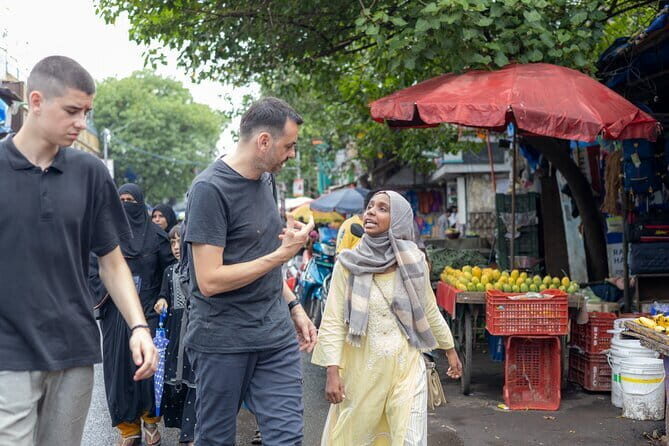
You’ll start from one of two Burger King options (the exact starting point depends on what’s booked). Then you’ll end near Third Wave Coffee (again, the specific drop-off depends on your option). The meeting point can vary, and you’ll get the details after booking.
Why does this matter? Because Mumbai logistics can swallow time fast. Here, the tour handles the on-tour local transport, so you can spend your attention on the neighborhoods instead of negotiating every hop across town. Just remember: transportation to the meeting point isn’t included, so plan your own way in.
The tour is also run in English, and the format is live guided, so it’s built for questions as you go.
Dabbawala Lunchbox Tour: The Delivery Math That Makes Mumbai Run
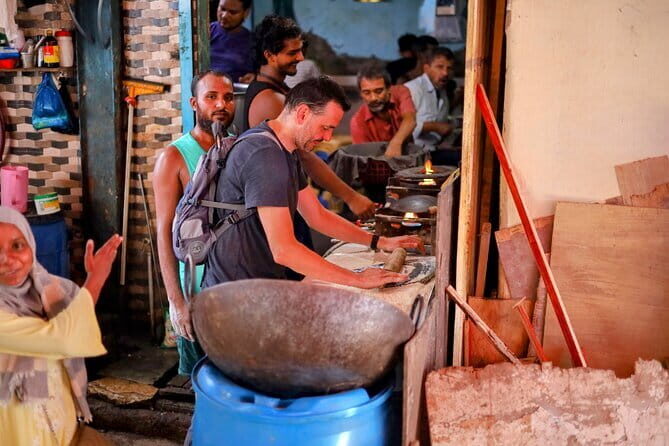
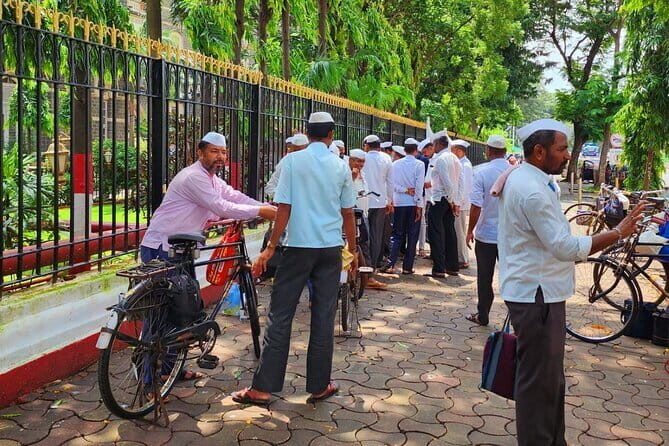
The first stop is the dabbawala system, with about 40 minutes of guided time. This is where the tour connects your curiosity about Mumbai to something you can measure: accuracy, scheduling, and the daily movement of meals.
You’ll learn how the system sorts and transports lunchboxes with minimal technology, and how the network still manages to deliver home-cooked meals across Mumbai. The best part of this stop is that it turns the dabbawala reputation into a functioning story. You don’t just hear that it works; you get a sense of the method behind the work.
What to watch for:
- How the process is organized so meal handoffs don’t get chaotic.
- How people in the system rely on routine and knowledge, not apps.
- Why the history of the system matters to modern Mumbai food culture.
Even if you’re not a “food” person, this part is practical. It explains how a city-wide habit can run on coordination, not convenience.
Dhobi Ghat: Open-Air Laundry That’s More Than a Photo Stop
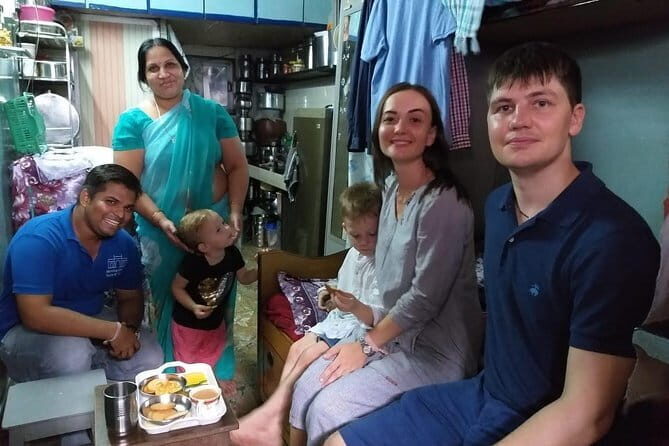
Next comes Dhobi Ghat, about 35 minutes. This is Mumbai’s historic open-air laundry, operating in a communal setting for well over a century.
The sight hits fast: clothes being scrubbed, washed, and hung to dry in an orderly-looking rhythm across an entire open yard. It can look like traditional work from a distance, but the guide’s job is to help you see the logic up close. You’ll hear how the traditional process works and why Dhobi Ghat has stayed part of the city’s daily life despite rapid modernization.
A balanced way to approach this stop:
- Treat it like a working site, not a stage.
- Be ready for real smells, real noise, and real activity.
- Keep your camera use respectful. If you’re unsure, ask the guide first.
The value here is that you’re not just looking at “poverty” or “heritage.” You’re watching labor—sustained, skilled, and organized.
Dharavi Lanes and Workshops: Where Resilience Looks Like Work
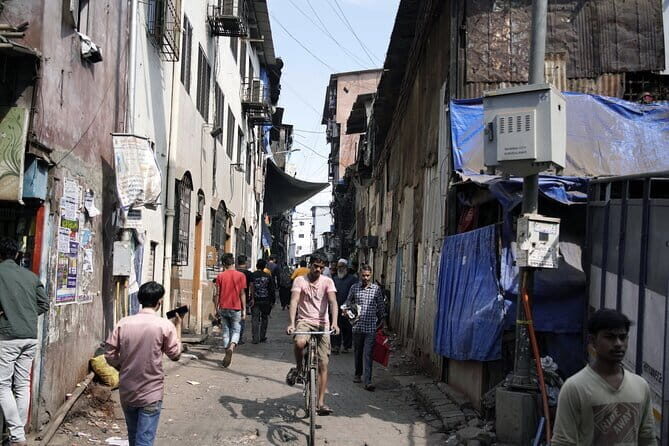
The biggest chunk of the tour is Dharavi, about 1.5 hours. This is also where you get the most emotional contrast if you’ve only ever heard Dharavi as a headline.
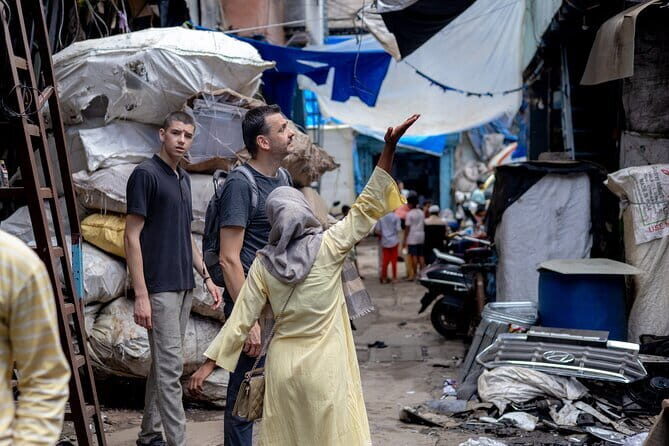
You’ll walk through dense lanes and see small-scale industries operating inside the neighborhood—recycling, pottery, textiles, leather goods, and more. The guide shares stories about people who live and work there, with an emphasis on entrepreneurship and daily problem-solving. The goal isn’t to reduce Dharavi to hardship. It’s to show how people build livelihoods in tight spaces.
Why this stop matters:
- It gives you a grounded view of how local economies function.
- It helps you notice the skills and specialization that exist in everyday life.
- It shifts the lens from charity to work systems—how people earn, produce, and support one another.
A note on how you should carry yourself: you’re a visitor in someone’s neighborhood. Move steadily. Ask questions with respect. Avoid intrusive behavior. A good guide will set the tone, and the tour is designed around that kind of safe, contextual viewing.


How the Best Guides Keep the Tour Clear and Respectful (Ravi, Subhan, Javed, and Yash)
This tour lives or dies by the guide. The feedback you’ll see for Cityscape Mumbai Tours repeatedly highlights specific guides for doing a few key things well: explaining what looks confusing, keeping the group comfortable, and making the experience feel safe.
Names that show up in strong feedback include Ravi, Subhan, Javed, Jay/Jawwad, and Yash. What connects these accounts is not just friendliness. It’s clarity. Guides are described as being able to explain the order within apparent chaos and answer lots of questions patiently.
For you, that means:
- You won’t be stuck guessing what you’re seeing.
- You’re more likely to understand the “why” behind each location.
- You’ll feel less like you’re observing from outside and more like you’re learning from the inside—without pretending you own the space.
If you care about respectful storytelling, this is one of the big reasons the tour has such a high rating (4.9 across 20 reviews).
Walking, Sun, and Photo Tips That Actually Help
Because the route is outdoors and on foot, your comfort affects your experience more than you might expect.
Bring:
- Comfortable shoes (you’ll want support for uneven, active streets)
- A hat and sunscreen
- Water (use it, don’t save it)
- A camera if you like documenting moments
Be mindful of tour rules:
- No smoking
- No alcohol or drugs
- No littering
For photography, aim for moments that show process: laundry being handled, work steps in motion, sorting behaviors, group routines. Wide shots are nice, but the “how it works” details are what you’ll remember later.
Also, plan your expectations. You’re not on a low-effort sightseeing bus. You’re on a human-scale walk through real working areas. That’s the point.
Price and Logistics: Is $17 Real Value Here?
Let’s talk value without the hype.
For $17, you’re getting:
- A local guide for the full route
- Local transport during the tour
- A guided walk through Dharavi, Dhobi Ghat, and the dabbawala system
What you’re not getting is meals and drinks. That’s normal for a 3.5-hour format, but it means you may want to plan a meal either before or after.
So is it worth it? If you want the “three-part Mumbai” story in a short window, yes. The alternative—trying to assemble these stops independently—can be slower, more stressful, and harder to interpret. When you combine guide context with local transport and a small group style, the price starts to make sense fast.
Who This Tour Suits Best (and Who Should Rethink It)
This tour is a strong fit if you:
- Want more than postcard Mumbai and prefer real work stories
- Like structured time in a short window (3.5 hours)
- Are comfortable with walking and being outdoors for parts of the route
It’s not a good fit if you:
- Have mobility challenges or use a wheelchair (it’s not suitable for wheelchair users or people with mobility impairments)
- Are traveling with very young children (it’s not suitable for children under 5)
Also, if you’re the type who needs quiet, minimal street exposure, this might feel like a lot. But if you’re curious and ready to engage, it delivers.
My Booking Call: Should You Do It?
If you want a clear, guided way to see Mumbai through its labor systems—meals being delivered, laundry being processed, and livelihoods built in Dharavi—this is a smart pick. The combination of Dharavi + Dhobi Ghat + dabbawala in one 3.5-hour outing is efficient, and the guide emphasis shows up strongly in feedback.
I’d book this when you have limited time and you want context that you can’t easily DIY. I’d skip it if mobility is a concern or if you’re looking for a light, low-walking day.
FAQ
How long is the Mumbai Dharavi, Dhobi Ghat & dabbawala lunchbox tour?
The tour lasts 3.5 hours.
What places do you visit on this tour?
You visit Dharavi, Dhobi Ghat, and the dabbawala lunchbox delivery system.
Is the tour guide available in English?
Yes, the live tour guide speaks English.
Does the price include the guide and transportation?
The tour includes the local guide and local transport as part of the all-inclusive experience.
Are meals included?
No. Meals and drinks are not included.
What should I bring to the tour?
Bring comfortable shoes, a hat, camera (recommended), sunscreen, and water.
Is this tour suitable for wheelchair users or mobility impairments?
No. It is not suitable for people with mobility impairments or wheelchair users.