REVIEW · MUMBAI
Dharavi Tour and Family Lunch
Book on Viator →Operated by Reality Tours & Travel Pvt Ltd · Bookable on Viator
Dharavi changes your perspective fast. This 3-hour walking tour brings you face-to-face with how people work and live in Mumbai’s best-known informal settlement, from recycling and pottery to soap-making and poppadom production, plus residential lanes where different faiths sit close together. I especially like the way the tour keeps things grounded in daily routine and local context, guided by people who know the area well, with names like Rishi, Jadev, Shivi, and Raj showing up in past groups for clear explanations and a calm, respectful pace.
My second big favorite is the family lunch: you end the tour walking to a nearby home for a vegetarian meal, often described as a home-cooked thali, then you see what hospitality looks like beyond the headlines. The one drawback to think about first is the emotional weight. This is a real neighborhood, not a staged attraction, so expect the experience to feel intense and you’ll want to come with patience and respect.
In This Review
- Key highlights
- Dharavi in 3 Hours: what you’ll realistically see
- Your guide and your group size: why the pace matters
- Entering Dharavi’s work world: industries you can actually picture
- Residential Dharavi: where temples, mosques, churches, and pagodas meet
- The festival moment: seeing community life, not just conditions
- The family lunch: vegetarian food with a real purpose
- Price and value: why $29.50 can feel like a fair deal
- Logistics that affect comfort: meeting point, weather, and timing
- What to bring (and what mindset helps)
- Who should book this Dharavi tour with family lunch
- Should you book this tour?
- FAQ
- How long is the Dharavi Tour and Family Lunch?
- Where does the tour start and end?
- What’s included in the price?
- Is lunch vegetarian?
- What is the group size?
- Is the tour near public transportation?
- Do I need good weather for this tour?
- Is gratuity included?
Key highlights
- A focused 3-hour walk that mixes work life (industries) and home life (residential areas)
- Small-group size (max 25) that helps you move through tight streets without feeling rushed
- Local-guided context, including explanations people use daily to make sense of Dharavi’s economy
- A vegetarian family meal that offers insight and directly supports the host household
- Faith sites side by side, from temples and mosques to churches and pagodas
Dharavi in 3 Hours: what you’ll realistically see
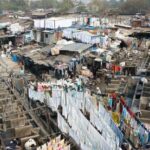
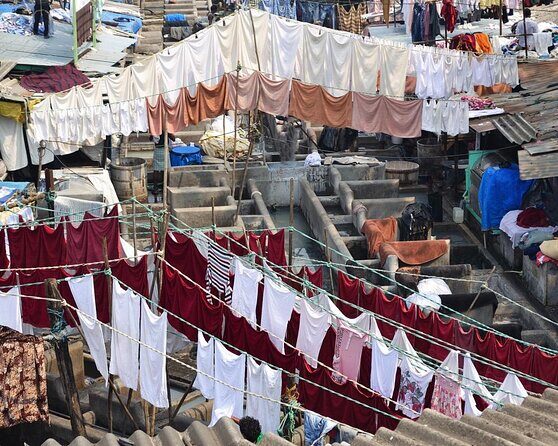
A good Dharavi tour has one job: help you understand, not just photograph. This one is built around a guided walk through Dharavi’s working areas, where everyday commerce is the main character. You’re not floating above the streets on a viewpoint. You’re moving through lanes where people make goods, process materials, and run small-scale services that feed Mumbai and beyond.
In the opening stretch, the tour starts with an area walk connected to local festival celebrations. Even if you’re not there on the exact day of a major event, the point is the same: you’ll see how community life continues in places that outsiders often write off as only hardship. It sets the tone for the rest of the visit.
The final portion is less about industry and more about perspective. After you’ve seen the workshops and homes, you walk to a nearby family household for lunch. That transition matters because it turns your brain from observing systems to seeing people. It’s the difference between learning about a place and learning from a place.
You can also read our reviews of more tours and experiences in Mumbai



Your guide and your group size: why the pace matters
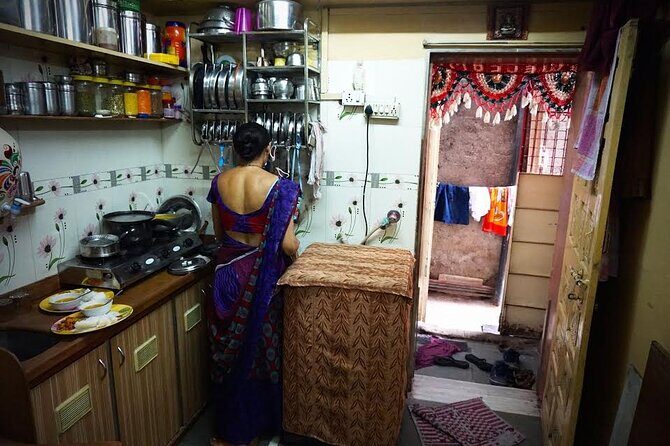
This tour runs with a maximum of 25 people, which is a big deal in a neighborhood where space is limited. Smaller groups don’t just feel nicer. They make it easier for your guide to keep track of where everyone is, answer questions, and adjust the pace when the walk turns slower due to crowds or ongoing daily activity.
You’ll also want a guide who can explain what you’re seeing in plain, practical language. In past departures, local guides such as Rishi, Jadev, Shivi, and Raj have been highlighted for being friendly, easy to follow, and respectful. One theme that comes up again and again is that the tours are run in a way that helps you feel safe and not pressured.
That last part matters because Dharavi tours can sometimes go sideways when the vibe turns too salesy. Here, the experience is framed around education and respect, and visitors are guided through without any push to buy things.
Entering Dharavi’s work world: industries you can actually picture
The core of the tour is an educational walk through Dharavi’s business activities. You’ll hear about the kinds of work that keep the local economy moving, and you’ll get enough detail to connect the dots between what you see and how it’s made.
The workshop topics include (among others):
- Recycling, where materials are sorted and reprocessed
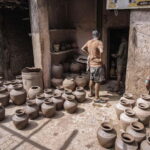
- Pottery-making, showing how products take shape from raw materials
- Embroidery and other small manufacturing tasks
- A bakery context, tied to daily food supply
- A soap factory style of production
- Leather tanning processes
- Poppadom-making, often described as a lively, hands-on food industry
What I like about this lineup is that it isn’t random. It gives you a sense of Dharavi as an ecosystem of skills. Once you understand that, the place stops feeling like a single label. You start noticing different trades, different routines, and different ways people support family income.
Residential Dharavi: where temples, mosques, churches, and pagodas meet
After the work-world portion, the tour moves into residential areas. This is where you see Dharavi as a living neighborhood rather than a concept. You’ll notice the density, yes, but also the structure: communities that have temples, mosques, churches, and pagodas close together.
This mix of faiths isn’t just a photo opportunity. It’s the whole point of the tour’s approach. Dharavi draws people from across India, and that diversity shows in daily life. As you walk, you get a more nuanced view of how social identity and spiritual practice coexist in a compact space.
One thing to keep in mind: residential lanes can be quieter than workshops, but they still feel “in use.” You’re not entering a museum. You’re moving through someone’s home area, so your best behavior is the simplest one: slow down, pay attention, and don’t block foot traffic.
The festival moment: seeing community life, not just conditions
At the beginning, the tour mentions a walk through Dharavi connected to how locals celebrate a festival. Even if you only catch glimpses rather than a huge ceremony, that’s still valuable. It pushes the visit beyond the outsider narrative that Dharavi is only about hardship.
Festivals also help you understand rhythm. In places like this, celebrations aren’t separate from work. They are part of the calendar that shapes when people gather, how they dress, and how communities show support.
If you’re the kind of traveler who likes context, you’ll appreciate this start. It gives you an emotional anchor before the tour becomes more informational through industries and household life.



The family lunch: vegetarian food with a real purpose
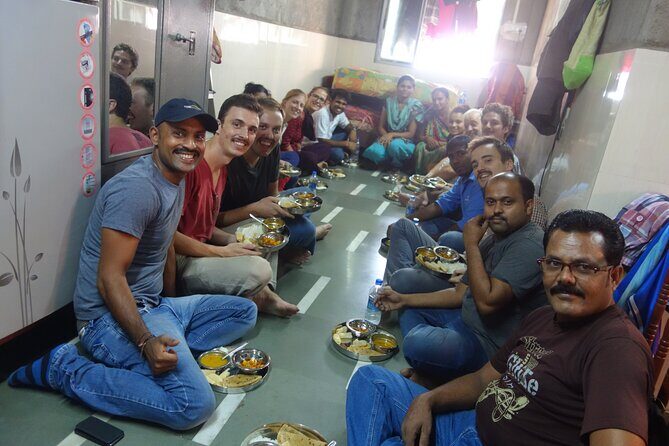
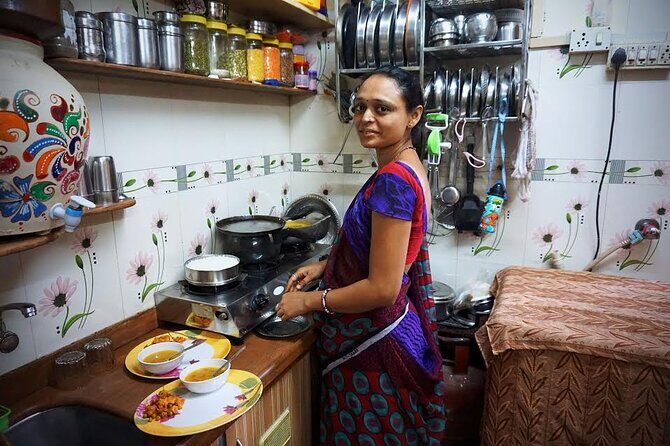
The best part for many people is the last step: walking to a nearby family home for a vegetarian meal. The tour is designed so you don’t just eat and leave. You get a window into everyday hospitality, which is hard to find on standard sightseeing days.
Based on descriptions from past groups, the meal is often served as a home-cooked thali, and it’s described as delicious and comforting. More importantly, the tour’s structure turns lunch into a form of community connection. By sharing the meal, you’re helping provide additional income for the host family.
That last bit is what makes the lunch feel more meaningful than a restaurant stop. You aren’t paying for food alone. You’re supporting a household in a direct way, while also learning how families live beyond the industrial headline.
Practical note: after lunch, your guide helps with getting you where you want to go next. If you plan to take a local train, the guide can escort you to the station and help you get on.
Price and value: why $29.50 can feel like a fair deal
At $29.50 per person, this tour sits in the “short day, strong content” category. It’s only about 3 hours, which makes it easier to fit into a Mumbai itinerary that’s already crowded with travel time.
Here’s where the value comes from:
- Lunch is included, so you’re not doing math for a meal you’d otherwise pay for
- You get an experienced local guide who explains the industries and the social side of Dharavi life
- Admission costs are listed as free for the main portion (so you’re not paying extra for entry into sites)
- The group is capped at 25, which can improve the quality of the walk compared to mass tours
- You receive a mobile ticket, which keeps the day simple
There’s also an ethical value angle mentioned by past visitors: Reality Tours shares most of its profit with an educational project connected to the community. One review cited an 80% profit allocation to the education initiative. Even if you don’t focus on numbers, it helps explain why this tour feels different from the exploitative models you’ll find in other places.
The bottom line: if you want a short, structured, respectful Dharavi experience with lunch attached, this price is usually easier to justify.
Logistics that affect comfort: meeting point, weather, and timing
The tour starts and ends at the same location: Reality Tours and Travel (Dharavi), 60 Feet Road, Shahid Bhagat Singh Nagar, Kumbhar Wada, Dharavi, Mumbai, Maharashtra 400017. It’s also noted as near public transportation, which is helpful because Mumbai can be a maze if you’re relying only on taxis.
One practical detail that can matter more than you think: the experience requires good weather. Since this is a walking tour and you’ll be moving through an active neighborhood, rain or harsh conditions can disrupt the day. If the tour is canceled due to poor weather, you’ll be offered another date or a full refund.
The day length is about 3 hours, so you can plan a follow-on activity the same day without feeling like you need a whole afternoon buffer.
What to bring (and what mindset helps)
Because this tour is a real neighborhood walk, I suggest you plan like you’re visiting somewhere active and lived-in, not somewhere designed for visitors.
Bring:
- Comfortable walking shoes
- Water, if you’re someone who needs it during walks
- A light layer, since Mumbai weather can shift
Mindset:
- Think “listen and learn,” not “audit and judge.” Dharavi has complexity, and the point is to understand it through work, faith, and daily routines.
- Expect moments that feel emotionally heavy. If you’re the type who needs distance from uncomfortable realities, you might find this tour more intense than standard city tours.
Who should book this Dharavi tour with family lunch
You should book if:
- You want an authentic Mumbai experience that connects industries, homes, and community life
- You like walking tours with real explanations, not just route sightseeing
- You want lunch that supports a local household rather than a generic tourist meal
- You care about a socially responsible approach and respectful handling of a sensitive topic
You might skip it if:
- You’re looking for a relaxed, low-emotion day
- You dislike walking through crowded, tight streets
- You’re traveling with limited flexibility due to weather constraints
Also, since it’s listed as suitable for most travelers and capped at 25, it tends to work for a wide range of visitor types. The main deciding factor is your readiness for an honest view of life and work in Dharavi.
Should you book this tour?
If your goal is to understand Dharavi beyond headlines, I think this is a strong choice. The combination of a focused 3-hour guided walk plus a vegetarian family lunch gives you both the “how it works” story and the “how people live” story. You also get practical help at the end, with your guide supporting transport plans like taxis or train station escort.
Book it if you want value, structure, and respect in one package. Just go in ready for intensity, and you’ll come away with a perspective you won’t get from looking at Mumbai from behind glass.
FAQ
How long is the Dharavi Tour and Family Lunch?
The tour is about 3 hours.
Where does the tour start and end?
It starts and ends at Reality Tours and Travel (Dharavi), 60 Feet Road, Shahid Bhagat Singh Nagar, Kumbhar Wada, Dharavi, Mumbai, Maharashtra 400017, India.
What’s included in the price?
Lunch and an experienced local guide are included.
Is lunch vegetarian?
Yes. The tour includes a vegetarian meal with a local family.
What is the group size?
The tour has a maximum of 25 travelers.
Is the tour near public transportation?
Yes, it is noted as being near public transportation.
Do I need good weather for this tour?
Yes. The experience requires good weather, and if it’s canceled due to poor weather, you’ll be offered a different date or a full refund.
Is gratuity included?
No. Gratuity is not included.