REVIEW · MUMBAI
Dharavi Slum tour in Mumbai by local resident
Book on Viator →Operated by Beautiful Bombay Tours · Bookable on Viator
Dharavi is one of Mumbai’s most misunderstood places. This local resident Dharavi slum tour takes you through both the commercial workshops and the everyday residential lanes, so you can see how people live and work in the largest slum in Asia. I especially like the practical structure of the walk—stopping at real production areas—and the fact you’re guided by someone who knows the place from the inside. The main consideration: you should be mentally ready for what you’ll see in a working neighborhood, including cramped alleys and close-up views of informal industry.
You’ll start around Third Wave Coffee in Mahim, then join a 2 to 3 hour guided route that’s set up for small-group listening rather than a drive-by photo sprint. I also like that the tour includes a shop stop with products made in Dharavi, without the hard-sell energy you sometimes get on tours. If you want a comfortable, all-air-conditioned experience, this is not that kind of tour—it’s walking, and the streets can feel tight.
In This Review
- Key highlights you’ll actually notice
- Why a Dharavi walk with a local guide changes everything
- Getting to Third Wave Coffee in Mahim (and why the start matters)
- Stop 1: Dharavi, where the work is part of the street
- The leather-drying area: a different kind of industry
- Seeing homes and business together (without turning it into a spectacle)
- The products shop stop: useful souvenirs, no hard sell
- The guide and group size: what 99 people means for the vibe
- Price and value: how $4.46 can be a smart deal
- Timing: 2 to 3 hours works if you plan it right
- What to bring (and how to act respectfully)
- Who should book this Dharavi slum tour, and who might not enjoy it
- Should you book Beautiful Bombay Tours’ Dharavi walk?
- FAQ
- How long is the Dharavi slum tour?
- What is the price per person?
- Is pickup offered?
- Where does the tour start?
- What language is the guide?
- How many people can join the tour?
- Is free cancellation available?
Key highlights you’ll actually notice
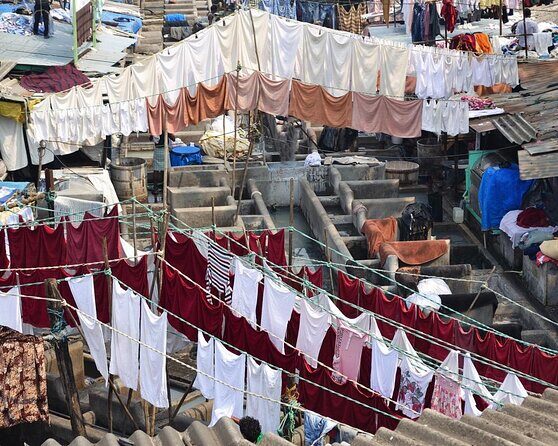
- You see workshops in action, not just talking points, including plastic recycling and other small-scale production.
- The route mixes commercial and residential areas, so the place feels human, not just industrial.
- You’ll likely pass through narrow lanes, where the scale of everyday life becomes real fast.
- A leather-drying area is part of the experience, adding another layer beyond plastic crafts.
- A products shop stop happens without pressure to buy.
- English-speaking local guidance helps you make sense of what you’re seeing as you walk.
Why a Dharavi walk with a local guide changes everything
Dharavi can look like a single thing from far away. Up close, it’s many things at once: homes, workplaces, supply chains, and community routines all on top of each other. That’s why I think the biggest value here is the local guide who can explain what you’re seeing in plain language as you go, instead of you trying to guess.
This tour also works because it doesn’t treat Dharavi as a sideshow. You get a balanced look at commercial activity and residential life, which helps you understand that most people are doing normal human work and normal human errands—just in a very different setting than what you might be used to.
You can also read our reviews of more tours and experiences in Mumbai.



Getting to Third Wave Coffee in Mahim (and why the start matters)
The meeting point is Third Wave Coffee, Tip Road, Unit no. 58, Ground, Ram Mahal, Senapati Bapat Marg, Marinagar Colony, Station, Mahim, Mumbai, Maharashtra 400016. The tour ends back at the meeting point, which is a nice stress saver when you’re navigating Mumbai streets on your own.
It also helps that the start location is described as near public transportation. That means you can focus on getting to the neighborhood reliably, rather than spending your mental energy figuring out how to make the timing work.
If you’re planning your day, build in a little buffer. A short walk can feel longer when you’re meeting up, grouping together, and then getting moving into tighter lanes.
Stop 1: Dharavi, where the work is part of the street
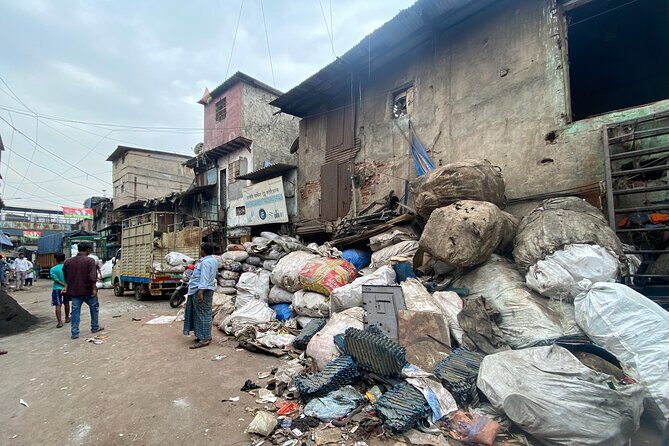
The core of the experience is the Dharavi walking route, and it’s designed to show you the place as a functioning economy. A major part of what you’ll encounter is the world of workshops and small factories inside the neighborhood.
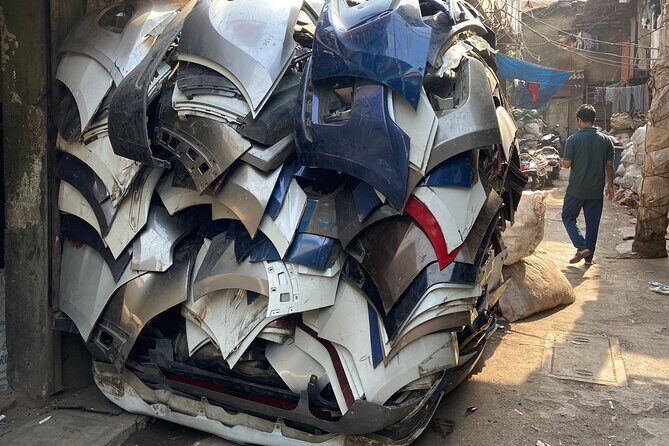
You may see the plastic recycling area, where raw materials get processed into usable products. This isn’t abstract manufacturing—it’s hands-on, close-up work that makes you think about waste, supply, and reuse in a new way. From there, the walk can take you through small alleyways where you’ll likely witness other stages of production connected to that plastic work.
The tour also includes production stops tied to daily goods. In at least one route, you’ll be shown soap production and the making of plastic bags. Seeing those links matters, because it helps you connect the materials you might recognize from everyday life to the local labor that turns them into finished products.
The leather-drying area: a different kind of industry
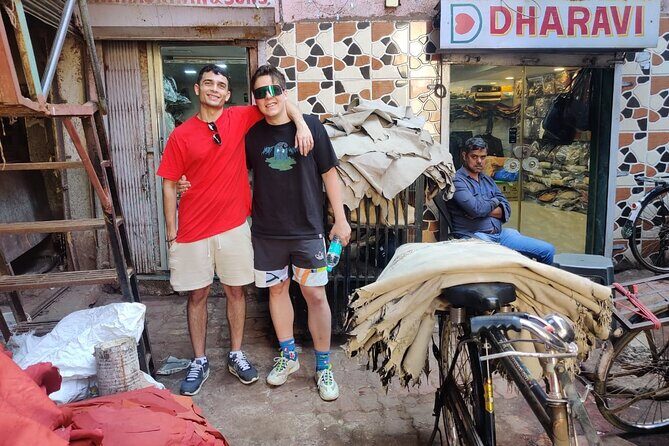
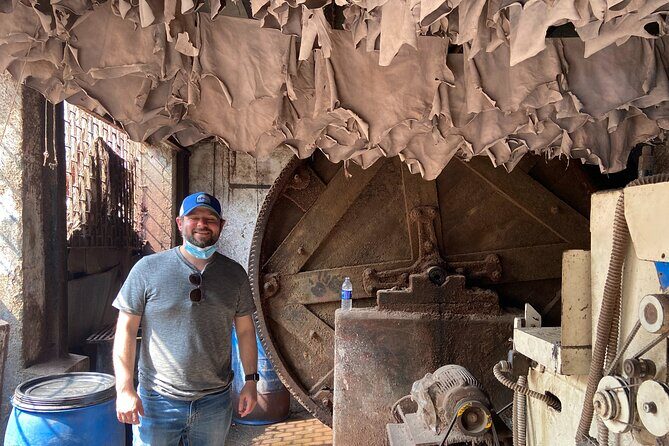
Another stop you can expect is a leather-drying area. Even if you’ve never thought much about how leather products are made, this adds a strong new dimension beyond plastic crafts. You’re not only seeing different materials—you’re seeing a different kind of workflow and how time and storage work in a cramped space.
What I like about including this kind of stop is that it broadens your understanding of Dharavi. It’s easy to walk in with a single-track image of recycling. The leather segment makes it clear this is a multi-industry neighborhood.
Seeing homes and business together (without turning it into a spectacle)
One of the best parts is that the tour is not only about commercial activity. You’ll be shown both commercial and residential areas, which helps you see how daily life and work overlap.
This is where a guide makes a real difference. If you’re on your own, you might only notice the sights that fit a tourist camera. With a local English-speaking guide, you’re more likely to understand what’s happening, why it’s arranged the way it is, and how people navigate the space.
A quick reality check, though: you’re walking through an area where privacy and routine matter. Keep your phone use respectful, don’t crowd people, and follow your guide’s cues. The goal is to understand, not to treat the neighborhood like a set.


The products shop stop: useful souvenirs, no hard sell
The walk includes a stop at a shop selling products made in Dharavi. I like that the experience is described as having no pressure to buy. That’s important because it keeps the tour focused on learning rather than shopping.
If you do want a small souvenir, this is the moment to consider it—especially if you want something connected to the production areas you just saw. If you don’t want to shop, you can still treat the stop as part of the story: it shows how goods move from workshop to buyer.
The guide and group size: what 99 people means for the vibe
The tour is capped at a maximum of 99 travelers, which is a lot on paper. The practical upside is that the tour is built for a structured walking experience, not a free-for-all.
Still, you’ll likely enjoy it more if you like learning on the move—asking questions, listening at your own pace, and taking in details as you pass through different zones. A good guide matters here, and the provided feedback highlights a sympathetic and competent guide who can explain what you’re seeing with kindness.
Because it’s a walking experience, you’ll want to be comfortable with limited space and a steady pace through lanes. If you’re expecting a lecture with lots of sitting, this won’t match that style.
Price and value: how $4.46 can be a smart deal
At $4.46 per person, this is priced like one of the most budget-friendly tours in Mumbai. For me, the value comes from two things: you’re paying for a guided route that includes multiple production areas, and you’re also paying for interpretation—someone local translating what you’d otherwise only partially understand.
Pickup is offered, and there are group discounts, which can make the total even better if you’re traveling with a friend. You also get a mobile ticket, which is handy in a city where paper logistics can be annoying.
The only trade-off is that the price point supports a basic format: you’re not paying for luxury comfort. You’re paying for access to a real working neighborhood, with guidance that turns the walk into something you can actually make sense of.
Timing: 2 to 3 hours works if you plan it right
The tour runs about 2 to 3 hours. That’s a great length for this kind of experience because you get enough time to see several areas without it becoming exhausting for most people.
If you’re planning your day, treat it like a major block—start it when you still have energy to pay attention. If you do it right after a long flight or a full day of other sightseeing, it may feel rushed or mentally heavy.
What to bring (and how to act respectfully)
The data doesn’t list specific gear requirements, so I’ll keep this practical and safe. Wear shoes you can walk in for a couple of hours. Bring a small amount of water if you tend to get thirsty, and consider dress that won’t make you feel overheated while walking tight lanes.
Most importantly: this is a working neighborhood. Take cues from your guide on where to stand, where not to block paths, and what’s appropriate to photograph. A respectful attitude goes a long way toward making the experience feel dignified for everyone involved.
Who should book this Dharavi slum tour, and who might not enjoy it
This tour is a strong fit if you want more than a quick Mumbai highlight. You’ll probably love it if you enjoy street-level learning, understand that cities have many layers, and want to connect everyday products to the labor behind them.
It’s also a good choice if you like walking tours with a clear route and a guide who can explain what’s happening in English.
You might choose something else if you strongly prefer sightseeing that stays clean, open, and low-contact. Tight lanes, active workshops, and close-up realities aren’t for everyone.
Should you book Beautiful Bombay Tours’ Dharavi walk?
If you’re looking for a short, guided, high-value way to understand Dharavi as a real place with real work, I’d say yes. The price is unusually low for an experience that includes multiple production zones—plastic recycling, soap and bag making, and a leather-drying area—plus interpretation from an English-speaking local guide.
Book it if you’re curious, patient, and ready to walk through a working neighborhood with respect. If you’re very sensitive to what industrial life and housing can look like up close, you may want to think twice.
As a bonus safety net, the experience includes free cancellation up to 24 hours in advance, so you can keep it on your shortlist while you shape the rest of your Mumbai plan.
FAQ
How long is the Dharavi slum tour?
The tour lasts about 2 to 3 hours.
What is the price per person?
The price is $4.46 per person.
Is pickup offered?
Pickup is offered.
Where does the tour start?
It starts at Third Wave Coffee, Tip Road, Unit no. 58, Ground, Ram Mahal, Senapati Bapat Marg, Marinagar Colony, Station, Mahim, Mumbai, Maharashtra 400016, India.
What language is the guide?
The tour is described as having an English-speaking tour guide.
How many people can join the tour?
The activity has a maximum of 99 travelers.
Is free cancellation available?
Yes. Free cancellation is available, and you can cancel up to 24 hours in advance for a full refund.