REVIEW · MUMBAI
Best Bicycle Tour In Mumbai
Book on Viator →Operated by Young Tours And Travel · Bookable on Viator
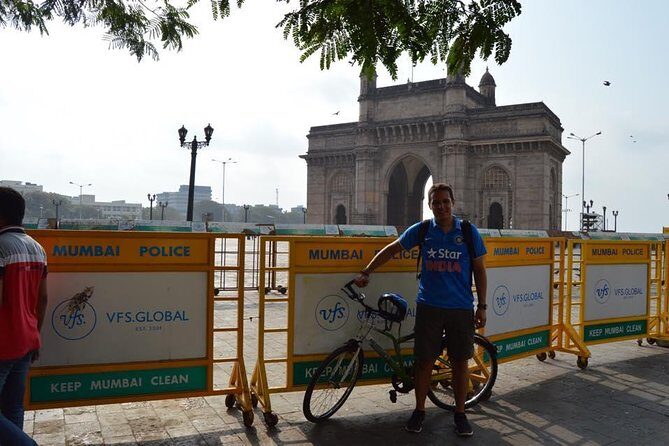
Waking up in Mumbai deserves wheels, not a ride-hail. This 3-hour guided bicycle tour threads together big-name landmarks and everyday streets in South Mumbai—starting at the Gateway of India with seafront morning light, then moving through iconic colonial architecture, temples, markets, and the walk-and-wheel rhythm of Marine Drive.
I like two things most: the way you get guided context at almost every stop, and the tight route that packs major sights into a short morning without feeling rushed. I also appreciate the small group size (up to 12 people), which makes it easier to hear your guide and stay together.
One thing to consider: cycling in a dense, traffic-heavy city comes with real street-crossing moments. In one account from this operator’s cycling trips, a rider noted no helmets were provided and called out road conditions that weren’t for the fainthearted—so if you’re not comfortable riding near traffic, you’ll want to think twice and ask questions up front.
In This Review
- Key Highlights at a Glance
- South Mumbai on Two Wheels: What This 3-Hour Loop Delivers
- Meeting at Colaba and Getting Rolling Early
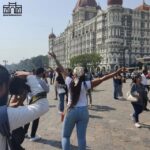
- Gateway of India to Taj Mahal Palace: Seafront Icons First
- Museum Streets and Rajabai Clock Tower Photo Moments
- Chhatrapati Shivaji Terminus (Victoria Terminus) and the Victorian Gothic Look
- Crawford Market, Mangaldas Market Area, and How South Mumbai Trades
- Mumba Devi Temple and Panjrapole: Culture That Has a Place to Stand
- Marine Drive and Sassoon Dock: Finishing With Sea Views
- Guides Like Roy and Kurtin: Why the Stories Matter on a Bike
- Price and Value: What $39 Buys You in Real Terms
- Bike Comfort and Safety: The One Thing You Must Check
- Who This Morning Bike Tour Fits Best
- Should You Book This Best Bicycle Tour in Mumbai?
- FAQ
- How long is the Mumbai bicycle tour?
- Where does the tour start and where does it end?
- Is pickup available?
- What’s the group size?
- What are some of the main stops on the route?
- Are admission tickets included?
- What age is the minimum for the tour?
- How do I get my ticket?
- Is there free cancellation?
- Are helmets provided?
Key Highlights at a Glance
- Gateway of India at sunrise light before the area gets crowded
- Taj Mahal Palace and Prince of Wales Museum architecture in quick, photo-friendly stops
- Chhatrapati Shivaji Maharaj Vastu Sangrahalaya and Rajabai Clock Tower viewpoints that make sense on a bike route
- Crawford Market and other old markets for a look at how the city trades every day
- Cow protection stop that connects a cultural idea to a real place, not a lecture
- Marine Drive and Sassoon Dock to finish with long views of the Arabian Sea
South Mumbai on Two Wheels: What This 3-Hour Loop Delivers
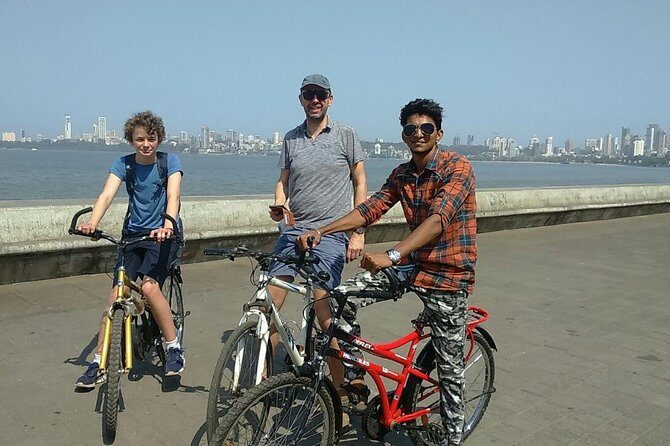
If you want one morning that helps Mumbai click into place, this style of tour does the job fast. You’re not just sightseeing from the window of a bus—you’re moving through the same corridors locals use. That changes how the city feels. Streets have a tempo. Sidewalks have energy. And landmarks land differently when you’re actually riding past them.
The route is designed around South Mumbai’s best-known heritage stops—Gateway of India, the Taj Mahal Palace area, the museum district, and the waterfront—then it pivots into the working side of the city with markets and temple neighborhoods. You get that mix of postcard and practical.
The tour is about 3 hours with a small group, and it runs early. That matters. Early on, streets are calmer, light is better for photos, and you’re more likely to hear your guide instead of fighting traffic noise.
You can also read our reviews of more tours and experiences in Mumbai.

Meeting at Colaba and Getting Rolling Early
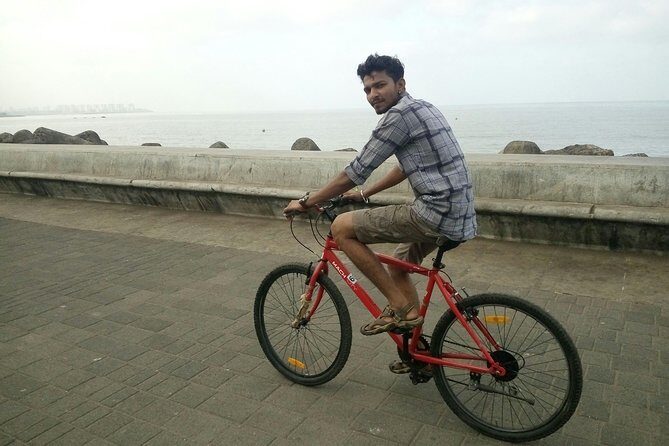
The meeting point is in Colaba, at Kailash Parbat Hindu Hotel and Restaurants (Sheila Mahal Society Shop no 5, 1st Pasta Ln, Apollo Bandar, Colaba). The good news is it ends back at the same place, so you don’t have to figure out where your morning dumps you.
Pickup is offered, which is a big value if you’re staying farther from Colaba or you don’t want to start your day navigating. If you’re using a cab or ride-hail, I’d still give yourself a little buffer. Morning timing can be tight when you’re coordinating a group and bikes.
Group size is capped at 12, which usually means you won’t feel like you’re in a moving parade. Instead, it’s easier to stop, restart, and listen when your guide explains why a building matters or what a place represents.
Gateway of India to Taj Mahal Palace: Seafront Icons First
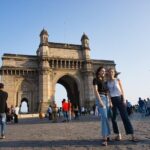
The morning kicks off at the Gateway of India, and the standout moment is the early view out toward the Arabian Sea. Even if you’ve seen photos before, sunrise light changes the scale. It’s one of those places where you understand why it became a symbol in the first place.
From there, you’re pushed forward quickly into the Taj Mahal Palace area. The stop at the Taj Mahal Palace is short—think “see it, register it, learn one or two details”—but that’s perfect on a bike tour. You get architecture appreciation without turning your day into a museum marathon.
One practical benefit of starting with these seafront landmarks: you build a mental map early. After that, the rest of South Mumbai’s heritage buildings and market lanes start to feel connected, not like random stops.
Museum Streets and Rajabai Clock Tower Photo Moments
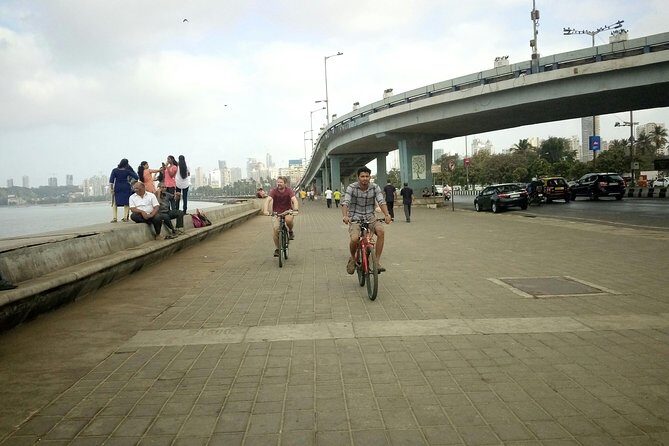
Next up is the Chhatrapati Shivaji Maharaj Vastu Sangrahalaya, which is the former Prince of Wales Museum. You get a focused look at the Indo-Saracenic architectural style from the outside. If you enjoy noticing patterns—arches, domes, decorative details—this is a good part of the ride to slow down mentally and look up.
Then you’ll spot Rajabai Clock Tower from outside. It’s the kind of structure that looks simple in a photo but feels more dramatic on-site. Being on a bike helps here: you can take in scale and surroundings while still keeping the tour moving.
Tip for this section: keep your phone charged. This is one of the parts where you’ll want to take photos from multiple angles, not just one quick shot.
Chhatrapati Shivaji Terminus (Victoria Terminus) and the Victorian Gothic Look
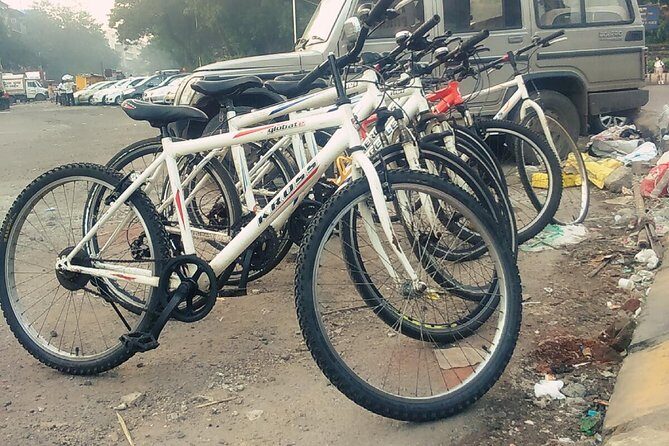
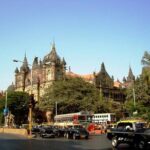
South Mumbai has a distinct architectural personality, and the bike route leans into it. You’ll reach the Chhatrapati Shivaji Terminus area—formerly Victoria Terminus Station—an outstanding example of Victorian Gothic Revival in India. You don’t spend long indoors (this is an outdoor, ride-through stop), but the point is to see how the building’s shape dominates the street.
There’s also a stop for the Brihanmumbai Municipal Corporation building nearby. The tour gives you just enough context to notice details rather than treating it like background.
Why this section works on two wheels: train-station architecture is all about lines, rhythm, and perspective. When you approach by bike rather than on foot, you catch those perspective shifts more naturally.

Crawford Market, Mangaldas Market Area, and How South Mumbai Trades
Here’s where the tour stops being only about famous monuments. You shift into Mahame Jyotiba Phule Market, better known as Crawford Market (the itinerary also references its historic context, including completion in 1869 and a donation connection to Cowasji Jehangir).
The stop is brief—around 15 minutes—but it’s enough to see the market’s energy and understand why people care about these places. Markets are where the city’s daily life shows itself. It’s not just shopping. It’s people, bargaining, rhythm, and a kind of real-world navigation that locals know instantly.
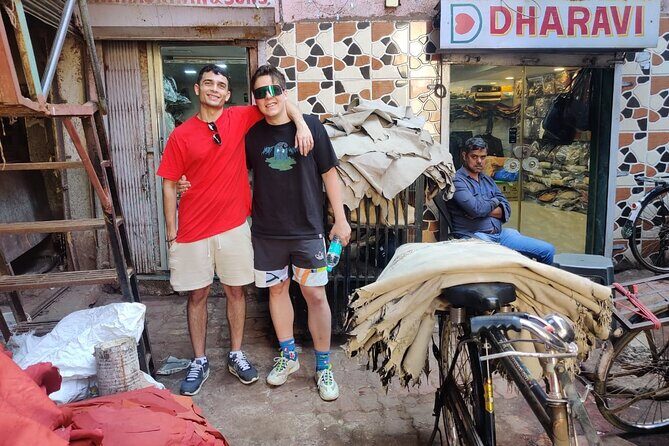
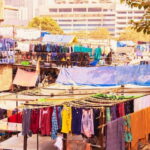
The route also references the clothing market area and nearby older markets like the Mangaldas Market region. You may not have time for a deep wander, but that’s the point. You’re getting a guided “sample platter” that helps you know where you’d want to return later on your own.
Mumba Devi Temple and Panjrapole: Culture That Has a Place to Stand
Not every heritage tour includes meaning that connects to everyday beliefs. This one does, and it’s one of the most interesting parts of the ride.
You’ll stop at Mumba Devi Mandir, dedicated to the goddess Mumbai and described as one of Mumbai’s oldest temples. Even on a short visit, it helps you understand why South Mumbai’s religious sites stay woven into city life instead of being isolated attractions.
Then comes Bombay Panjrapole, where the tour includes an entry ticket. The description links to the Gujarati origin of the word and, more importantly, to the concept of cow protection in Indian culture. This is one of those moments where a guide’s explanation can turn a quick stop into something memorable. It’s not just a photo stop; it’s a cultural idea made physical.
If you’re sensitive to religious spaces, keep it simple: dress respectfully, move quietly during any viewing moments, and follow your guide’s cues for where to stand and what to observe.
Marine Drive and Sassoon Dock: Finishing With Sea Views
The tour ends with the waterfront vibe. Marine Drive is a 3-kilometer-long promenade, and the C-shaped stretch makes it feel like you’re moving along a curved stage. The guide points out the setting along Netaji Subhash Chandra Bose Road, and the timing here matters because you’re likely catching the end of the morning with clearer views toward the sea.
After that, the route includes Sassoon Dock, an older dock area built in 1875 and described as one of the earliest wet docks in Bombay. Docks can feel industrial and plain, but from a bicycle route perspective, it’s a useful contrast to the polished landmark areas. You finish with a sense of how Mumbai connects land and water in practical ways.
This finishing stretch is also a morale boost. You’ve done the big monuments early, walked past heritage architecture, and traded markets—now you get open sightlines and sea air.
Guides Like Roy and Kurtin: Why the Stories Matter on a Bike
The difference between seeing Mumbai and understanding Mumbai is your guide. In the experiences tied to this operator, the guide names Roy and Kurtin came up, and the feedback consistently praised the storytelling and the feeling of getting your bearings fast.
That matters on a bike tour more than a walking tour, because you’re constantly moving. A good guide helps you connect what you see now with what you’ll notice later. For example, architecture stops are more than pretty facades when someone ties them to the city’s colonial and civic past. Market stops land better when the guide explains what the area is known for and how it fits into daily life.
If you’re choosing between tours in Mumbai, look for this: will your guide explain things while you ride, or will it just be a series of quick “look here” moments? On this tour, the guide role is central.
Price and Value: What $39 Buys You in Real Terms
At $39 per person for about 3 hours, this sits in the “you should probably try it” zone if your goal is a high-signal first morning. The value isn’t only the price tag. It’s what’s wrapped into it:
- Guided route through many standout areas in a short window
- Small group size (max 12)
- Pickup offered, plus you don’t have to manage transfers
- A mobile ticket
- Admission tickets listed as free for multiple stops, and Bombay Panjrapole is indicated as included
Also, it tends to get booked ahead—on average 53 days in advance. That’s a hint this isn’t a niche activity that you can always grab last-minute, especially during busy seasons or weekends.
If you’re the kind of traveler who wants a “city orientation” experience before committing to deeper independent exploring, this price makes sense. If you already know South Mumbai intimately and you just want a scenic ride, you might find you’re paying more for guidance than you need.
Bike Comfort and Safety: The One Thing You Must Check
Let’s talk safety plainly.
One rider described a cycling experience with no helmets provided and raised concerns about street crossings, saying the route wasn’t for the fainthearted. That doesn’t mean your tour will be identical, but it does mean you should not assume safety gear is included.
Before you go, ask two questions:
- Are helmets provided for this specific departure?
- How is the route planned for traffic and crossings, and what’s the riding comfort level expected?
Also, only you know your cycling style. If you’re new to biking or you don’t like riding near cars and buses, choose an experience that explicitly matches your comfort level.
General practical advice that costs nothing:
- Wear closed-toe shoes with good grip
- Keep your phone secured so you can take photos without fiddling while riding
- Bring a bottle of water, even if the tour is only 3 hours
Who This Morning Bike Tour Fits Best
This tour is a good fit if you want:
- A fast introduction to South Mumbai without renting a bike yourself
- A route that mixes monuments, temples, and markets
- A guided explanation that helps you connect the dots
It’s also a solid choice for families if everyone meets the minimum age requirement. The tour lists a minimum age of 6, and group size is capped, which can help younger riders stay together.
If you prefer long, slow sightseeing where you can wander independently for an hour at each stop, you may feel the time is tight. This is designed for motion—see a place, learn the point, move on.
Should You Book This Best Bicycle Tour in Mumbai?
I’d book it if your top goal for Mumbai is orientation: a guided first morning that covers landmark heavyweights and real neighborhood texture in a tight route. The Gateway of India sunrise energy, the architecture stops around the museum district and train-station area, the market section, and the cultural stops like Mumba Devi and Panjrapole are exactly the mix that makes a first trip feel organized.
I’d hesitate if you’re uneasy about city cycling or if you need guaranteed safety gear. Spend two minutes before booking asking whether helmets are provided and how the route handles crossings.
If you want a single “best value” first morning bike experience in Mumbai, this one has a strong argument. Just do your homework on safety gear and riding comfort, then enjoy the fact that you’ll spend your morning moving through Mumbai instead of waiting to be delivered to it.
FAQ
How long is the Mumbai bicycle tour?
It’s approximately 3 hours.
Where does the tour start and where does it end?
It starts at Kailash Parbat Hindu Hotel and Restaurants in Colaba (Sheila Mahal Society Shop no 5, 1st Pasta Ln, Apollo Bandar, Colaba) and ends back at the same meeting point.
Is pickup available?
Yes, pickup is offered.
What’s the group size?
The tour has a maximum of 12 travelers.
What are some of the main stops on the route?
You’ll visit major landmarks and heritage areas including Gateway of India, the Taj Mahal Palace area, Chhatrapati Shivaji Maharaj Vastu Sangrahalaya, Rajabai Clock Tower area, Chhatrapati Shivaji Terminus area (Victoria Terminus), Crawford Market (Mahatma Jyotiba Phule Market), Mumba Devi Temple, Bombay Panjrapole, Marine Drive, and Sassoon Dock.
Are admission tickets included?
Many stops list admission tickets as free, and Bombay Panjrapole is listed as included.
What age is the minimum for the tour?
The minimum age is 6 years.
How do I get my ticket?
A mobile ticket is used.
Is there free cancellation?
Yes. You can cancel up to 24 hours in advance for a full refund.
Are helmets provided?
One rider’s account stated that helmets were not provided on an illuminated-city bike ride with this operator. You should ask before you go to confirm what’s provided for your specific departure.