REVIEW · MUMBAI
Mumbai: Dhobi Ghat Tour with Dharavi and Train Ride Options
Book on GetYourGuide →Operated by Mumbai Dream Tours · Bookable on GetYourGuide
A hundred years of washing runs on muscle, not machines. Mahalaxmi Dhobi Ghat is Mumbai’s best-known open-air laundry, and a guided walk helps you understand what you’re looking at instead of just snapping photos. I like two things a lot: seeing hand-washing routines in action and learning the history and role of dhobis behind the scenes. One thing to consider: tour length can vary by booking, so it’s smart to confirm timing up front.
The Dhobi Ghat is also a photographer’s playground, with long rows and bright color as shirts, sheets, and towels move through the day. You’ll watch each step of the process and hear why families still rely heavily on manual work. My only caution is that this is a working place, so expect an intense, sometimes close-up environment rather than a quiet museum stroll.
In This Review
- Quick take: what you’re really signing up for
- Key things to know before you go
- Mahalaxmi Dhobi Ghat: an open-air laundry you can actually understand
- What you’ll see: how dhobis wash, dry, and iron by hand
- The history part that matters: why the dhobi role still has weight
- Getting the most from your guide (and your own expectations)
- Adding Dharavi: when you want the city story beyond the laundry
- Adding the train ride: a local-moving perspective
- Price and value: $11 looks good, but duration is the real math
- Who this is best for (and who should rethink it)
- How to plan your day: simple tips that help
- Should you book the Mahalaxmi Dhobi Ghat tour with options?
- FAQ
- What is the Mahalaxmi Dhobi Ghat tour?
- What optional add-ons are available?
- What’s included in the standard experience?
- Where does the tour start and end?
- How long has the Dhobi Ghat been operating?
- What languages are available for the tour?
- Does the tour use traditional methods?
- What is the price?
- Is there a reserve and pay later option?
- What is the cancellation policy?
Quick take: what you’re really signing up for
This is a guided look at a working system in motion. You’re not just visiting a landmark. You’re witnessing routine that keeps hundreds of families’ clothing moving through wash, drying, and finishing.
Key things to know before you go
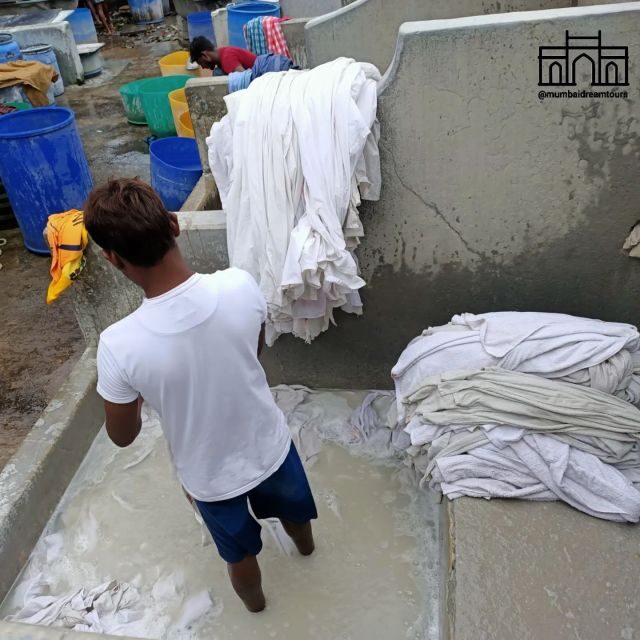
- Mahalaxmi Dhobi Ghat’s open-air setup: you see laundry work as it happens, not behind glass
- Manual steps you can spot: flogging clothes in troughs, hanging to dry, and finishing with charcoal irons
- A guide who explains the system: expect context on how dhobis and families share the work
- Optional add-ons: you can tack on a Dharavi tour and/or a train ride depending on your ticket
- Photo-friendly conditions: color lines and repeating patterns make great shots, even if you’re not a pro
You can also read our reviews of more tours and experiences in Mumbai.



Mahalaxmi Dhobi Ghat: an open-air laundry you can actually understand
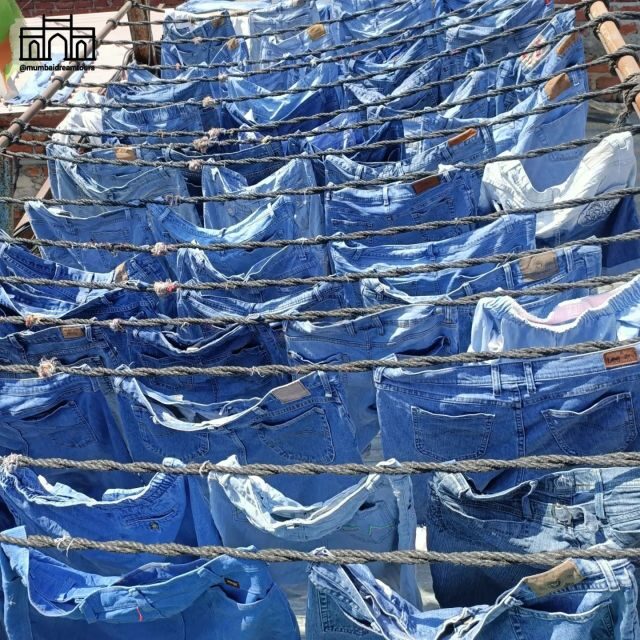
Mahalaxmi Dhobi Ghat is Mumbai’s largest open-air laundry facility, and it’s been in operation for well over a century. That age matters, because you’re not looking at a “staged” version of the past. You’re seeing a system that still handles real laundry from across the city.
What I like about going with a guide is simple: it turns visual chaos into a clear workflow. At first glance, it can look like a wall of activity. With explanation, you start noticing patterns—where clothes arrive, how they move from trough work to drying, and who does what within the family routine. The guide’s job is to help you read the place fast.
And yes, this is also a visual stop. The repeated rows, movement of fabrics, and vivid colors create a strong scene for photos. But the best photos often come when you understand the steps first. You’ll know when and where towels and shirts are being handled, and your timing improves.
What you’ll see: how dhobis wash, dry, and iron by hand
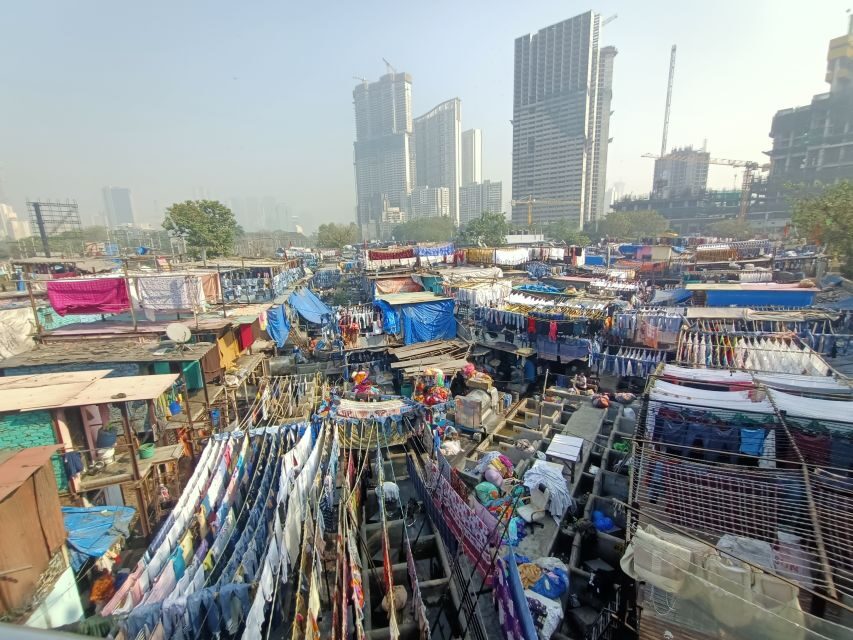
The laundry process here is traditionally very manual. Even if some families use machines too, a lot of the work at Mahalaxmi Dhobi Ghat is carried out by hand, with different family members taking responsibility for different steps. The result is a workflow you can watch and track.
Here’s the rhythm you’ll likely notice during your visit:
- Clothes are washed in troughs, where someone flogs the items to loosen grime.
- After washing, fabric moves out to dry, often in long lines where you can see the order of tasks.
- Finishing is done with bulky charcoal irons, which gives the process a distinct look and sound.
The practical value of seeing this in person is that it helps you understand Mumbai differently. You start connecting everyday logistics—laundry, labor, and household routines—to the bigger city system. It’s not just “interesting culture.” It’s the kind of place that makes you realize how much urban life depends on skilled work that rarely gets credit.
One more thing: because this is a working site, you’ll feel the pace. That can be energizing. It can also mean you shouldn’t expect a leisurely pace like you might find in a heritage fort.
The history part that matters: why the dhobi role still has weight

You won’t just be shown activities. A big part of the guided experience is the history and significance of the Dhobi Ghat itself—how it became central to Mumbai’s laundry world and how dhobi families fit into the daily cycle.
This matters for two reasons:
- Context changes your respect level. When you know what you’re watching, you don’t treat it like scenery. You treat it like work.
- You learn what’s still traditional. The process isn’t purely a memory. It’s used today, including charcoal ironing methods and the way family members split tasks.
In the stronger guided experiences, you also get time for questions. One guide named Rakesh stood out in positive accounts for being able to answer questions and keeping a relaxed approach. That mix—knowledge plus calm—helps you absorb what you’re seeing without rushing.
Getting the most from your guide (and your own expectations)

A good guide makes a huge difference at a site like this. You’re walking through a busy place, and the explanations help you avoid the common tourist trap: treating the stop as a photo opportunity only.
If you can, aim to go with a clear plan for how you want to experience it:
- Ask one or two questions early so the guide can orient you.
- Tell yourself you’re learning the workflow, not just hunting for photos.
- Give yourself permission to slow down at the steps that interest you most.
Now, the practical caution. There are also complaints about tour time ending sooner than expected. One low-rating account claimed the booked duration was about an hour, but the tour stopped after roughly ten minutes, with the traveler feeling the value wasn’t there. That doesn’t automatically mean every booking is like that, but it’s a clear signal for you to protect your time.
My advice: confirm the duration and what’s covered before you show up. If your ticket includes add-ons like Dharavi or a train ride, make sure those are part of the scheduled time and not just marketing language.



Adding Dharavi: when you want the city story beyond the laundry
Your tour can include a Dharavi tour if you selected that option. That changes the feel of the day. Dhobi Ghat gives you a close look at a specific working craft system. Dharavi broadens the picture into community life and how Mumbai functions at street level.
The value of adding Dharavi is that you’ll walk away with more “how people live and work here” context, not just one niche workplace. It also tends to shift your experience from process-focused learning to more social and neighborhood-focused learning.
One note: Dharavi experiences can be emotionally intense. If you’re sensitive to crowded spaces, tight alleys, or difficult realities, plan your energy accordingly. I’m not saying you should avoid it. I am saying you should go with a calm mindset and understand it’s not designed to be comfortable in the casual, shopping-mall sense.
Adding the train ride: a local-moving perspective
Another optional add-on is a train ride. In positive accounts, the train portion was enjoyed alongside the washing history, which makes sense: it helps you connect the laundry stop to how the city actually moves people and goods.
The good thing about combining a working-labor visit with transit is variety. Dhobi Ghat is mostly about seeing labor in one place. A train ride gives you motion and scale—Mumbai as an active system rather than a single stop.
The possible drawback is scheduling. If your plan includes multiple segments (Dhobi Ghat + Dharavi + train ride), you’ll want to keep a close eye on time so you don’t end up feeling rushed or shortchanged on any piece.
Price and value: $11 looks good, but duration is the real math
The listed price is $11 per person, which is a strong starting point for a guided experience with optional extras. Tours in big cities often charge a lot more for a guide and a structured walk.
But here’s the value equation you should use:
- If your tour actually runs for the time promised and includes the add-ons you selected, you likely get great value.
- If the experience is cut short, the per-minute cost can shoot up fast, and it won’t feel fair.
That’s where the caution from the low-rating account becomes practical. A traveler said they paid a higher amount and the tour ended early, calling it poor value. Even without confirming every detail of that situation, the takeaway for you is clear: verify timing. Ask what the guide covers in your booked window and whether add-ons change the schedule.
If you’re comparing options, also consider what you’re getting beyond the photos. A guided explanation of the washing workflow and the role of dhobis is the main “product,” and that only works if you have enough time with the guide.
Who this is best for (and who should rethink it)

This works best for you if:
- You like culture that’s practical, not staged.
- You enjoy learning how a system works while you watch it.
- You want photography with context.
- You’re open to walking through real, active spaces.
It may be less ideal if:
- You need a quiet, low-intensity experience.
- You’re uncomfortable with crowds or busy working areas.
- You’re the type who needs highly predictable timing and strict adherence to a schedule.
If you’re the flexible type—someone who likes city texture and real routines—you’re likely to enjoy it. And if you’re coming with a friend, pairs often work well because you can take turns listening and photographing without losing the story.
How to plan your day: simple tips that help
Because the Dhobi Ghat is a working laundry facility, treat it like that:
- Wear comfortable shoes you don’t mind getting used to uneven surfaces in a dense area.
- Keep your camera ready, but don’t let it control the whole trip. Ask about what you’re seeing so your photos have meaning.
- If you booked Dharavi or a train ride, build in mental flexibility. Multi-part days rarely feel like a straight line.
Also, bring the right attitude toward labor. This isn’t a show built for tourists. The best experiences come when you act like a curious observer who respects the work happening around you.
Should you book the Mahalaxmi Dhobi Ghat tour with options?
I’d book it if you want an authentic, working-city experience and you’re specifically interested in how laundry is done—plus you value a guide who can explain the “why” behind the “what.” The standout positive experiences tie strongly to guide quality, including one named Rakesh who was praised for answering questions and guiding through tight alleys you might not choose on your own.
I’d hesitate or at least verify carefully if you’re worried about time accuracy. One low-rating account complained about a much shorter tour than expected, which shows the risk you should manage. If you confirm duration and coverage for your exact option (Dhobi Ghat only, Dhobi + Dharavi, Dhobi + train ride, or combinations), you protect yourself from disappointment.
If you want a day that feels like Mumbai rather than just shows you the idea of Mumbai, this tour can be a solid pick—especially at the $11 starting price.
FAQ
What is the Mahalaxmi Dhobi Ghat tour?
It’s a guided tour of Mahalaxmi Dhobi Ghat, Mumbai’s largest open-air laundry facility, where you’ll learn about the history and significance of the dhobi system and the traditional way of washing clothes.
What optional add-ons are available?
You can choose a Dharavi tour option and a train ride option, depending on what you select when booking.
What’s included in the standard experience?
The experience includes the Dhobi Ghat tour. If you select the options, the Dharavi tour and/or the train ride are also included.
Where does the tour start and end?
The meeting point may vary depending on the option booked, and the activity ends back at the meeting point.
How long has the Dhobi Ghat been operating?
Mahalaxmi Dhobi Ghat has been in operation for over a century.
What languages are available for the tour?
The tour is offered in English.
Does the tour use traditional methods?
Much of the activity is described as traditional and handled by hand, including washing in troughs and finishing with bulky charcoal irons.
What is the price?
The price is listed as $11 per person.
Is there a reserve and pay later option?
Yes. You can reserve and pay later, meaning you book your spot and pay nothing today.
What is the cancellation policy?
You can cancel up to 24 hours in advance for a full refund.