REVIEW · MUMBAI
Bombay by Dawn
Book on GetYourGuide →Operated by Mystical Mumbai · Bookable on GetYourGuide
Dawn in Mumbai tells the truth. Bombay by Dawn is a tight 4-hour route that shows you how daily life runs on fresh supply and fast deals. You start early enough to catch the city before it becomes noise, and you’ll meet the people who keep commerce moving.
I especially like the way the tour links food to the clock. Fresh fruit, flowers, vegetables, and even fish aren’t just scenery here; they’re the reason mornings matter so much in Mumbai’s trade.
One thing to weigh: it’s a 4:30AM start and it’s not for everyone. If you’re not ready for an early wake-up, or you need food included, you may feel the squeeze.
In This Review
- Key points to know before you go
- Why 4:30AM Changes How You See Mumbai
- Newspaper Vendor to Wholesaler Row: The Supply Chain Starts Here
- Fish at Sassoon Docks: The Smell and the System
- The Short Train Ride: A Quick Lesson in Mumbai’s Movement
- Route Variations: Banganga, Flower Trading, and View Stops
- Morning Prayer in a Temple: How Religion Shapes the Day
- Price and Value: What $64 Actually Buys You
- Language and Comfort: Planning for Real-World Communication
- Who Should Book Bombay by Dawn
- Should You Book Bombay by Dawn?
- FAQ
- What time does Bombay by Dawn start?
- How long is the tour?
- What’s included in the price?
- Are food and drinks included?
- What languages is the live guide available in?
- Is the tour suitable for pregnant women?
Key points to know before you go
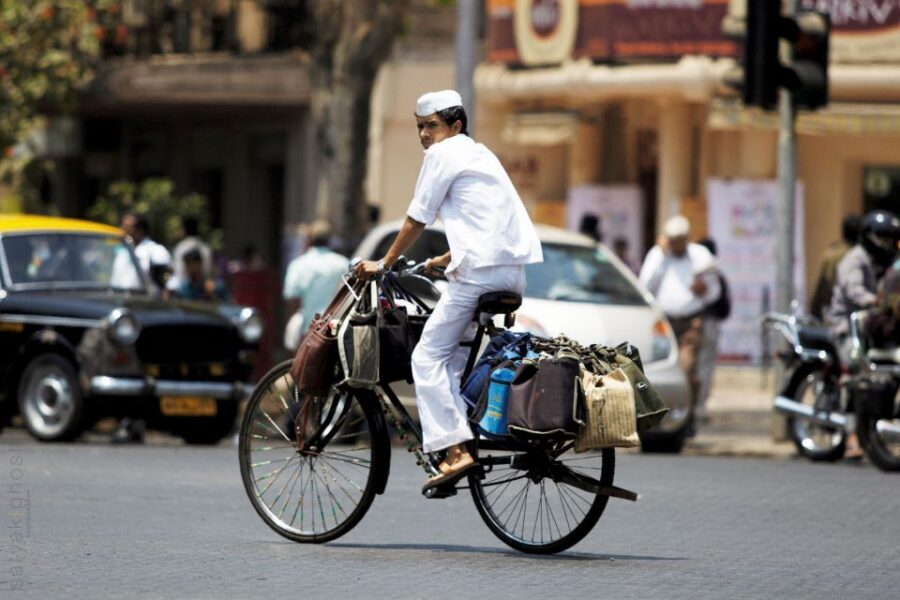
- 4:30AM hotel pickup means you’ll see markets running while others are still asleep
- Newspaper vendor first gives you a surprising look at how information reaches shops and hotels
- Cross-street market walks put bargaining for produce right in front of you
- Sassoon docks fish market delivers the real dock experience, including public access
- A short train ride connects marketplaces and people in a way driving alone can’t
- Temple morning prayer caps the tour with a spiritual rhythm to match the city’s schedule
Why 4:30AM Changes How You See Mumbai
This tour starts at 4:30AM because Mumbai’s morning economy starts then. You’re not just watching markets from the sidewalk. You’re walking through the workday kick-off, when vendors are trying to lock in buyers and move perishable goods before the heat and time pressure take over.
I like how the experience is built around one big idea: in Mumbai, freshness is a business strategy. When fish spoils fast, when flowers wilt quickly, and when vegetables lose value with time, you learn why the city prioritizes the early hours.
You should also know the pace is practical, not leisurely. You’ll be driving between stops, then walking through active market areas, then heading toward the docks and back. If you prefer slow sightseeing or sleeping in, this one may feel like a training session.
You can also read our reviews of more tours and experiences in Mumbai.


Newspaper Vendor to Wholesaler Row: The Supply Chain Starts Here
The first interaction is with a newspaper vendor, which sounds simple until you connect it to daily life. The logic is clear: information has to arrive early, and vendors are part of that morning delivery system. It’s also a reminder that Mumbai’s trade isn’t only about food.
After that, you cross the street to fruit, flowers, and vegetable wholesalers. This is where you’ll see the bargaining culture in motion, with men and women negotiating for fresh supplies. You’ll also notice how quickly decisions get made when the raw materials depend on time and transport.
What’s special here is that you’re not stuck in one photo spot. You’re moving through the spaces where wholesalers collect, sort, and arrange stock for the day ahead. It’s a chance to understand the city’s rhythm instead of just catching a pretty market moment.
Fish at Sassoon Docks: The Smell and the System
If you want a sensory wake-up call, you’re heading to Sassoon docks. The tour’s description doesn’t hide it: you’ll meet the smell of fish, and you’ll do it right at the dock where goods are handled for morning sales.
Sassoon docks matters because it’s the city’s first wet dock and the only one open to the public. That means you’re not only hearing about dock life; you’re seeing it where the work happens. The focus stays on the morning flow: fish preparation and distribution tied to market demand.
A downside to consider: docks are work areas. Expect a less polished look than a museum, and expect the environment to be practical. If strong smells will bother you, plan for it mentally before you arrive.
I also like that the tour doesn’t treat this as a spectacle. It’s framed as part of how Mumbai trades, which makes the fish market feel like an organized piece of the city, not just a scene.
The Short Train Ride: A Quick Lesson in Mumbai’s Movement
One included highlight is a small distance train ride. This is smart, because driving alone can flatten the feeling of how the city connects.
Trains in Mumbai aren’t just transport; they’re part of the daily rhythm that links workers with markets, warehouses, and neighborhoods. Even if the ride is short, it changes your perspective. You can feel how supply and people share routes and schedules.
I recommend treating the ride as a reset point. You’ll likely have been up and walking for hours, and a brief transit segment can give you a moment to observe without constantly stepping into the next doorway of activity.
Also, it helps that the tour includes a driver and a guide. In a city that moves fast, having that support means you spend your energy watching and learning, not figuring out logistics.
Route Variations: Banganga, Flower Trading, and View Stops
The core outline is markets, then fish docks, then temple prayer. But one important reality of real tours is that route details can shift with timing and flow.
In at least one version of the route, the morning includes a drive to Banganga, where you can learn about the water tank connected to the immersion of funeral ashes in Mumbai. That stop adds weight to the morning story, showing how daily trade and city life sit next to deep cultural practices.
That same version also includes time around flower trading, plus a viewpoint stop along Marine Drive for a dawn-like look at the city’s early energy. If your departure has those additions, you’ll get more context than just commerce.
There’s one caution here: if the tour starts later than intended, you may lose parts of the experience that depend on timing. One example was that newspaper distribution, the food market, and the temple prayer were missed when the start ran behind. So, show up early at your pickup spot and keep your morning flexible.


Morning Prayer in a Temple: How Religion Shapes the Day
The tour ends with morning prayer at one of Mumbai’s famous temples, followed by drop-off back to your accommodation. This part changes the whole tone. After the sensory push of markets and docks, prayer puts the city’s day into a different kind of order.
I like this structure because it prevents the morning from feeling like only business. In Mumbai, faith and daily routine overlap. People don’t shut off culture at dawn. They carry it into the same hours when sellers want to finish deals and buyers want fresh goods.
You should be prepared for a more quiet, respectful setting compared to the markets. Dress and behavior norms can matter at temples, and the tour guide will help you understand what to do once you arrive.
It’s also worth remembering that temple timing is not flexible. If your tour runs late, this is the part most likely to get shortened or skipped, because it’s tied to when prayer happens.
Price and Value: What $64 Actually Buys You
At $64 per person for 4 hours, this is priced like an experience that aims to give you access and context, not just transportation.
Here’s what your money covers: a driver/guide plus a professional guide, and hotel pick-up and drop-off. That matters because starting at 4:30AM means you don’t have to organize a taxi, navigate to markets, or worry about getting back on time.
Also, you’re getting small extras that add up to real value in practice. You’re taking a train ride, visiting the public portion of Sassoon docks, and ending with temple prayer. Those aren’t the kinds of things you usually piece together quickly on your own, especially this early.
The one thing not included is food and drinks. That’s important. You’re walking and absorbing strong smells and sights; you’ll likely want water and a plan for breakfast afterward. I’d treat this tour as a morning “education” slot and plan a meal immediately after.
So, is it good value? For the early-hour access plus guided interpretation, I think it’s a fair deal. If you’re expecting a relaxed brunch-with-a-view tour, though, you’ll feel the difference fast.
Language and Comfort: Planning for Real-World Communication
The live guide is offered in German and Spanish. If you’re traveling in English only, you might find yourself relying more on nonverbal cues and the group’s overall flow. It can still be worth it, but you’ll want to be patient with the communication style.
Comfort-wise, the tour isn’t listed for pregnant women. That’s a straightforward signal: it’s an early, active route with walking and market conditions that may not be gentle or predictable.
I’d also think about your tolerance for early mornings and close quarters. Markets and docks can be tight, and the environment moves quickly. If you’re sensitive to smells, be ready for fish at Sassoon docks to be the defining moment.
Who Should Book Bombay by Dawn
You’ll like this tour if you want more than sightseeing. It fits best if you enjoy learning how cities work through everyday systems: delivery, bargaining, freshness rules, and public dock activity.
It’s also a great match if you like sensory travel—sound, smell, movement—and you can handle waking up early without turning the morning into grump-time. The pacing is the point here: commerce before it’s replaced by tourism.
If you want a museum-style outing, skip it. This is a living schedule, not staged content.
And if you’re the type who can’t stand being without breakfast or who needs food included, plan ahead. Food and drinks aren’t included, so your morning should end with a breakfast plan.
Should You Book Bombay by Dawn?
Yes, if your idea of a great Mumbai morning is understanding trade in real places. The combination of newspaper vendor context, wholesale bargaining, Sassoon docks and its public wet-dock access, a short train ride, and temple prayer gives you a full arc from information to food to spirituality.
But don’t book it if you need a slow start, if smells are a deal-breaker, or if you need food provided during the tour. Also, if you’re traveling with language needs beyond German or Spanish, consider whether you’ll still enjoy it without detailed narration in your own language.
If you can handle the 4:30AM start and you like city life that feels practical, this tour is one of the better ways to experience Mumbai at the hour that actually makes sense.
FAQ
What time does Bombay by Dawn start?
You meet your guide at 4:30AM at your accommodation in Mumbai.
How long is the tour?
The tour lasts 4 hours.
What’s included in the price?
The tour includes the driver/guide, a professional guide, and hotel pick-up and drop-off.
Are food and drinks included?
No. Food and drinks are not included.
What languages is the live guide available in?
The live tour guide is available in German and Spanish.
Is the tour suitable for pregnant women?
No. It’s listed as not suitable for pregnant women.