REVIEW · MUMBAI
Small Group Tour of Dharavi Slum
Book on Viator →Operated by Young Tours And Travel · Bookable on Viator
Dharavi is not what the posters show. In about 2 hours 15 minutes, this guided walk takes you through real daily life in a place known for major production and constant motion, with a local guide leading the way and mineral water provided. You’ll get a structured look at how households, workshops, and schools sit side by side, including the kinds of small-scale industries that also brought worldwide attention to the area.
Two things I especially like: first, the guides—people such as Sneha, Rahul, Divya, and Pooja—use firsthand local knowledge and are ready for questions. Second, you can usually reach small lanes and working corners that many visitors never see on their own, including the Kumbharwada pottery area. One possible drawback: food and cold drinks are not included, so plan for a snack or a proper meal before or after the tour.
In This Review
- Key takeaways before you go
- Why this Dharavi tour feels practical, not performative
- Your 2 hours 15 minutes: how the day flows
- Stop 1 in Dharavi: density, work, and daily life side by side
- Stop 2 in Kumbharwada: pottery area in a short, focused window
- Churchgate transportation and how to plan the rest of your Mumbai day
- Local guides who answer questions: Sneha, Rahul, Divya, and Pooja
- What’s included, what’s not, and what you should bring
- Price and value: why $15 can make sense here
- Who this tour fits best (and who should think twice)
- Should you book this Dharavi slum tour?
- FAQ
- How long is the Dharavi slum tour?
- What does the tour cost?
- Is transportation from Churchgate included?
- What’s included in the tour besides the guide?
- Is food included?
- Where does the tour start and end?
- How many people can join the tour?
- What are the main stops on the itinerary?
- Who will guide the tour?
- Can I cancel and get a full refund?
Key takeaways before you go
- Local guides with real street context (names like Sneha, Rahul, Divya, and Pooja show up in strong feedback)
- Working Dharavi, not just sightseeing, with a look at how life and production blend together
- Kumbharwada pottery stop, short but focused on craft making
- Transportation from Churchgate is included (train option), which helps keep the day simple
- Mineral water bottles are included, but you’ll still want to handle your own food
Why this Dharavi tour feels practical, not performative
A slum tour can go wrong in two ways. It can turn into a grim photo session, or it can stay so vague that you don’t learn anything real. This one aims for the middle lane: a guided route with clear stops, time limits that keep it manageable, and enough local explanation to help you make sense of what you’re seeing.
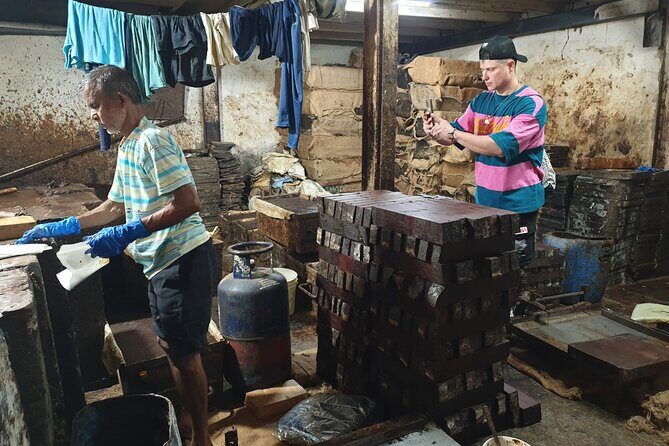
What makes it interesting for you is the emphasis on how things actually work. Dharavi isn’t presented here as a single story of poverty. Instead, you get a picture of a densely packed neighborhood where people live, learn, and produce—sometimes in the same block. The tour also points you toward the kinds of industries people associate with Dharavi’s fame, like small factories making items ranging from suitcases to Hindu shrines.
Another plus: it’s set up to be small and guided. The tour notes a maximum of 1 traveler, so you should expect a very small group feel. That matters in a place like Dharavi, where questions are normal and the right context can change everything about what you notice.
You can also read our reviews of more tours and experiences in Mumbai.



Your 2 hours 15 minutes: how the day flows
This is a short-format tour. You’re looking at roughly 2 hours 15 minutes total, which is great if you want a meaningful experience without losing an entire day in Mumbai.
The structure is straightforward:
- You start in Dharavi, then spend the bulk of the time in the neighborhood area.
- You finish with a quick craft-focused stop at Kumbharwada.
That tight timing is also why the guide matters. A good guide doesn’t just point; they connect. In the feedback you’ll see a theme: guides explain how daily life and work overlap, and they keep answering questions as you walk. If you like tours that stay focused on what’s in front of you, this format is easier to handle than longer half-day projects.
Also, the tour uses a mobile ticket, which helps you show up with less paperwork stress.
Stop 1 in Dharavi: density, work, and daily life side by side
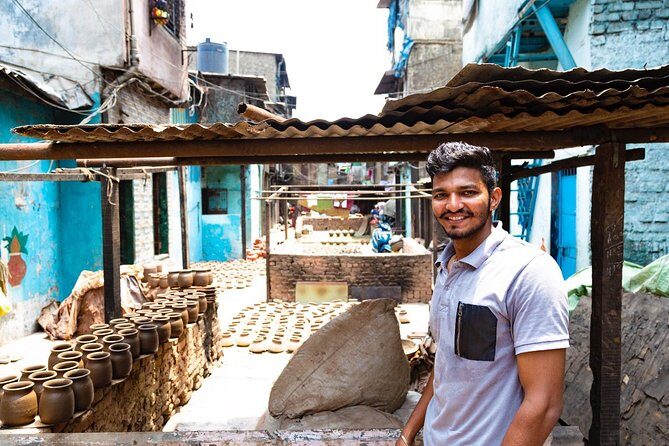
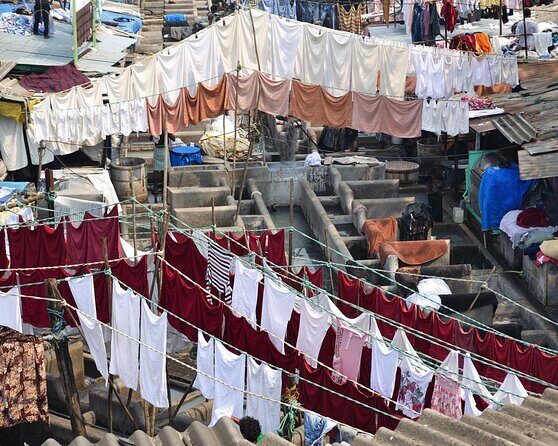
Your first stop is Dharavi itself. The tour frames it with big, real-world numbers so your brain can grab the scale quickly. Dharavi covers just over 2.1 square kilometers and is home to about 700,000 people. The population density is listed at over 277,136 people per square kilometer, which is the kind of statistic that instantly changes how you interpret everything you see.
Once you’ve got that mental picture, the tour’s content makes more sense. The highlights describe you visiting areas that show:
- factories producing goods (including items like suitcases and Hindu shrines),
- a residential area where families live,
- and even a school.
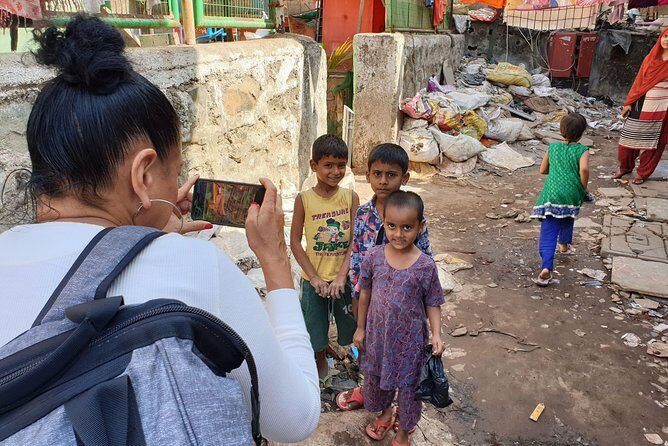
This is where the most praised part of the experience comes through. People highlight that guides lead them through lanes and gully areas that are otherwise hard to access, and they explain the blur between home and work. When a guide is local—again, names like Pooja and Divya appear with strong feedback—you’re more likely to get answers that feel grounded instead of rehearsed.
What to watch for while you’re there (so you actually get value from the walk):
- How many different kinds of activity happen in very small spaces.
- How the tour language connects work to daily routine, not just production to output.
- How often the guide returns to the idea that this is a living community, not a single theme.
One more thing: because Dharavi is compact and busy, you’ll want to keep expectations realistic. You’re not walking a museum loop. You’re moving through a real neighborhood, so the pace can feel intense. That’s not a bad thing, but it is the main “consideration” you should mentally prep for.
Stop 2 in Kumbharwada: pottery area in a short, focused window
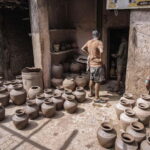
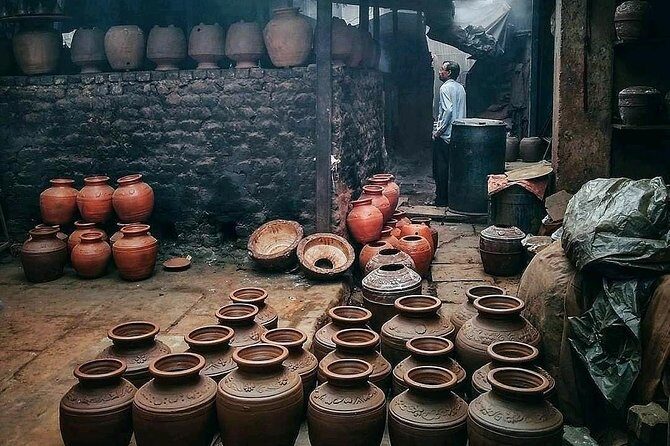
The second stop is Kumbharwada, described as the pottery area. You’re there for about 15 minutes.
That short timing might sound small, but it often works well for two reasons:
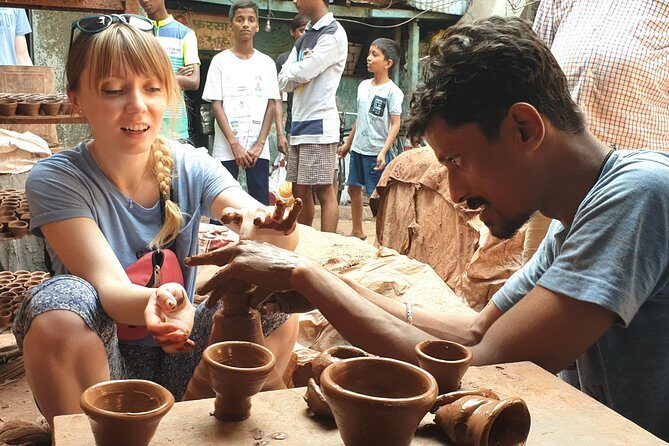
- Pottery craft is visual. Even in a brief stop, you can notice process details—shapes, materials, and the workshop rhythm.
- After time in the wider Dharavi area, this stop gives your brain a clear craft anchor. It turns general observations into something more specific.
So instead of leaving with only impressions of crowds and density, you also leave with a concrete example of skill-based work. If you like tours that balance big-picture context with at least one hands-on-seeming moment, Kumbharwada hits that need.
Churchgate transportation and how to plan the rest of your Mumbai day
One of the more helpful parts for your schedule is transportation. The tour includes transportation from Churchgate. The details specify that if you’re picked up from Churchgate, train transportation is included.
This matters because Churchgate is a common starting hub for visitors. Adding included rail transport reduces the guesswork and helps you time the tour without extra costs or detours.
Now, here’s the part to think about carefully: the listed meeting point is the Young Tours & Travel office on 90 Feet Rd, Muslim Nagar, Kumbhar Wada, Dharavi. The tour notes that the starting point and final point can be far, and it recommends taking a cab to your next destination. If you need to reach the nearest railway station, the guide will accompany you back to the station.
Because the tour’s start and end details can look a bit different depending on how the operator schedules you, treat this as your practical rule:
- Plan to travel locally after the tour.
- Don’t schedule your next big appointment at the minute after it ends.
At the end, the guide helps you get back using taxi, bus, train, and walking, depending on what makes sense for you.


Local guides who answer questions: Sneha, Rahul, Divya, and Pooja
This tour’s strongest ingredient isn’t the sticker highlights. It’s the guide.
In the feedback, people consistently mention that the guide is:
- local to Dharavi,
- able to explain day-to-day experience,
- and comfortable answering questions.
You’ll see repeat praise for guides including Sneha, Rahul, Divya, and Pooja. One review mentions a guide fluent in both English and regional languages, which is a big deal if you want to ask follow-ups and not just nod along.
Another common praise point is that the tour can feel customized. People mention going to multiple spots and lanes that would be otherwise hard to access. That’s exactly what you want when the location is complex. In Dharavi, the difference between a good walk and a disappointing one is often whether the guide knows where to take you next and how to explain what you’re seeing.
If you like tours where you can ask questions and get straight answers, this setup is a good match.
What’s included, what’s not, and what you should bring
The included items are refreshingly clear:
- Mineral water bottles
- Transportation from Churchgate (train option, if picked up from Churchgate)
Not included:
- Taxi/Uber charges
- Food and cold drinks
So you should plan your day around that. For food, consider eating before the tour or having a plan for after. The tour is short enough that hunger might not ruin everything, but it can affect your comfort if you’re pushing through with no snack.
What you should bring (practical, not fancy):
- Comfortable footwear for tight lanes and lots of walking.
- Your mobile ticket on your phone.
- A little buffer in your day, since you may want time to connect to trains or local transport after.
Also, confirmation is received at booking time. That’s useful if you like to show up prepared and not wait around for last-minute details.
Price and value: why $15 can make sense here
The price is listed as $15.00 per person. For Mumbai, that’s low enough that you should ask what you’re getting—especially because tours in major cities often add costs on top.
Here’s what you’re paying for that can make the value feel real:
- A guided experience led by a local guide
- A defined route with two stops (Dharavi area and Kumbharwada pottery area)
- Mineral water
- Admission ticket free (the tour notes admission ticket is free for stops)
- Optional included rail transport from Churchgate (based on pickup)
You’re not buying a hotel, a private driver, or an all-day food plan. You’re buying time with someone who knows the neighborhood and can guide you through it. In that sense, $15 works best if you’re there for context and explanation, not for comfort perks.
One more value point: the tour notes a maximum of 1 traveler. If you’re traveling solo, that can mean a more personal experience for the same price structure meant for small groups.
Who this tour fits best (and who should think twice)
This tour says most travelers can participate. That’s a broad statement, but you can still use it as a guide.
You’ll likely enjoy it if you:
- want to see how people live and work in a real, extremely dense area,
- like guided walks where you can ask questions,
- appreciate local perspective from guides such as Sneha, Rahul, Divya, or Pooja,
- prefer a 2+ hour plan rather than a full day.
You might think twice if you:
- need a very quiet, low-traffic environment,
- can’t handle crowded streets and narrow lanes with no escape route,
- or you’re the type who needs food and drinks included.
If you’re flexible and follow your guide’s pace, this format can feel honest and direct.
Should you book this Dharavi slum tour?
My take: yes, if you want a short, guided reality check of Mumbai’s working neighborhood life. The strongest reasons to book are the practical structure and the people running it. This tour is built around local guides who explain the blend of home, production, and education, plus it gives you at least one craft stop at Kumbharwada.
Book it if you can handle a dense walking environment and you’re okay planning your own meals. Don’t book it if you’re expecting a relaxed, ticketed attraction with built-in refreshments and a long sit-down experience.
If you’re the curious type—comfortable asking questions and learning on your feet—this is one of those experiences that can reset your mental map of a place fast.
FAQ
How long is the Dharavi slum tour?
It runs for about 2 hours 15 minutes.
What does the tour cost?
The price is $15.00 per person.
Is transportation from Churchgate included?
Yes. If you’re picked up from Churchgate, train transportation is included.
What’s included in the tour besides the guide?
Mineral water bottles are provided, and the tour uses a mobile ticket.
Is food included?
No. Food and cold drinks are not included.
Where does the tour start and end?
Both the start and end are listed at the Young Tours & Travel office on 90 Feet Rd, Muslim Nagar, Kumbhar Wada, Dharavi, Mumbai, Maharashtra 400017, India.
How many people can join the tour?
The maximum is listed as 1 traveler, so it’s very small group.
What are the main stops on the itinerary?
You visit Dharavi first, then Kumbharwada, the pottery area.
Who will guide the tour?
A local guide will lead the way (guides referenced in feedback include Sneha, Rahul, Divya, and Pooja).
Can I cancel and get a full refund?
Yes, free cancellation is available. You can cancel up to 24 hours in advance for a full refund.