REVIEW · MUMBAI
Mumbai Sightseeing with Dharavi Slum
Book on Viator →Operated by Dynamic Mumbai · Bookable on Viator
Mumbai hits hard in the best possible way. This 6-hour private tour pairs famous colonial landmarks with a guided walk through Dharavi, one of the biggest slums in Asia. You get a driver in an air-conditioned vehicle, plus a mobile ticket that keeps the day simple.
I really like two parts of this outing. First, the Dharavi segment is led by a guide who can explain how people work and live there, and you often get that extra layer when paired with someone like Nickesh, known from prior groups for strong, personal local context. Second, the main-sight stops are classic Mumbai highlights, especially the UNESCO-listed Chhatrapati Shivaji Terminus and the Gandhi museum at Mani Bhavan.
One drawback to plan for: the Dharavi walk is intense and real, and it involves street-level walking in a dense area. If you prefer scenery over people, this may feel like a lot.
In This Review
- Key things you’ll notice on this tour
- A Six-Hour Mix of Colonial Mumbai and Real Daily Life
- Dharavi Walk: How a Guided Look Changes Your Perspective
- Gateway of India and the Taj Mahal Palace: The Waterfront Story You Should Know
- Chhatrapati Shivaji Terminus (CST): UNESCO, Trains, and British-Era Power
- Mani Bhavan Gandhi Museum: When 1917 to 1934 Feels Personal
- Dhobi Ghat and the Working City: Laundry, Routine, and Watching With Care
- Hanging Gardens Near the Tower of Silence: A Short Scenic Stop With Big Meaning
- Price and Logistics: Is $250 Worth It?
- Who This Tour Suits Best (And Who Might Want to Skip Dharavi)
- Making It Work in Real Life: Timing, Comfort, and What to Bring
- Should You Book Mumbai Sightseeing With Dharavi Slum?
- FAQ
- How long is the Mumbai Sightseeing with Dharavi Slum tour?
- What does the tour cost and how many people are in a group?
- Is pickup offered?
- Is there a mobile ticket?
- Which sites include admission tickets?
- Is lunch included?
- Where does the tour start and end?
- Is this a private tour?
- Can I cancel for a full refund?
- FAQ
- How far in advance do people usually book this tour?
Key things you’ll notice on this tour
- A guided walk through Dharavi focused on daily work and how life functions there
- Gateway of India + Taj Mahal Palace in the same waterfront pocket, with the story behind both
- Chhatrapati Shivaji Terminus (CST), UNESCO-listed and included with admission
- Mani Bhavan Gandhi Museum tied to Gandhi’s years in Mumbai (1917 to 1934)
- Dhobi Ghat open-air laundry—a working place you can watch up close for a short stop
- Multiple colonial-era landmarks plus skyline viewpoints from Kamala Nehru Park
A Six-Hour Mix of Colonial Mumbai and Real Daily Life
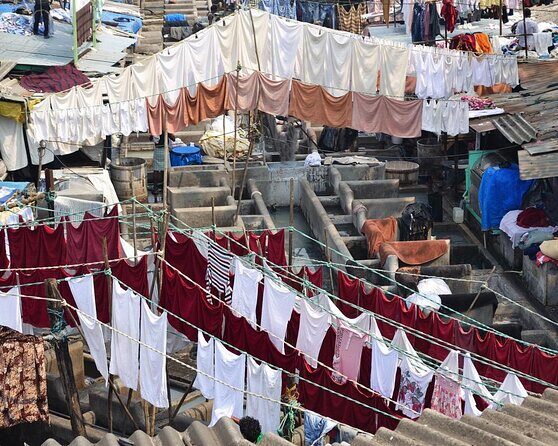
This is the kind of Mumbai day that forces you to pay attention—in a good way. One moment you’re looking at grand waterfront architecture and British-era civic buildings. The next moment you’re walking in a neighborhood where work, trade, and routine happen right on the street.
What makes the day work is the contrast. You don’t just collect photos. You get a guided explanation at Dharavi, and then you see the city that grew around (and sometimes ignored) neighborhoods like it. It also helps that the tour is private for your group (priced per group, up to three people), so you’re not getting shuffled around with strangers.
You’ll start in Mahim, meet at Café Coffee Day, and then use an air-conditioned vehicle for the longer city rides. That matters in Mumbai heat and traffic, especially when your schedule is packed with short stops and a couple of longer ones.
You can also read our reviews of more tours and experiences in Mumbai.



Dharavi Walk: How a Guided Look Changes Your Perspective
The heart of this tour is a two-hour guided walk through Dharavi. The focus is straightforward: you’ll see how people work and live, and you’ll have time to talk about it with your guide. The ticket portion is listed as free, which keeps the experience accessible.
This part of the day is not about sightseeing in the usual sense. It’s about understanding. You’ll be walking through a dense, active area where daily life is the main attraction—workshops, small businesses, and the constant movement that keeps the neighborhood functioning.
If you get a guide like Nickesh (or Nick), you’re in for extra context. Prior groups have specifically praised him for living there and sharing insight from the inside, plus for being friendly and even funny without losing respect for the subject. That tone matters, because Dharavi can be a topic people approach either with curiosity or with fear.
A practical note: take a breath before you go. If you’re the type who needs everything to feel comfortable, this may challenge you. But if you want the unfiltered Mumbai side—beyond postcards—this walk is the reason to book.
Gateway of India and the Taj Mahal Palace: The Waterfront Story You Should Know
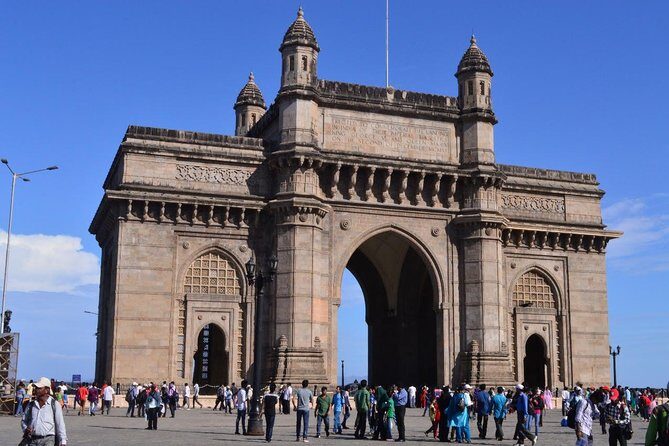
After Dharavi, you head to the most famous public square by the sea: Gateway of India. It’s quick—about ten minutes for your stop—but it’s one of those places where knowing the background changes how you see it.
The gateway was built to welcome King George V and Queen Mary into India. That’s your anchor detail. Right next to it sits the Taj Mahal Palace Hotel, another major landmark in the same waterfront pocket, and the tour connects the two through a neat bit of colonial-era backstory.
One detail I like here is the reference to Watson’s Hotel ruins and how Tata was refused entry at that hotel. The story goes that this led to the building of the Taj Mahal Hotel. It’s the kind of detail that makes the skyline feel less random and more like a map of decisions made long ago.
Even if your photos are great, don’t rush the meaning. The waterfront gives you a quick sense of Mumbai’s role as a port city—and why this part of the city still feels like an entrance point.
Chhatrapati Shivaji Terminus (CST): UNESCO, Trains, and British-Era Power

Next up is Chhatrapati Shivaji Terminus (CST), the UNESCO-listed train station. Your time here is short (about fifteen minutes), but the ticket is included, so you’re not juggling money or entry lines.
CST is one of Mumbai’s most iconic buildings because it’s both functional and ceremonial. Trains move people quickly, but the station itself is built to impress—big scale, detailed design, and a sense of authority. Standing inside or near CST helps you understand how rail shaped the city: it moved goods, workers, and visitors, and it determined where activity concentrated.
This tour also layers in other British-heritage stops nearby or along the route. You’ll see things like the Mumbai University building (built in 1857) and the Rajabai Clock Towers, often described as Big Ben of India. You’ll also pass the Bombay High Court, another notable colonial-era structure.
One key advantage of bundling these together: you don’t have to treat each stop as separate research. In a few hours, you get a pattern—British civic planning, visible institutions, and a city that still lives inside those structures.
Mani Bhavan Gandhi Museum: When 1917 to 1934 Feels Personal
Your schedule then moves to Mani Bhavan Gandhi Museum, with about thirty minutes on site and admission included. This stop is one of the most grounded in the entire day because you get a specific time and a specific place.
Gandhi lived here for 17 years from 1917 to 1934. That timeline is the point. It’s not just a museum label—it’s a reminder that major ideas and movements weren’t abstract. They had an address.
If you like your history tied to real rooms and real decisions, this is a strong counterbalance to the grand architecture earlier in the day. It also pairs well with the earlier contrast: after Dharavi, you’re still thinking about daily life and power. Then you walk into a space linked to a leader who became a focal point for how people imagined change.


Dhobi Ghat and the Working City: Laundry, Routine, and Watching With Care
Then comes Dhobi Ghat, described as the world’s largest open-air laundry. Your visit is about twenty minutes, and admission is free.
This is a working place. Clothes are washed in full view of the public, so what you see isn’t staged. It’s practical labor continuing through the day, and it gives you a different kind of city insight than monuments do.
A useful way to enjoy Dhobi Ghat is to watch like a documentarian but with respect. Don’t treat people like scenery. Instead, let the process teach you. Laundry tells a story about water access, labor, and how services function in everyday Mumbai.
Also, the tour builds in other viewpoint moments along the way, like Kamala Nehru Park, known for skyline views and the Old woman’s shoe viewpoint. Those spots are great for resetting your brain after Dharavi and Dhobi Ghat—just enough distance to see the city as a whole again.
Hanging Gardens Near the Tower of Silence: A Short Scenic Stop With Big Meaning

Between the working-city stops and the memorial sites, you also get to see Hanging Gardens. These gardens are built on top of water tanks near the Tower of Silence, a Parsi burial place.
Even if you only spend a short time here, it’s a fascinating intersection: nature, infrastructure, and religious practice in the same area. The fact that the gardens are built on top of water tanks turns a simple viewpoint into a reminder of the engineering underneath city life.
This part of the route helps you understand Mumbai as layered. It’s not just one era or one community. The city stacks meanings side by side, and you feel it even when you’re just passing through.
Price and Logistics: Is $250 Worth It?
This tour costs $250 per group and is designed for up to 3 people. On paper, that can look pricey if you compare it to per-person walking tours. In practice, the value depends on how many you are and what’s included.
Here’s what you get for the group price:
- An air-conditioned vehicle
- All fees and taxes
- Admission included for Chhatrapati Shivaji Terminus and Mani Bhavan Gandhi Museum
- Mobile ticket for smoother entry
- A private format where only your group participates
Several other stops are listed as free for admission, including the Dharavi segment and Dhobi Ghat, plus the Gateway area.
If you have three people, your cost per person comes down fast. Even with two people, you’re often paying less than the typical total when you add separate transport plus entry tickets plus a guide who can handle the schedule and transitions.
The main thing to consider is that it’s a packed day with multiple stops and short visits. If you like long, slow museum time and deep coffee breaks between sights, you might find the pace a bit tight. But if you want a focused mix of Mumbai icons plus real neighborhoods, this price structure fits the goal.
Who This Tour Suits Best (And Who Might Want to Skip Dharavi)
This works best for you if:
- You’re on a shorter visit and want both iconic Mumbai and the living city in the same day
- You prefer a guided explanation over guessing your way through
- You want a private group experience rather than getting swept into a big crowd
- You’re traveling solo and value having a guide and vehicle support for transitions between areas
One solo traveler specifically noted feeling safe with the private format. That’s a real consideration in a city as busy as Mumbai, and it’s part of why I think this tour is smart for first-time visitors who don’t want to figure everything out alone.
Where I’d be cautious: if you strongly dislike intense or emotionally heavy environments, the Dharavi section may feel too confronting. This isn’t a casual “see a slum from the outside” outing—it’s a walk through the reality of how people work and live.
Making It Work in Real Life: Timing, Comfort, and What to Bring
The tour is about six hours. Pickup is offered, and you meet at Café Coffee Day in Mahim (Mahim area). The tour ends back at the meeting point, so you don’t need to plan a separate return.
Because the schedule includes walking (especially in Dharavi) and you’re outdoors at places like Dhobi Ghat, I’d plan for comfort:
- Wear shoes you can walk in without thinking
- Bring water, since you’re out for hours and moving through dense areas
- Keep your phone charged for CST and the skyline viewpoints at Kamala Nehru Park
Also, lunch is not included. So decide ahead of time if you want a quick snack during the gaps or a proper meal right after. This tour gets you a lot of sights in six hours; your stomach will want a plan.
Should You Book Mumbai Sightseeing With Dharavi Slum?
Book it if you want a Mumbai day that doesn’t stop at monuments. The combination of Dharavi’s guided walk, colonial-era landmarks like Gateway and CST, and a working-city stop at Dhobi Ghat gives you a full-scope sense of what Mumbai is.
Don’t book it if your idea of sightseeing means relaxing, pretty views only, with minimal emotional weight. The Dharavi portion is the point of the tour, and it’s not designed to be light.
If you do book, I’d pay attention to who you’re paired with for the Dharavi walk. Prior groups have praised guides such as Nickesh for local perspective and a respectful, human tone. That can turn a difficult topic into an educational one you’ll remember long after the photos fade.
FAQ
How long is the Mumbai Sightseeing with Dharavi Slum tour?
The tour runs for about 6 hours.
What does the tour cost and how many people are in a group?
It’s $250 per group (up to 3 people).
Is pickup offered?
Yes, pickup is offered.
Is there a mobile ticket?
Yes, a mobile ticket is provided.
Which sites include admission tickets?
Admission is included for Chhatrapati Shivaji Terminus (CST) and Mani Bhavan Gandhi Museum. Dharavi and Dhobi Ghat are listed as free admission stops, and the Gateway area is listed as free.
Is lunch included?
No, lunch is not included.
Where does the tour start and end?
It starts at Café Coffee Day in Mahim (Unit No. 58, Ground Floor, Ram Mahal Building, Senapati Bapat Marg, T.P. Road area) and ends back at the meeting point.
Is this a private tour?
Yes. It’s a private tour/activity, and only your group participates.
Can I cancel for a full refund?
Yes. Free cancellation is available up to 24 hours in advance for a full refund.
FAQ
How far in advance do people usually book this tour?
On average, it’s booked about 24 days in advance.