REVIEW · MUMBAI
Gufran’s Slum Home Tour in the Mumbai Slums
Book on Viator →Operated by Goofy Tour and Travel · Bookable on Viator
Homes like this teach Mumbai fast.
Gufran’s Slum Home Tour is a short, two-hour way to see South Mumbai through the eyes of someone who grew up there, sharing daily life, family stories, and his Slum Care social initiative. The route starts with a hot cup of Indian tea at Regal Cinema in Colaba, then moves to Sassoon Docks and the nearby laundry scene before ending at Gufran’s home, where visitors meet family and friends—and you also hear a local connection to Gregory Roberts’ Shantaram.
I really like the value for what you get: a guided, private experience (just your group), with tea/coffee, bottled water, and all fees included, priced at about $11.35 per person. I also like the human focus—you’re not touring a set of sights, you’re getting context for how people live, work, and support each other in the largest slum area in South Mumbai.
One consideration: this is a neighborhood visit, so expect tight, moving spaces and a schedule that depends on good weather. If it’s poor weather, the tour may be moved or refunded, so don’t plan your day too tightly.
In This Review
- Key things that make this tour worth your time
- South Mumbai Through Gufran’s Eyes (and Why This Feels Different)
- Regal Cinema in Colaba: Tea First, Then You Get Your Bearings
- Sassoon Docks: From 1875 Docking History to a Major Fish Market
- Traditional Laundry Washing at Ganesh Nagar: Everyday Work With Real Meaning
- Inside Gufran’s Home Area: Stories, Family, and Slum Care
- Price, Time, and What You Actually Get for $11.35
- Mobile Ticket and Getting There: Simple, But Don’t Show Up Late
- Who This Tour Suits Best (and Who Might Feel Uncomfortable)
- Quick Tips to Make the Most of the Day
- Should You Book Gufran’s Slum Home Tour?
- FAQ
- How much does Gufran’s Slum Home Tour cost?
- How long is the tour?
- Where does the tour start?
- What’s included in the price?
- Is lunch included?
- Is this a private tour?
- Is a mobile ticket provided?
- What are the tour hours?
- What happens if the weather is bad?
- Is the tour near public transportation?
Key things that make this tour worth your time
- Tea at Regal Cinema: start with a warm drink at a famous Art Deco landmark in Colaba.
- Sassoon Docks (1875) fish market stop: see one of the oldest docks turned into a major fish market area.
- Laundry-washing observation: watch traditional washing in action before you head into the home area.
- Meet Gufran’s family and friends: conversations are part of the point, not a photo-op add-on.
- Slum Care context: you’ll hear how community support fits into everyday life.
- A Shantaram connection: the tour notes that Gregory Roberts lived in the area for a long time.
South Mumbai Through Gufran’s Eyes (and Why This Feels Different)

Mumbai can be loud, fast, and a bit unreal when you only see it from big hotels and named attractions. This tour gives you something more grounding: a person’s home, a community’s routines, and the kind of stories that don’t show up in guidebooks.
Gufran lives in Ganesh murti Nagar, described as the largest slum in South Mumbai, and that matters. This isn’t a lecture tour about poverty from far away. It’s framed as life there—growing up, navigating the neighborhood, and sharing what he’s building through Slum Care. You’ll also meet his family and friends, which changes the tone from “tourist viewing” to real conversation.
The structure is smart, too. You begin outside with tea at an iconic cinema, then shift into working waterfront life at Sassoon Docks, then into a quieter everyday rhythm with laundry washing—before you step into the home area for the longer human part. That pacing makes it easier to understand what you’re seeing.
You can also read our reviews of more tours and experiences in Mumbai.



Regal Cinema in Colaba: Tea First, Then You Get Your Bearings
You meet at Regal Cinema (Apollo Bandar, Colaba). It’s an Art Deco landmark, so even the start feels like a Mumbai snapshot: history in brick and steel, and people moving through the street around it.
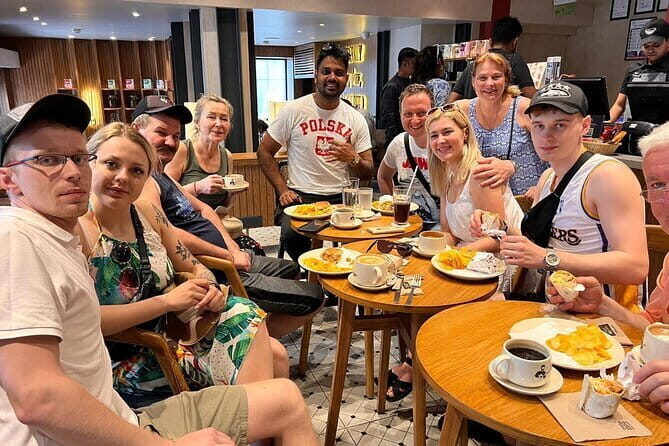
After you link up, you get a nice hot cup of Indian tea. That might sound small, but it helps for two reasons. First, it’s a practical reset—Mumbai weather can be warm, and a hot drink makes the first part of the walk feel more comfortable. Second, it sets the tone. You’re not rushing. You’re settling in, and you have a moment to start asking questions before you head into busier areas.
This first stop is also short (about 15 minutes). That keeps the tour from turning into a waiting game and helps you get to the meat of the day without losing momentum.
Sassoon Docks: From 1875 Docking History to a Major Fish Market
Next comes Sassoon Docks, one of the oldest docks in Mumbai, built in 1875, and now a large fish market area. If you’ve ever wondered what “working Mumbai” looks like, this is where you see it.
Here’s why this stop works even if you’re not a “market person.” Markets aren’t just about buying. They’re about logistics—how goods move, who does what, and how the pace of the day affects everything. The tour keeps this focused by pairing the docks with the rest of your route, so you see the day as a chain of normal activity rather than a single spectacle.
Practical note: fish market areas can be busy and sometimes close-quartered. Wear shoes you trust. Keep your phone/camera ready, but don’t block people or linger where you’re in the way. With a local guide, you’ll usually know where to stand and when to move.
This stop is about 15 minutes—enough time to register the sights and smells without exhausting yourself before the next transitions.
Traditional Laundry Washing at Ganesh Nagar: Everyday Work With Real Meaning

After the docks, the tour slows down at Ganesh Nagar with traditional laundry washing. This is one of those “small” stops that often becomes the most memorable, because it shows a routine that’s both ordinary and dignified.
Watching laundry get done in the open makes you notice details you’d otherwise miss: water use, workflow, how people manage tasks in shared spaces, and how the neighborhood itself becomes part of daily labor. It also bridges the tour from the working waterfront world to the home community world. You’re not jumping from one extreme to another—you’re tracing daily life step by step.
This stop runs about 30 minutes. That’s a good chunk of time. Markets are fast. Laundry is methodical. The contrast helps your brain connect what you’re seeing.
Inside Gufran’s Home Area: Stories, Family, and Slum Care

The main event is the visit to Gufran’s home area in Ganesh murti Nagar slums, where the tour is described as lasting about an hour. This is where the experience becomes more than just sightseeing.
You meet Gufran’s family and friends. That’s not just a nice touch; it’s the core value. People can tell you about a place, but family conversation makes the story bigger and more grounded. You’ll also hear about growing up there and how Slum Care fits into his life.
Slum Care is a social initiative, and the tour frames it as something connected to everyday reality. That’s important. You get a sense of community effort rather than just an outside explanation. It helps you understand how people respond to the pressures of poverty and instability with practical support—education, health, or other forms of aid (the tour specifically calls it a social initiative, without listing programs).
There’s also an unexpected cultural link. The tour notes that Gregory Roberts, author of Shantaram, lived in the area for a long time. Even if you only know the book, it adds a layer of meaning: this neighborhood has been seen by the world through literature, but here you’re meeting the people living it now.



Price, Time, and What You Actually Get for $11.35

At about $11.35 per person for roughly two hours, this tour is priced like an extraordinary deal—especially in a city where guided experiences often cost far more. Here’s why the value calculation works:
- You’re getting a private setup for your group (not a giant shared bus experience).
- The tour includes coffee and/or tea, plus bottled water, and covers all fees and taxes.
- You also get a local guide, and the time is used for distinct stops rather than wandering.
What’s not included is lunch. So you’ll want to treat this as a shorter outing that fits into a bigger day plan. If you’re sensitive to hunger timing, eat beforehand or plan a meal right after.
Duration matters here. Around two hours is long enough to feel you learned something real, but short enough that you’re not tied up for half the day. That makes it an easier fit for first-timers in Mumbai who want authenticity without sacrificing their schedule.
Mobile Ticket and Getting There: Simple, But Don’t Show Up Late
The tour uses a mobile ticket, which is convenient. Your meeting point is Regal Cinema in Colaba, and it’s near public transportation. That’s a good combination: you don’t need a complicated route just to start.
Try to arrive a bit early. Even short stops depend on everyone being ready to move. In busy areas like Colaba and the docks, being late can throw off the rhythm.
The tour also runs daily, with hours listed from 11:00 AM to 5:00 PM. That wide window helps you slot it into your travel days.
Who This Tour Suits Best (and Who Might Feel Uncomfortable)

This tour suits you if you want Mumbai that’s personal and specific—not just famous landmarks. It’s also a good match if you like meeting guides who speak from real lived experience and share the practical reality of daily life.
It’s especially strong for travelers who care about:
- seeing more than the postcard view,
- understanding the role of local initiatives like Slum Care,
- having conversations in a community setting.
One group to think about carefully: if you dislike close contact with busy public areas, or if you need very controlled, predictable spaces, this might feel intense. You don’t know until you go—but the design of the day suggests movement through real neighborhood activity.
Also, because it requires good weather, you’ll want flexibility. If your trip is during a weather-unstable window, keep an extra day free.
Quick Tips to Make the Most of the Day

A few simple habits will help you get the most from this experience:
- Bring comfortable walking shoes. You’ll be moving through active areas.
- Keep your camera use respectful. Ask before photographing people, and don’t block work or traffic.
- Stay open to a slower pace during the home-area portion. The hour there matters most.
- Have snacks or a meal plan for after. Lunch isn’t included.
None of this changes the tour’s purpose. It just helps you participate smoothly and respectfully.
Should You Book Gufran’s Slum Home Tour?
Yes, book it if you want a meaningful slice of South Mumbai in just a couple of hours. For the price, the structure, and the fact that you meet Gufran’s family and hear about Slum Care, this has a lot of “real Mumbai” packed in.
Skip it if you need a very comfortable, predictable environment, or if you can’t handle weather dependence. Also skip if you’re only looking for famous sights and don’t want to spend time in community spaces.
If you’re a first-time visitor trying to understand how Mumbai actually functions at street level, this is one of the most direct ways to do it—through a guide who lives there and through a neighborhood that isn’t a stage.
FAQ
How much does Gufran’s Slum Home Tour cost?
The price is $11.35 per person.
How long is the tour?
It’s about 2 hours.
Where does the tour start?
It starts at Regal Cinema, Apollo Bandar, Colaba, Mumbai, Maharashtra 400001, India.
What’s included in the price?
Coffee and/or tea, bottled water, all fees and taxes, and a local guide are included.
Is lunch included?
No. Lunch is not included.
Is this a private tour?
Yes. It’s listed as private, meaning only your group participates.
Is a mobile ticket provided?
Yes, the tour includes a mobile ticket.
What are the tour hours?
The tour runs Monday through Sunday from 11:00 AM to 5:00 PM.
What happens if the weather is bad?
The experience requires good weather. If it’s canceled due to poor weather, you’ll be offered a different date or a full refund.
Is the tour near public transportation?
Yes. The meeting point is listed as near public transportation.