REVIEW · MUMBAI
4 Day Golden Triangle Tour to Delhi Agra and Jaipur From Mumbai
Book on Viator →Operated by Imperial Holidays · Bookable on Viator
A four-day shortcut through India’s icons. This Golden Triangle trip is built for speed without feeling thrown around, with private guidance and included commercial flights that connect Mumbai to Delhi and back.
I like two things most: the plan is tightly organized around big-ticket moments (especially sunrise Taj Mahal with a shuttle from the parking area), and the on-the-ground support is the kind that makes first-time India trips feel manageable. The main drawback is that this is a busy circuit with long car days, so it can feel like sightseeing on fast-forward rather than slow travel.
In This Review
- What You’re Really Paying For in 4 Days
- A Fast, Well-Supervised Golden Triangle Loop from Mumbai
- Day 1 Mumbai: Gateway, Gandhi, Dhobi Ghat, and a Night Flight to Delhi
- Day 2 Delhi’s Qutub Minar and Stepwell Moments, Then Down to Agra
- Day 3 Sunrise Taj Mahal, Agra Fort, and the Road to Jaipur
- Day 4 Jaipur Forts, City Palace, Jantar Mantar, and Pink Stone Views
- Vehicles, Guides, and Airport Runs: What Keeps This Tour Smooth
- What the Price Covers and What You’ll Still Need to Budget For
- Value Check: Is $550.27 a Smart Deal?
- Book It or Skip It: Who This 4-Day Tour Fits Best
- FAQ
- What time does the tour start?
- Is hotel accommodation included?
- Are airport transfers included?
- What’s included besides sightseeing?
- Are lunch and dinner included?
- How much notice do I need for a full refund?
What You’re Really Paying For in 4 Days
- Private, guided touring in each city, not just a driver and a vague map
- Flights included (Mumbai → Delhi, Jaipur → Mumbai) with stated baggage allowance
- Entrance fees included for the listed monuments, so you don’t get nickel-and-dimed
- A practical Taj Mahal setup with shuttle service to reduce walking at a busy site
- Hotel + breakfast included when you choose the with-hotels option, cutting planning stress fast
- The schedule is packed, so plan to move quickly and carry stamina
A Fast, Well-Supervised Golden Triangle Loop from Mumbai
The best thing about this tour is not any single monument. It’s the structure. You’re moving through four major hubs—Mumbai, Delhi, Agra, and Jaipur—while someone else handles the hard parts: airport transfers, timed sightseeing, hotel changes, and the vehicle logistics.
This matters a lot if you’re visiting for the first time. In places like Delhi and Jaipur, getting from one landmark area to another is rarely a simple straight shot. Here, you’re doing the classic Golden Triangle in a guided, timed way, which keeps you from spending half your day just figuring out routes.
Also, the tour is explicitly private, so it’s designed for your group only. That means fewer compromises on pace and fewer awkward “wait for everyone” moments that can creep into shared tours.
You can also read our reviews of more tours and experiences in Mumbai

Day 1 Mumbai: Gateway, Gandhi, Dhobi Ghat, and a Night Flight to Delhi
Day 1 is your Mumbai “greatest hits,” and it’s a lot in a good way. You start at Gateway of India, looking out over the Arabian Sea. This is one of those places where you instantly understand why movies and photographs made it famous. From there, you’ll continue through nearby heritage stops that give the city texture beyond the postcard.
Next you’ll visit Mani Bhavan Gandhi Museum, the former home of Mahatma Gandhi. It’s short, but it sets a tone: India isn’t only about monuments; it’s also about people and ideas.
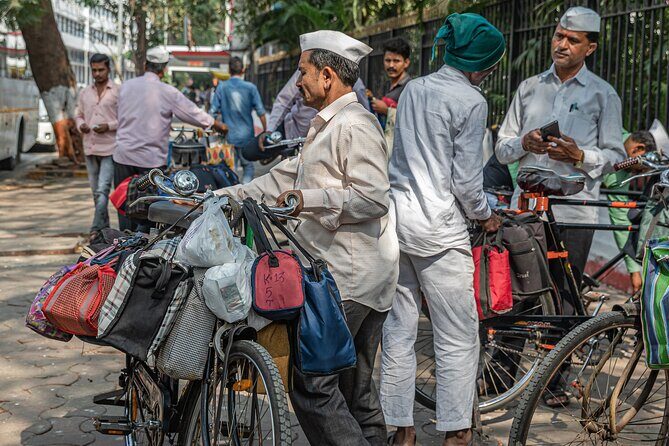
Then the itinerary leans into Mumbai’s daily-energy side. You’ll pass through areas like Dhobi Ghat (the open-air laundry) and stop near Marine Drive viewpoints. This isn’t “quiet museum time.” It’s street-level Mumbai, where you can see how daily life runs alongside major landmarks.
You’ll also include major architecture stops:
- Chhatrapati Shivaji Terminus (UNESCO-listed, Victorian Gothic rail station vibe)
- Chhatrapati Shivaji Maharaj Vastu Sangrahalaya (the museum complex)
- A Jain Temple stop (brief, but worth it for variety)
After all that, the tour shifts gears. You get driven to Chhatrapati Shivaji Maharaj International Airport for your evening flight to Delhi. The logic is simple: the tour doesn’t waste daylight by turning Day 1 into an airport marathon later.
Possible consideration: because this day includes several short stops, you’ll want to be okay with moving on quickly. If you’re hoping for long, slow wandering in Mumbai, you may feel the pace.
Day 2 Delhi’s Qutub Minar and Stepwell Moments, Then Down to Agra
In Delhi, Day 2 starts with Qutub Minar, a UNESCO site and one of the clearest examples of Indo-Islamic architecture in the city. This is the kind of stop that rewards staying aware of details. Look up and compare the scale changes as you walk around.
From there, you’ll head to Lotus Temple—not because it’s flashy, but because it’s a tonal reset. The lotus shape gives you a serene break after taller stone monuments.
Then comes India Gate, the war memorial. It’s straightforward, but it helps you understand how modern India remembers its past—especially when you’re moving between older UNESCO sites and newer government areas.
A fun curveball on this itinerary is Agrasen Ki Baoli – Leamigo, a stepwell that’s described with real dimensions (about 60 meters long and 15 meters wide). Stepwells in India can feel spooky in the best way, and this one is tucked into the city rather than out in the open. Expect it to feel like a hidden pocket of cool air and echo.
After the city tour, you drive from Delhi to Agra via the Yamuna Expressway. The travel time is listed as roughly 3.5 hours (with itinerary timing that can stretch). Either way, you’re in the car for a chunk of the day, and you’ll want to use that time for rest, not just staring out the window.
You arrive in Agra, check in, and get an overnight stay. The day’s overall shape is: major Delhi icons first, then a focused transfer day into the Taj zone.
Day 3 Sunrise Taj Mahal, Agra Fort, and the Road to Jaipur
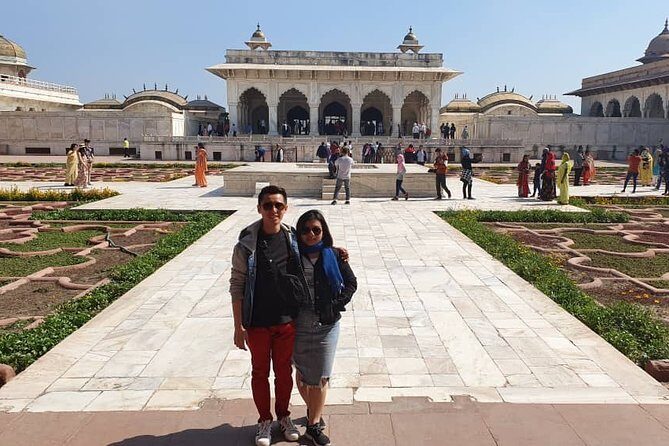
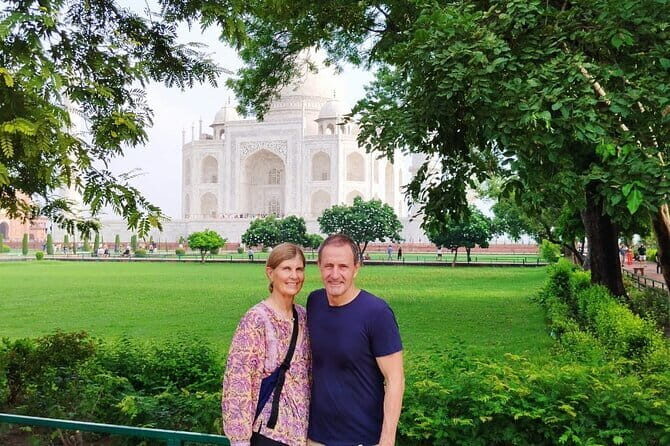
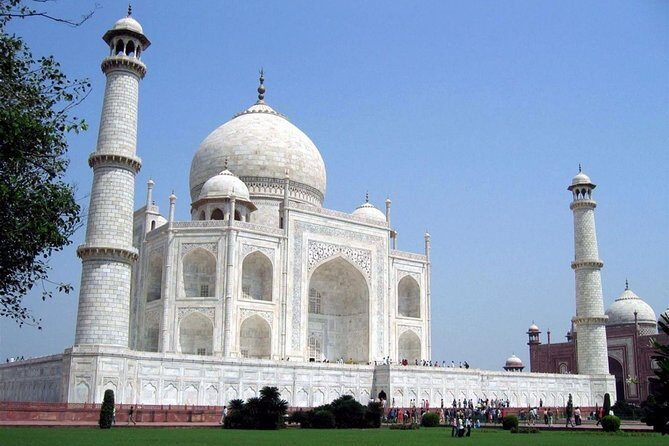
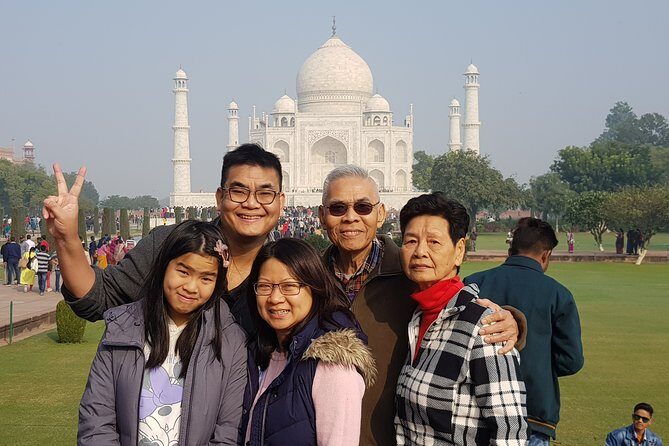
Day 3 is the big one. You start with a sunrise Taj Mahal visit. Going early is not just tradition—it’s logistics. It tends to be less crowded, and the light changes how the marble reads. You’re also given two hours for the Taj, which is enough time to take it in without feeling like you’re sprinting.
A real practical plus: the included battery-operated shuttle service to and from the Taj Mahal entrance. This is helpful if your feet get tired or if the queue/parking logistics make long walks annoying. You still get to explore on foot, but you’re not stuck doing extra walking just to get in.
After the Taj, you shift to other “Mughal mastery” stops:
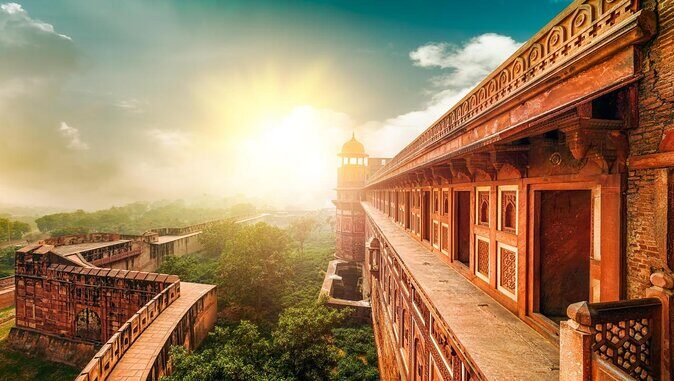
- Agra Fort, a UNESCO World Heritage site with about one hour
- Itmad-ud-Daula, often considered a smaller-scale cousin to the Taj, around 30 minutes
This pairing works because it adds variety. Taj Mahal is the emotional peak. Agra Fort and the tomb give you architectural context and the feel of Mughal-era power beyond one single postcard view.
Then you drive to Jaipur (about 4.5 to 5 hours). This is the day where the Golden Triangle tour earns its name: you’re moving fast, but the monument sequence stays logical.
When you arrive, you check into your hotel and unwind. Jaipur is close enough that you can enjoy the evening without spending more time in transit that night.
Small consideration: the day is long, and you’ll be stacking sunrise + multiple sights + road travel. Build in a slower breakfast routine if your body needs it.
Day 4 Jaipur Forts, City Palace, Jantar Mantar, and Pink Stone Views
Jaipur Day 4 is where the tour turns from “icon photos” to “wide-scope city exploring.” You start with Amber Palace, a hilltop fort experience with included entry and about two hours. The big value here is the viewpoint. Even if you don’t obsess over architecture, you get the sense of why rulers chose these positions.
Next comes a string of strong contrast stops:
- Panna Meena ka Kund (short visit, around 15 minutes)
- Jal Mahal (Jal Mahal, around 15 minutes), the palace-like silhouette sitting over Man Sagar Lake
- Gaitore Ki Chhatriyan, royal cenotaphs with intricate carvings (about 30 minutes)
Then you get your major palace-and-science anchors:
- City Palace of Jaipur, about two hours with a mix of Rajasthani and Mughal architectural styles
- Jantar Mantar, about one hour and UNESCO-listed as an astronomical observatory
Finally, you finish with Hawa Mahal (Palace of Wind), the pink facade that’s instantly recognizable. It’s about 30 minutes, which is enough to appreciate the exterior and photo angles.
The day ends after you’re dropped near the airport for your flight back to Mumbai. The tour includes that airport connection so you don’t have to organize a last-minute cab scramble.





Vehicles, Guides, and Airport Runs: What Keeps This Tour Smooth
The tour leans heavily on two moving parts: transportation and guiding.
On the driving side, you’ll travel in an air-conditioned vehicle chosen by group size:
- Sedan for 1–2 people
- SUV for 3–4 people
- Van for 5–10 people
That matters. Jaipur and Agra can get traffic-heavy, and you don’t want to be stuck in something too small or uncomfortable on long stretches.
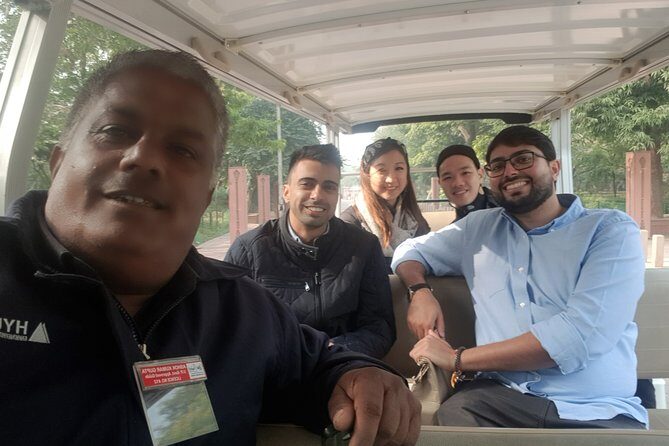
On the guiding side, you’ll have English-speaking local guides in each city, and they’re designed to be more than a talking head. One guest specifically praised the team’s driver-through-the-whole-trip care by name—Mr. Singh—and also highlighted an Agra guide/photography style with RashidBhai. Another named driver, Sunil, was described as accommodating and knowledgeable. That’s the kind of detail that usually means the logistics are working and the guide can actually keep things flowing on the ground.
One more practical point: you’re given bottled mineral water during all road journeys. Small detail, but it helps on hot days and between meal times.
Possible consideration: a few guests have noted that understanding some guides’ English accents can be a bit tricky. If language clarity matters to you, it’s worth asking the provider about guide communication style before you lock it in.
What the Price Covers and What You’ll Still Need to Budget For
This tour is priced at $550.27 per person, and it includes a big basket of essentials.
Included in the cost:
- Flights between Mumbai ↔ Delhi and Jaipur ↔ Mumbai (commercial economy class)
- Three nights’ hotel stays if you select the with-hotels option
- Daily breakfast for those hotel nights (3 breakfasts listed)
- All sightseeing and transfers by private, air-conditioned vehicle
- Entrance fees to the monuments in the itinerary
- Airport pickup and drop-off in Mumbai, Delhi, Agra, and Jaipur
- Battery shuttle service for the Taj Mahal entrance area
- Bottled water during road journeys
- Taxes and service charges
Not included:
- Lunch and dinner
So if you’re budgeting, you need to plan for two main meal breaks each day where you’ll pay on your own. In exchange, you’re not paying entrance fees, arranging trains, or booking separate flights on a tight schedule.
Also pay attention to the room setup rules. Rooms are generally twin-sharing. If you book as three people, rooms are triple-sharing by default, unless you pay an additional charge to get two rooms.
If you care about room layout, ask upfront which configuration you’ll get so there are no surprises on arrival.
Value Check: Is $550.27 a Smart Deal?
For this itinerary, the value comes from combining three expensive parts into one package: domestic flights, hotels, and paid attractions with guided time.
If you tried to DIY it, you’d likely spend time coordinating flights, then lining up guides city by city, then figuring out entrance tickets and transfers. This tour trades that planning energy for a set route that’s already assembled and executed.
It’s especially good value if:
- it’s your first trip to India and you want fewer moving parts
- you want major landmarks in a short window
- you don’t want to negotiate transport and schedules on the fly
It may be less ideal if:
- you hate long car days
- you’d rather linger longer in one place than hit all three Golden Triangle cities
- you’re traveling with very strict timing needs and prefer total flexibility over a fixed order
One more note from the broader guest experience: people strongly favored the overall organization, professional staff, and the sense that the team handled the stressful parts. That pattern is the real “value” here. You’re paying for reduced uncertainty.
Book It or Skip It: Who This 4-Day Tour Fits Best
I’d book this if you want a smooth Golden Triangle introduction with less mental load. The schedule makes sense: Mumbai heritage first, Delhi UNESCO and memorials next, then the Taj sequence that most people come for, and finally Jaipur’s fort-palace mix.
I’d hesitate if you want slow travel or deep countryside detours. This is a fast circuit: early Taj Mahal, repeated check-ins, and long drives. You’ll enjoy it most if you can switch into trip-mode quickly.
My practical advice for decision-making:
- If you’re okay with packed days and you want the highlights, this is a solid match.
- If language clarity matters, ask about English communication and guide style before departure.
- Choose the with-hotels option if you want the package to truly eliminate planning headaches, since hotels and breakfast are a key part of the built-in value.
FAQ
What time does the tour start?
The tour start time is listed as 9:00 am.
Is hotel accommodation included?
Hotel accommodations are included only if you select the with-hotels option during booking. Three nights and daily breakfast (3) are included with that option.
Are airport transfers included?
Yes. The tour includes pick-up and drop-off in Mumbai, Delhi, Agra, and Jaipur, including transfers to the airport for your flights.
What’s included besides sightseeing?
The package includes private, air-conditioned transportation, entrance fees for the monuments on the itinerary, professional local guides, bottled mineral water during road journeys, and the specified flights with baggage allowance.
Are lunch and dinner included?
No. Lunch and dinner are not included in the tour price.
How much notice do I need for a full refund?
You can cancel up to 6 days in advance of the experience for a full refund. Full refund requires canceling at least 6 full days before the experience’s start time.